All decks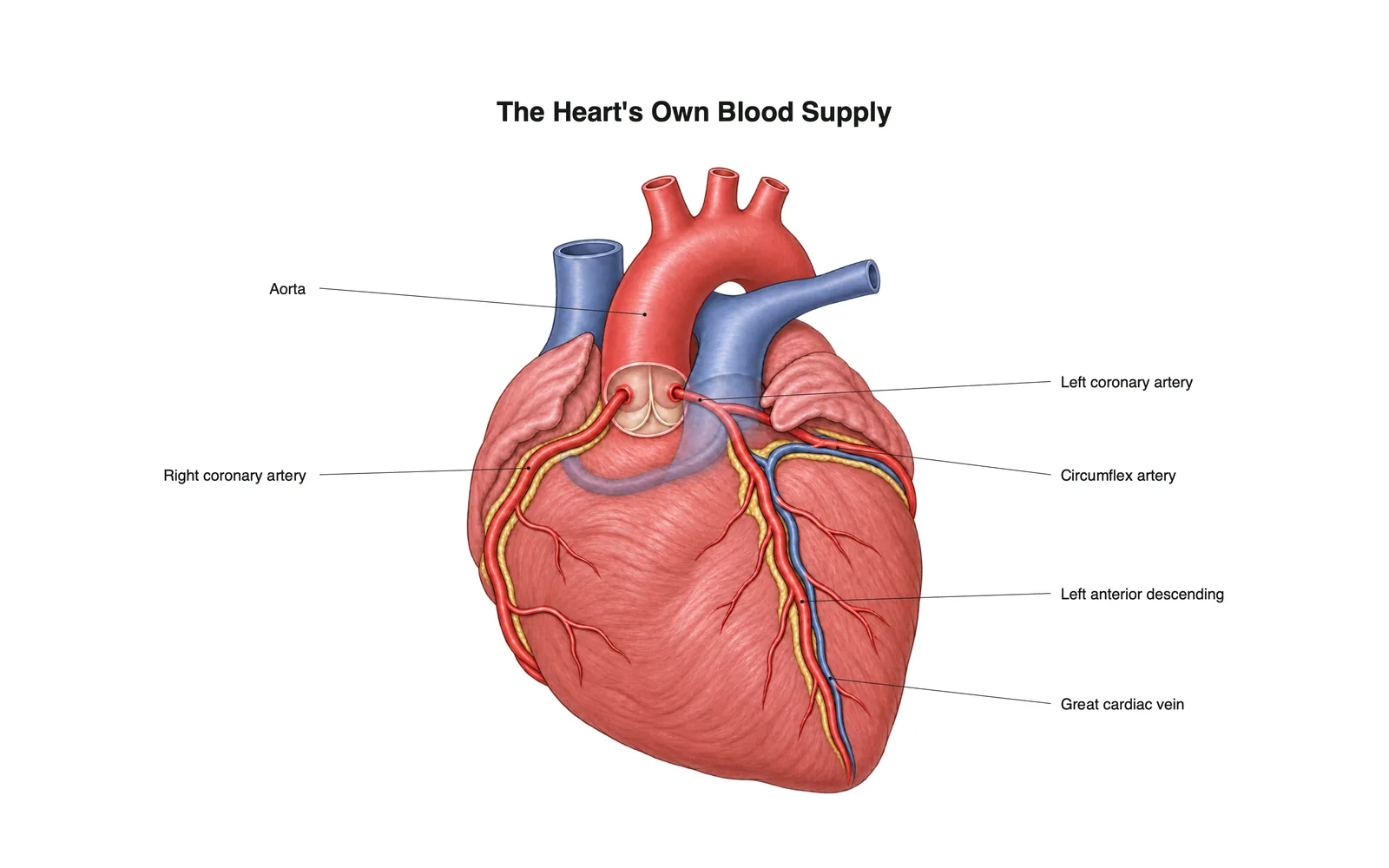
The Heart's Own Blood Supply 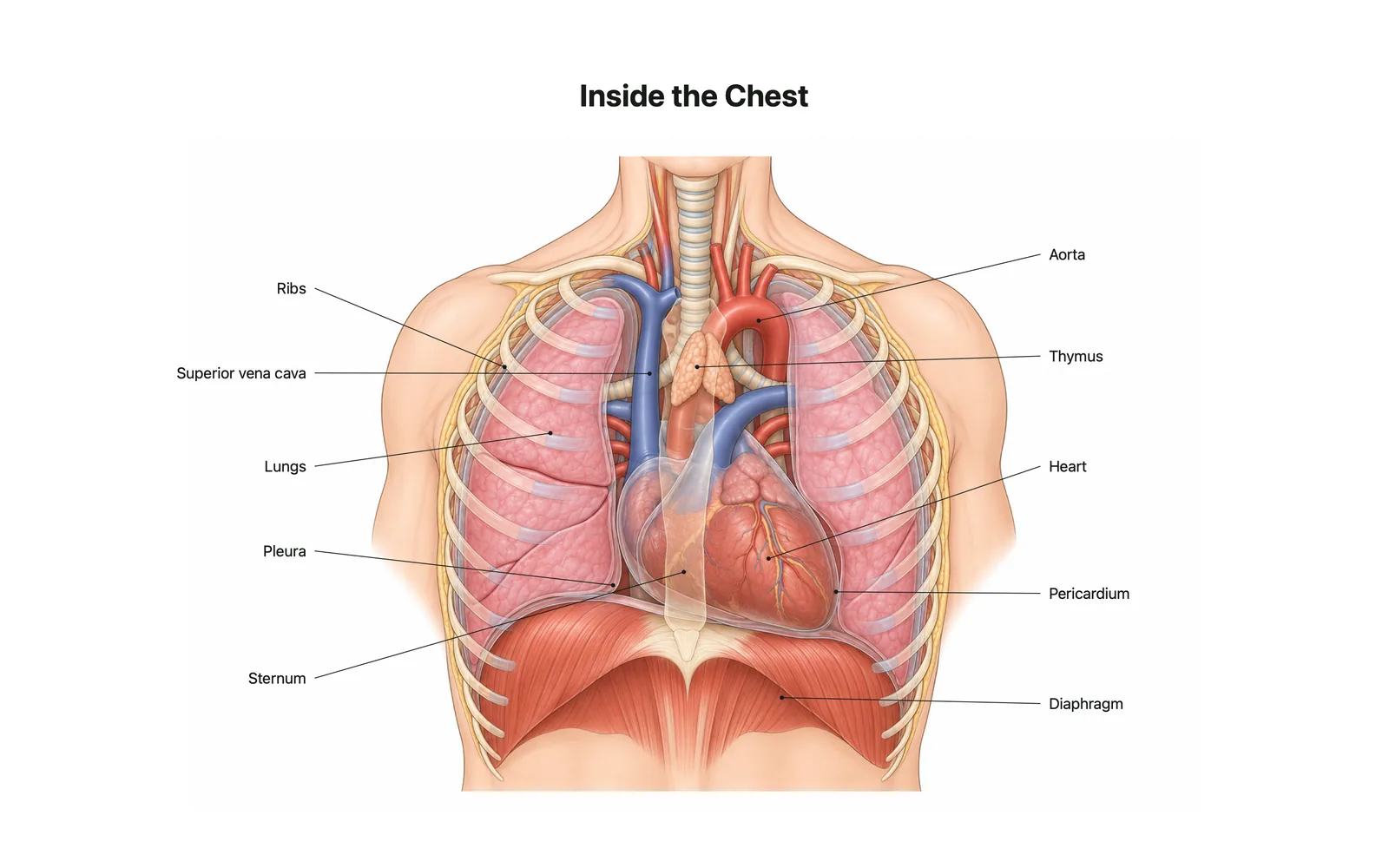
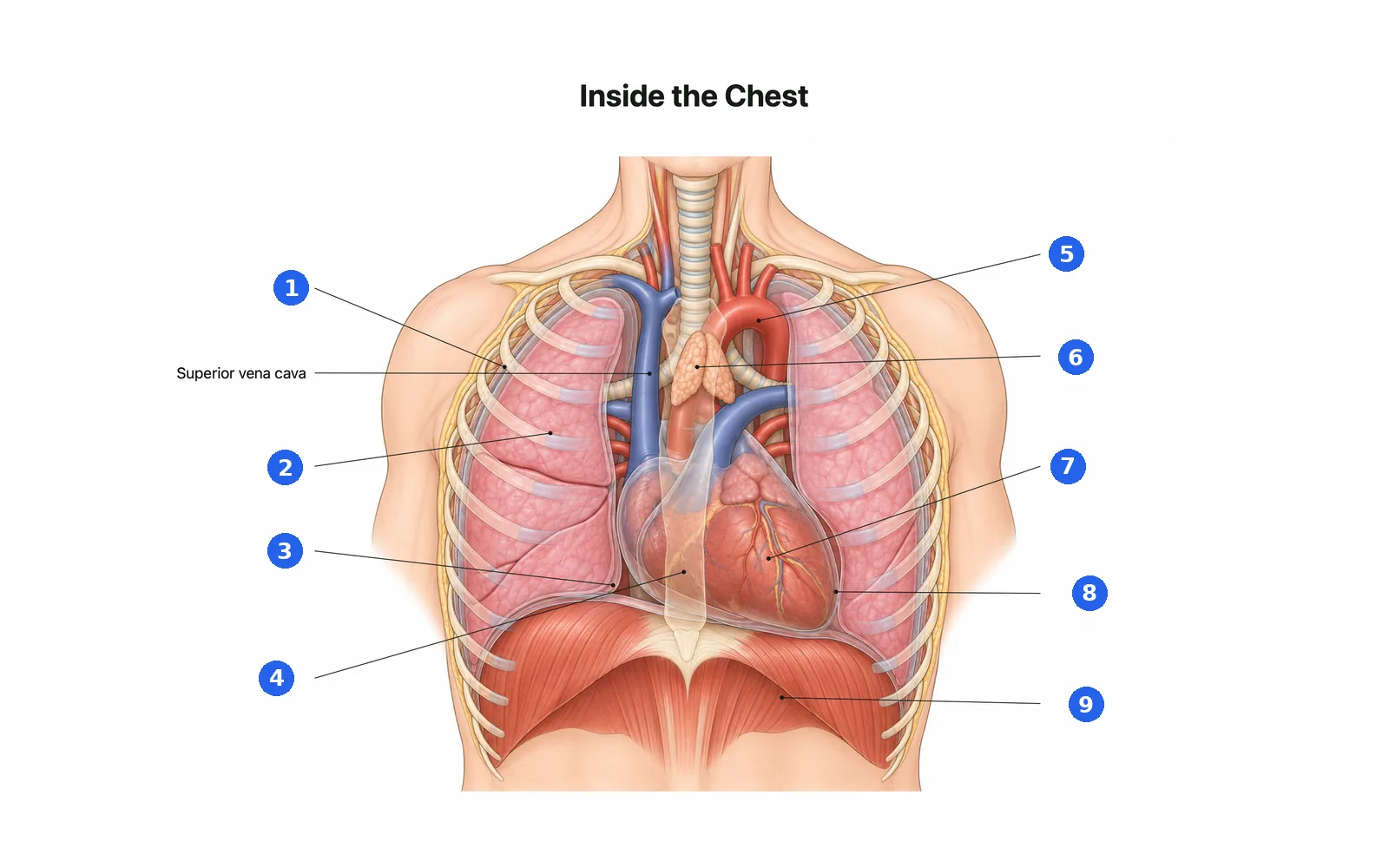
Inside the Chest 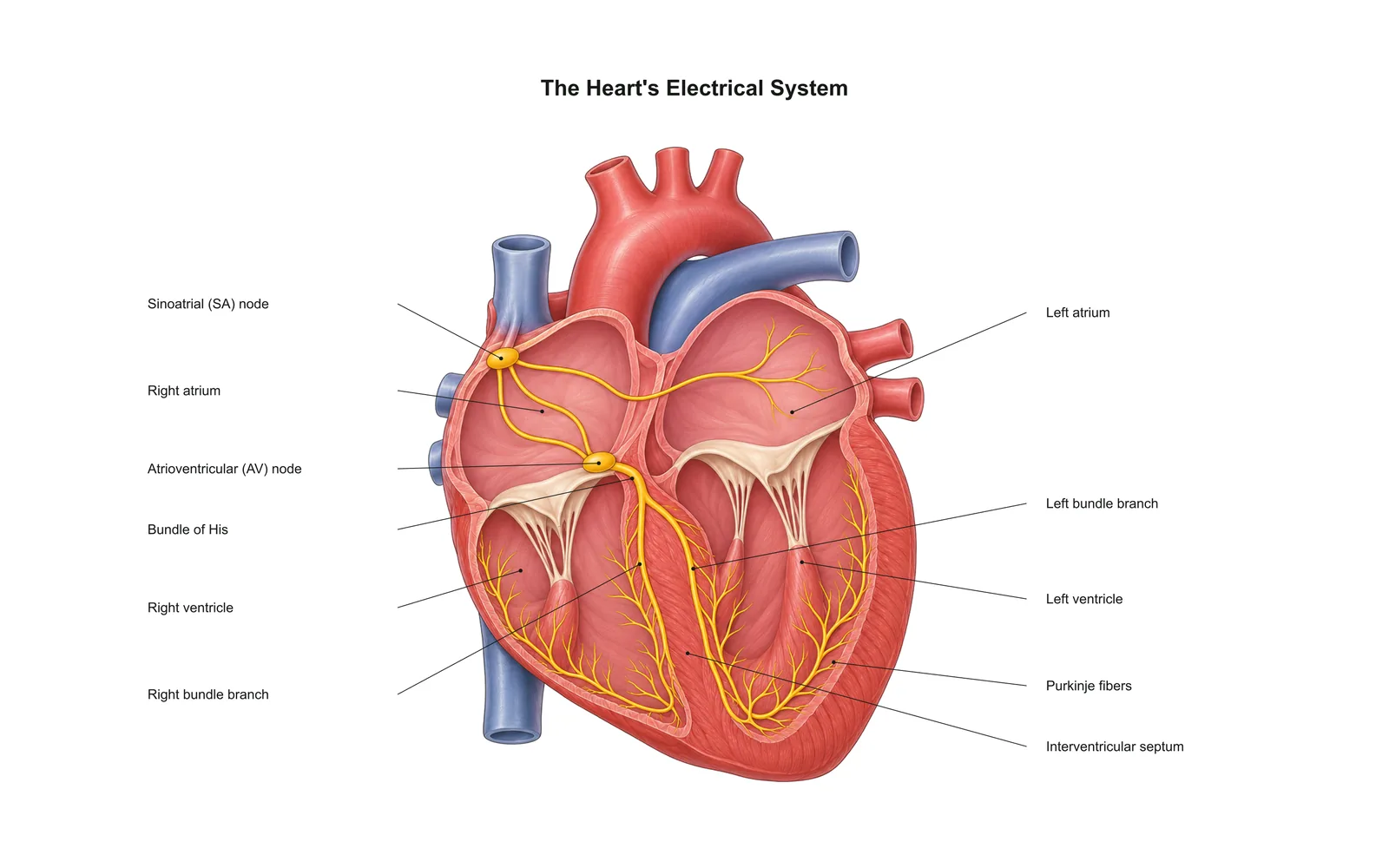
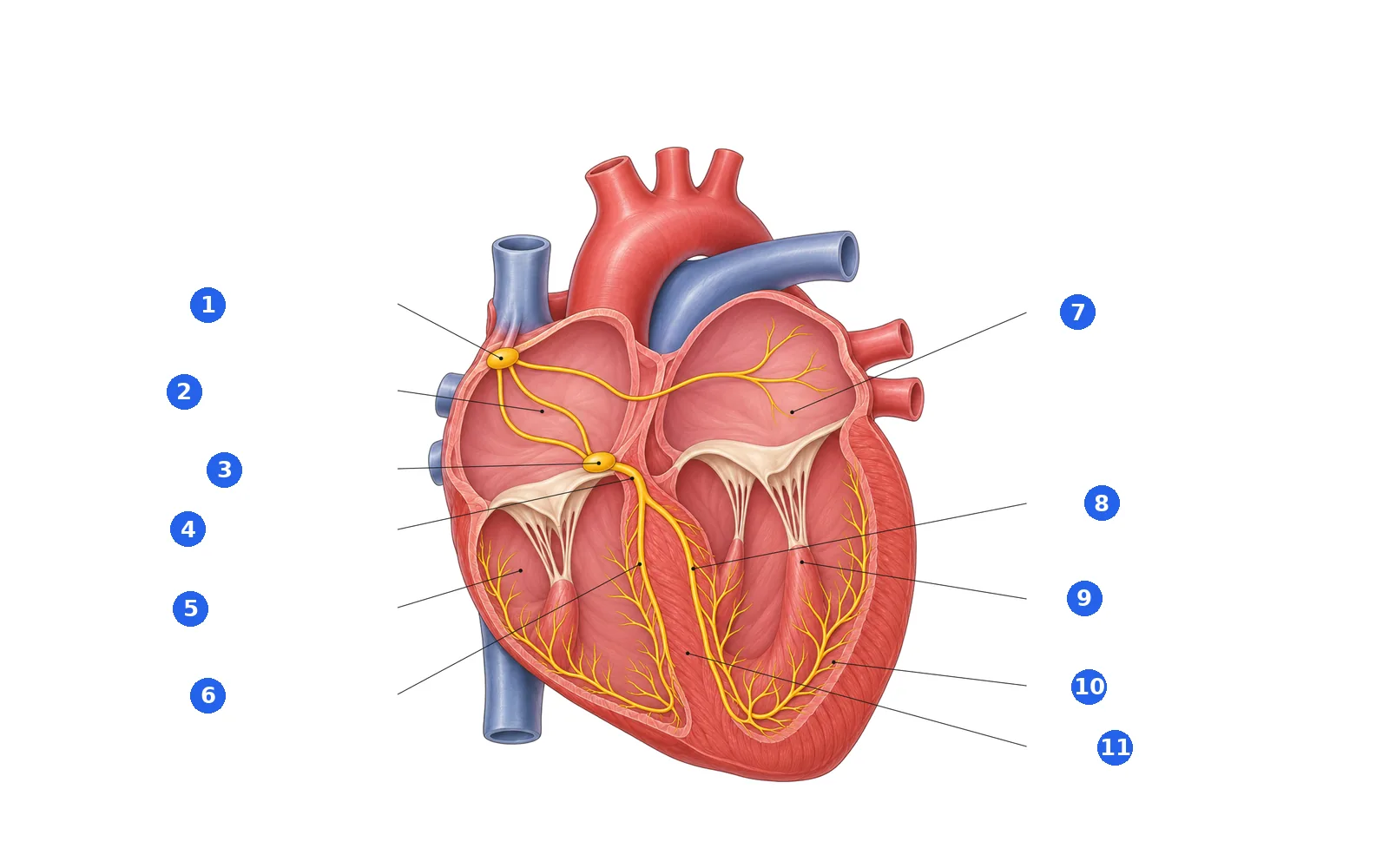
The Heart's Electrical System 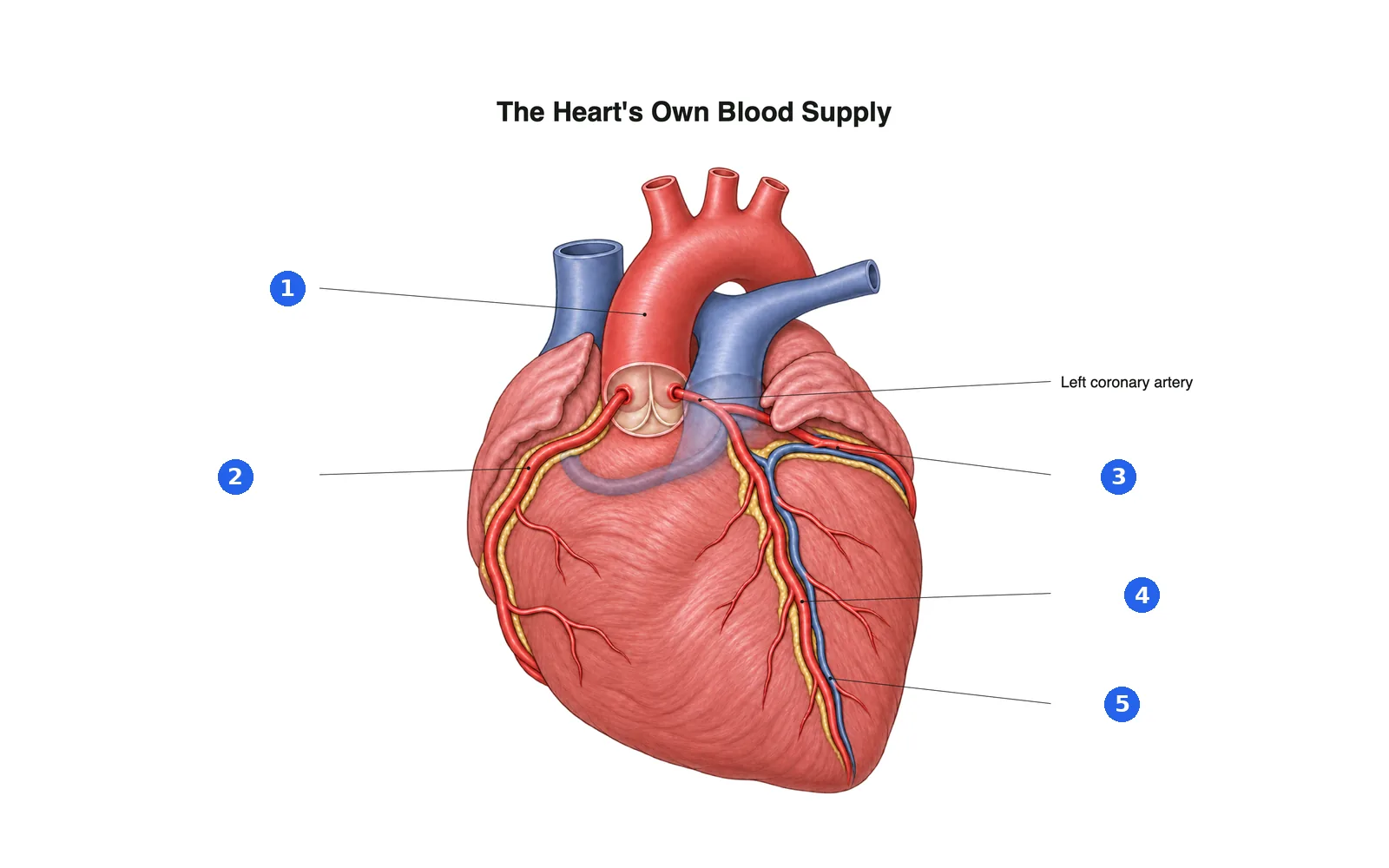
Heart: care and discussions
Organs
Heart
Organ · Circulatory system · 9 cards
Study notes
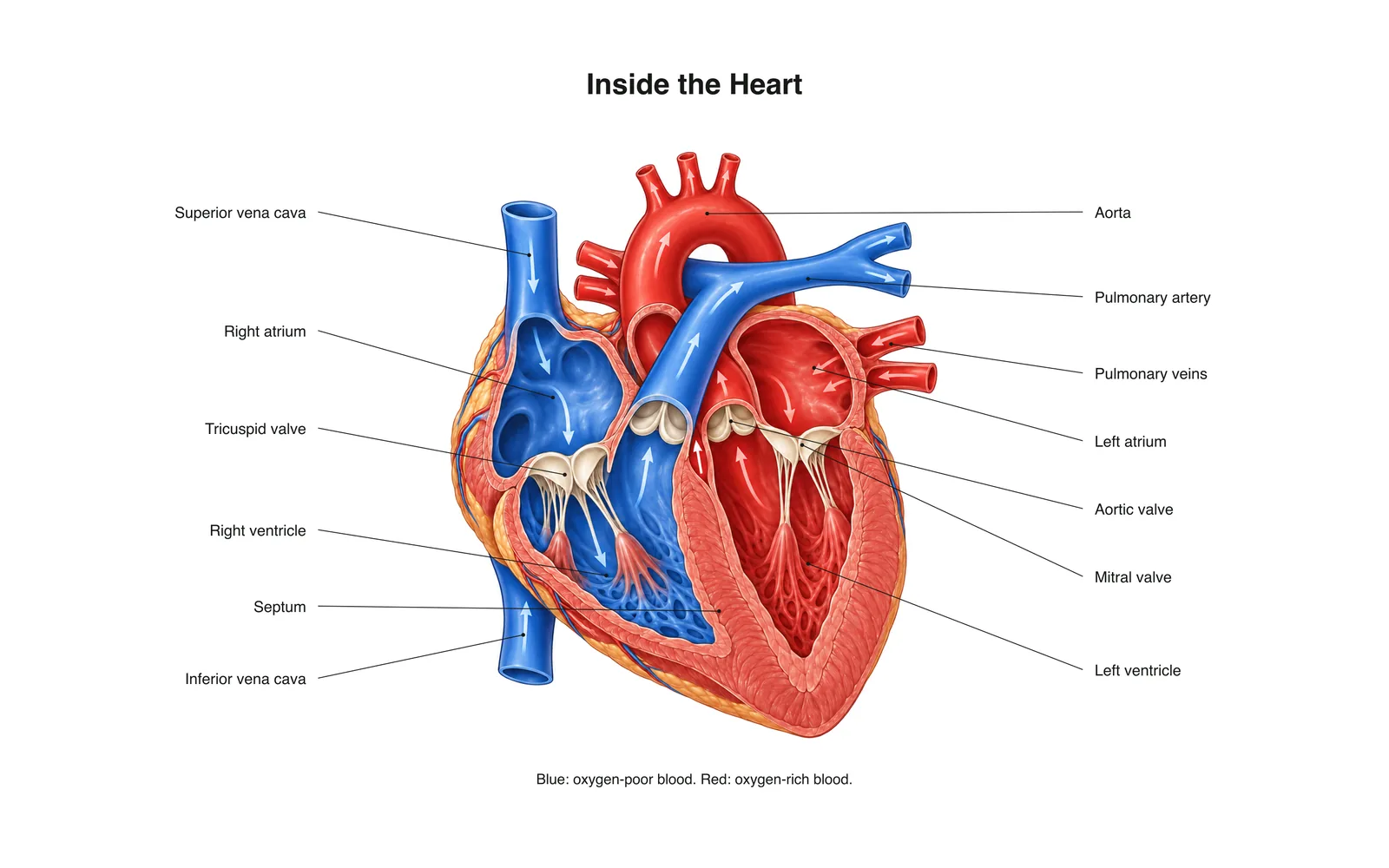
- The heart has four chambers: two atria on top and two ventricles below.
- The right side pumps blood to the lungs; the left side pumps it to the whole body.
- Four valves keep blood flowing one way.
- Its own electrical system (starting at the SA node) sets the heartbeat.
Flashcards
Card 1 of 9Tap the card to flip
Label the diagram
Name each numbered part. Switch to the labels to study first.
Label 1 of 5Pick an answer
What is number 1?
Label 1 of 9Pick an answer
What is number 1?
Label 1 of 11Pick an answer
What is number 1?
Picture quiz
Name the part shown in orange.
Picture 1 of 1What is the highlighted organ?
Terms in this deck (9)
- Four chambers of the heart
- Right atrium, right ventricle, left atrium, left ventricle.
- Atria vs ventricles
- The atria receive blood coming in; the ventricles pump blood out.
- Why is the left ventricle wall the thickest?
- It pumps blood to the entire body, which needs the most force.
- Path of blood through the heart
- Body → right atrium → right ventricle → lungs → left atrium → left ventricle → body.
- Four heart valves
- Tricuspid, pulmonary, mitral (bicuspid) and aortic.
- SA node
- The sinoatrial node, the heart's natural pacemaker in the right atrium.
- Arteries vs veins
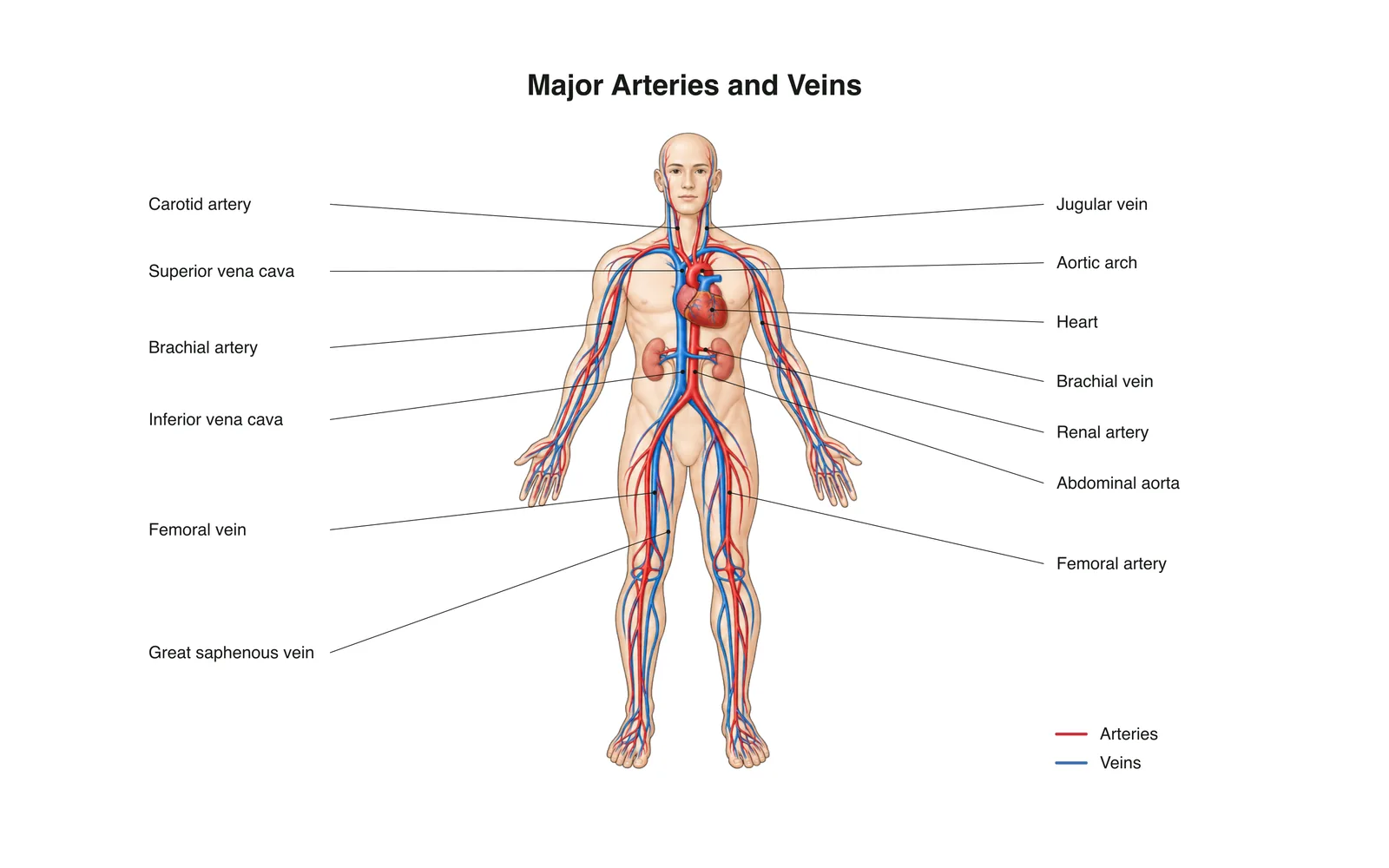
- Arteries carry blood away from the heart; veins carry it back.
- Aorta
- The body's largest artery, carrying oxygen-rich blood from the left ventricle.
- Septum
- The wall dividing the left and right sides of the heart.
2D Learning
Diagrams and body maps for this part.
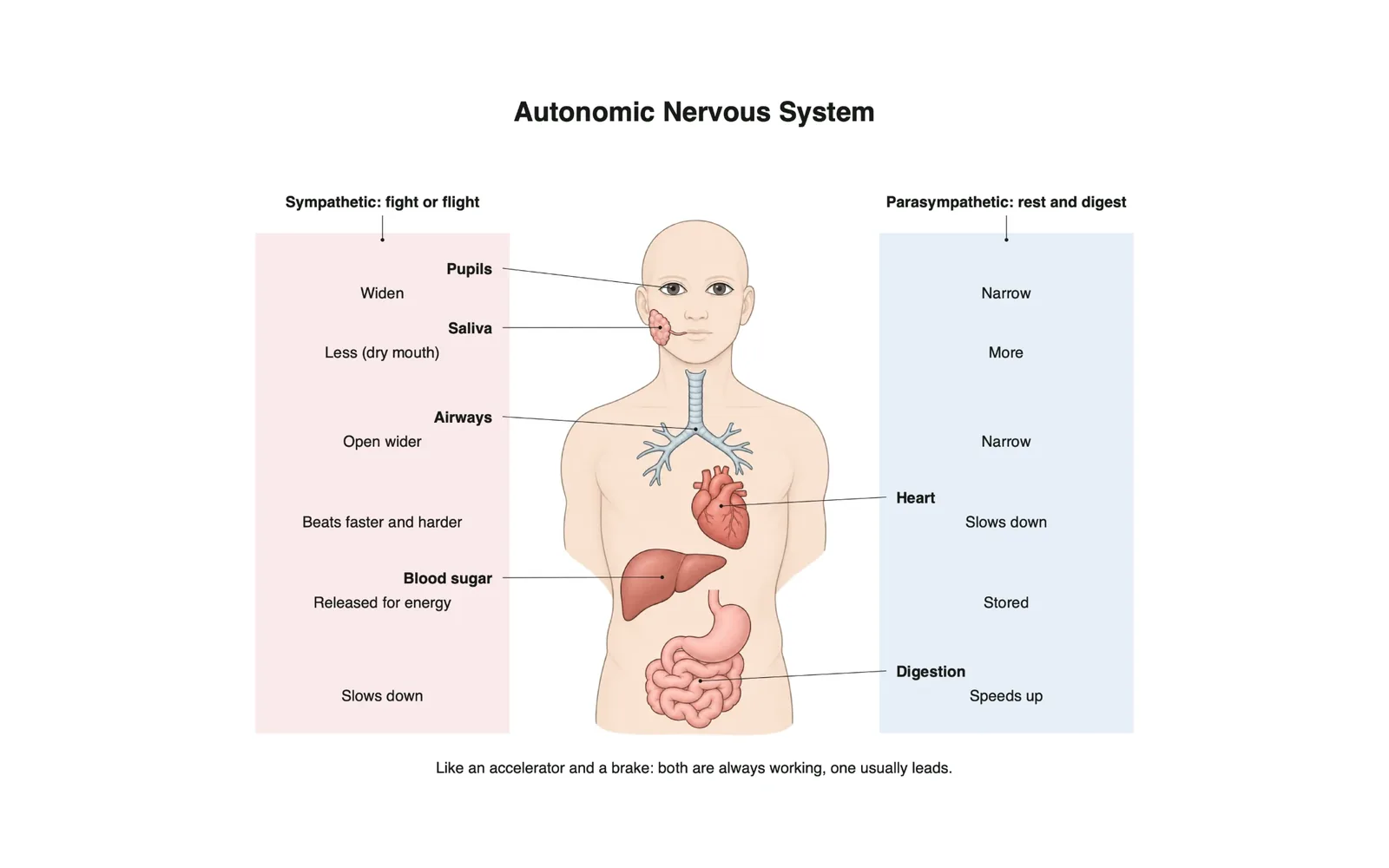
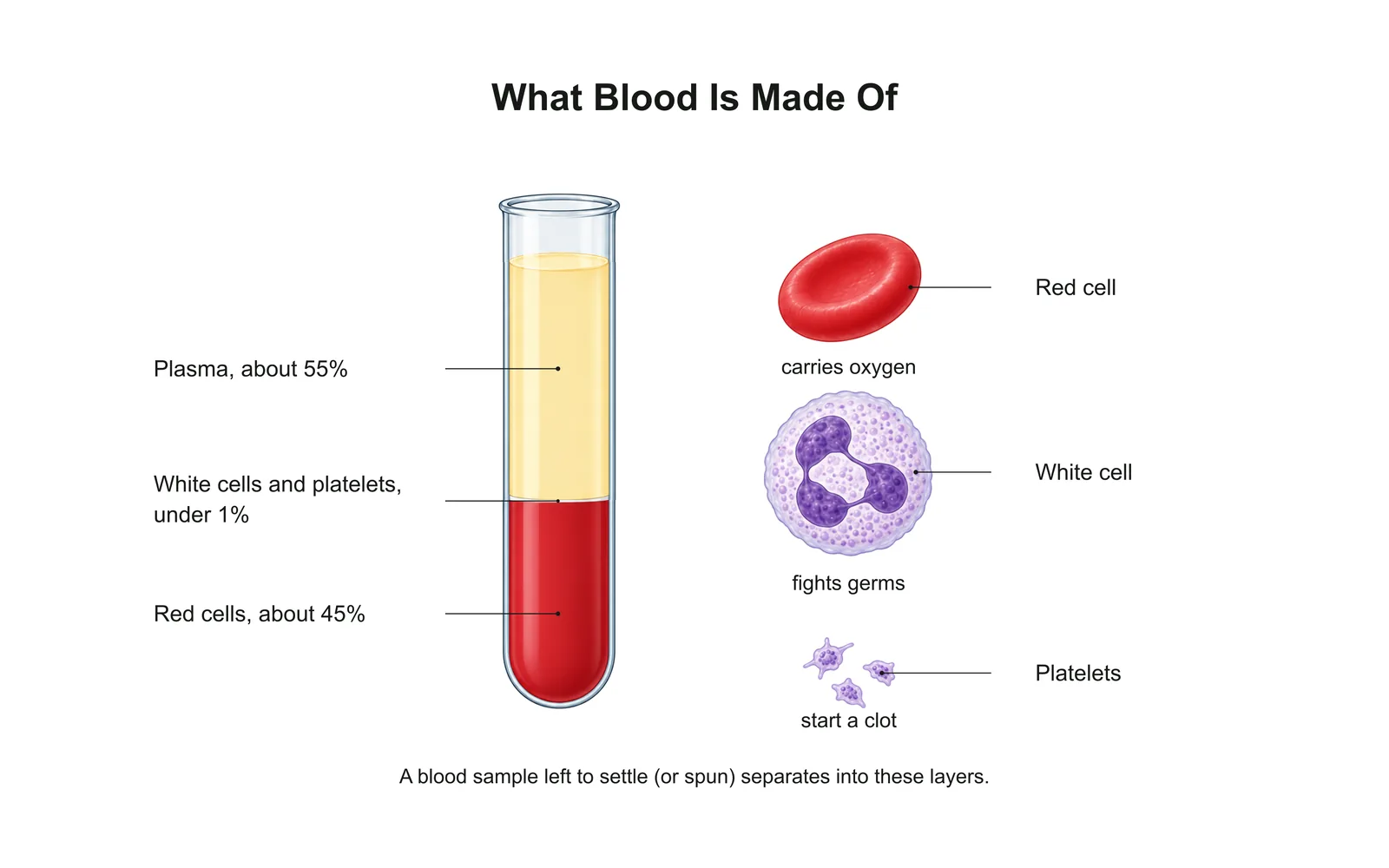
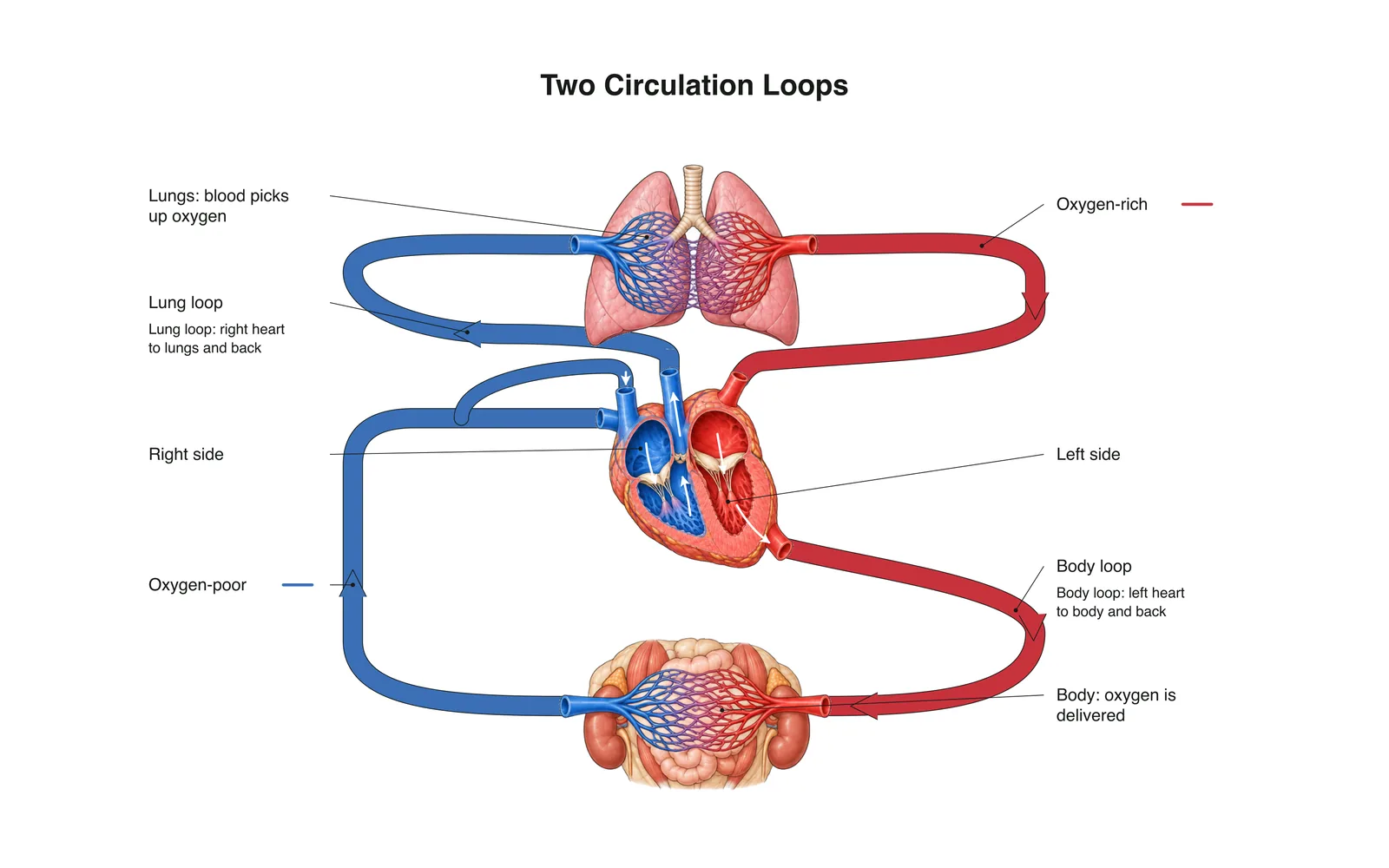
Educational content for learning anatomy, not medical advice. Tap this part on the 3D model with School selected to see it in place.