2D Learning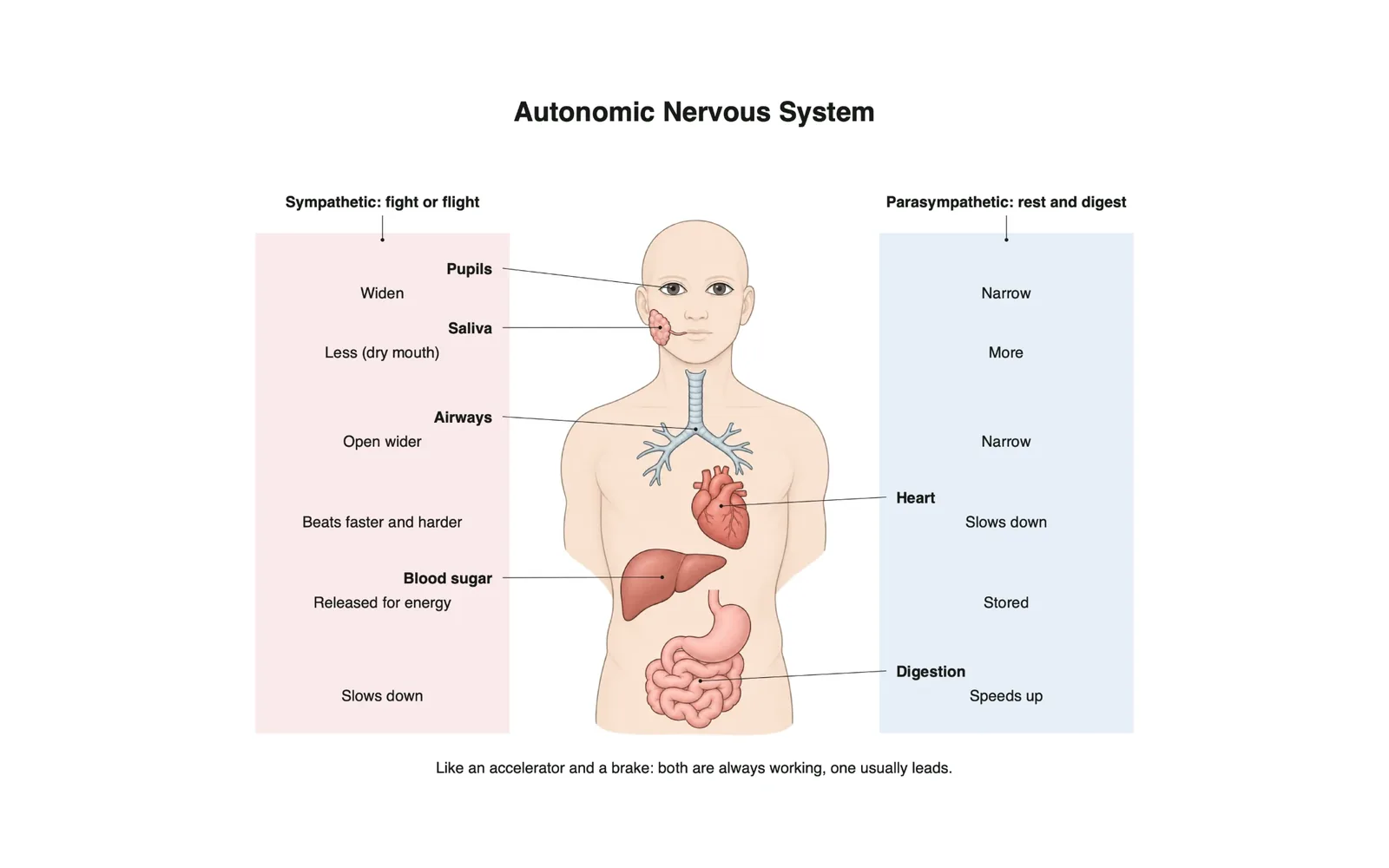
The two sides of the autonomic system work like an accelerator and a brake. 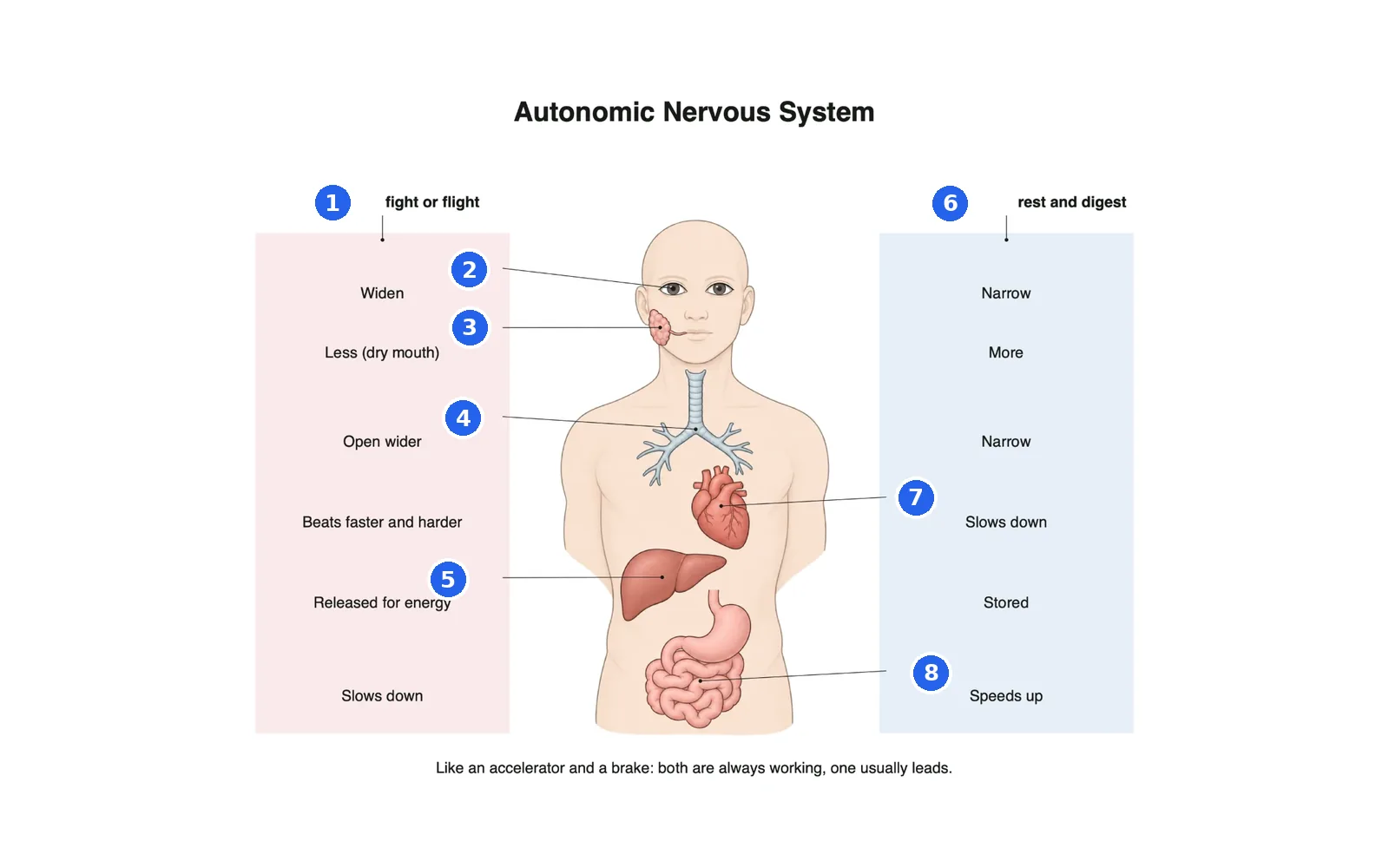
2D Learning
Autonomic Nervous System
How it works · Nerves and senses · 8 cards
Study notes
- The autonomic nervous system runs things you do not consciously control: heartbeat, breathing rate, digestion, sweating.
- Its sympathetic side prepares the body for action (fight or flight).
- Its parasympathetic side calms the body and supports digestion and repair (rest and digest).
- Slow breathing and relaxation exercises shift the balance toward the parasympathetic side.
Flashcards
Card 1 of 8Tap the card to flip
Label the diagram
Name each numbered part. Switch to the labels to study first.
Label 1 of 8Pick an answer
What is number 1?
Terms in this deck (8)
- Autonomic nervous system
- The part of the nervous system that controls automatic body functions.
- Sympathetic nervous system
- The 'fight or flight' side: speeds the heart, widens the airways and pupils, slows digestion.
- Parasympathetic nervous system
- The 'rest and digest' side: slows the heart, narrows the pupils and boosts digestion.
- Vagus nerve
- The main parasympathetic nerve; it runs from the brainstem to the heart, lungs and gut.
- Adrenaline's role in fight or flight
- The adrenal glands release it to boost heart rate, blood sugar and alertness within seconds.
- What happens to digestion under stress?
- It slows down, as blood is sent to the muscles instead.
- Somatic nervous system
- The part that controls voluntary movement of skeletal muscles.
- Why does slow breathing calm you?
- Long, slow breaths out increase vagus nerve activity, which slows the heart.
See it on the 3D body
Open the 3D model on a part, with its School notes and flashcards.
Educational content for learning anatomy, not medical advice.