2D Learning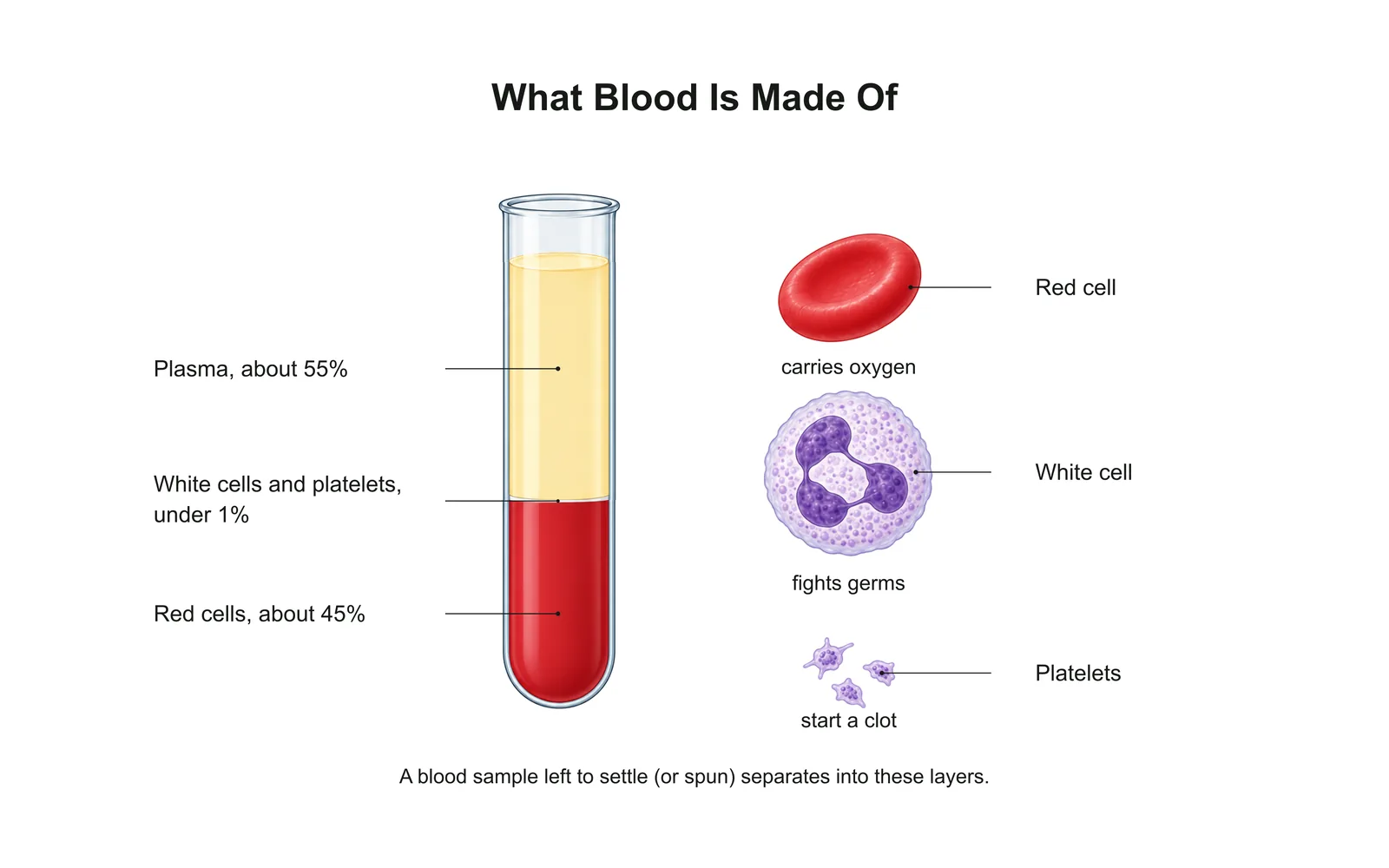
What blood is made of. 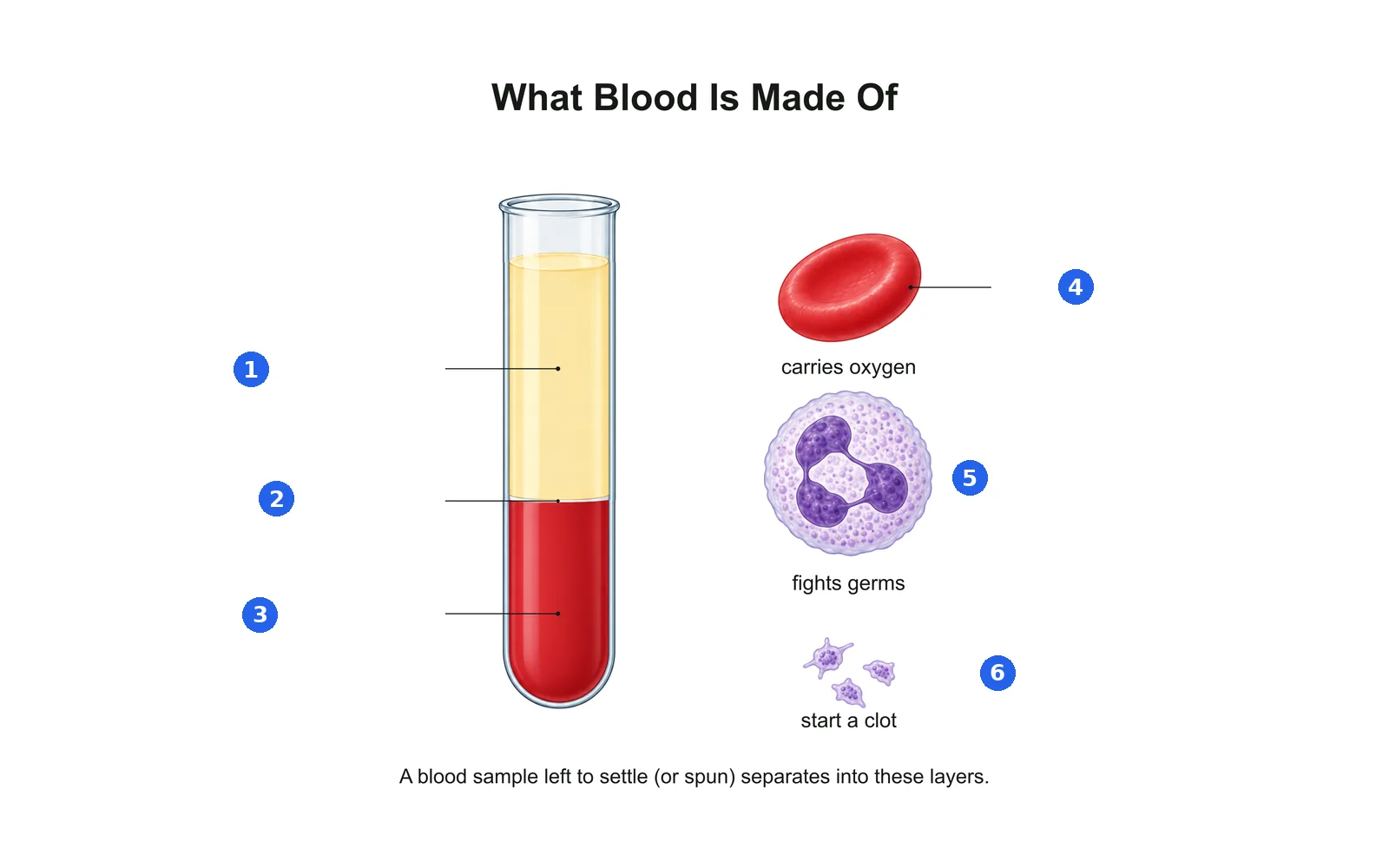
2D Learning
Blood
How it works · Blood and circulation · 10 cards
Study notes
- An adult has about 5 liters of blood.
- Just over half of blood is plasma, a yellowish liquid; the rest is cells.
- Red cells carry oxygen, white cells fight infection, and platelets help stop bleeding.
- All blood cells are made in the red bone marrow.
Flashcards
Card 1 of 10Tap the card to flip
Label the diagram
Name each numbered part. Switch to the labels to study first.
Label 1 of 6Pick an answer
What is number 1?
Terms in this deck (10)
- Plasma
- The liquid part of blood, mostly water, carrying nutrients, hormones, proteins, salts and waste.
- Red blood cells (erythrocytes)
- Disc-shaped cells with no nucleus that carry oxygen; each lives about 120 days.
- Hemoglobin
- The iron-containing protein in red cells that carries oxygen and makes blood red.
- White blood cells (leukocytes)
- Cells of the immune system that find and fight germs and clear debris.
- Platelets
- Small cell fragments that clump at a wound to start a clot.
- Clotting (coagulation)
- Platelets plug the hole, then a protein called fibrin forms a mesh that traps cells into a clot.
- Blood types
- A, B, AB and O, plus Rh positive or negative, set by markers on red cells; they matter for transfusions.
- Universal donor
- Type O negative red cells can be given to almost anyone in an emergency.
- Anemia
- Too few red cells or too little hemoglobin, causing tiredness and breathlessness; often from low iron.
- Where are blood cells made?
- In the red bone marrow, mainly in the hips, ribs, spine and breastbone in adults.
See it on the 3D body
Open the 3D model on a part, with its School notes and flashcards.
Educational content for learning anatomy, not medical advice.