All decks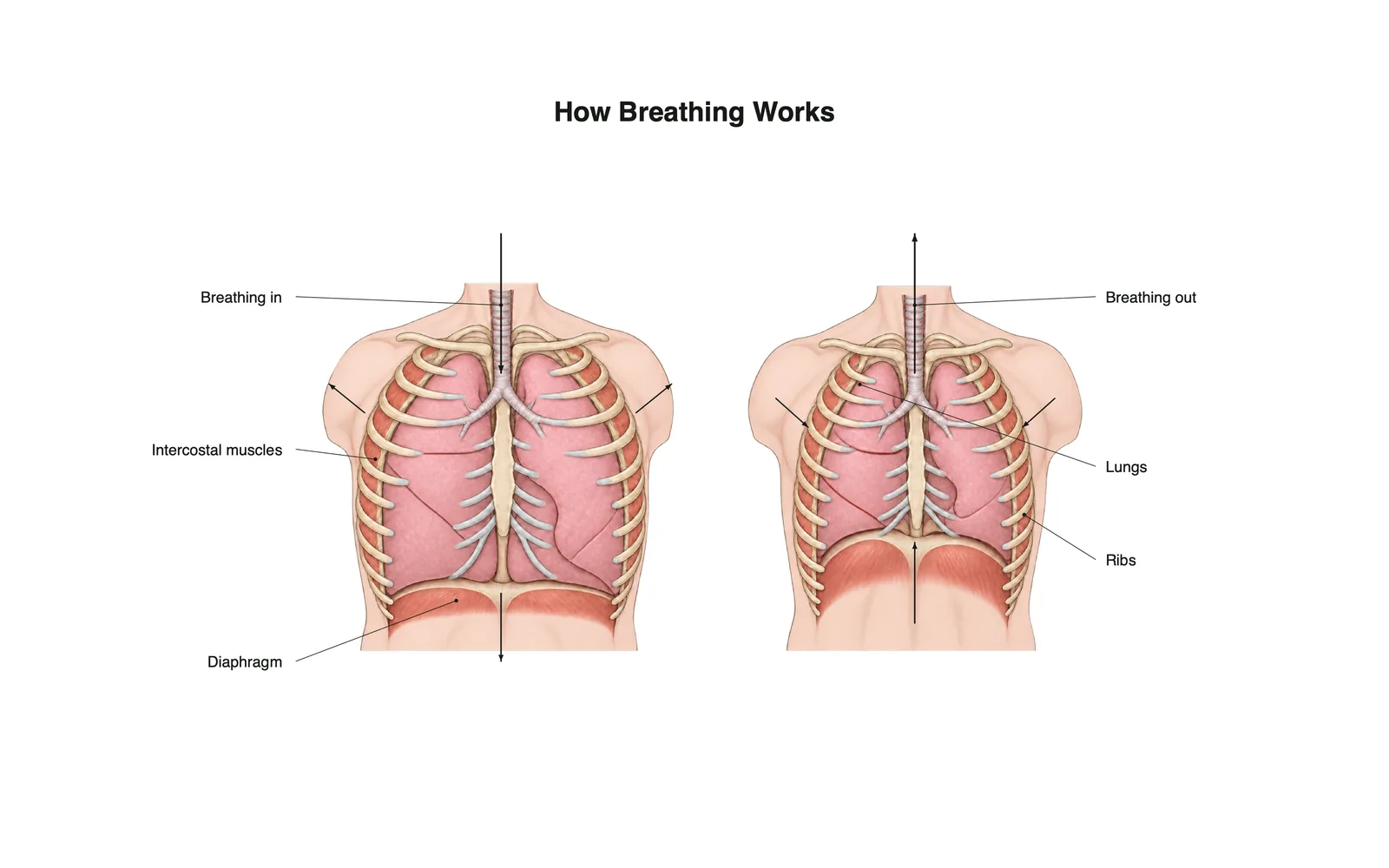
How Breathing Works 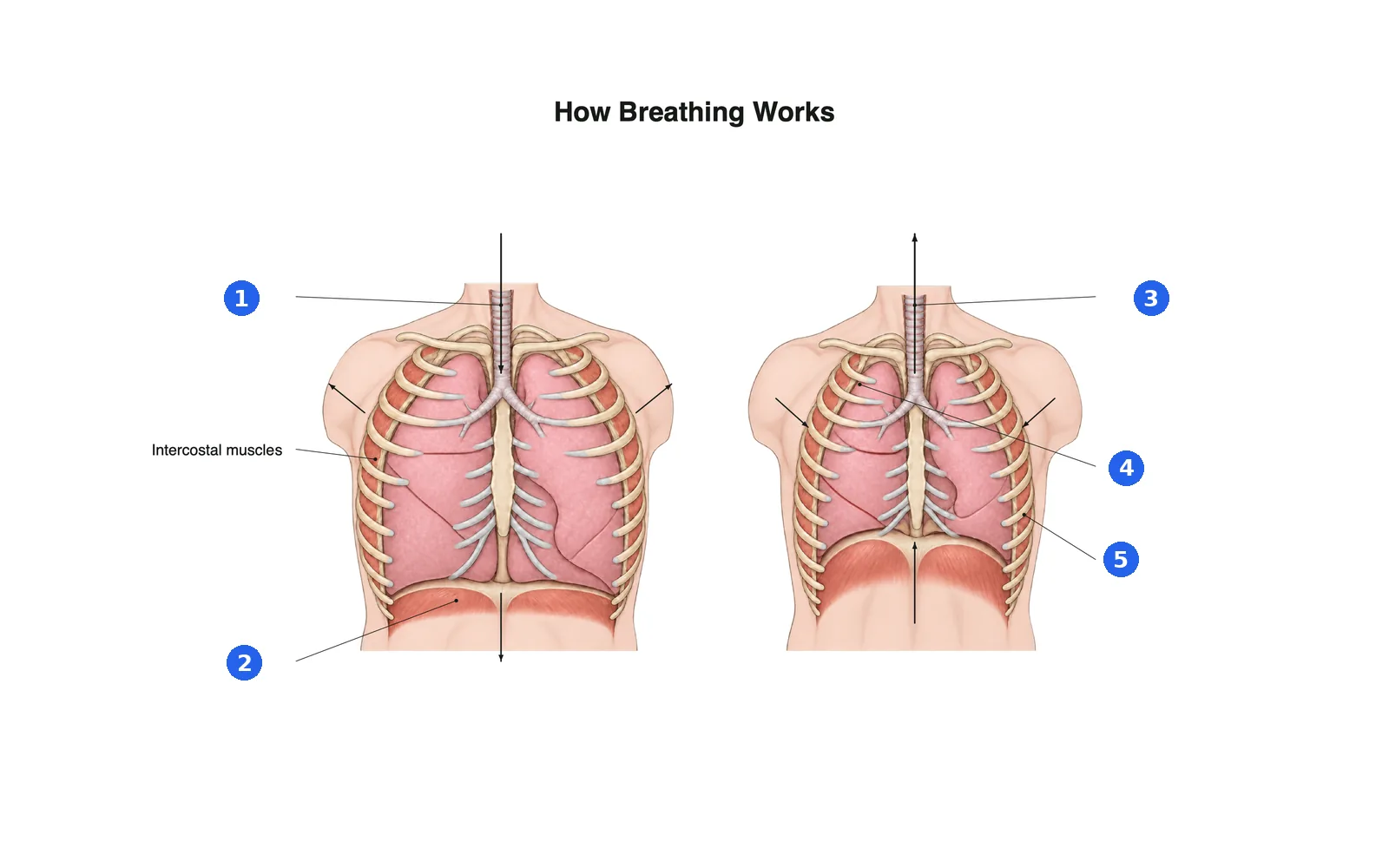
Chest: care and discussions
Organs
Diaphragm
Organ · Respiratory system · 6 cards
Study notes
- A dome-shaped sheet of muscle separating the chest from the abdomen.
- It is the main muscle of breathing.
- It contracts and flattens to pull air in, then relaxes and domes up to breathe out.
- The phrenic nerve controls it; hiccups are sudden spasms of it.
Flashcards
Card 1 of 6Tap the card to flip
Label the diagram
Name each numbered part. Switch to the labels to study first.
Label 1 of 5Pick an answer
What is number 1?
Picture quiz
Name the part shown in orange.
Picture 1 of 1What is the highlighted organ?
Terms in this deck (6)
- Diaphragm
- The dome-shaped muscle under the lungs that powers breathing.
- What happens to the diaphragm when you inhale?
- It contracts and flattens, enlarging the chest so air flows in.
- What happens when you exhale (at rest)?
- It relaxes and rises back into a dome, pushing air out.
- Phrenic nerve
- The nerve (from C3–C5) that controls the diaphragm.
- Hiccups
- Involuntary spasms of the diaphragm followed by a sudden closing of the vocal cords.
- What passes through the diaphragm?
- The esophagus, the aorta and the inferior vena cava, through separate openings.
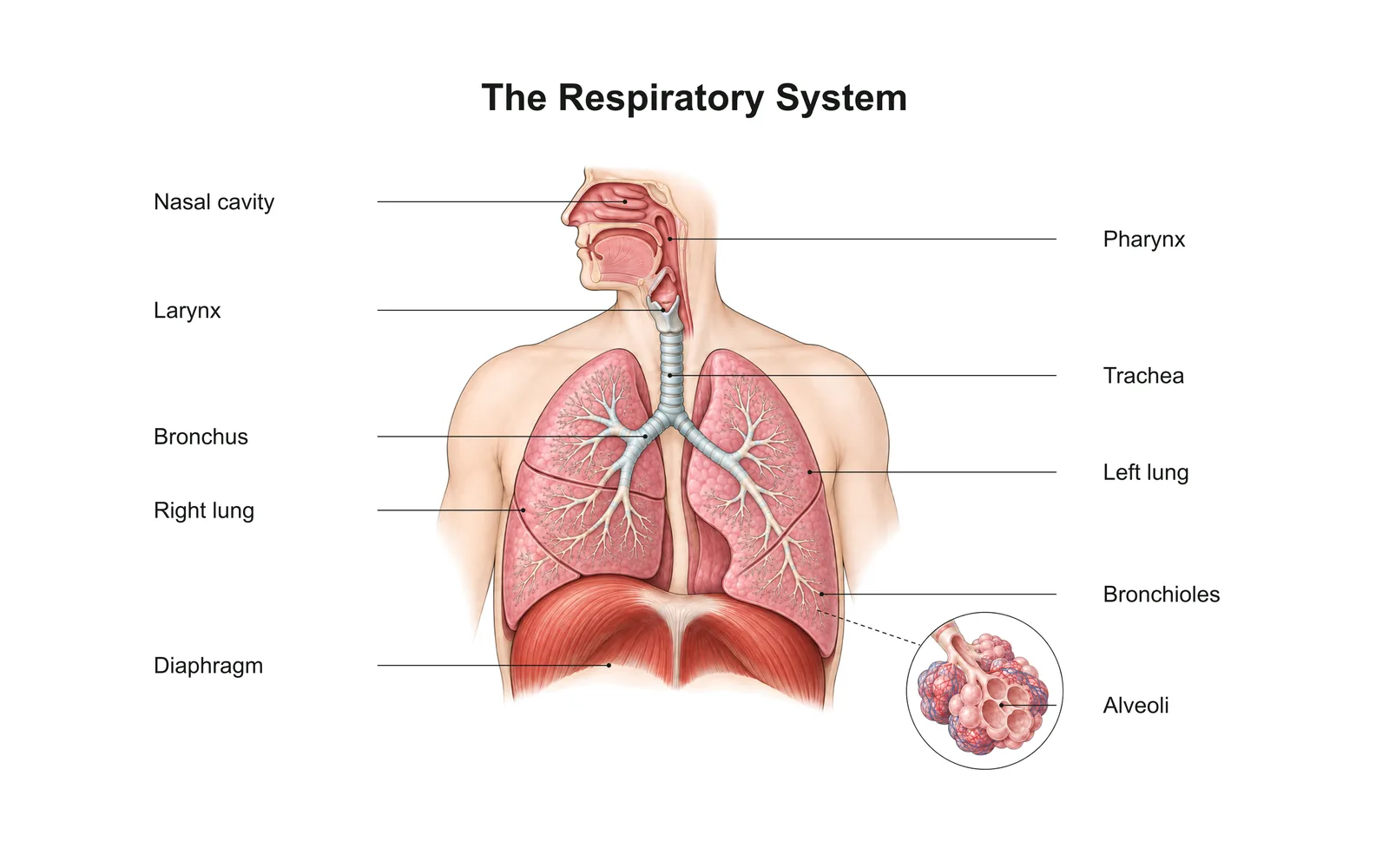
2D Learning
Diagrams and body maps for this part.
Educational content for learning anatomy, not medical advice. Tap this part on the 3D model with School selected to see it in place.