2D Learning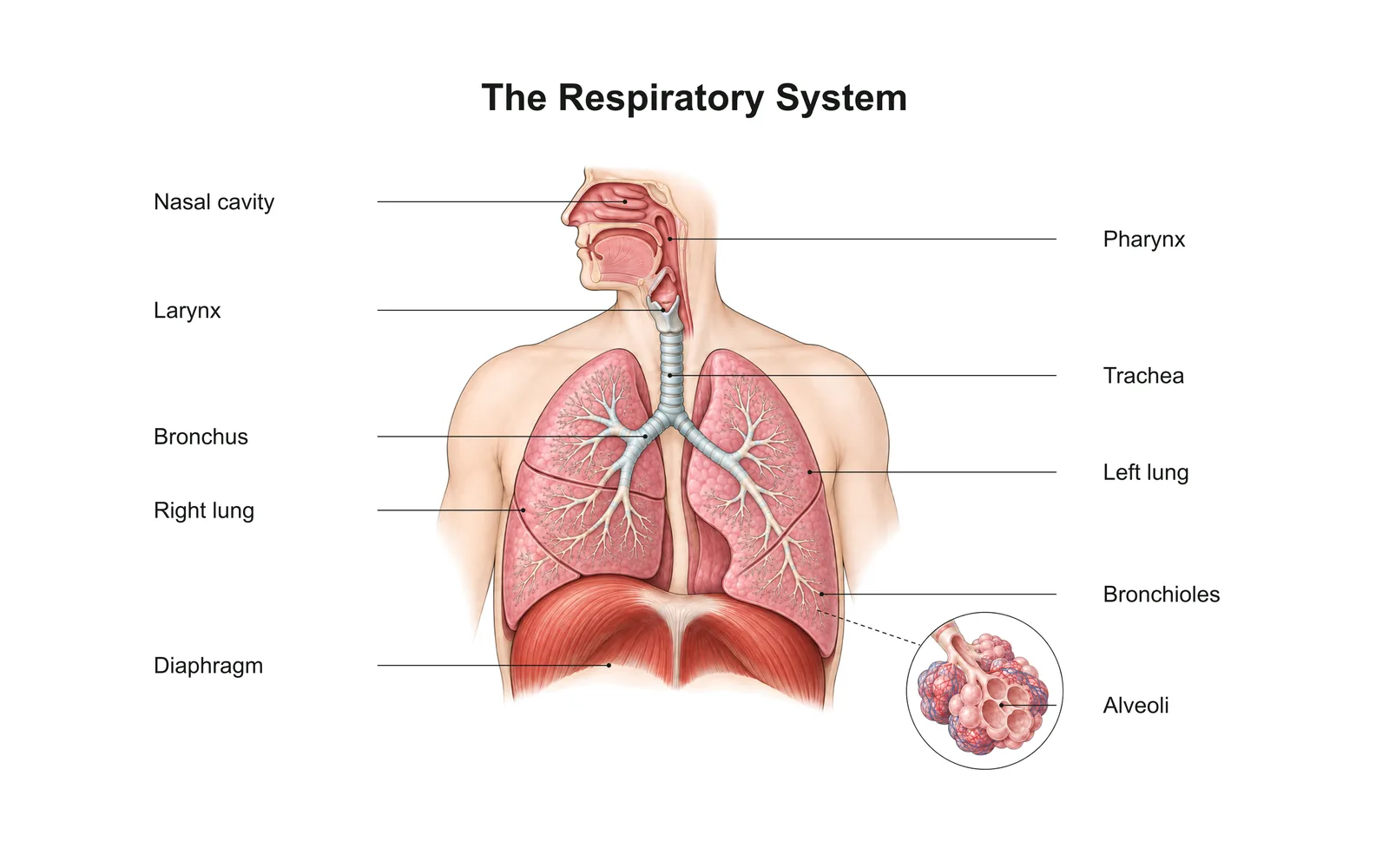
2D Learning
The Respiratory System
How it works · Body maps · 10 cards
Study notes
- Air travels nose → pharynx → larynx → trachea → bronchi → bronchioles → alveoli.
- The right lung has three lobes; the left has two, leaving room for the heart.
- An adult takes about 12 to 20 breaths a minute at rest.
Flashcards
Card 1 of 10Tap the card to flip
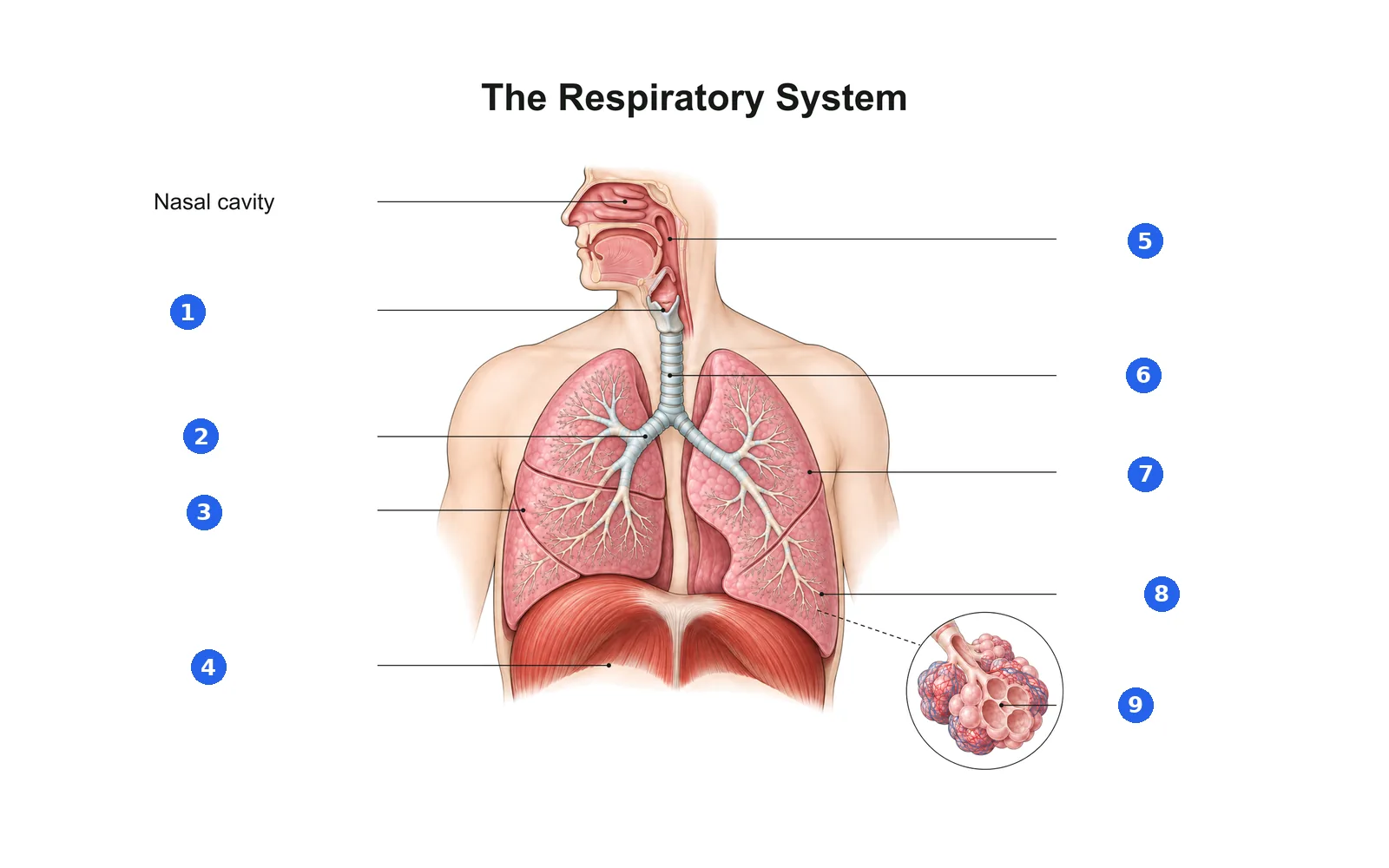
Label the diagram
Name each numbered part. Switch to the labels to study first.
Label 1 of 9Pick an answer
What is number 1?
Terms in this deck (10)
- Nasal cavity
- The space behind the nose that warms, moistens and filters air.
- Pharynx
- The throat, shared by air and food.
- Larynx
- The voice box at the top of the windpipe, holding the vocal cords.
- Trachea
- The windpipe, held open by C-shaped rings of cartilage.
- Bronchus
- One of the two main airways branching from the trachea into each lung.
- Bronchioles
- Small airway branches that lead to the air sacs.
- Alveoli
- Tiny air sacs where oxygen enters the blood and carbon dioxide leaves it.
- Right lung
- The larger lung, with three lobes.
- Left lung
- The smaller lung, with two lobes.
- Diaphragm
- The dome-shaped muscle under the lungs; it flattens to pull air in.
See it on the 3D body
Open the 3D model on a part, with its School notes and flashcards.
Educational content for learning anatomy, not medical advice.