All decks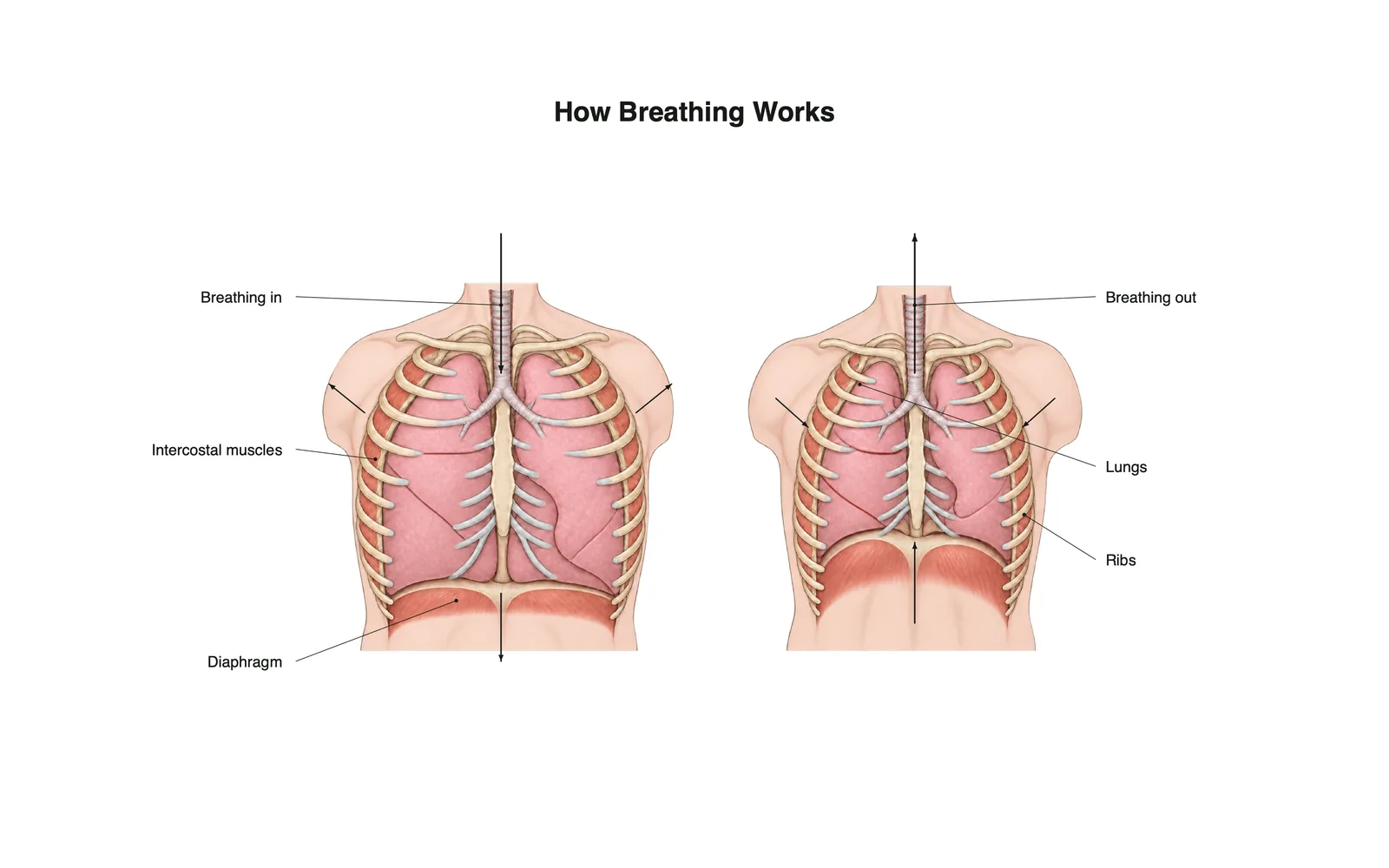
How Breathing Works 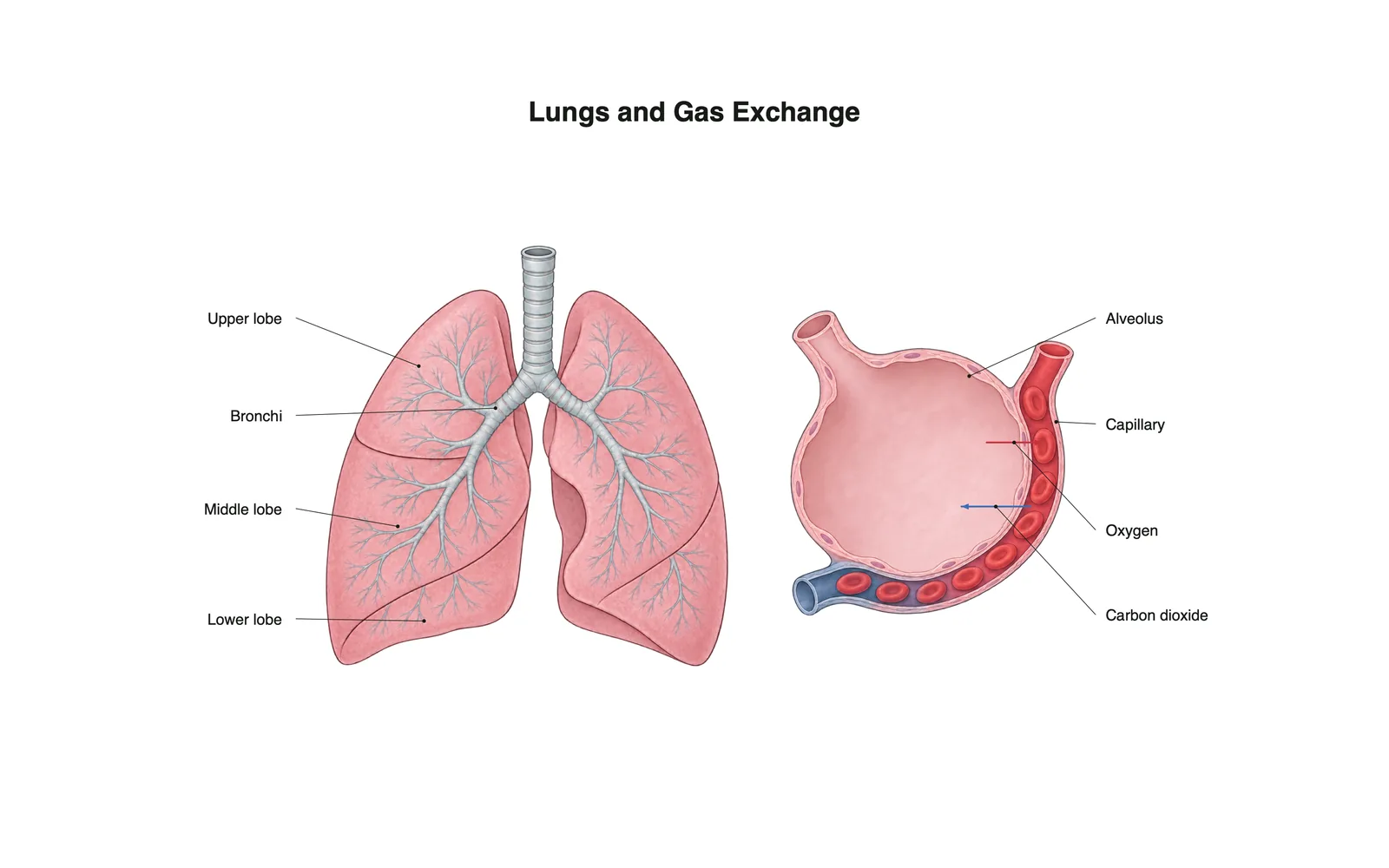
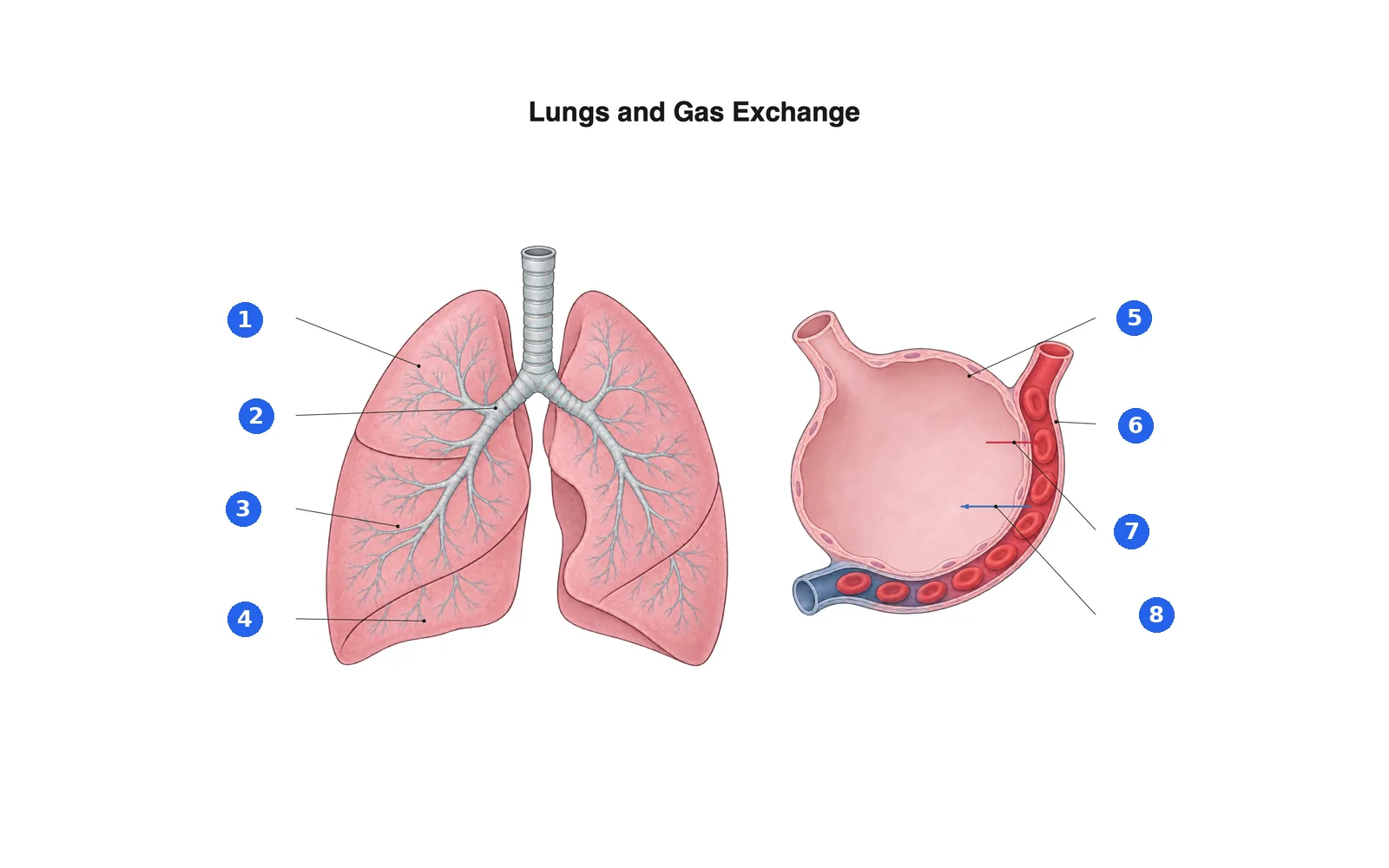
Lungs and Gas Exchange 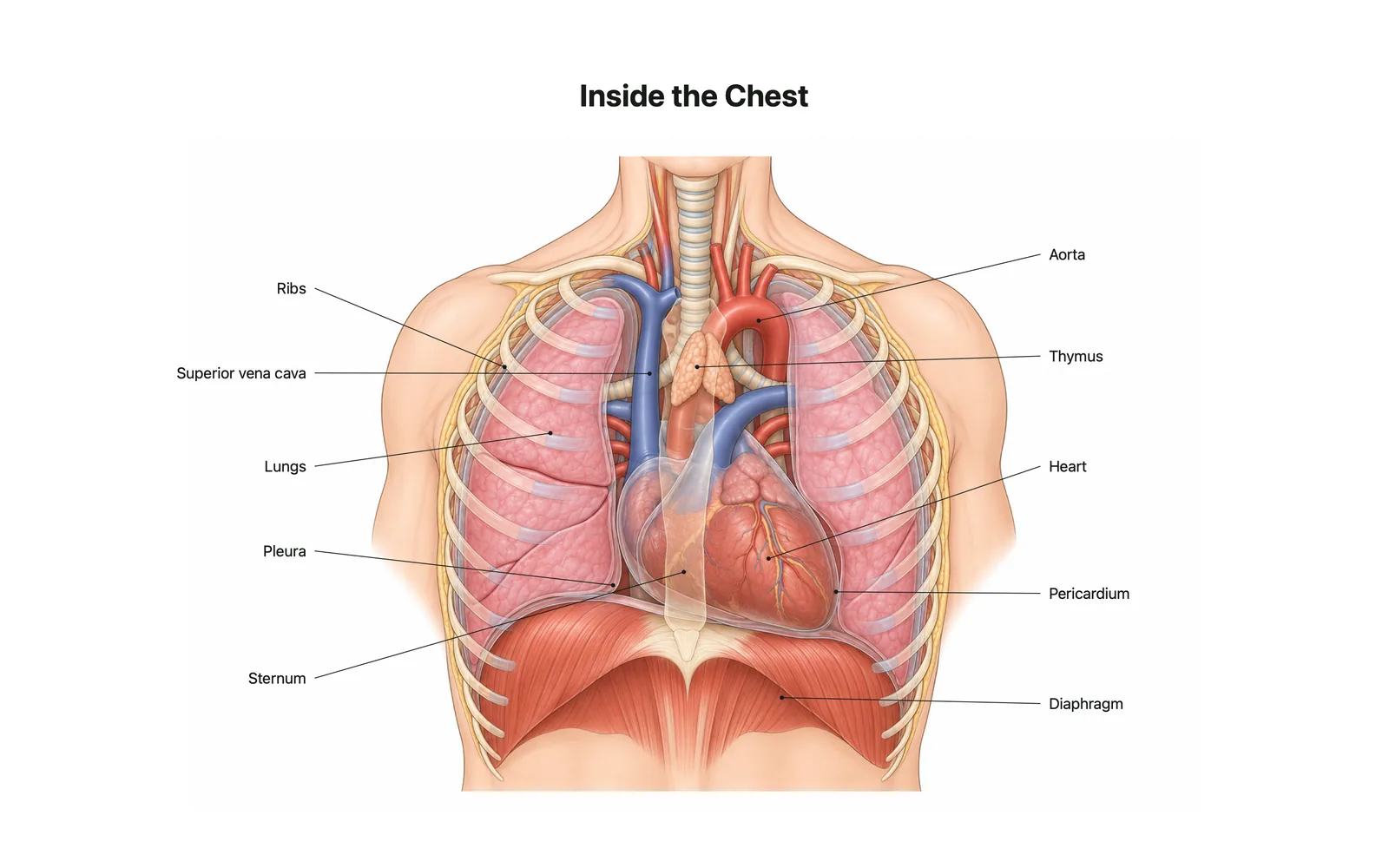
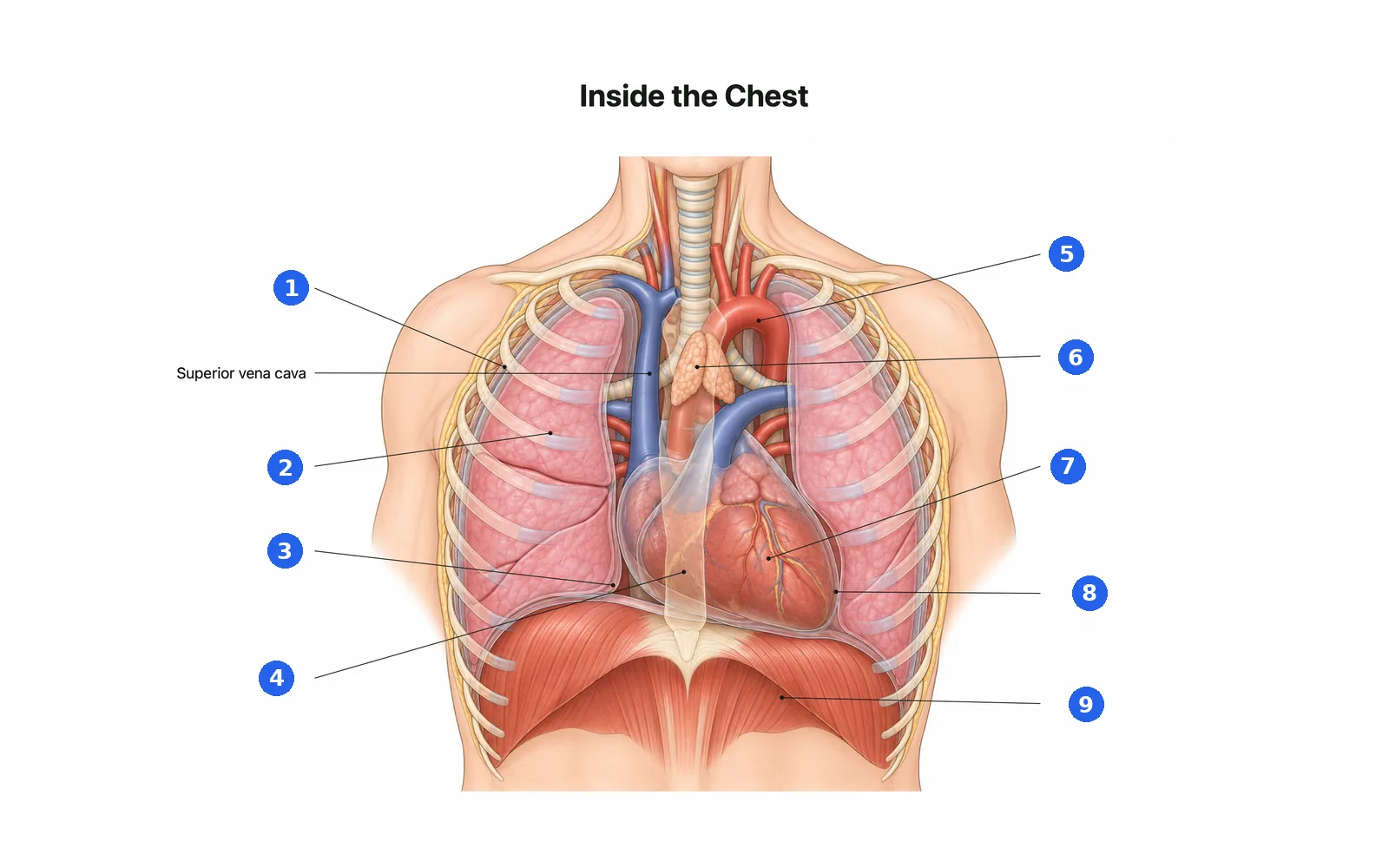
Inside the Chest 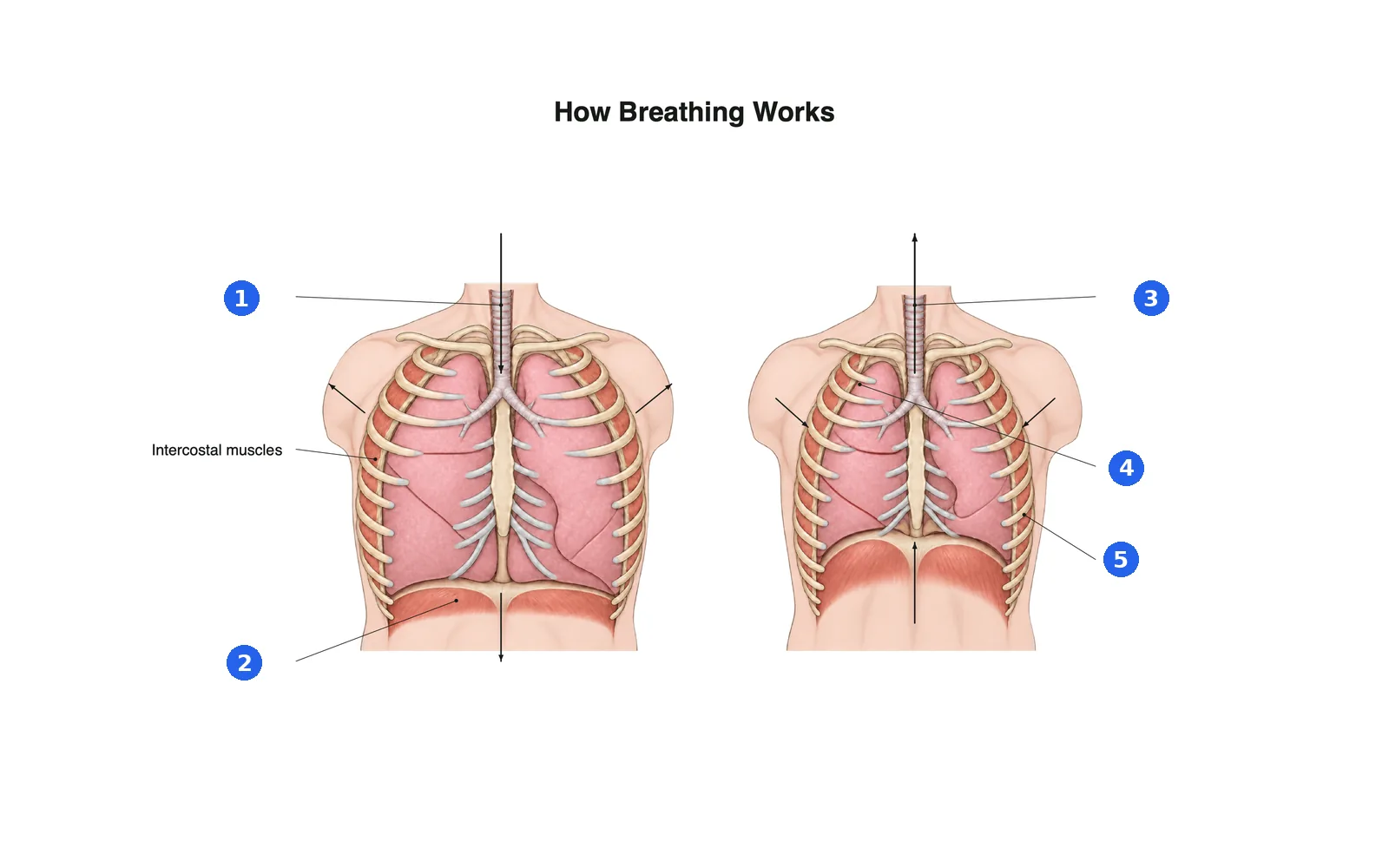
Chest: care and discussions
Organs
Lungs
Organ · Respiratory system · 8 cards
Study notes
- The lungs exchange gases: oxygen into the blood, carbon dioxide out.
- The right lung has 3 lobes; the left has 2 to make room for the heart.
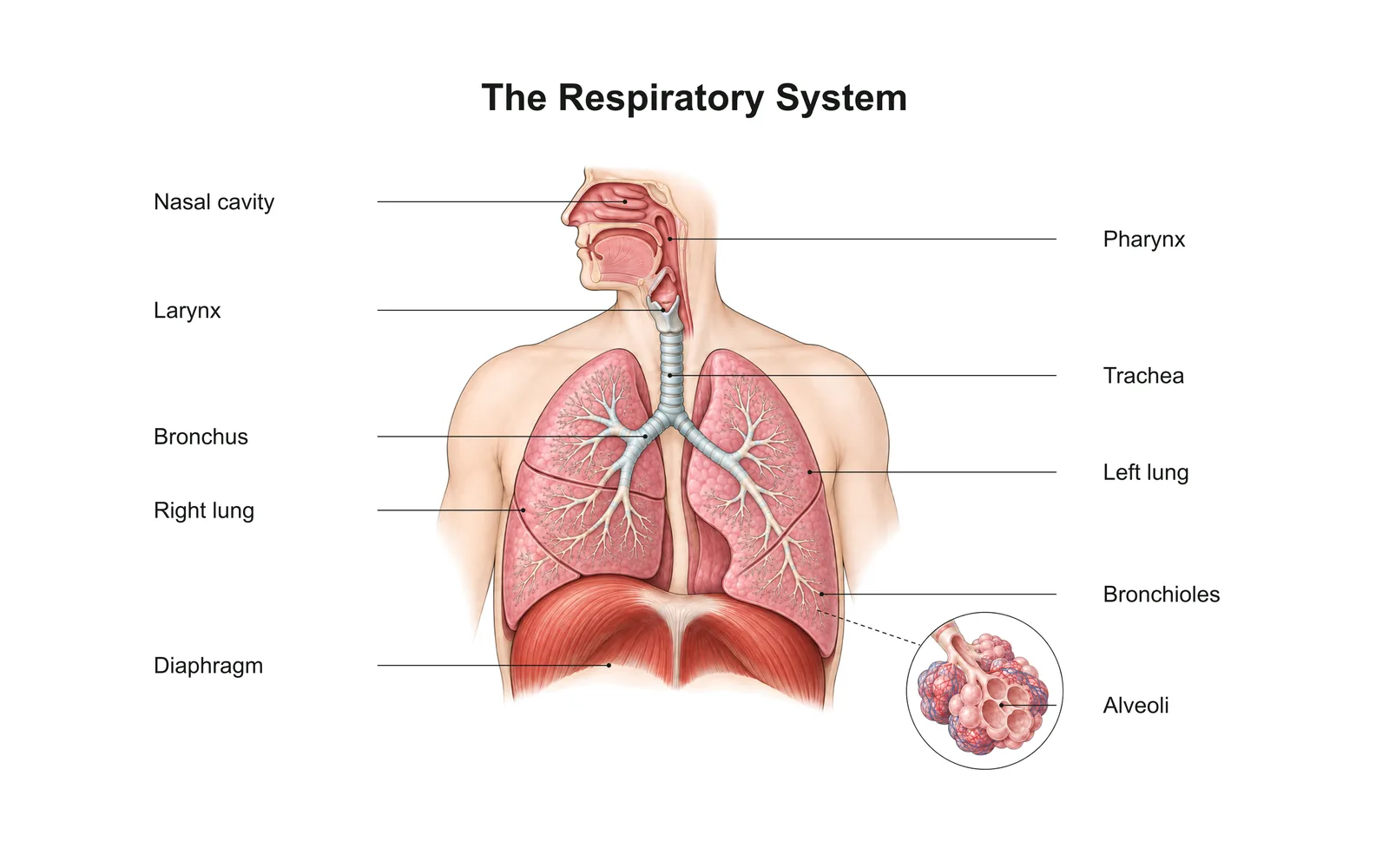
- Air travels trachea → bronchi → bronchioles → alveoli.
- Gas exchange happens in about 300–500 million tiny air sacs called alveoli.
Flashcards
Card 1 of 8Tap the card to flip
Label the diagram
Name each numbered part. Switch to the labels to study first.
Label 1 of 5Pick an answer
What is number 1?
Label 1 of 8Pick an answer
What is number 1?
Label 1 of 9Pick an answer
What is number 1?
Picture quiz
Name the part shown in orange.
Picture 1 of 1What is the highlighted organ?
Terms in this deck (8)
- Main function of the lungs
- Gas exchange: taking in oxygen and removing carbon dioxide.
- How many lobes does each lung have?
- Right lung: 3 (upper, middle, lower). Left lung: 2 (upper, lower).
- Alveoli
- Tiny air sacs surrounded by capillaries where oxygen and carbon dioxide are exchanged.
- Bronchioles
- The small branching airways that lead from the bronchi to the alveoli.
- Pleura
- Two thin membranes around each lung with fluid between them to reduce friction.
- Path of air into the lungs
- Nose/mouth → pharynx → larynx → trachea → bronchi → bronchioles → alveoli.
- Surfactant
- A substance lining the alveoli that keeps them from collapsing.
- Why is the left lung smaller?
- It shares space with the heart (the cardiac notch).
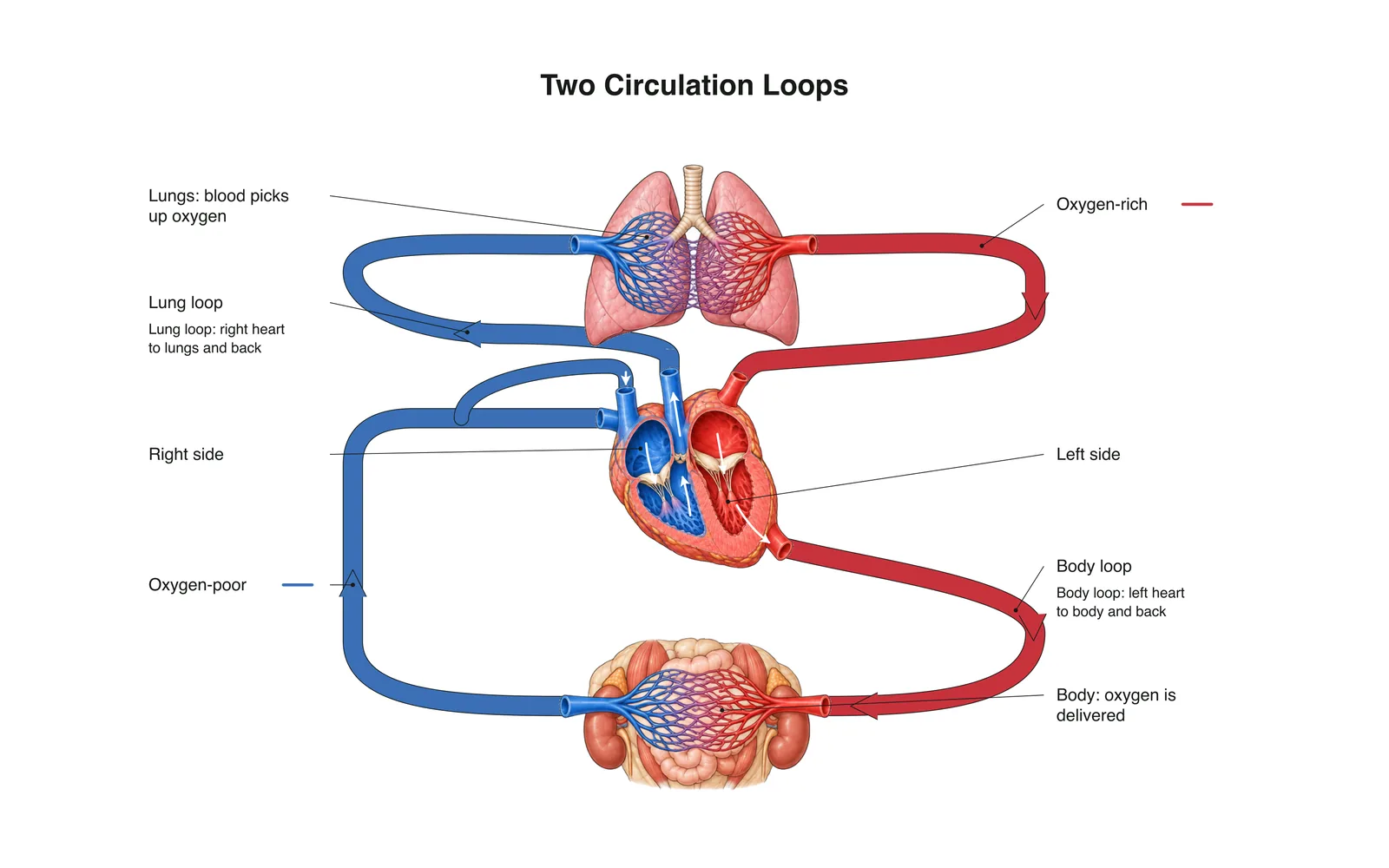
2D Learning
Diagrams and body maps for this part.
Educational content for learning anatomy, not medical advice. Tap this part on the 3D model with School selected to see it in place.