All decks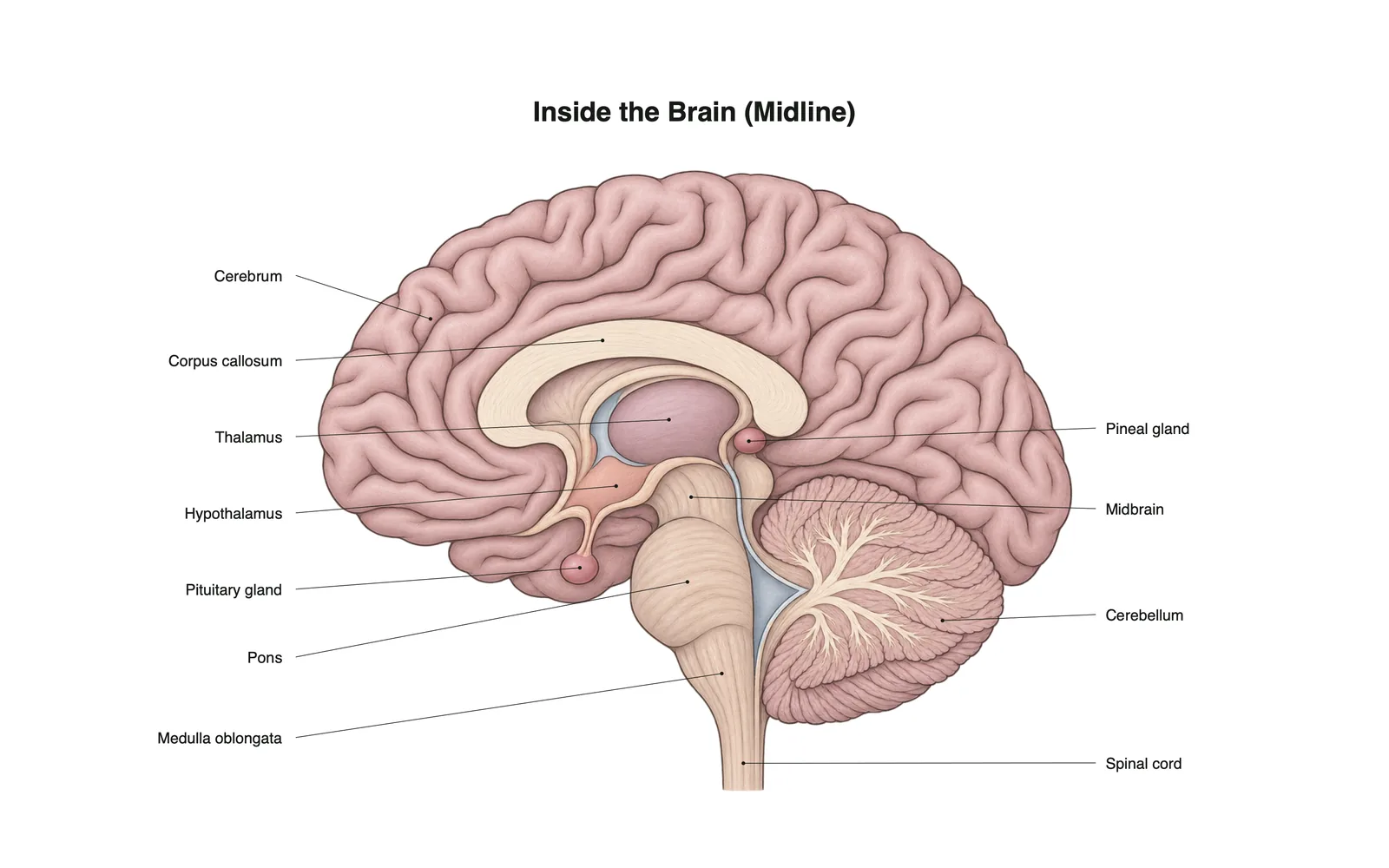
Inside the Brain (Midline) 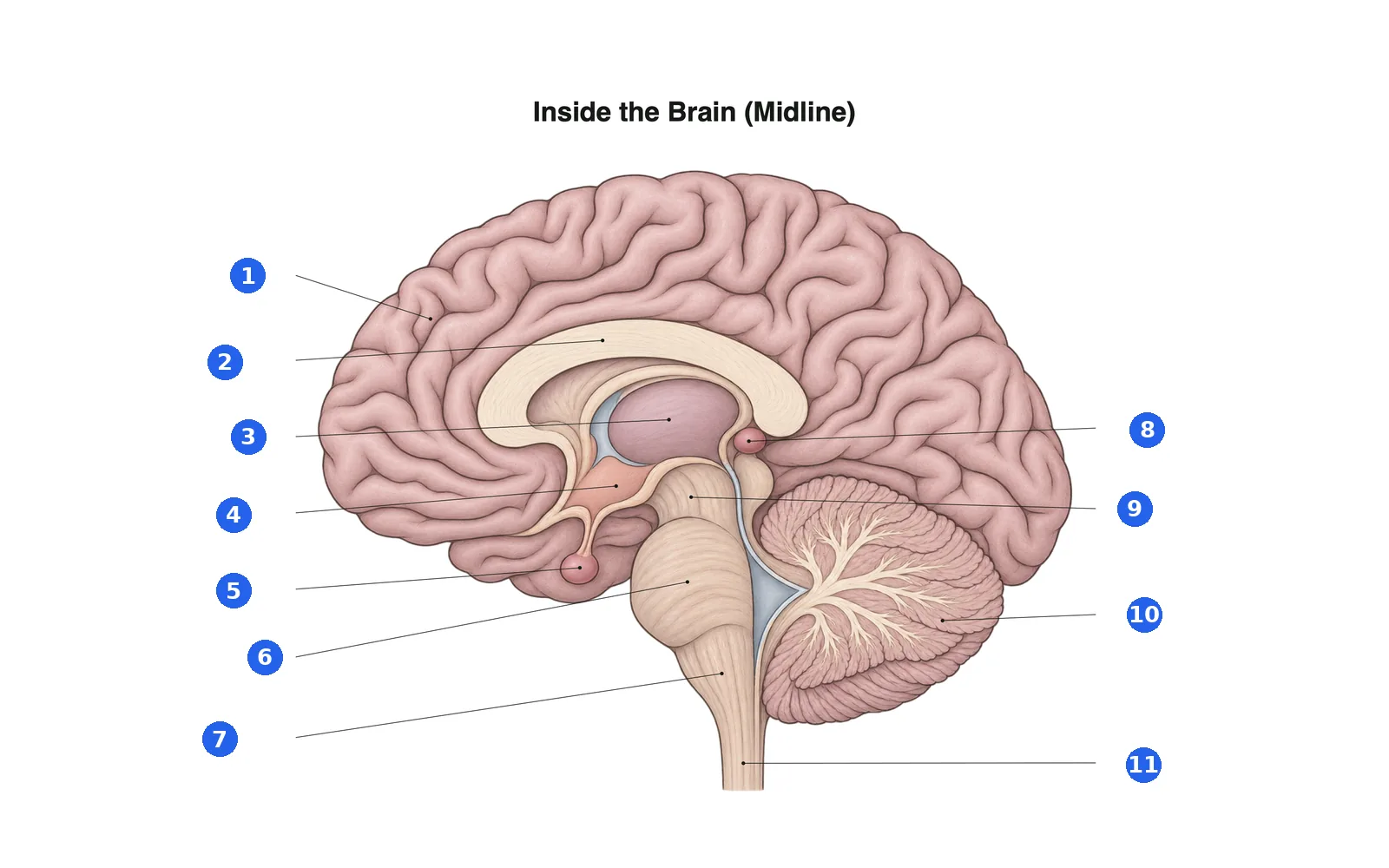
Head: care and discussions
Organs
Brain
Organ · Nervous system · 10 cards
Study notes
- The brain has three main parts: the cerebrum, the cerebellum and the brainstem.
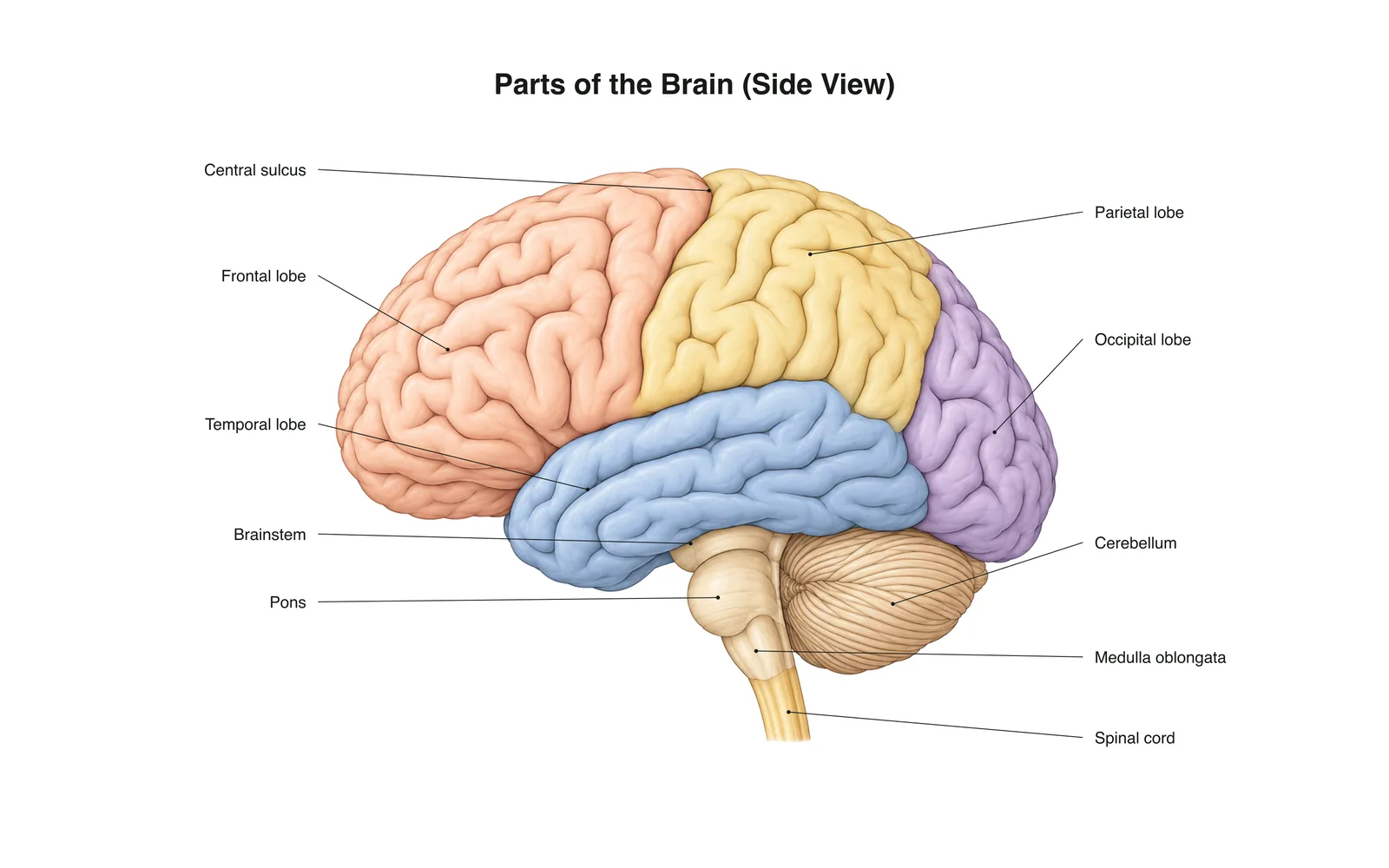
- The cerebrum's outer layer (cortex) is split into four lobes: frontal, parietal, temporal and occipital.
- The brain uses about 20% of the body's energy while being about 2% of its weight.
- It is protected by the skull, three membranes (meninges) and cerebrospinal fluid.
Flashcards
Card 1 of 10Tap the card to flip
Label the diagram
Name each numbered part. Switch to the labels to study first.
Label 1 of 11Pick an answer
What is number 1?
Picture quiz
Name the part shown in orange.
Picture 1 of 5What is the highlighted organ?
Terms in this deck (10)
- Cerebrum
- The largest part of the brain; handles thinking, memory, language, voluntary movement and the senses.
- Cerebellum
- At the back under the cerebrum; coordinates balance, posture and smooth movement.
- Brainstem
- Midbrain, pons and medulla oblongata; controls automatic functions like breathing and heart rate.
- Medulla oblongata
- The lowest part of the brainstem; regulates breathing, heart rate and blood pressure.
- Frontal lobe
- Planning, decision-making, personality and voluntary movement (motor cortex).
- Occipital lobe
- At the back of the brain; processes vision.
- Temporal lobe
- At the sides; processes hearing, language understanding and memory.
- Parietal lobe
- At the top; processes touch, temperature, pain and spatial awareness.
- Meninges
- Three protective membranes around the brain and spinal cord: dura mater, arachnoid mater and pia mater.
- Hypothalamus
- A small brain region that controls body temperature, hunger and thirst, and directs the pituitary gland.
2D Learning
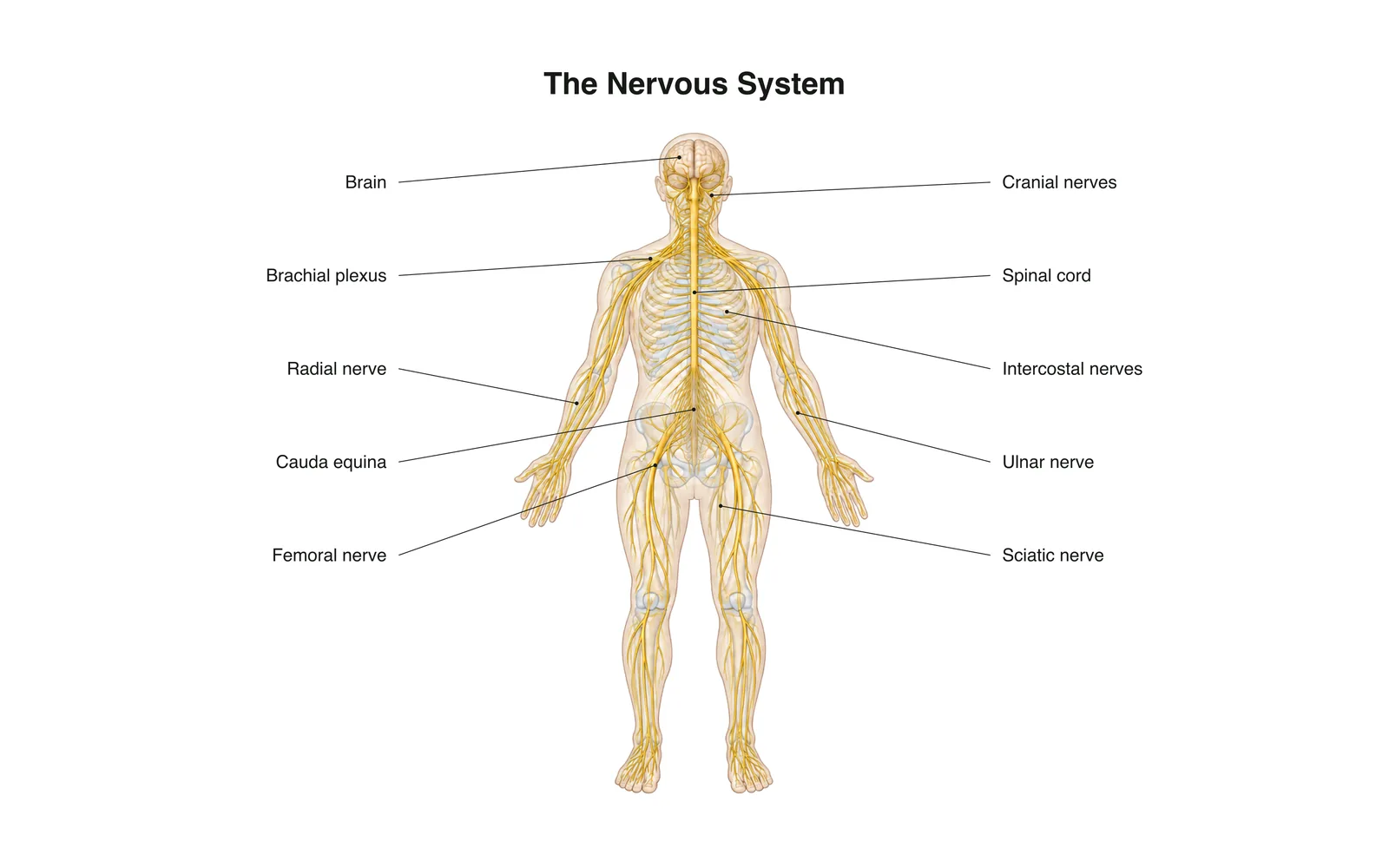
Diagrams and body maps for this part.
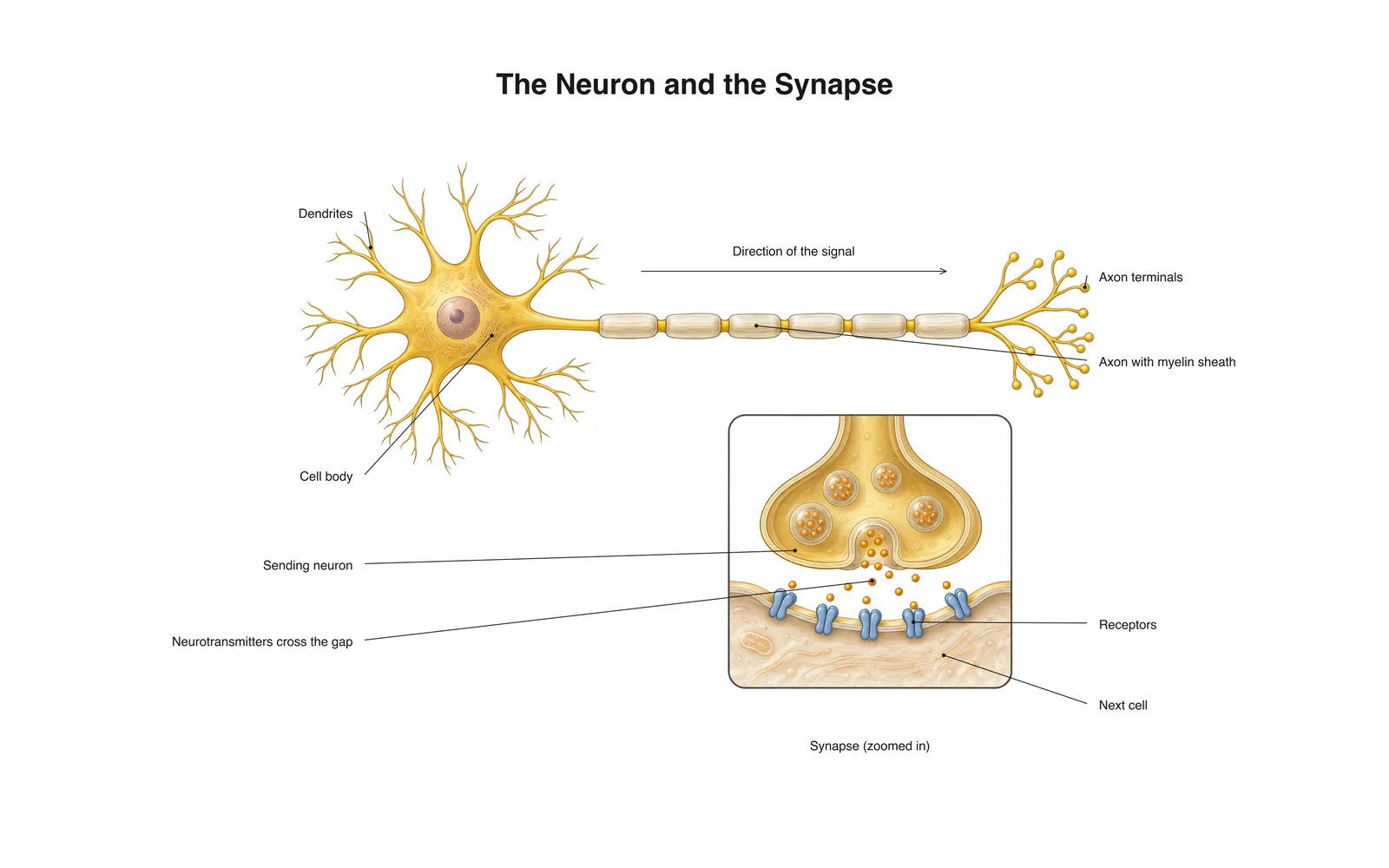
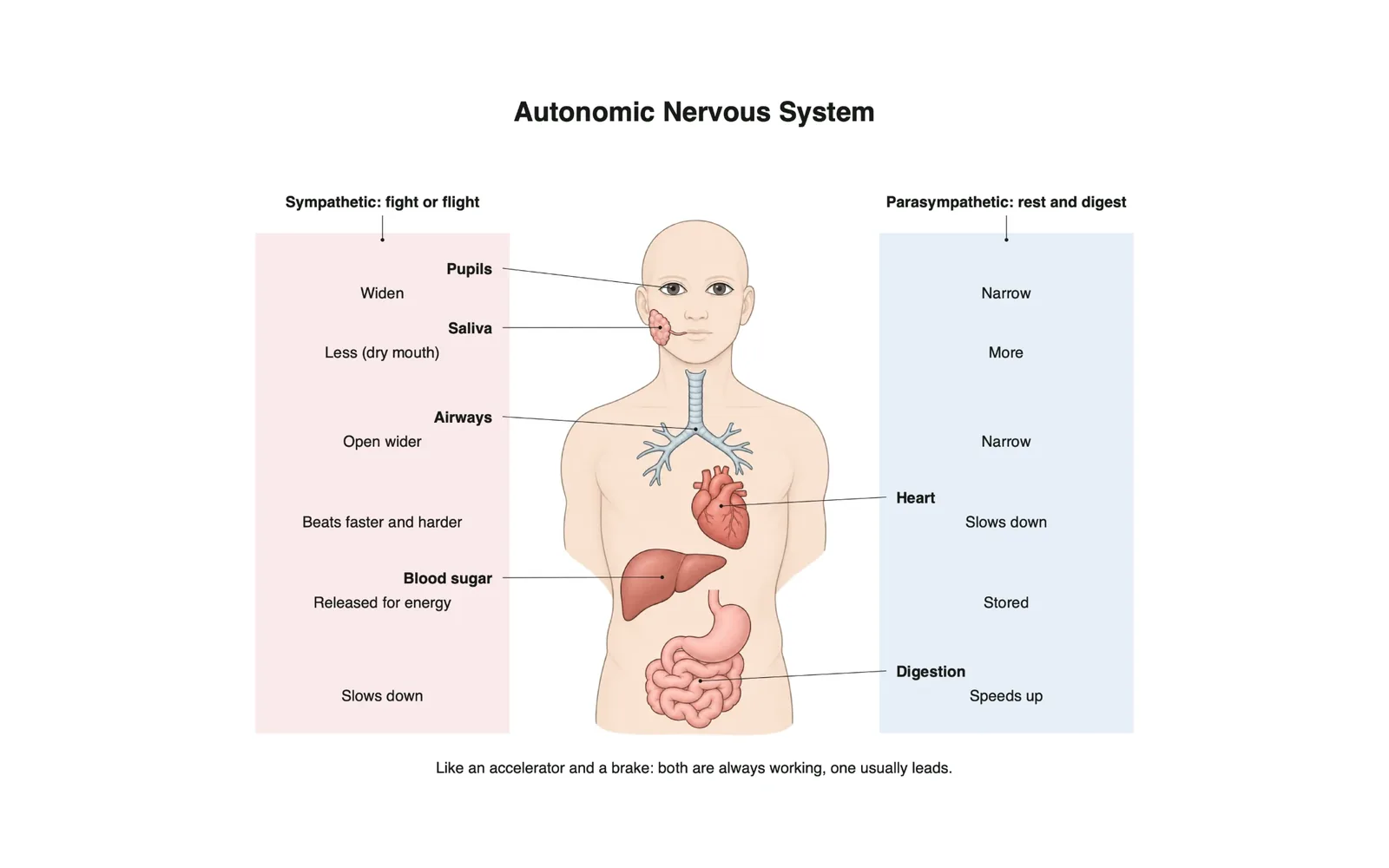
Educational content for learning anatomy, not medical advice. Tap this part on the 3D model with School selected to see it in place.