2D Learning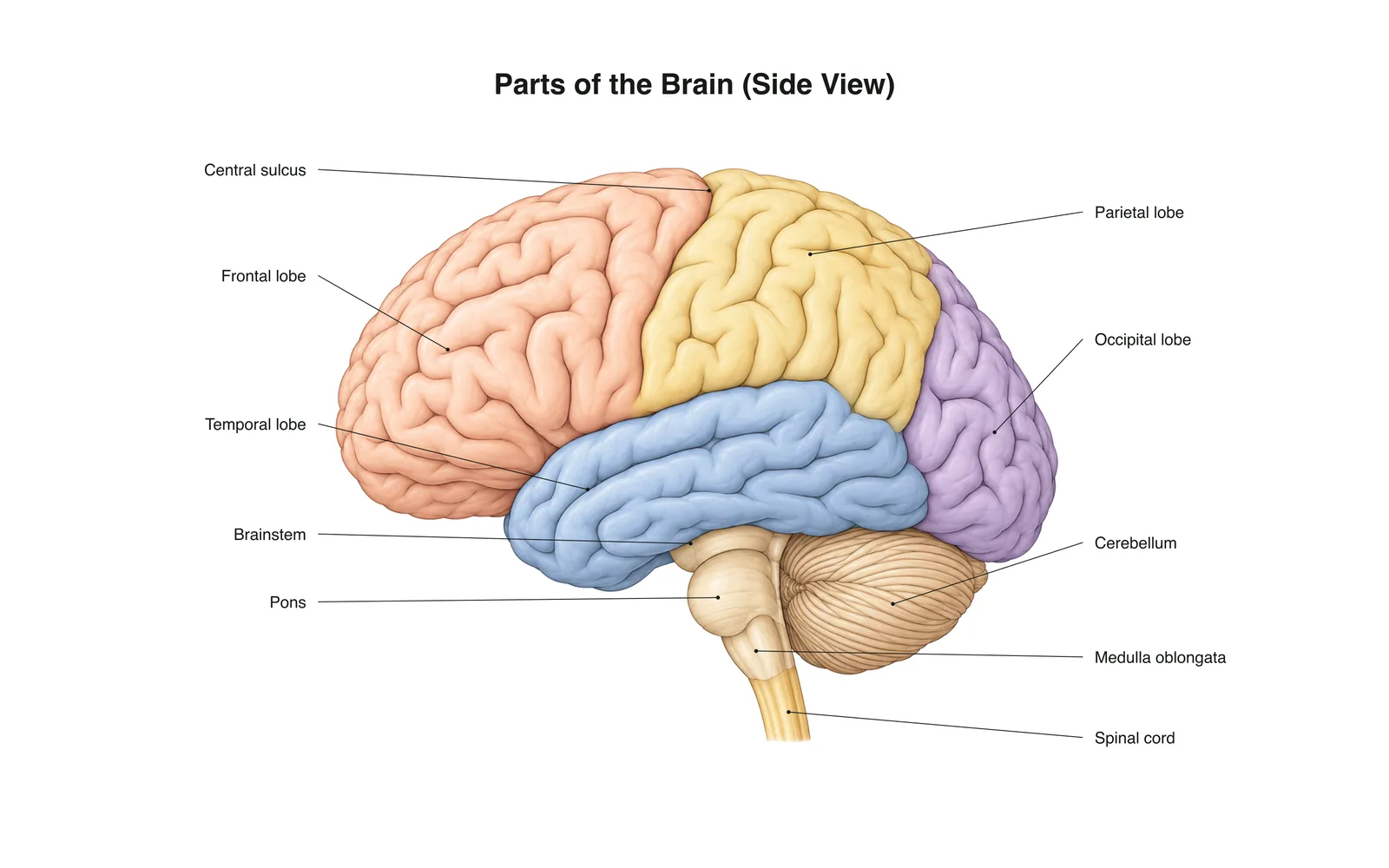
2D Learning
Parts of the Brain
How it works · Body maps · 10 cards
Study notes
- The outer cerebrum is divided into four lobes on each side.
- The cerebellum at the back fine-tunes balance and movement.
- The brainstem runs the automatic basics: breathing, heart rate and sleep-wake cycles.
Flashcards
Card 1 of 10Tap the card to flip
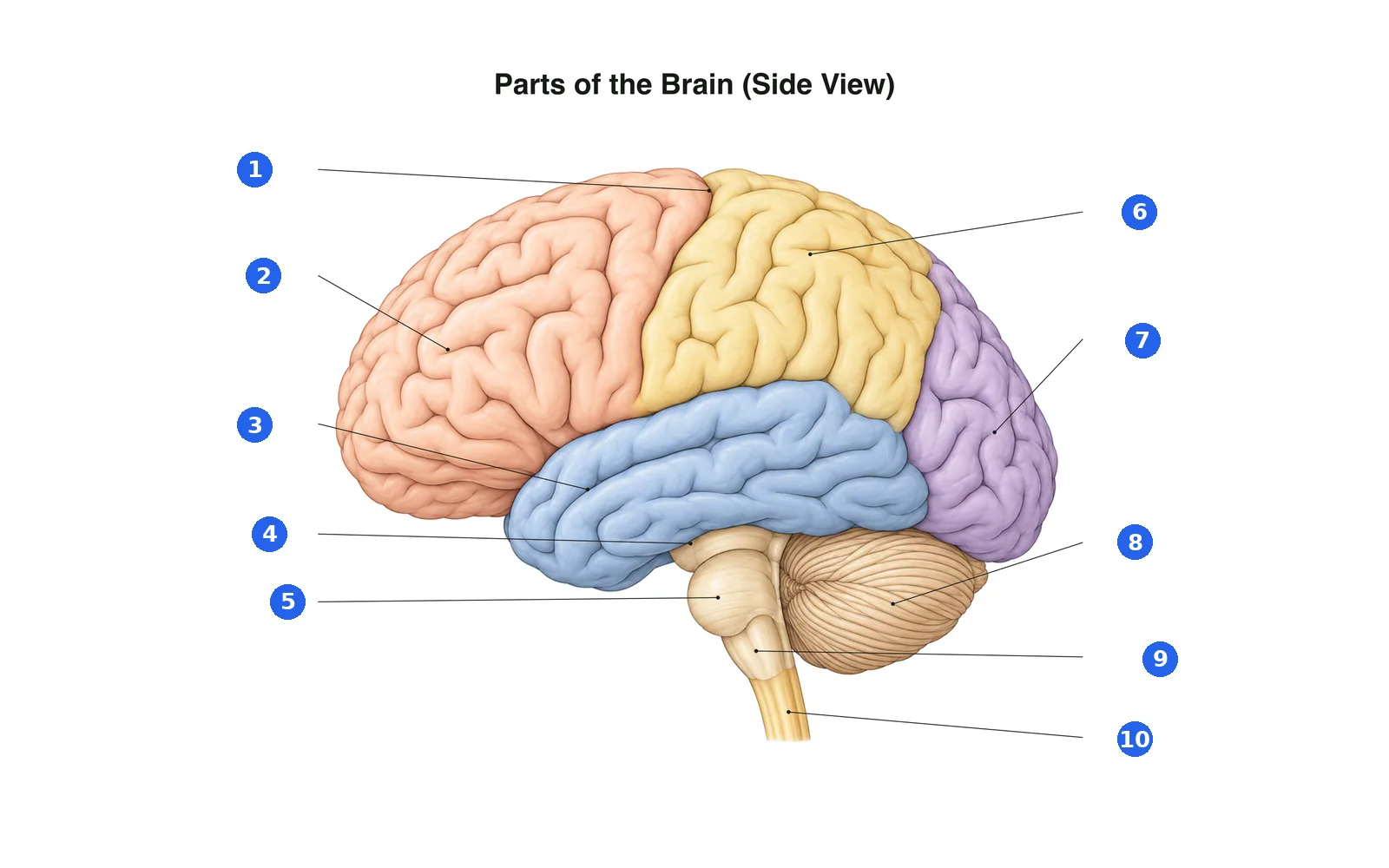
Label the diagram
Name each numbered part. Switch to the labels to study first.
Label 1 of 10Pick an answer
What is number 1?
Terms in this deck (10)
- Frontal lobe
- Planning, decisions, personality, speech production and voluntary movement.
- Parietal lobe
- Touch, temperature, pain and sense of where the body is in space.
- Temporal lobe
- Hearing, understanding language and forming memories.
- Occipital lobe
- Vision.
- Central sulcus
- The groove separating the frontal and parietal lobes.
- Cerebellum
- Coordinates balance, posture and smooth movement.
- Brainstem
- Midbrain, pons and medulla; connects the brain to the spinal cord.
- Pons
- Part of the brainstem that relays signals and helps control breathing and sleep.
- Medulla oblongata
- The lowest brainstem part; controls heartbeat, breathing and blood pressure.
- Spinal cord
- Continues down from the brainstem through the spine.
See it on the 3D body
Open the 3D model on a part, with its School notes and flashcards.
Educational content for learning anatomy, not medical advice.