2D Learning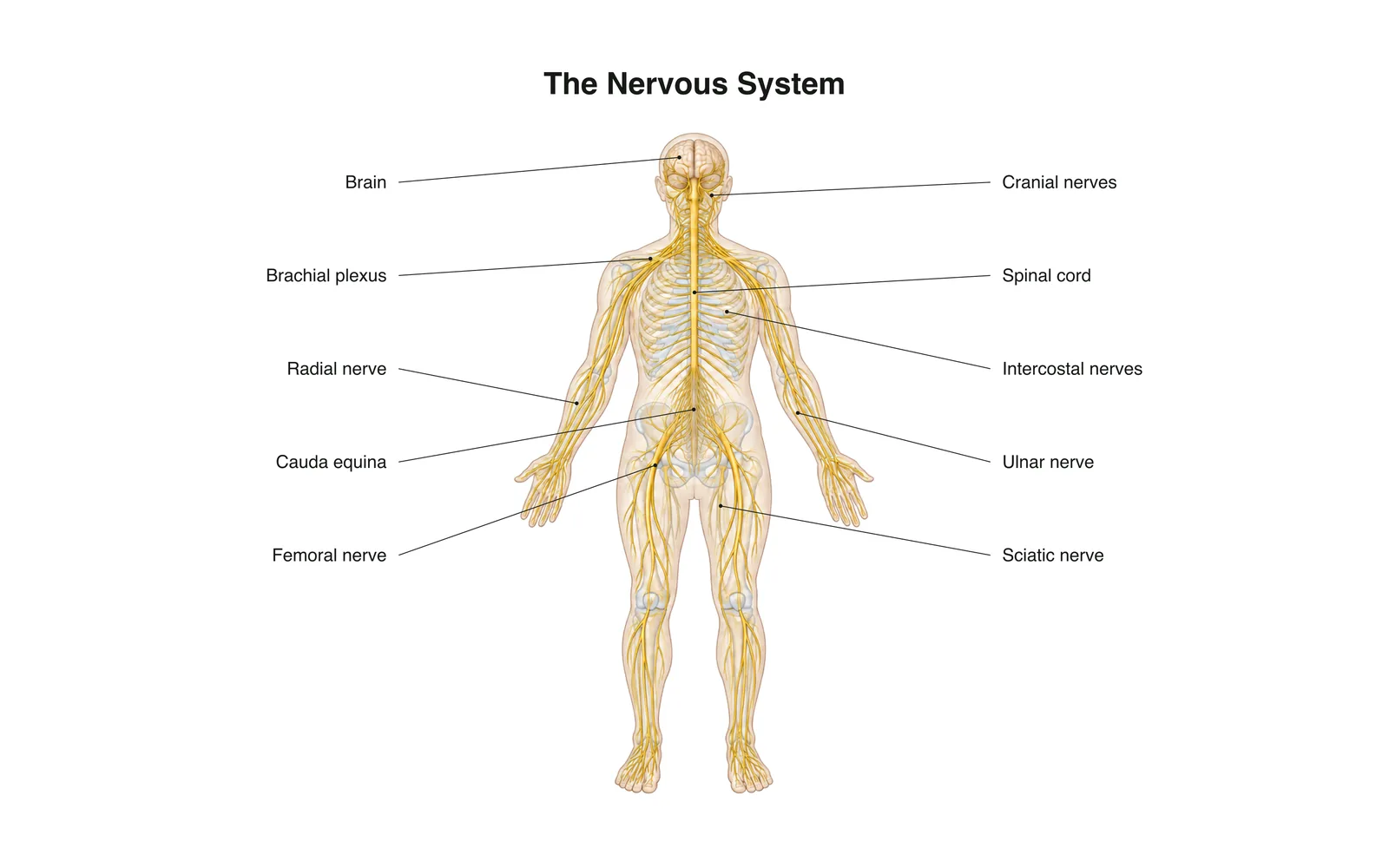
2D Learning
The Nervous System
How it works · Body maps · 10 cards
Study notes
- The central nervous system is the brain and spinal cord; everything else is the peripheral nervous system.
- Nerves are bundles of nerve fibers that carry signals to and from the spinal cord.
- Pins and needles happen when a nerve is pressed and briefly sends mixed signals.
Flashcards
Card 1 of 10Tap the card to flip
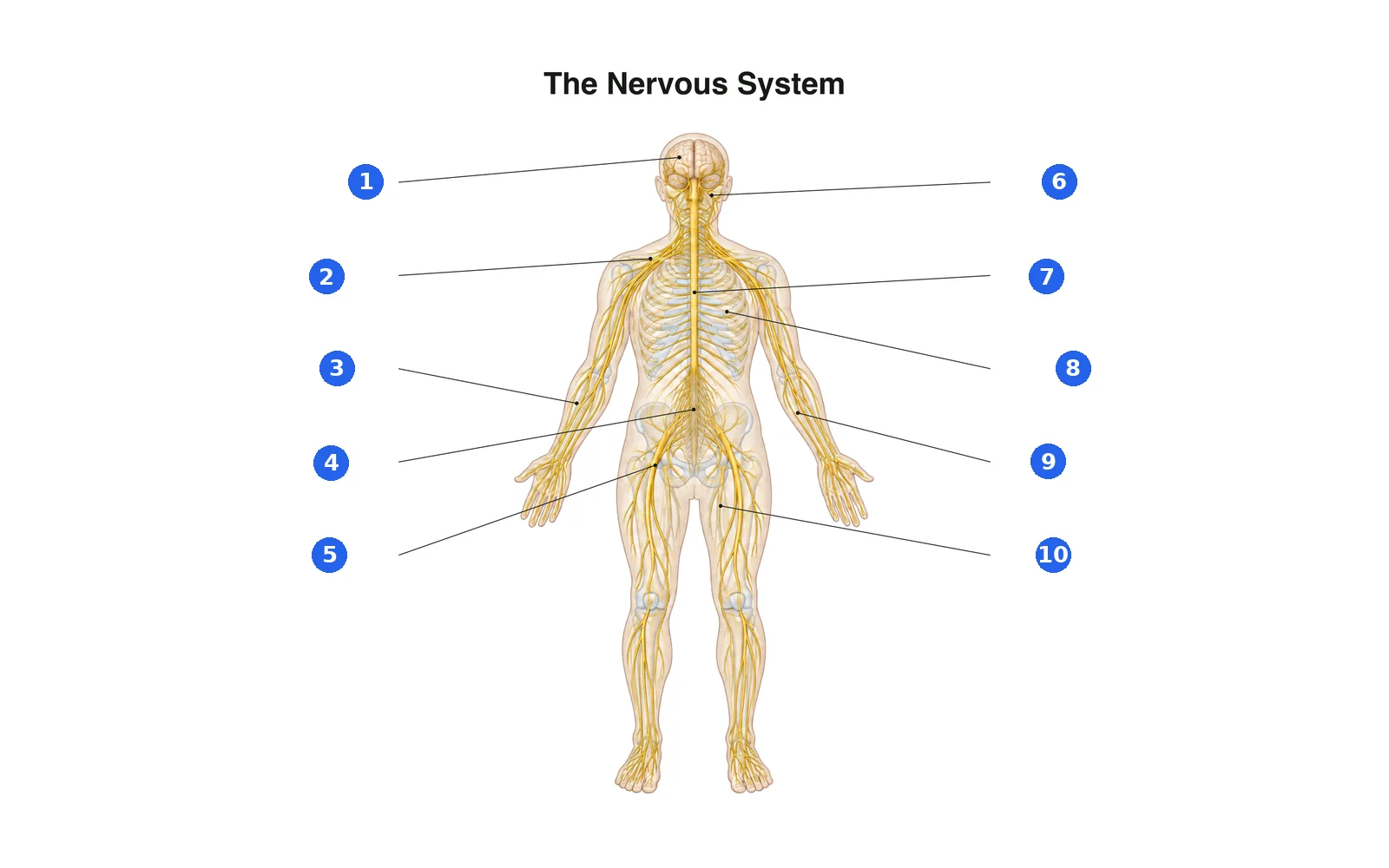
Label the diagram
Name each numbered part. Switch to the labels to study first.
Label 1 of 10Pick an answer
What is number 1?
Terms in this deck (10)
- Brain
- The control center: thinking, memory, senses, movement and automatic functions.
- Cranial nerves
- 12 pairs of nerves that come straight from the brain, mainly serving the head and neck.
- Spinal cord
- The nerve bundle in the spine that carries signals between the brain and body.
- Brachial plexus
- A network of nerves from the neck that supplies the shoulder and arm.
- Intercostal nerves
- Nerves running between the ribs to the chest wall.
- Ulnar nerve
- The arm nerve behind the elbow; hitting it causes the 'funny bone' tingle.
- Radial nerve
- The arm nerve that straightens the elbow, wrist and fingers.
- Cauda equina
- The bundle of nerve roots below the end of the spinal cord, like a horse's tail.
- Femoral nerve
- The nerve at the front of the thigh that straightens the knee.
- Sciatic nerve
- The body's largest nerve, running down the back of the leg; irritation causes sciatica.
See it on the 3D body
Open the 3D model on a part, with its School notes and flashcards.
Educational content for learning anatomy, not medical advice.