2D Learning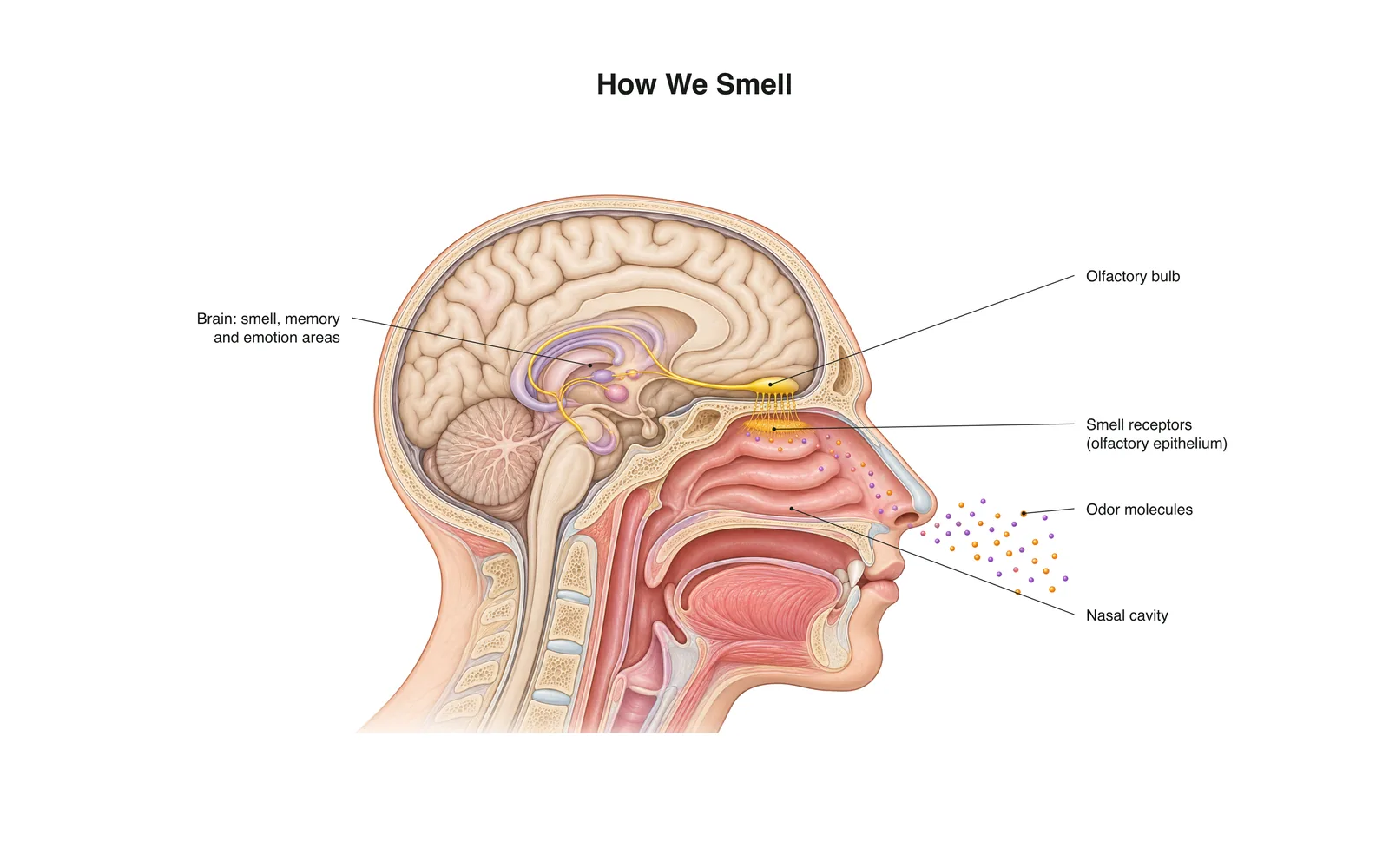
Smell receptors high in the nose send signals straight to the brain. 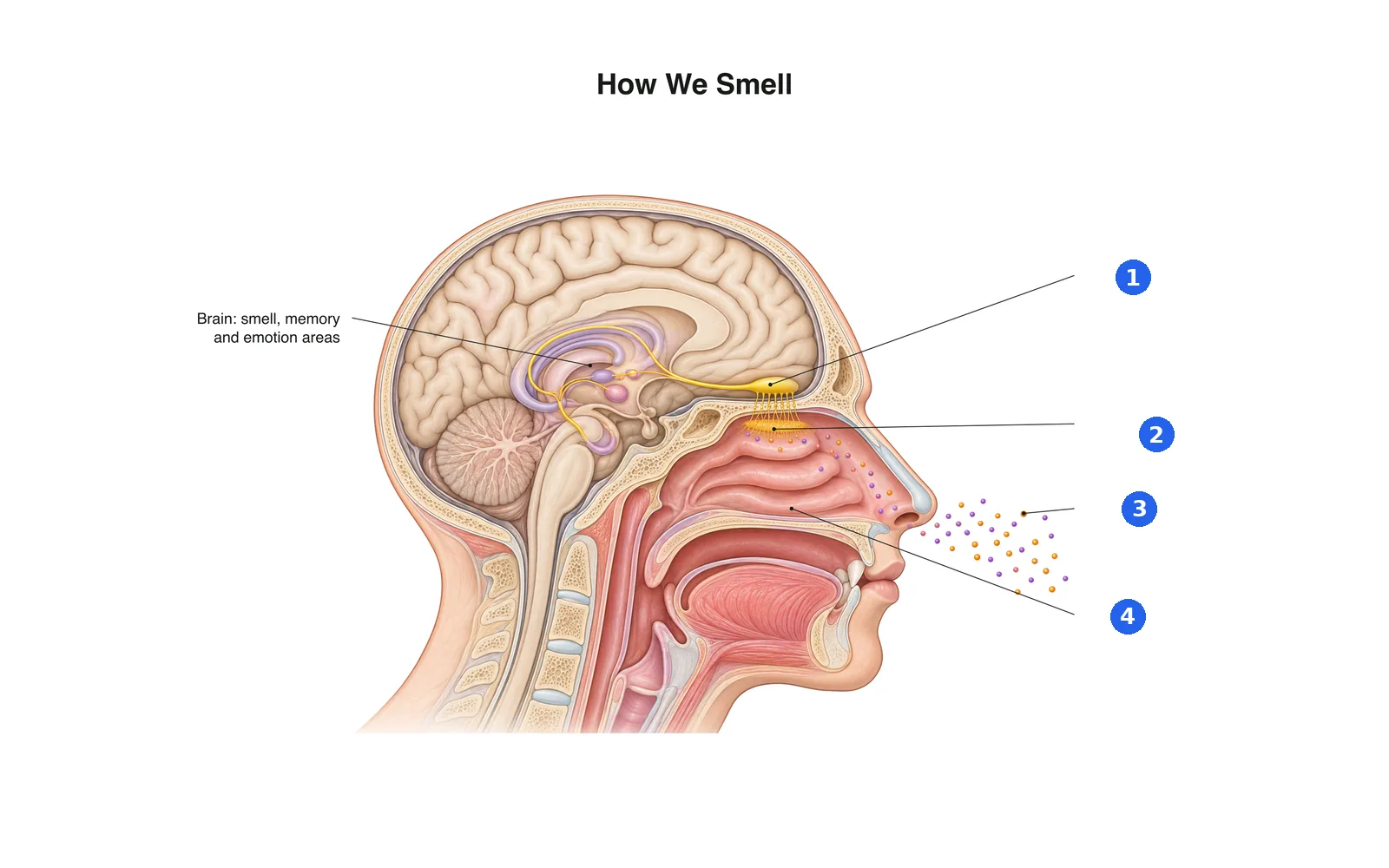
2D Learning
Smell and Taste
How it works · Nerves and senses · 9 cards
Study notes
- Smell and taste are chemical senses: receptors detect molecules.
- Smell receptors sit in a small patch high in the roof of the nose.
- Most of what we call flavor is actually smell, which is why food seems bland with a blocked nose.
- Taste buds detect five basic tastes: sweet, salty, sour, bitter and umami.
Flashcards
Card 1 of 9Tap the card to flip
Label the diagram
Name each numbered part. Switch to the labels to study first.
Label 1 of 4Pick an answer
What is number 1?
Terms in this deck (9)
- Olfactory epithelium
- The patch of tissue in the roof of the nose that holds smell receptors.
- Olfactory bulb
- The part of the brain just above the nose that first processes smells.
- Olfactory nerve
- The first cranial nerve; it carries smell signals to the brain.
- Why are smells linked to memories?
- Smell signals go directly to brain areas for emotion and memory.
- Taste buds
- Clusters of taste cells, mostly on the tongue's bumps (papillae), that detect taste chemicals.
- Umami
- The savory taste of glutamate, found in broth, cheese, tomatoes and meat.
- Flavor
- The combined sense of taste, smell, texture and temperature of food.
- Anosmia
- Loss of the sense of smell, for example after a cold or a viral infection.
- Nasal cavity
- The air space inside the nose, lined with mucus membranes.
See it on the 3D body
Open the 3D model on a part, with its School notes and flashcards.
Educational content for learning anatomy, not medical advice.