2D Learning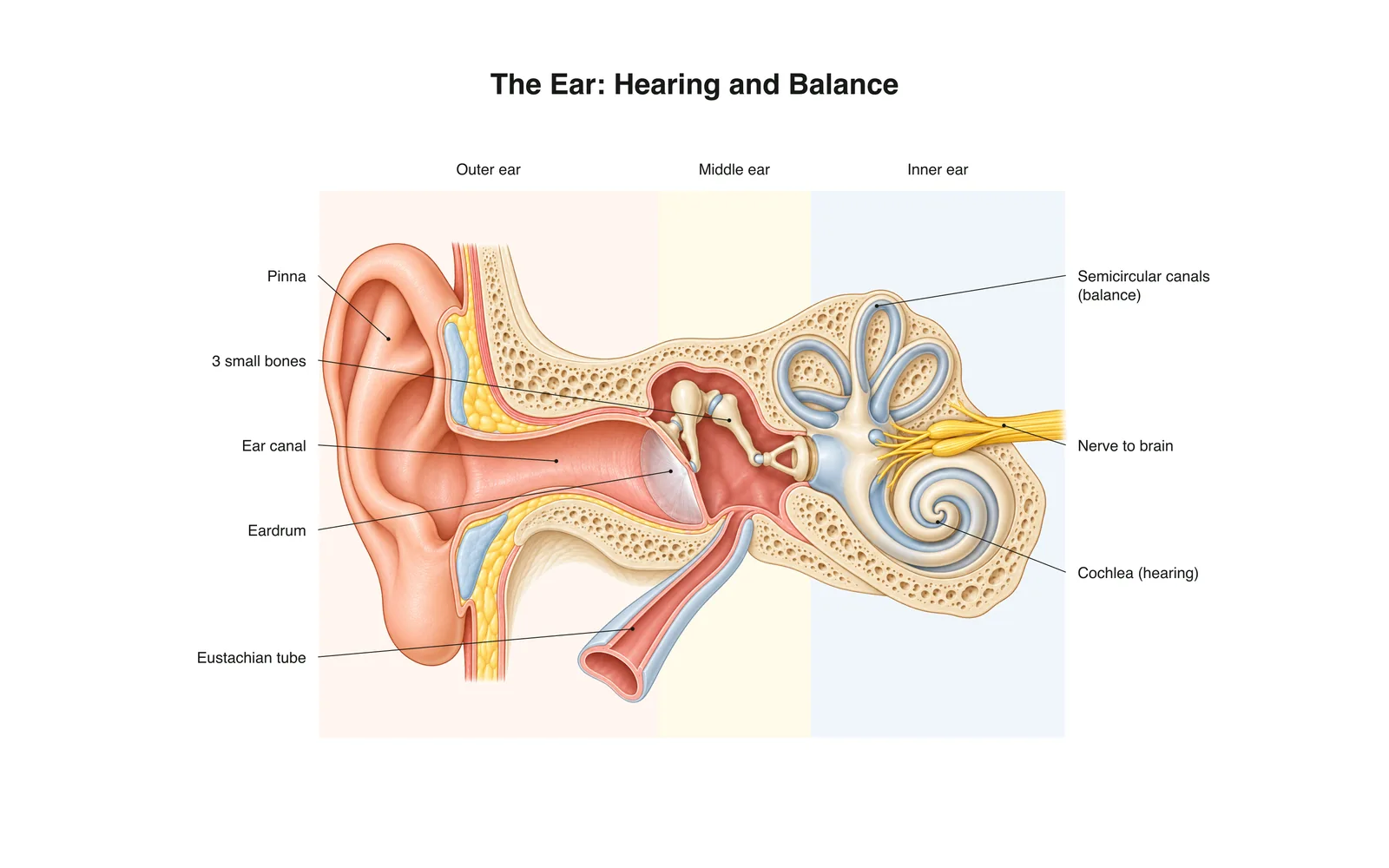
The ear handles both hearing and balance. 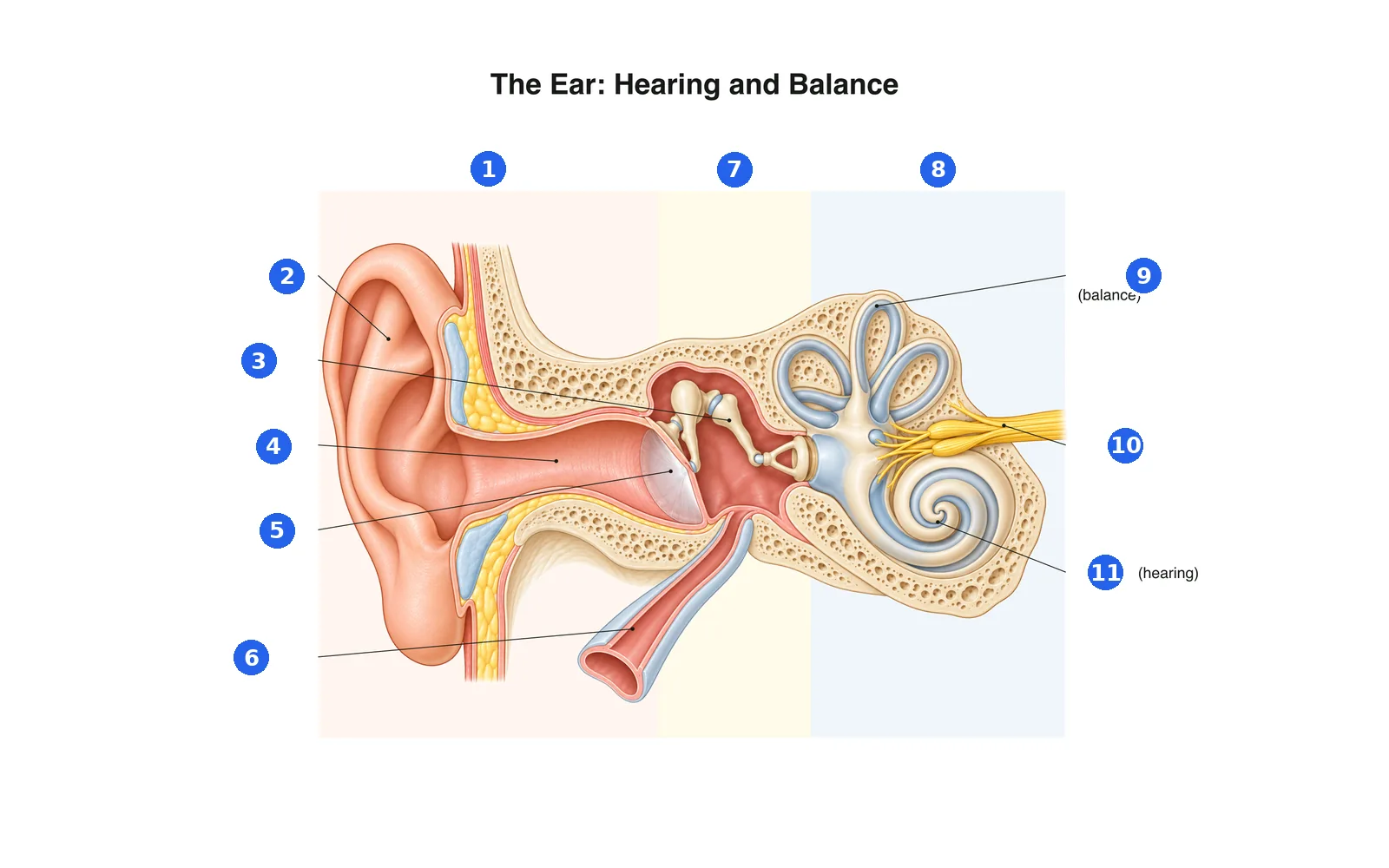
2D Learning
Hearing and Balance
How it works · Nerves and senses · 12 cards
Study notes
- The ear has three parts: outer, middle and inner.
- Sound waves make the eardrum vibrate; three tiny bones pass the vibration to the inner ear.
- In the snail-shaped cochlea, hair cells turn vibrations into nerve signals.
- Three fluid-filled canals and two small sacs in the inner ear sense head movement and keep you balanced.
Flashcards
Card 1 of 12Tap the card to flip
Label the diagram
Name each numbered part. Switch to the labels to study first.
Label 1 of 11Pick an answer
What is number 1?
Terms in this deck (12)
- Outer ear
- The visible ear (pinna) and ear canal, which funnel sound to the eardrum.
- Eardrum (tympanic membrane)
- A thin membrane that vibrates when sound waves hit it.
- Ossicles
- The three smallest bones in the body: the malleus (hammer), incus (anvil) and stapes (stirrup).
- Eustachian tube
- Connects the middle ear to the throat and equalizes pressure; it is why ears 'pop'.
- Cochlea
- The snail-shaped, fluid-filled part of the inner ear where hearing happens.
- Hair cells
- Sensory cells in the cochlea that turn vibrations into nerve signals; loud noise can damage them for good.
- Semicircular canals
- Three looped canals at right angles that sense the head turning in any direction.
- Vestibular system
- The inner ear's balance organs, which work with the eyes and muscles to keep you steady.
- Auditory nerve
- Carries sound signals from the cochlea to the brain.
- Why do you feel dizzy after spinning?
- The fluid in the balance canals keeps moving for a moment after you stop.
- Pinna
- The visible outer ear that funnels sound in.
- Ear canal
- The tube from the outer ear to the eardrum.
See it on the 3D body
Open the 3D model on a part, with its School notes and flashcards.
Educational content for learning anatomy, not medical advice.