2D Learning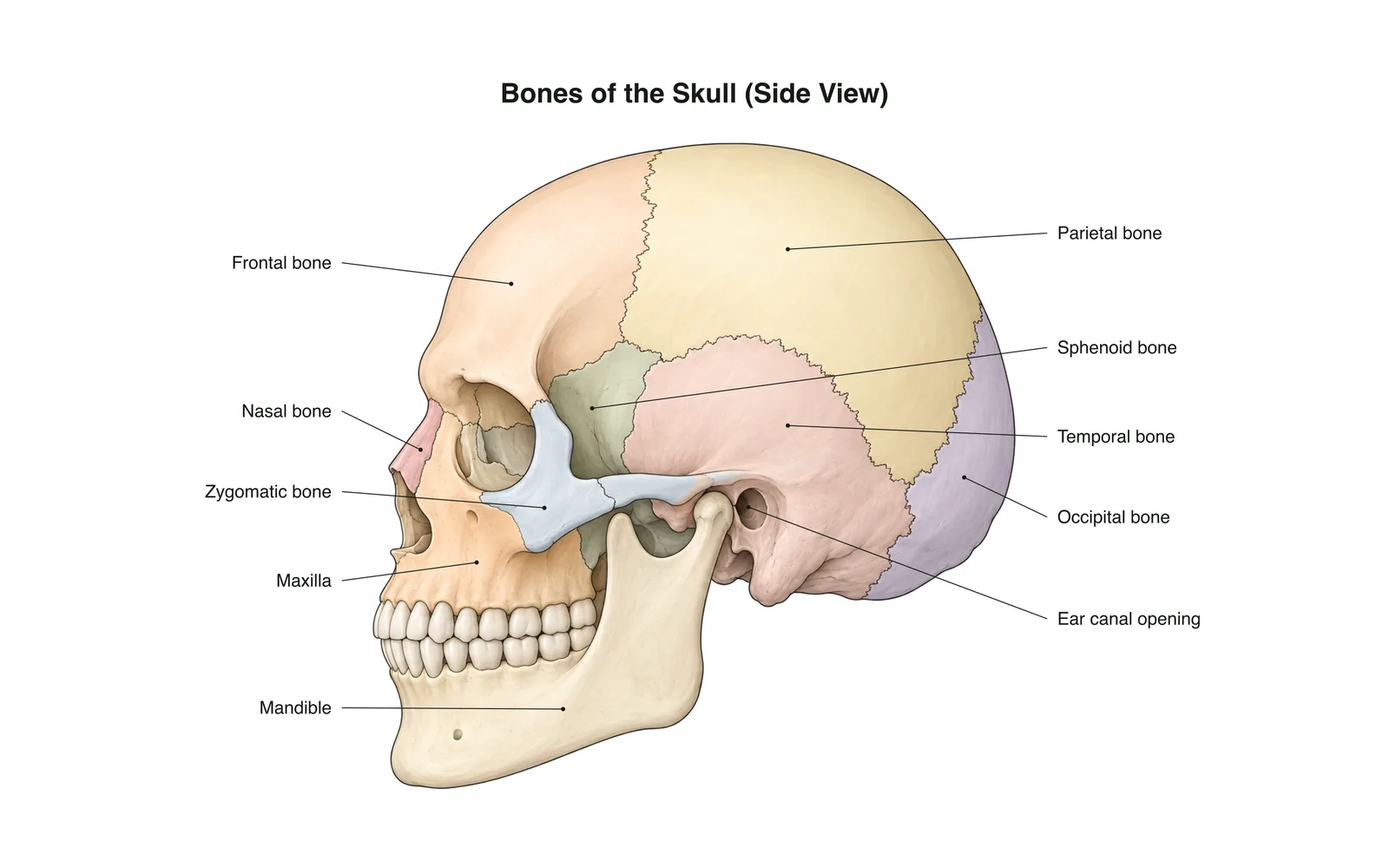
2D Learning
Bones of the Skull
How it works · Body maps · 10 cards
Study notes
- The skull has 22 bones: 8 around the brain and 14 in the face.
- Skull bones are joined by fixed joints called sutures; only the jaw moves.
- In babies, soft spots (fontanelles) let the skull grow and squeeze through birth.
Flashcards
Card 1 of 10Tap the card to flip
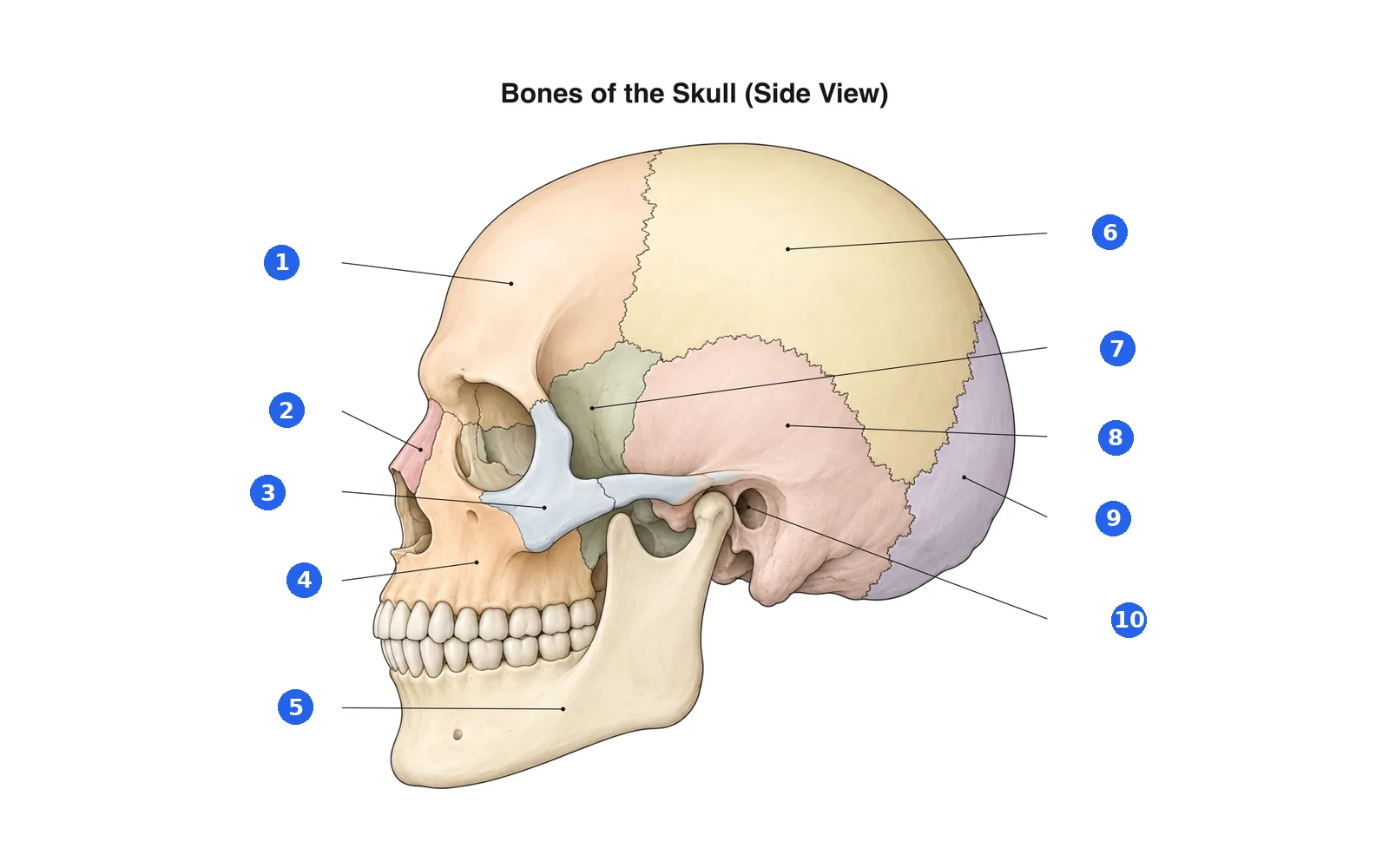
Label the diagram
Name each numbered part. Switch to the labels to study first.
Label 1 of 10Pick an answer
What is number 1?
Terms in this deck (10)
- Frontal bone
- The forehead and the roofs of the eye sockets.
- Parietal bone
- One of two bones forming the top and upper sides of the skull.
- Occipital bone
- The back and base of the skull.
- Temporal bone
- The side of the skull around the ear; holds the middle and inner ear.
- Sphenoid bone
- A butterfly-shaped bone at the base of the skull, behind the eyes.
- Zygomatic bone
- The cheekbone.
- Nasal bone
- One of two small bones forming the bridge of the nose.
- Maxilla
- The upper jaw, holding the upper teeth.
- Mandible
- The lower jaw, the skull's only movable bone.
- Ear canal opening
- The opening in the temporal bone that leads to the eardrum.
See it on the 3D body
Open the 3D model on a part, with its School notes and flashcards.
Educational content for learning anatomy, not medical advice.