2D Learning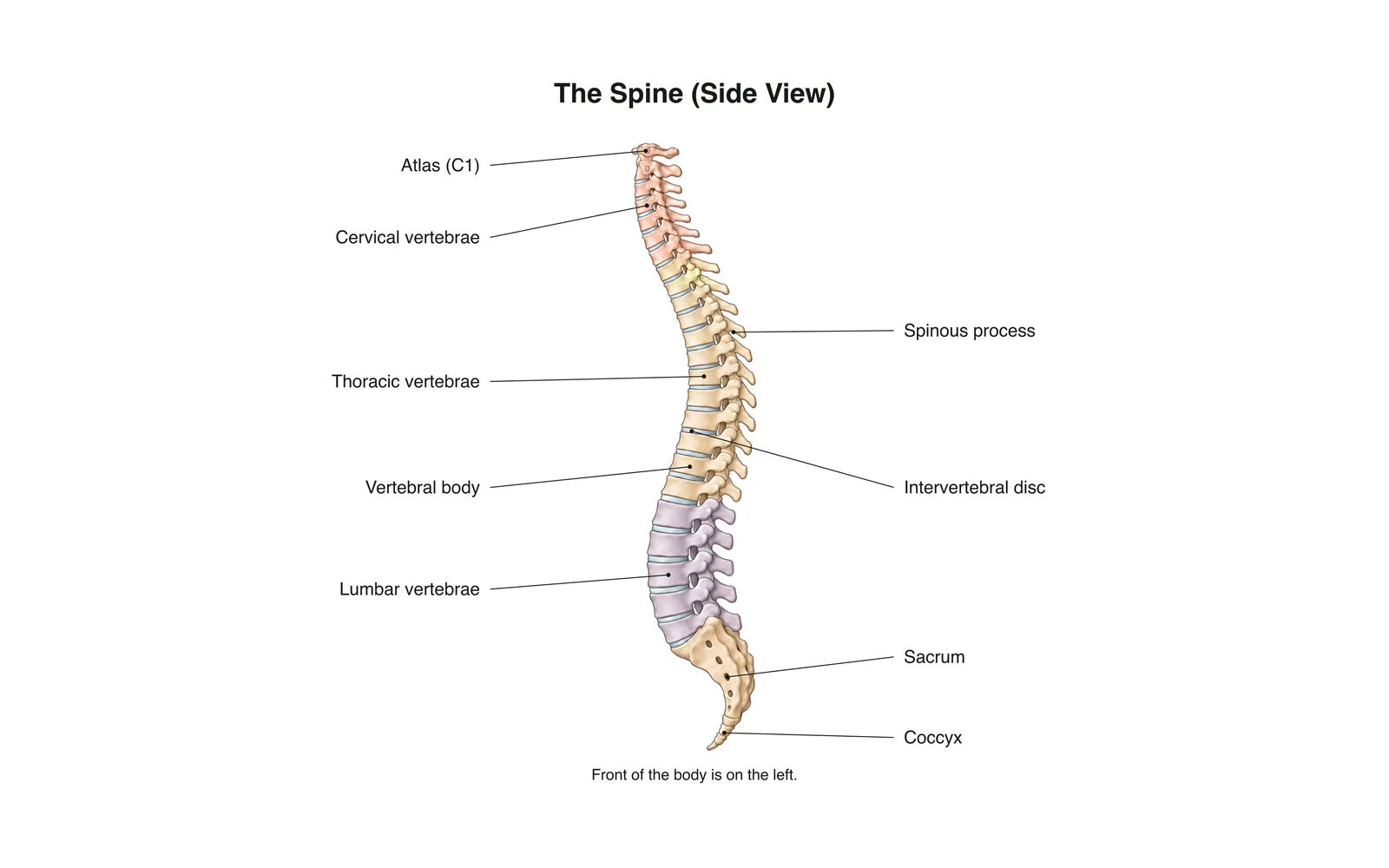
2D Learning
The Spine
How it works · Body maps · 9 cards
Study notes
- The spine has 7 cervical, 12 thoracic and 5 lumbar vertebrae, then the sacrum and coccyx.
- Its S-shaped curves act like a spring to absorb shock when walking and running.
- Discs between the vertebrae cushion them and let the spine bend.
Flashcards
Card 1 of 9Tap the card to flip
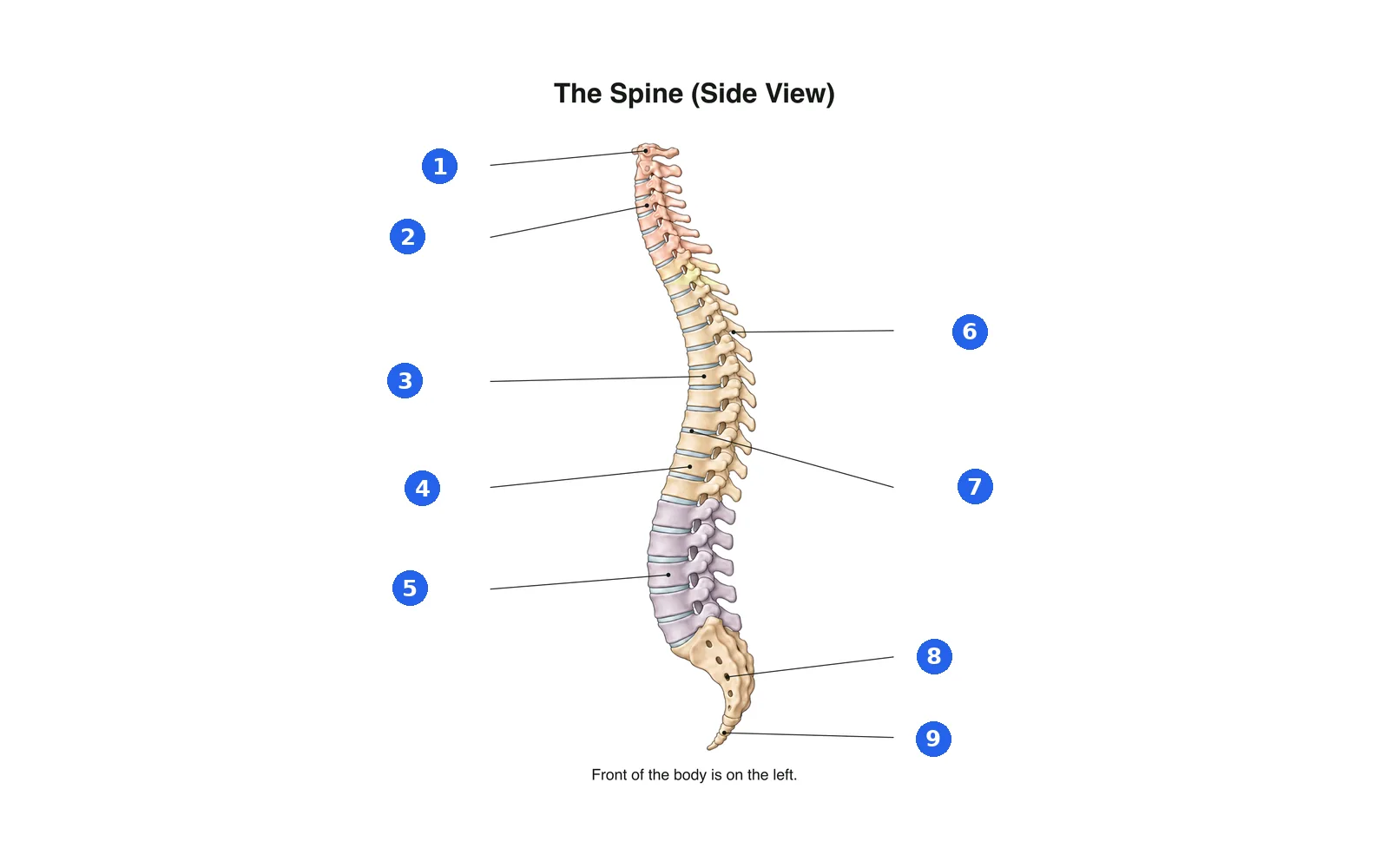
Label the diagram
Name each numbered part. Switch to the labels to study first.
Label 1 of 9Pick an answer
What is number 1?
Terms in this deck (9)
- Atlas (C1)
- The top vertebra, which holds up the skull and allows nodding.
- Cervical vertebrae
- The 7 neck vertebrae.
- Thoracic vertebrae
- The 12 mid-back vertebrae, each joined to a pair of ribs.
- Lumbar vertebrae
- The 5 large lower-back vertebrae that carry the most weight.
- Sacrum
- Five fused vertebrae joining the spine to the pelvis.
- Coccyx
- The tailbone, at the very bottom of the spine.
- Intervertebral disc
- A cushion of cartilage between two vertebrae; a 'slipped disc' bulges out of place.
- Spinous process
- The bony bump at the back of each vertebra that you can feel down your back.
- Vertebral body
- The thick, round front part of a vertebra that bears weight.
See it on the 3D body
Open the 3D model on a part, with its School notes and flashcards.
Educational content for learning anatomy, not medical advice.