2D Learning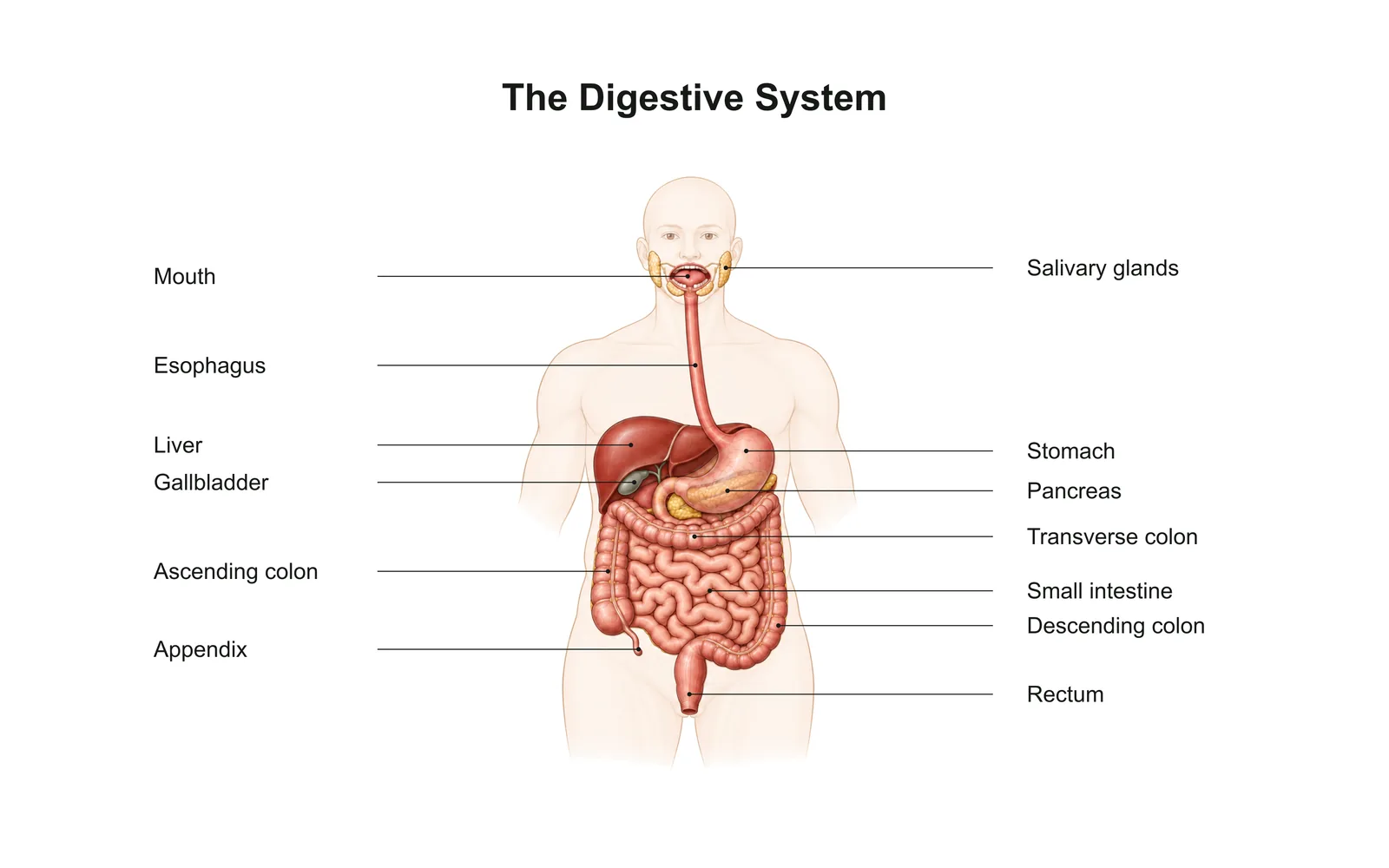
2D Learning
The Digestive System
How it works · Body maps · 13 cards
Study notes
- Food travels mouth → esophagus → stomach → small intestine → large intestine → rectum.
- The liver, gallbladder and pancreas add bile and enzymes but food does not pass through them.
- Most nutrients are absorbed in the small intestine; the large intestine mainly takes back water.
Flashcards
Card 1 of 13Tap the card to flip
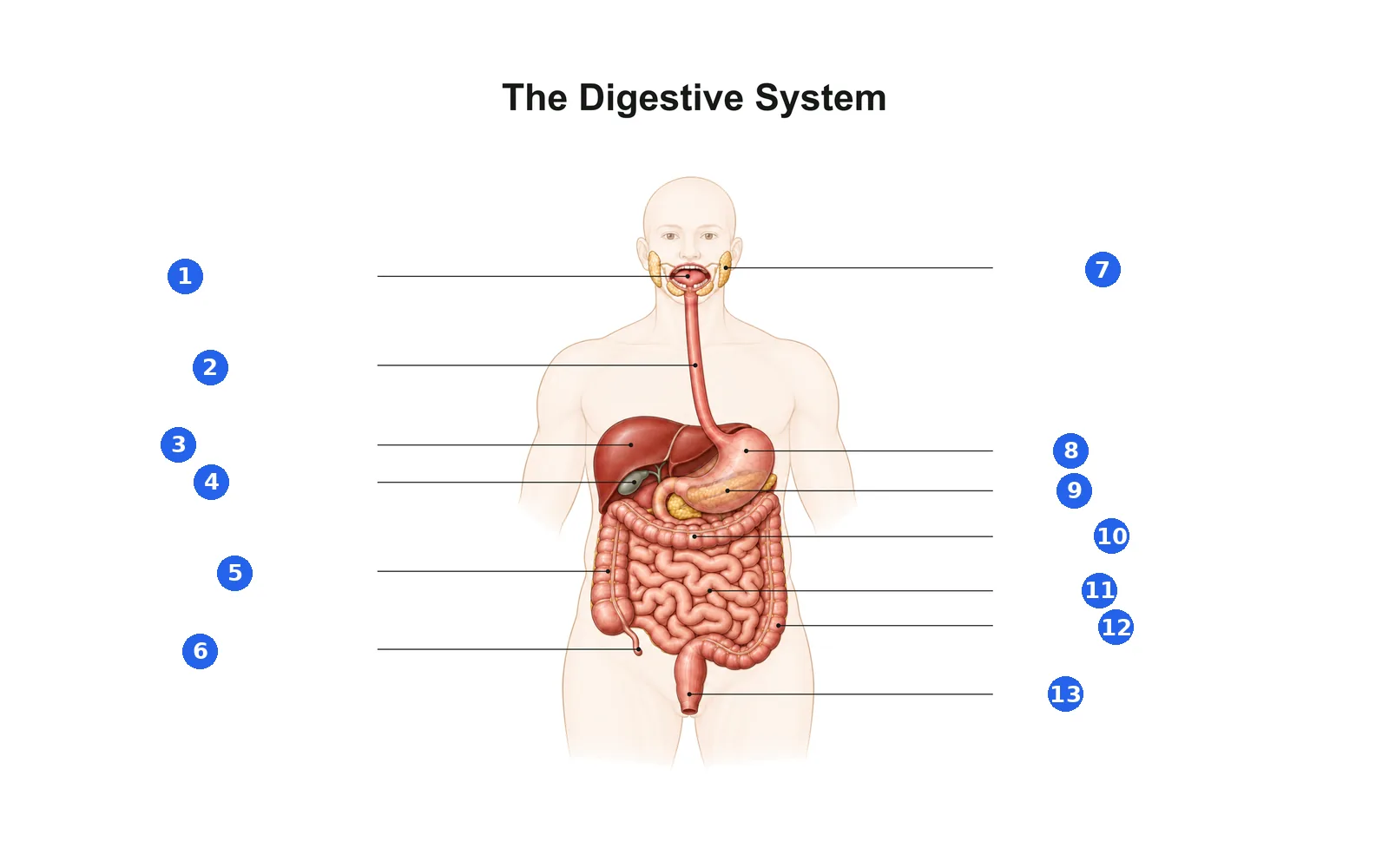
Label the diagram
Name each numbered part. Switch to the labels to study first.
Label 1 of 13Pick an answer
What is number 1?
Terms in this deck (13)
- Mouth
- Where digestion starts: teeth chew and saliva begins breaking down starch.
- Salivary glands
- Glands around the mouth that make saliva.
- Esophagus
- The muscular tube carrying food from the throat to the stomach.
- Liver
- Makes bile, stores energy and clears toxins from the blood.
- Gallbladder
- Stores bile from the liver and releases it after fatty meals.
- Stomach
- Churns food with acid and enzymes into a soupy mix called chyme.
- Pancreas
- Makes digestive enzymes and the hormones insulin and glucagon.
- Small intestine
- About 6 m long; digests food and absorbs most nutrients.
- Ascending colon
- The part of the large intestine that rises up the right side of the belly.
- Transverse colon
- The part of the large intestine that crosses the belly.
- Descending colon
- The part of the large intestine that runs down the left side.
- Appendix
- A small pouch off the start of the large intestine.
- Rectum
- The last part of the large intestine, which stores stool before it leaves.
See it on the 3D body
Open the 3D model on a part, with its School notes and flashcards.
Educational content for learning anatomy, not medical advice.