2D Learning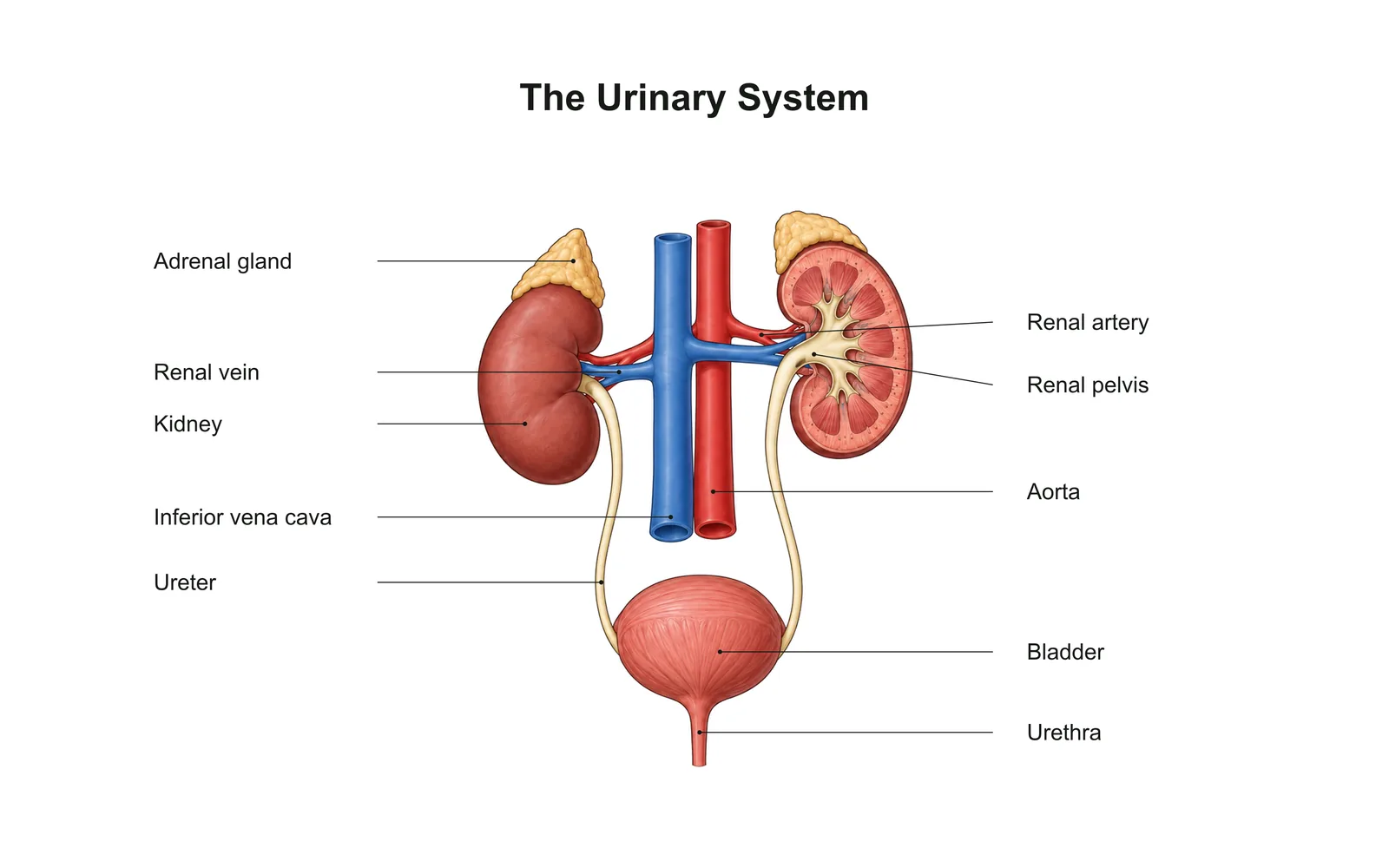
2D Learning
The Urinary System
How it works · Body maps · 16 cards
Study notes
- The kidneys filter about 180 liters of blood fluid a day and turn about 1 to 2 liters into urine.
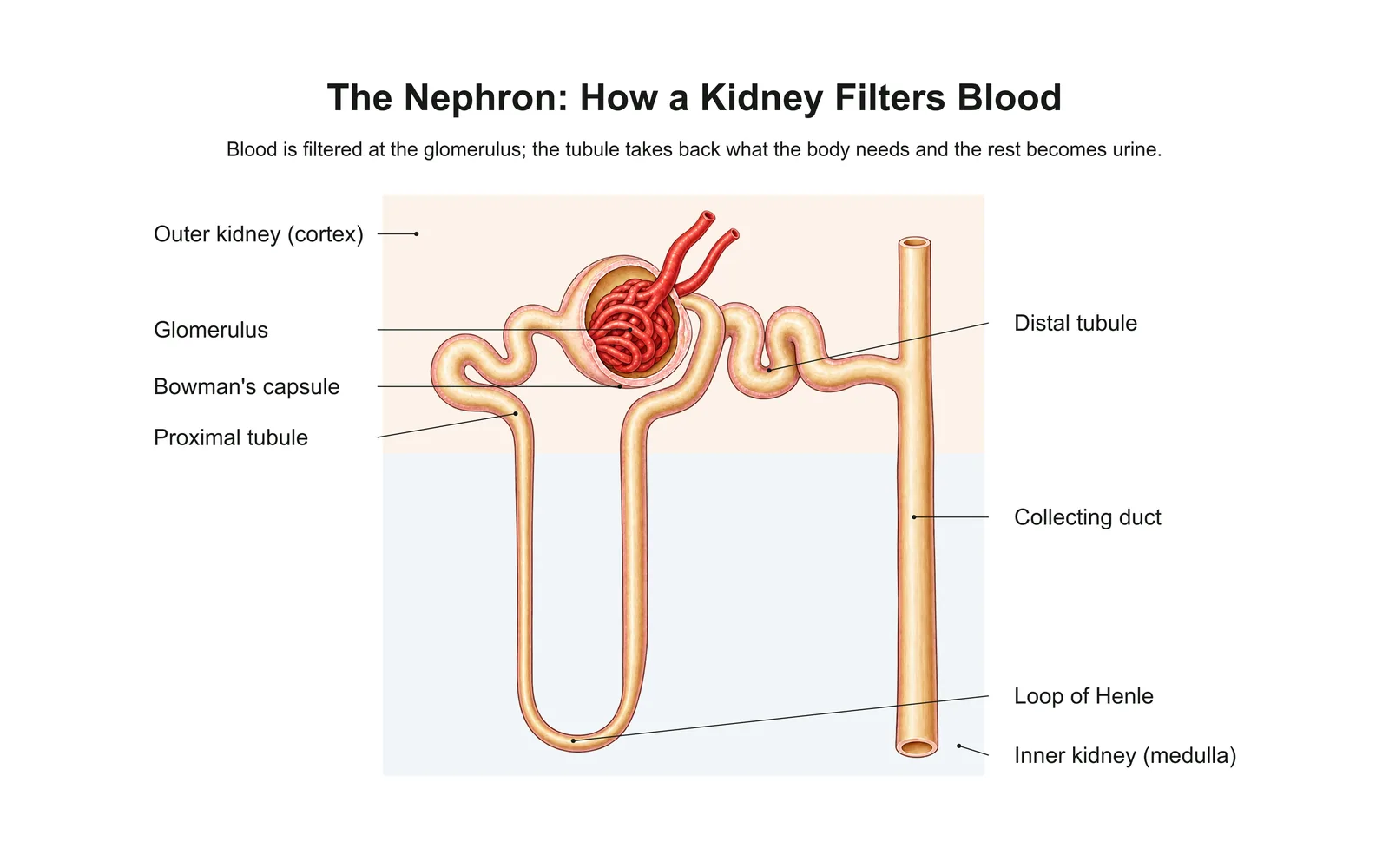
- Each kidney holds about a million tiny filters called nephrons.
- Urine flows kidney → ureter → bladder → urethra.
Flashcards
Card 1 of 16Tap the card to flip
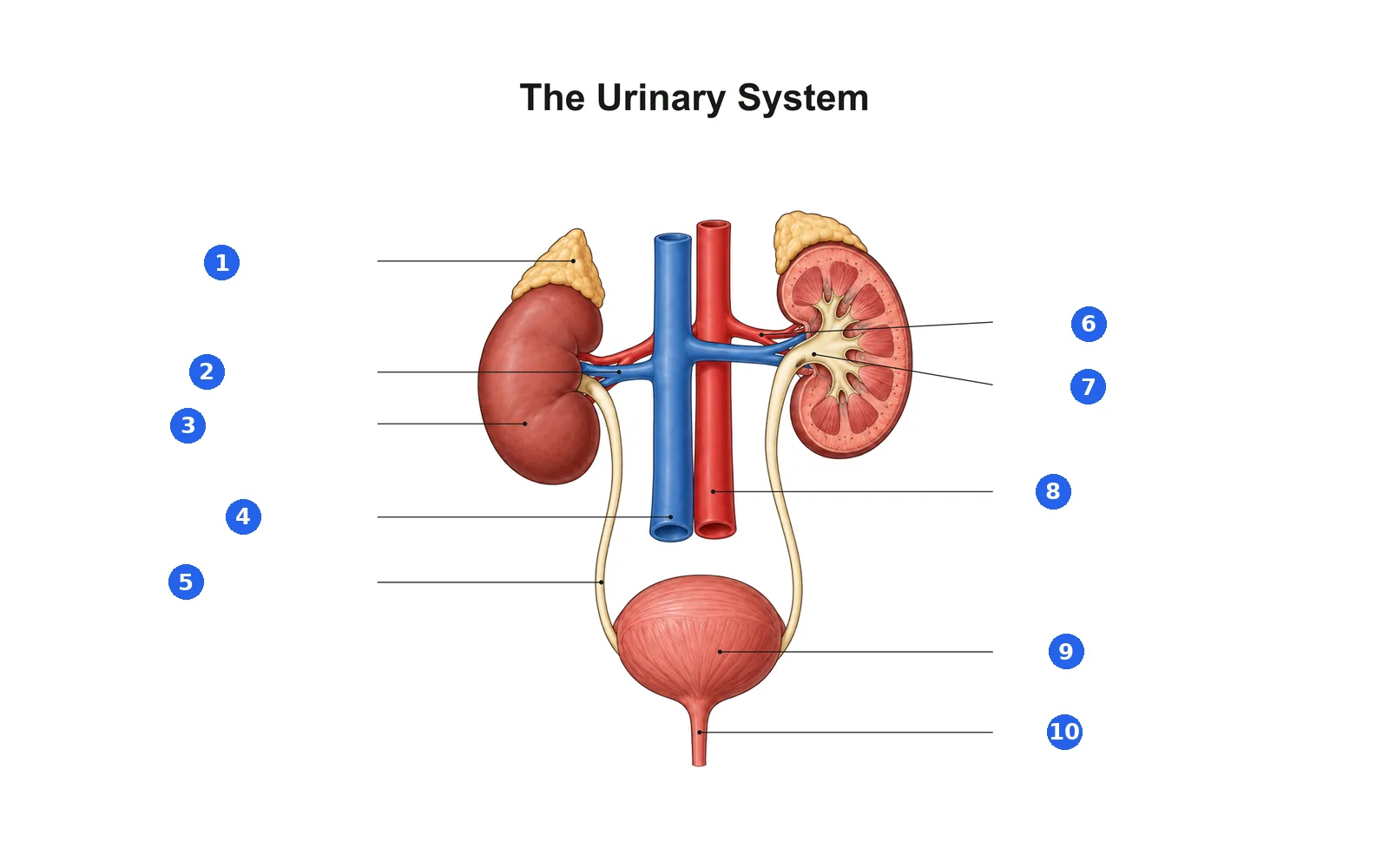
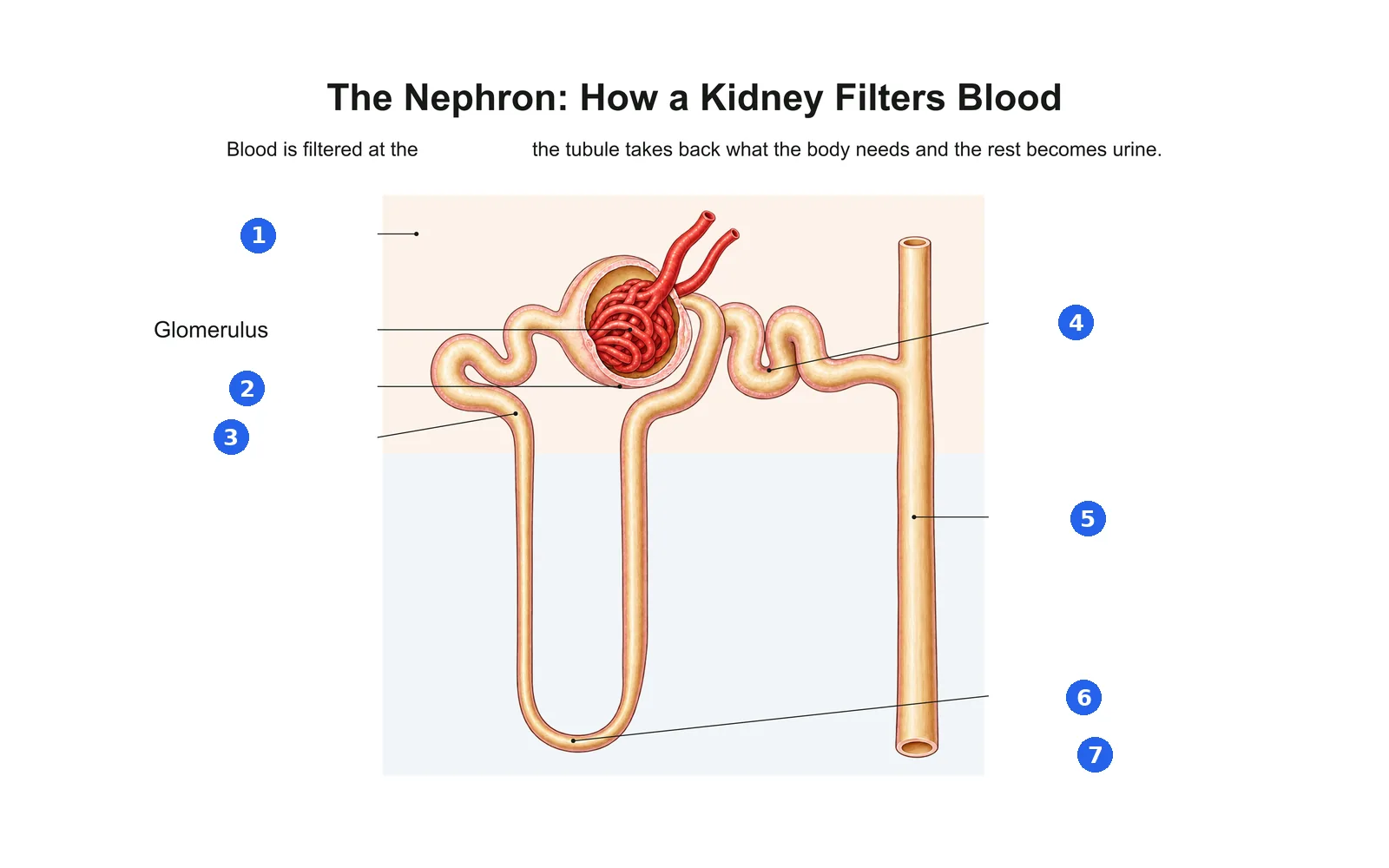
Label the diagram
Name each numbered part. Switch to the labels to study first.
Label 1 of 10Pick an answer
What is number 1?
Label 1 of 7Pick an answer
What is number 1?
Terms in this deck (16)
- Kidney
- A bean-shaped organ that filters blood and makes urine.
- Adrenal gland
- A hormone gland sitting on top of each kidney.
- Renal artery
- Brings blood to the kidney to be filtered.
- Renal vein
- Carries filtered blood away from the kidney.
- Renal pelvis
- The funnel inside the kidney that collects urine.
- Ureter
- The thin tube carrying urine from each kidney to the bladder.
- Bladder
- The stretchy muscular bag that stores urine.
- Urethra
- The tube that carries urine out of the body.
- Aorta
- The main artery, which feeds the renal arteries.
- Inferior vena cava
- The main vein that the renal veins drain into.
- Glomerulus
- A tiny ball of capillaries where blood is filtered.
- Bowman's capsule
- The cup around the glomerulus that catches the filtered fluid.
- Proximal tubule
- The first stretch of tubule, which takes back most water, sugar and salts.
- Loop of Henle
- The hairpin loop that concentrates urine by drawing out water.
- Distal tubule
- Fine-tunes salt and water balance under hormone control.
- Collecting duct
- Collects urine from many nephrons and carries it to the renal pelvis.
See it on the 3D body
Open the 3D model on a part, with its School notes and flashcards.
Educational content for learning anatomy, not medical advice.