All decks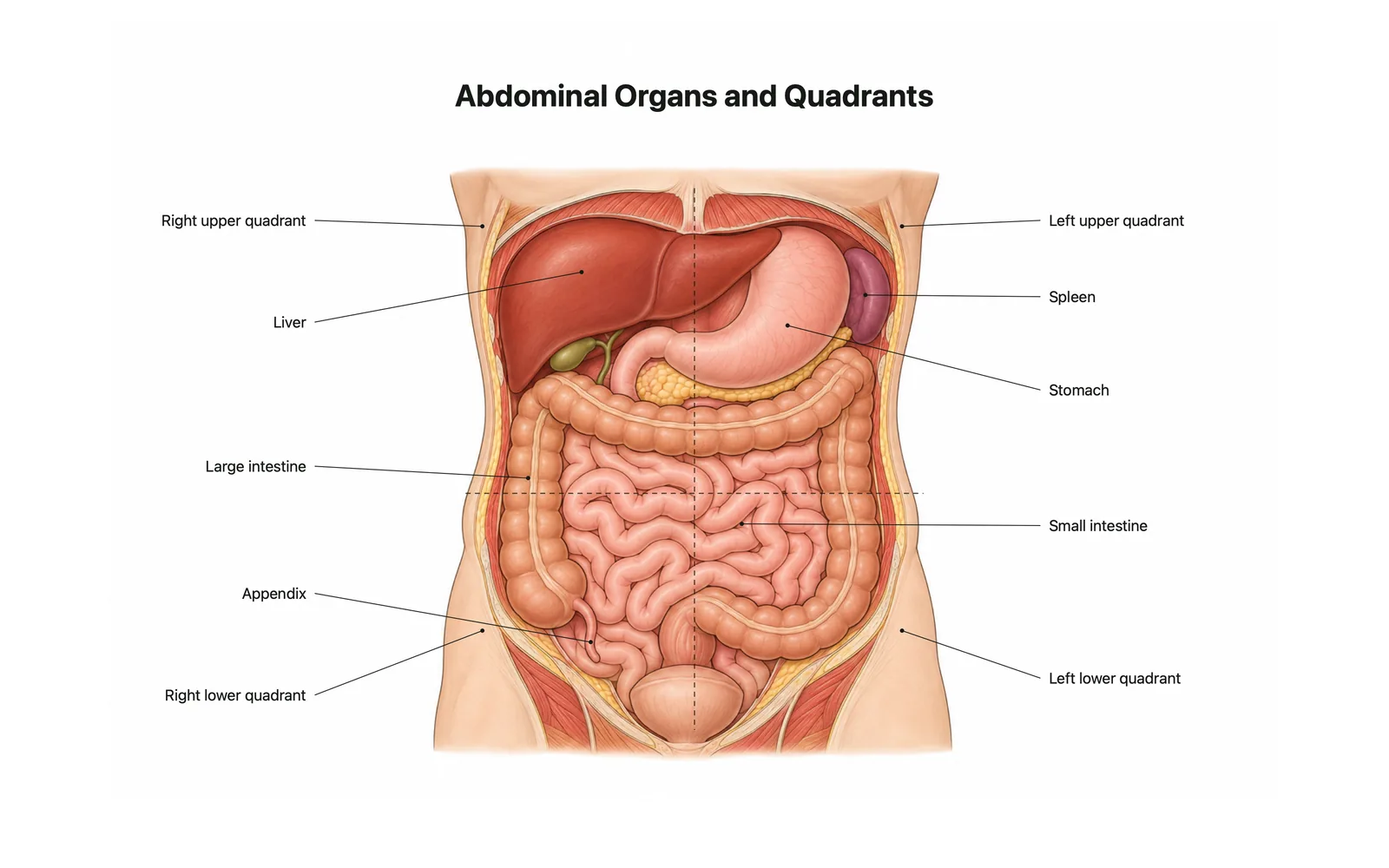
Abdominal Organs and Quadrants 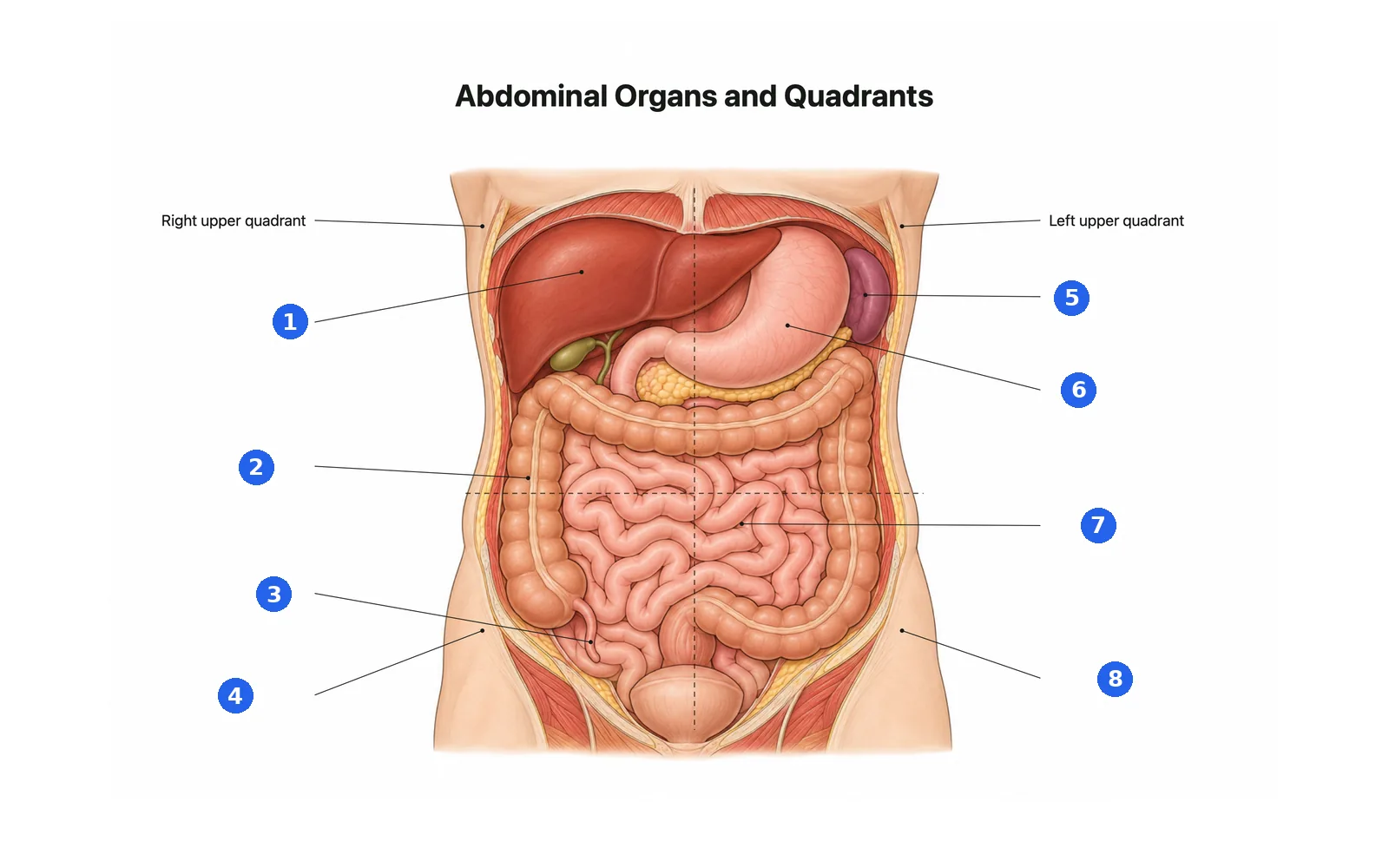
Stomach and belly: care and discussions
Bones
Lumbar Spine
Bones · Axial skeleton · 7 cards
Study notes
- There are 5 lumbar vertebrae (L1–L5), the largest in the spine because they carry the most weight.
- The front of the abdomen has no bone; muscles protect the organs there.
- Below L5 is the sacrum (5 fused vertebrae) and then the coccyx (tailbone).
- The spinal cord ends around L1–L2; below that, nerve roots continue as the cauda equina.
Flashcards
Card 1 of 7Tap the card to flip
Label the diagram
Name each numbered part. Switch to the labels to study first.
Label 1 of 8Pick an answer
What is number 1?
Picture quiz
Name the part shown in orange.
Picture 1 of 4What is the highlighted bone?
Terms in this deck (7)
- How many lumbar vertebrae are there?
- Five (L1–L5).
- Why are lumbar vertebrae so large?
- They support the weight of the whole upper body.
- Sacrum
- A triangular bone of 5 fused vertebrae that joins the spine to the pelvis.
- Coccyx
- The tailbone: 3–5 small fused vertebrae at the base of the spine.
- Cauda equina
- The bundle of nerve roots below the end of the spinal cord, named for looking like a horse's tail.
- Vertebral body
- The thick, weight-bearing front part of a vertebra.
- Spinous process
- The bony point sticking out from the back of each vertebra; the bumps you feel along your spine.
2D Learning
Diagrams and body maps for this part.
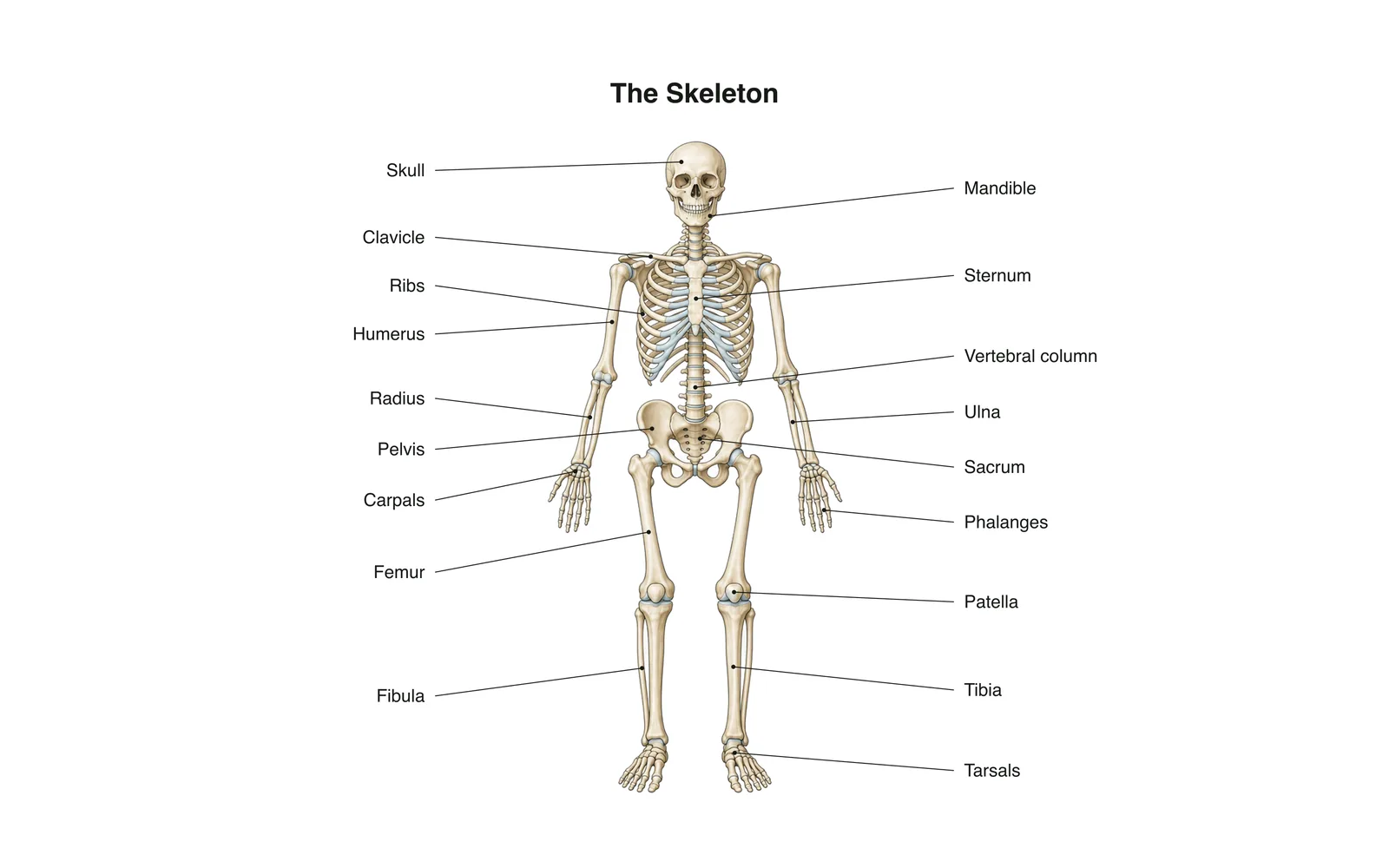
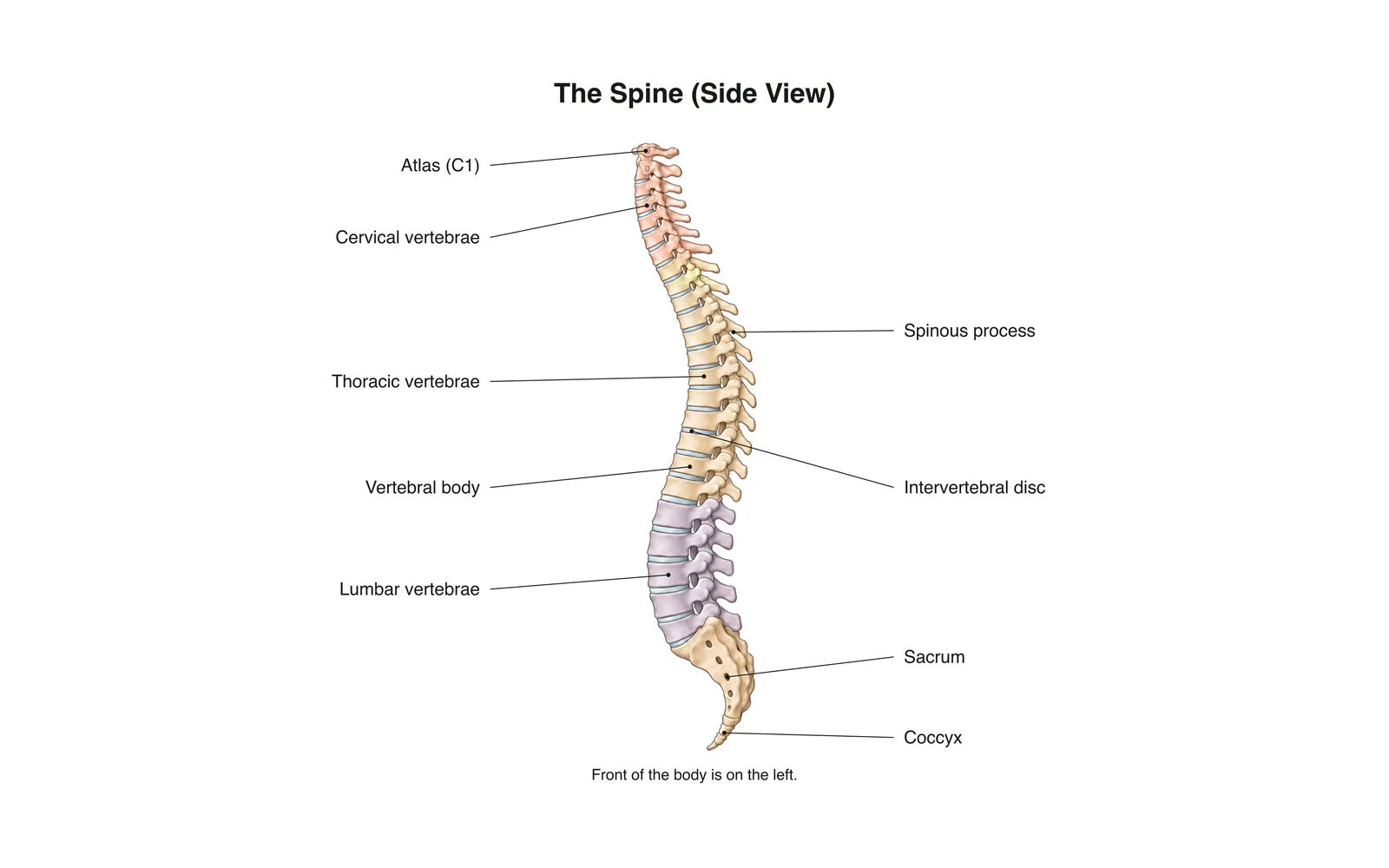
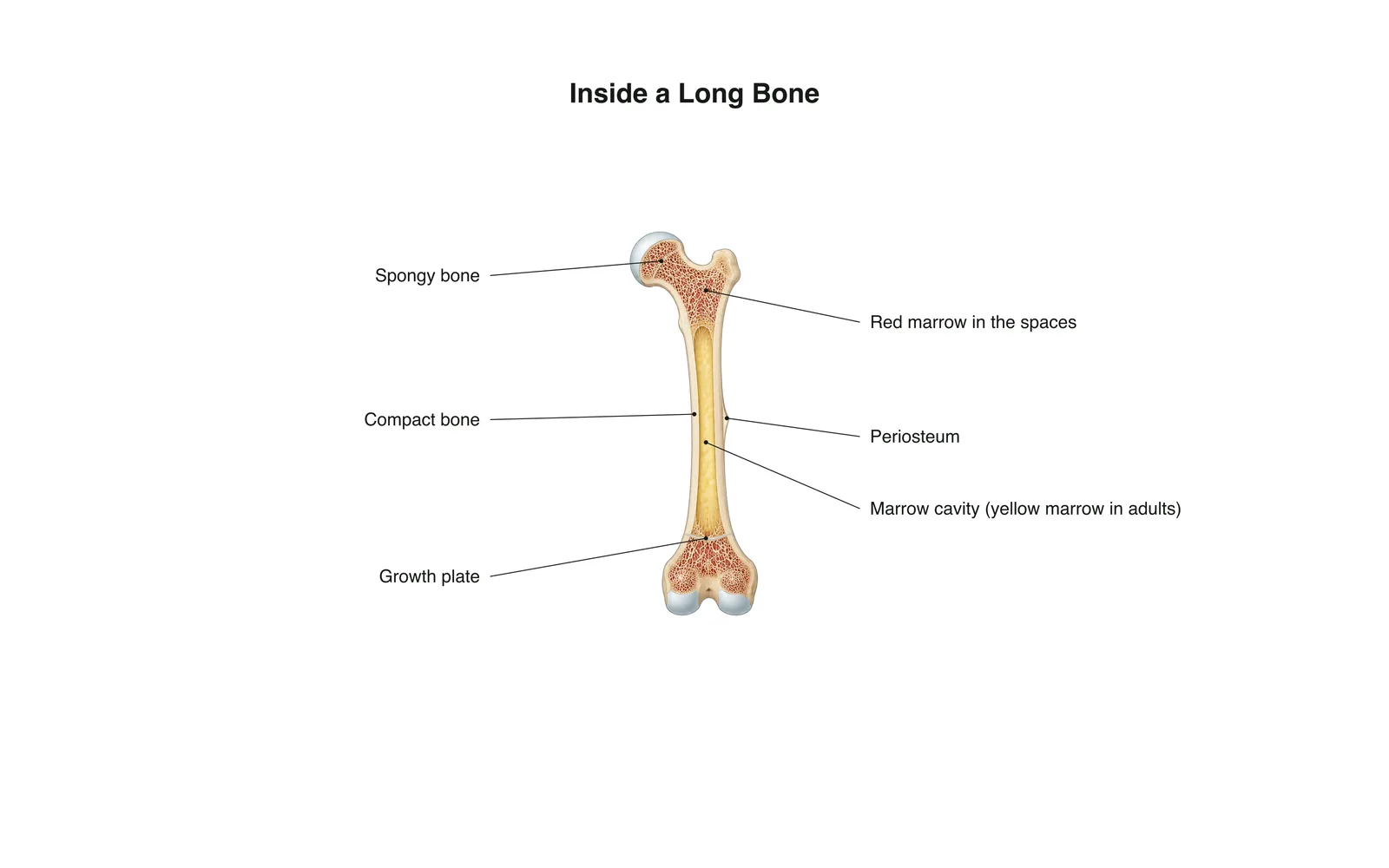
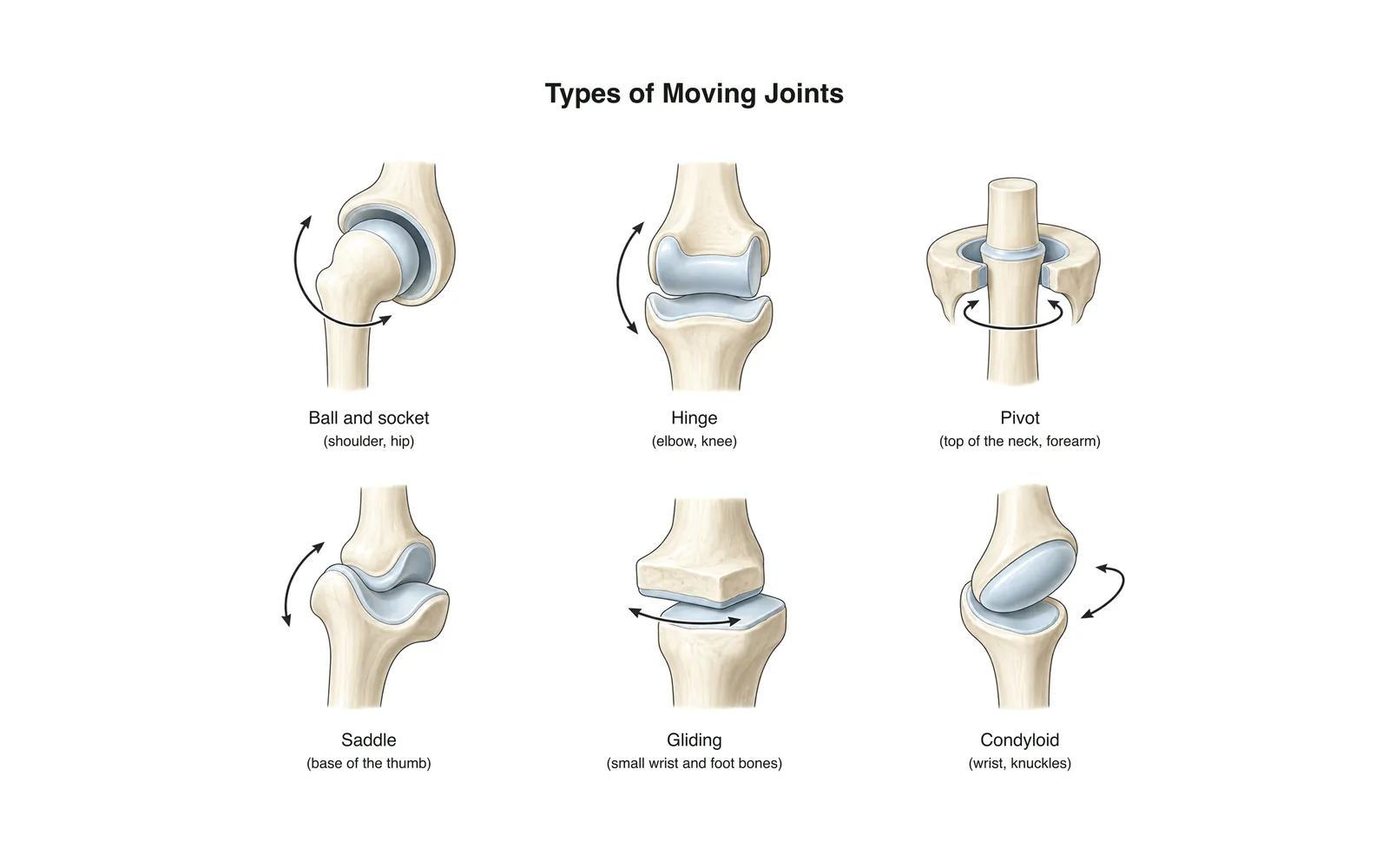
Educational content for learning anatomy, not medical advice. Tap this part on the 3D model with School selected to see it in place.