2D Learning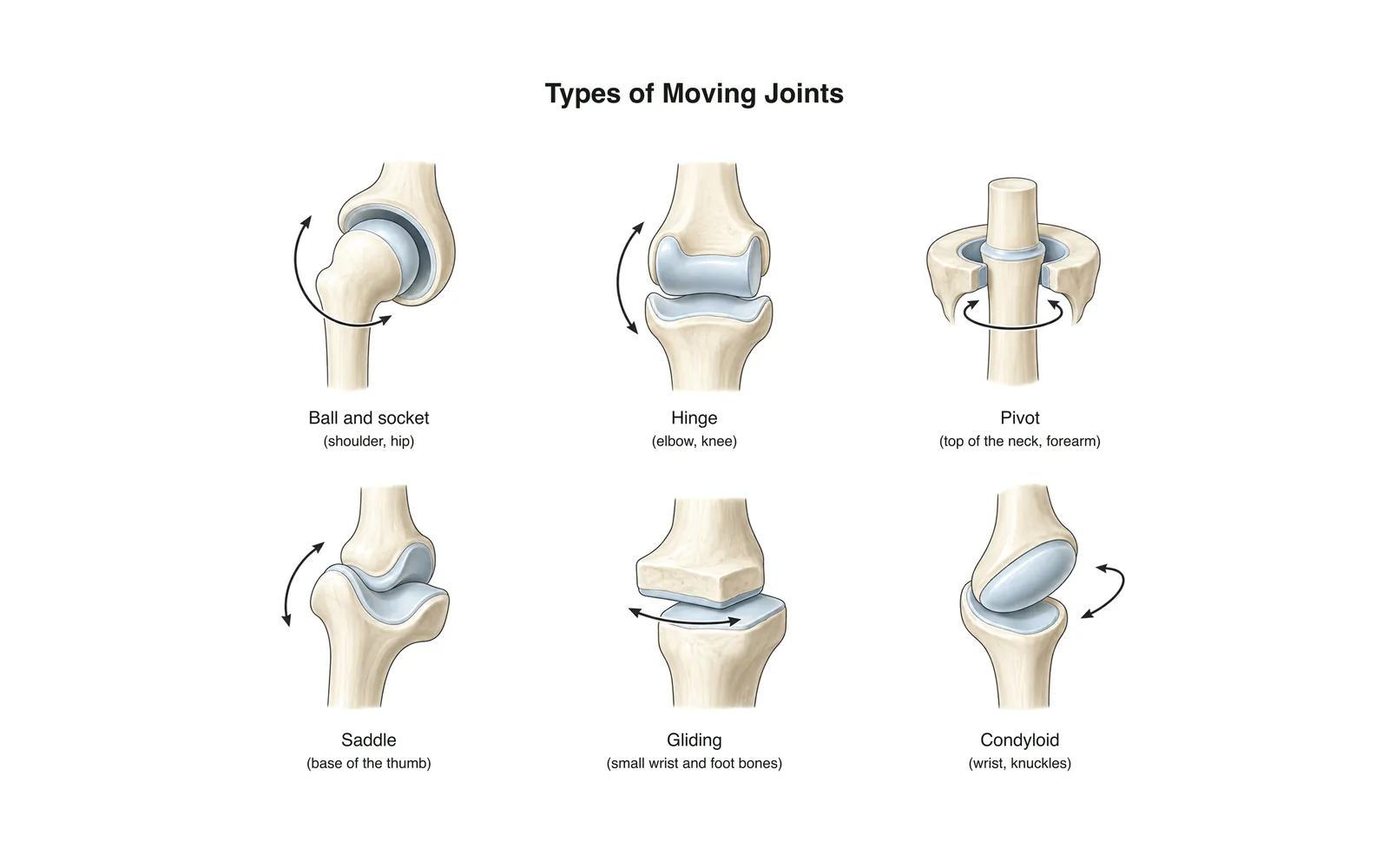
The six types of freely moving joint. 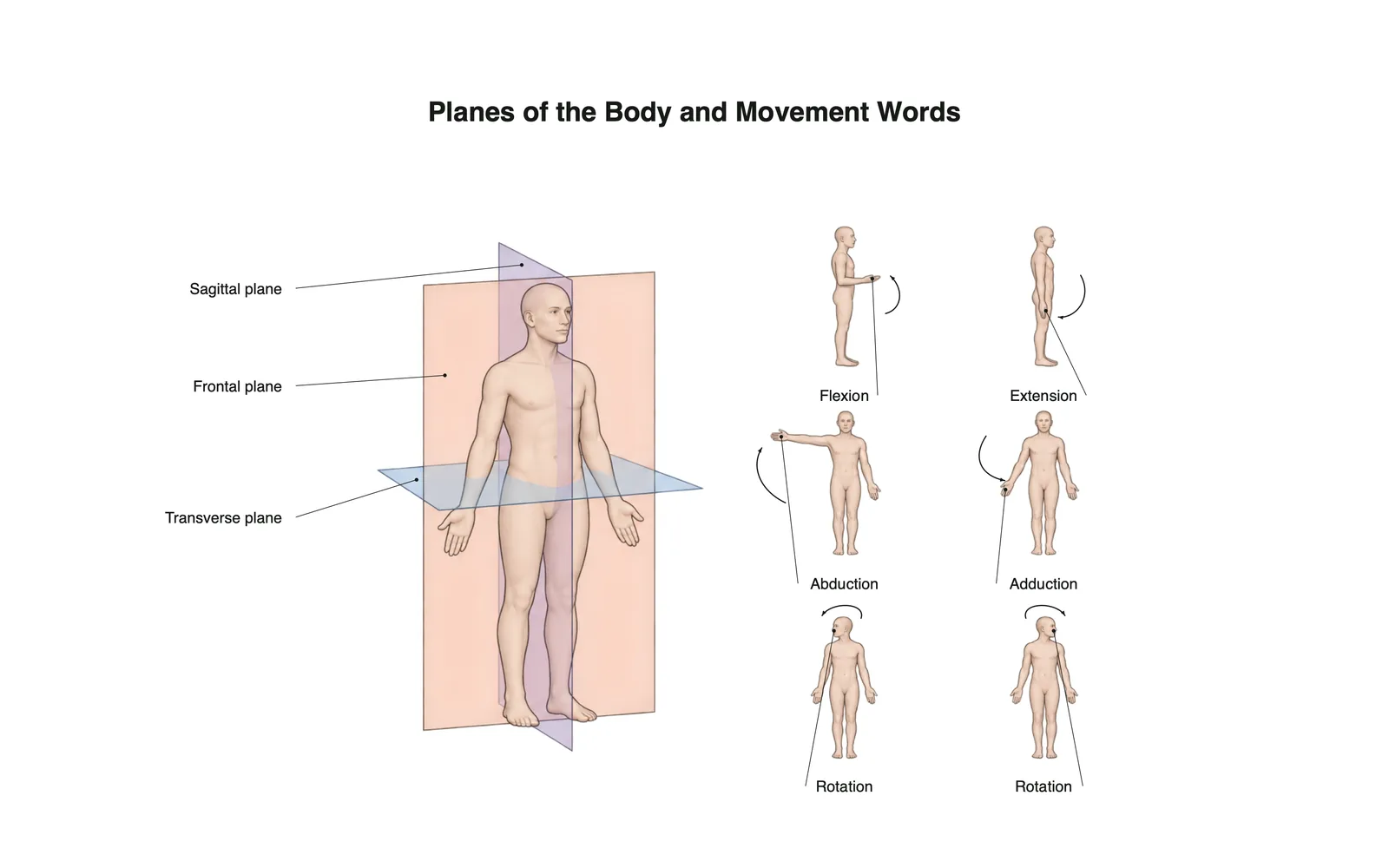
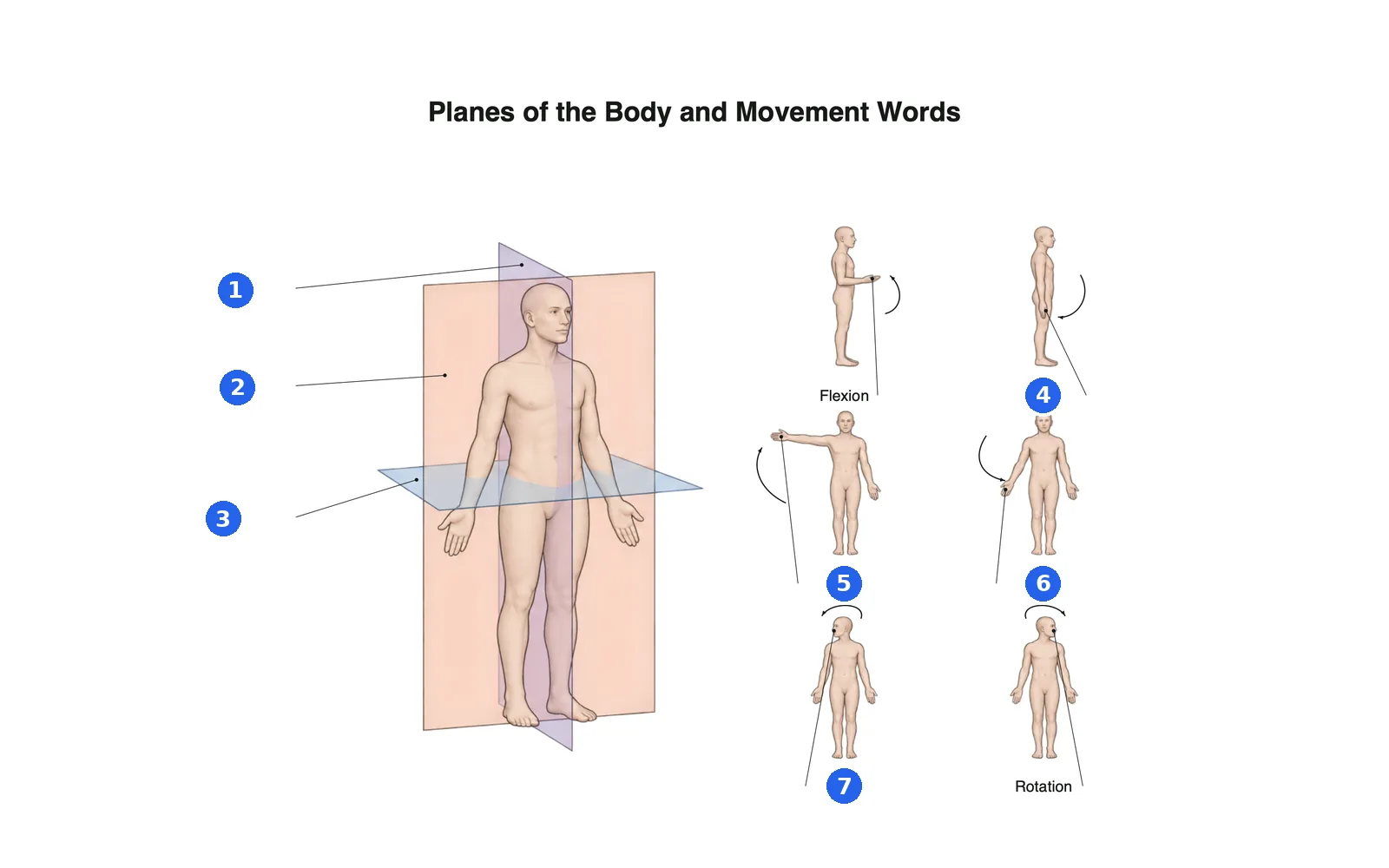
Planes of the Body and Movement Words 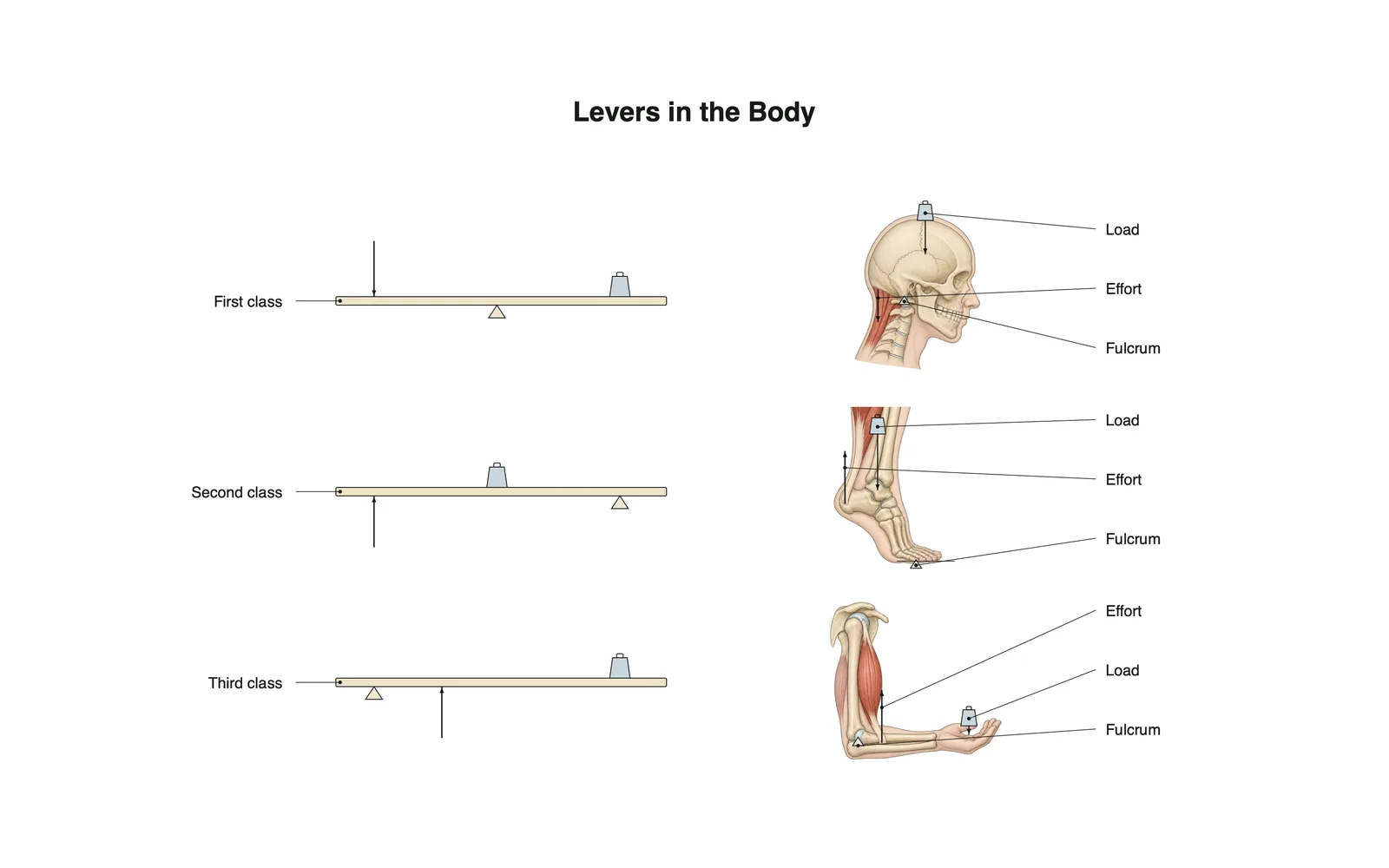
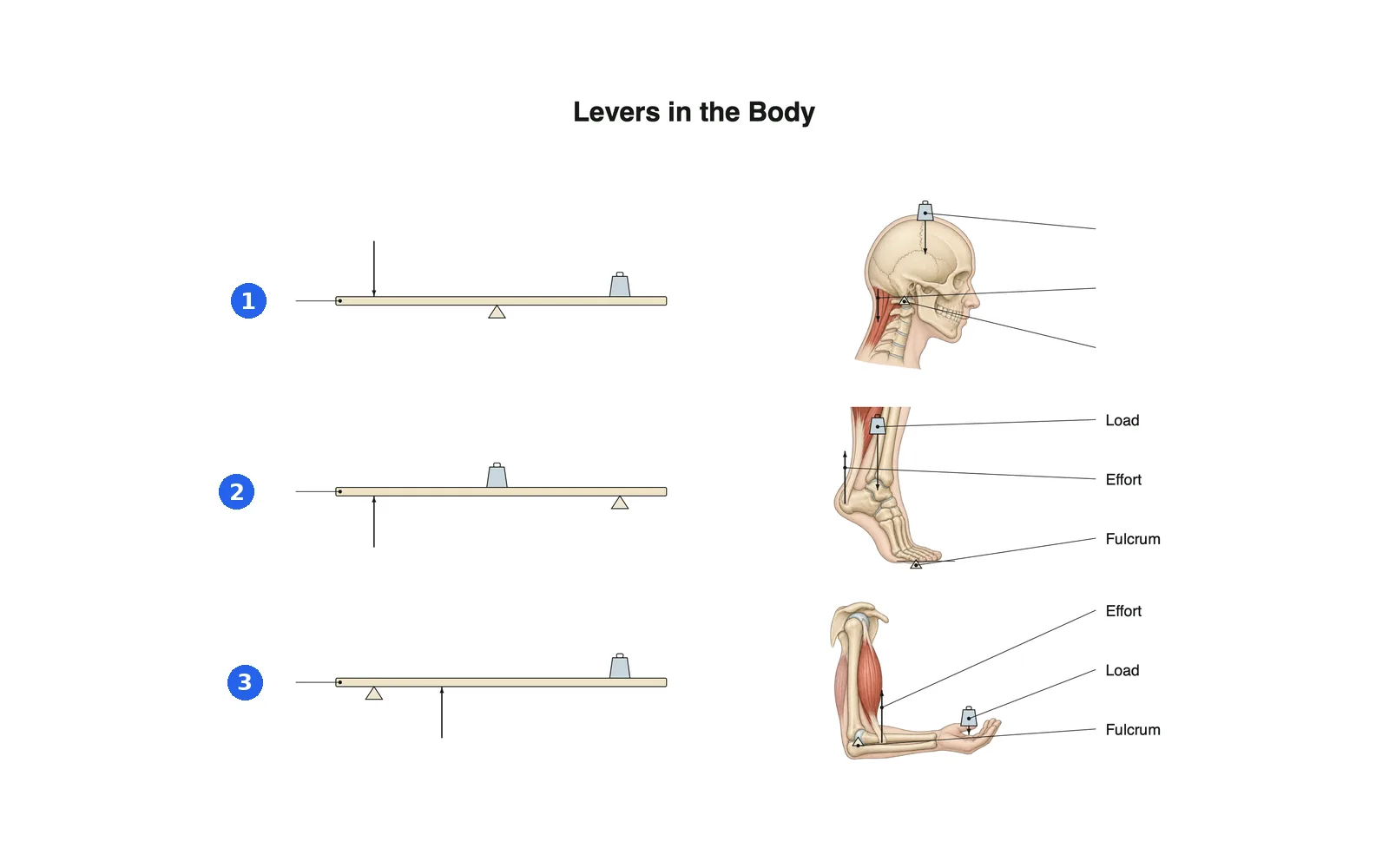
Levers in the Body 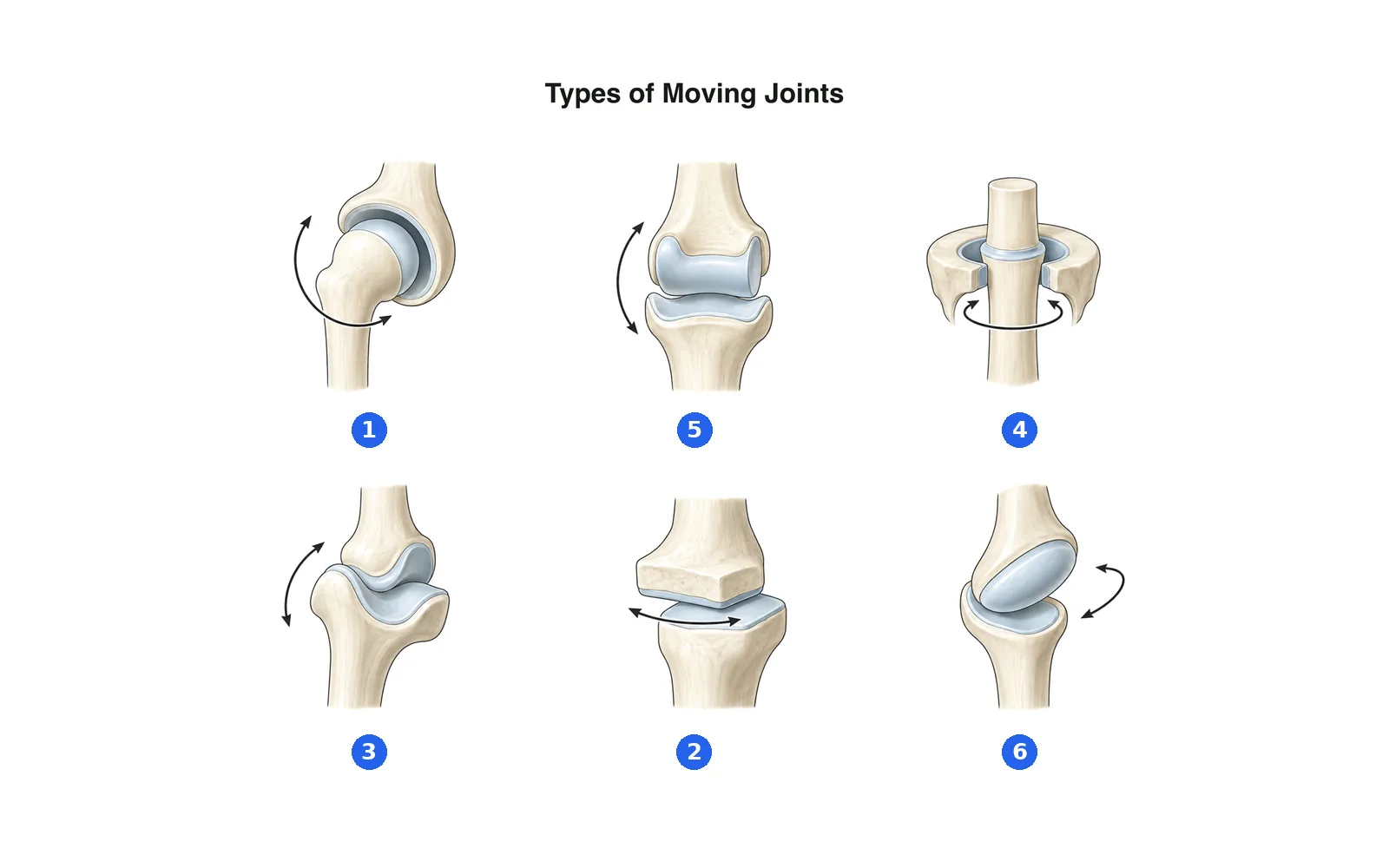
2D Learning
Joints and How They Move
How it works · Bones, joints and muscles · 10 cards
Study notes
- A joint is where two or more bones meet.
- Joints range from fixed (skull sutures) to slightly movable (between vertebrae) to freely movable (shoulder, knee).
- Freely movable joints are synovial joints: a capsule filled with slippery fluid, with cartilage on the bone ends.
- The shape of a synovial joint decides which way it can move.
Flashcards
Card 1 of 10Tap the card to flip
Label the diagram
Name each numbered part. Switch to the labels to study first.
Label 1 of 6Pick an answer
What is number 1?
Label 1 of 7Pick an answer
What is number 1?
Label 1 of 3Pick an answer
What is number 1?
Terms in this deck (10)
- Synovial joint
- A freely movable joint with a fluid-filled capsule and cartilage-covered bone ends.
- Synovial fluid
- The slippery fluid inside a joint that reduces friction and feeds the cartilage.
- Ball-and-socket joint
- Moves in every direction; the shoulder and hip.
- Hinge joint
- Bends and straightens in one direction, like a door; the elbow and knee.
- Pivot joint
- Lets one bone rotate around another; the top of the neck (atlas and axis) and the forearm.
- Saddle joint
- Two saddle-shaped surfaces that move back and forth and side to side; the base of the thumb.
- Gliding (plane) joint
- Flat surfaces that slide over each other; between the small bones of the wrist.
- Condyloid joint
- An oval end in an oval hollow; moves in two directions but cannot spin; the wrist and knuckles.
- Bursa
- A small fluid-filled sac that cushions tendons and bones near a joint.
- Fixed joint (suture)
- Bones joined so tightly they do not move, like those of the adult skull.
See it on the 3D body
Open the 3D model on a part, with its School notes and flashcards.
Educational content for learning anatomy, not medical advice.