Apprentissage 2D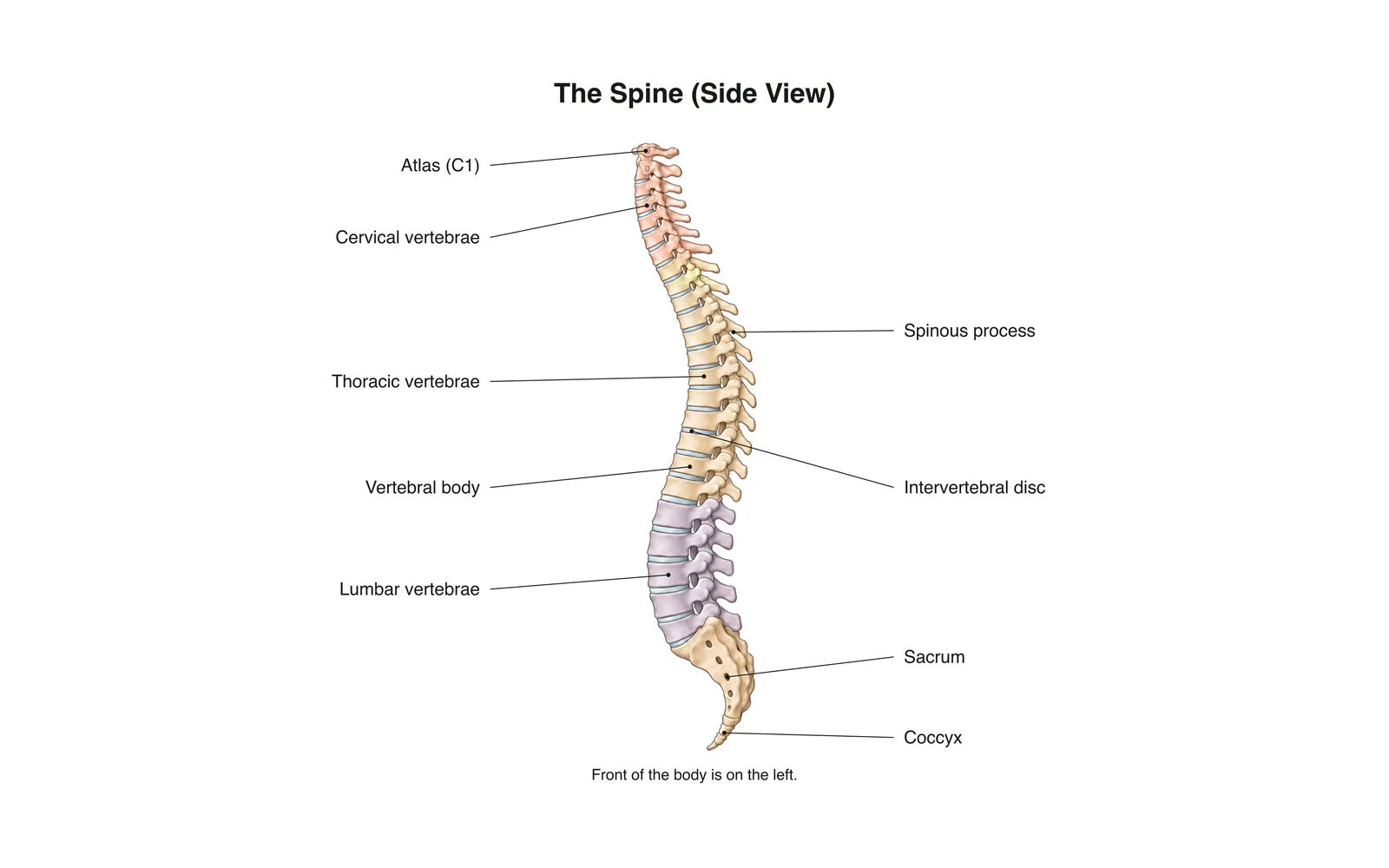
Apprentissage 2D
The Spine
How it works · Body maps · 9 cartes
Notes d'étude
- The spine has 7 cervical, 12 thoracic and 5 lumbar vertebrae, then the sacrum and coccyx.
- Its S-shaped curves act like a spring to absorb shock when walking and running.
- Discs between the vertebrae cushion them and let the spine bend.
Cartes mémoire
Carte 1 sur 9Touchez la carte pour la retourner
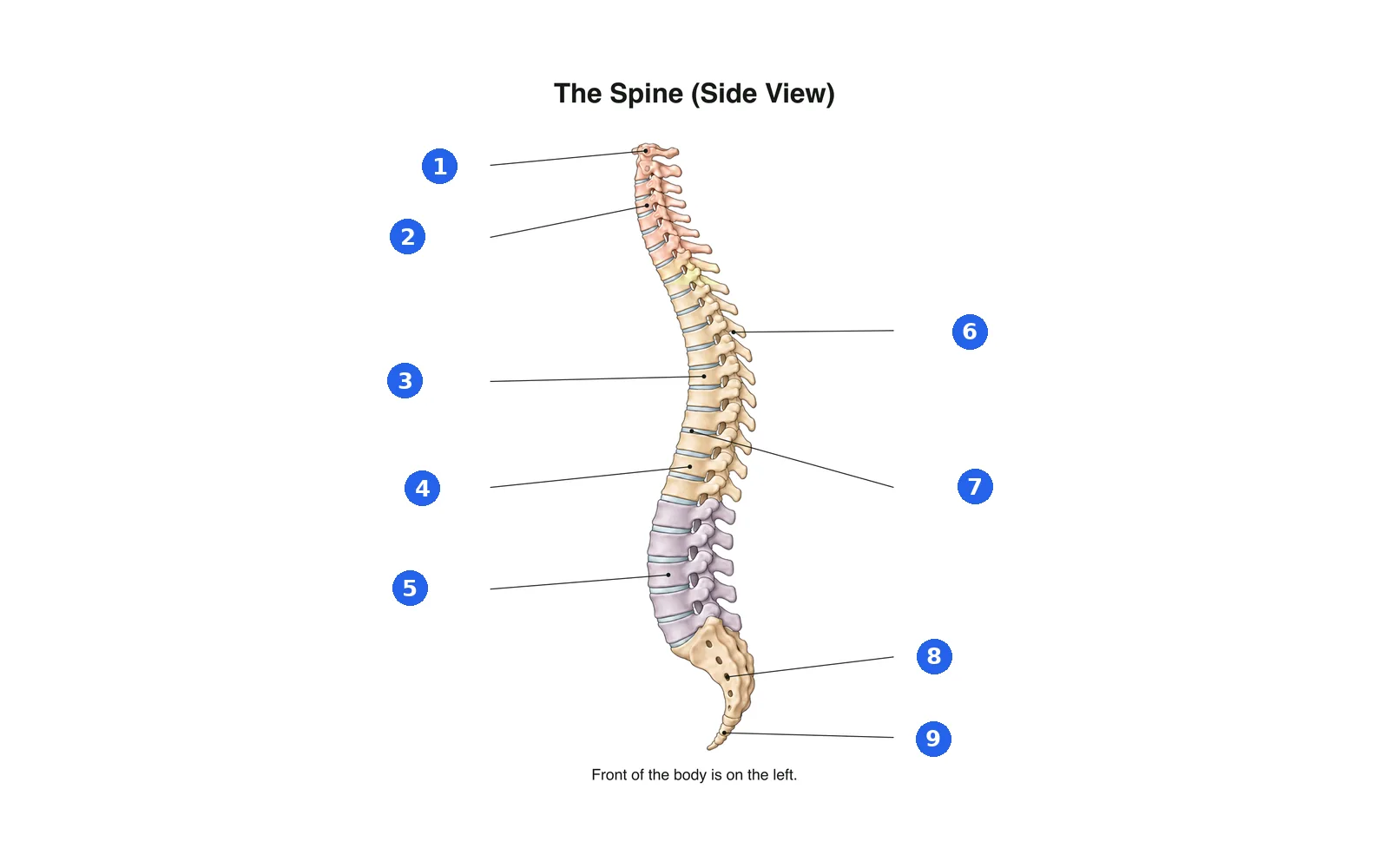
Légende le schéma
Nomme chaque partie numérotée. Passe aux légendes pour étudier d'abord.
Légende 1 sur 9Choisissez une réponse
Quel est le numéro 1 ?
Termes de ce paquet (9)
- Atlas (C1)
- The top vertebra, which holds up the skull and allows nodding.
- Cervical vertebrae
- The 7 neck vertebrae.
- Thoracic vertebrae
- The 12 mid-back vertebrae, each joined to a pair of ribs.
- Lumbar vertebrae
- The 5 large lower-back vertebrae that carry the most weight.
- Sacrum
- Five fused vertebrae joining the spine to the pelvis.
- Coccyx
- The tailbone, at the very bottom of the spine.
- Intervertebral disc
- A cushion of cartilage between two vertebrae; a 'slipped disc' bulges out of place.
- Spinous process
- The bony bump at the back of each vertebra that you can feel down your back.
- Vertebral body
- The thick, round front part of a vertebra that bears weight.
Le voir sur le corps 3D
Ouvrez le modèle 3D sur une partie, avec ses notes et fiches d'École.
Contenu éducatif pour apprendre l'anatomie, pas un avis médical.