Apprentissage 2D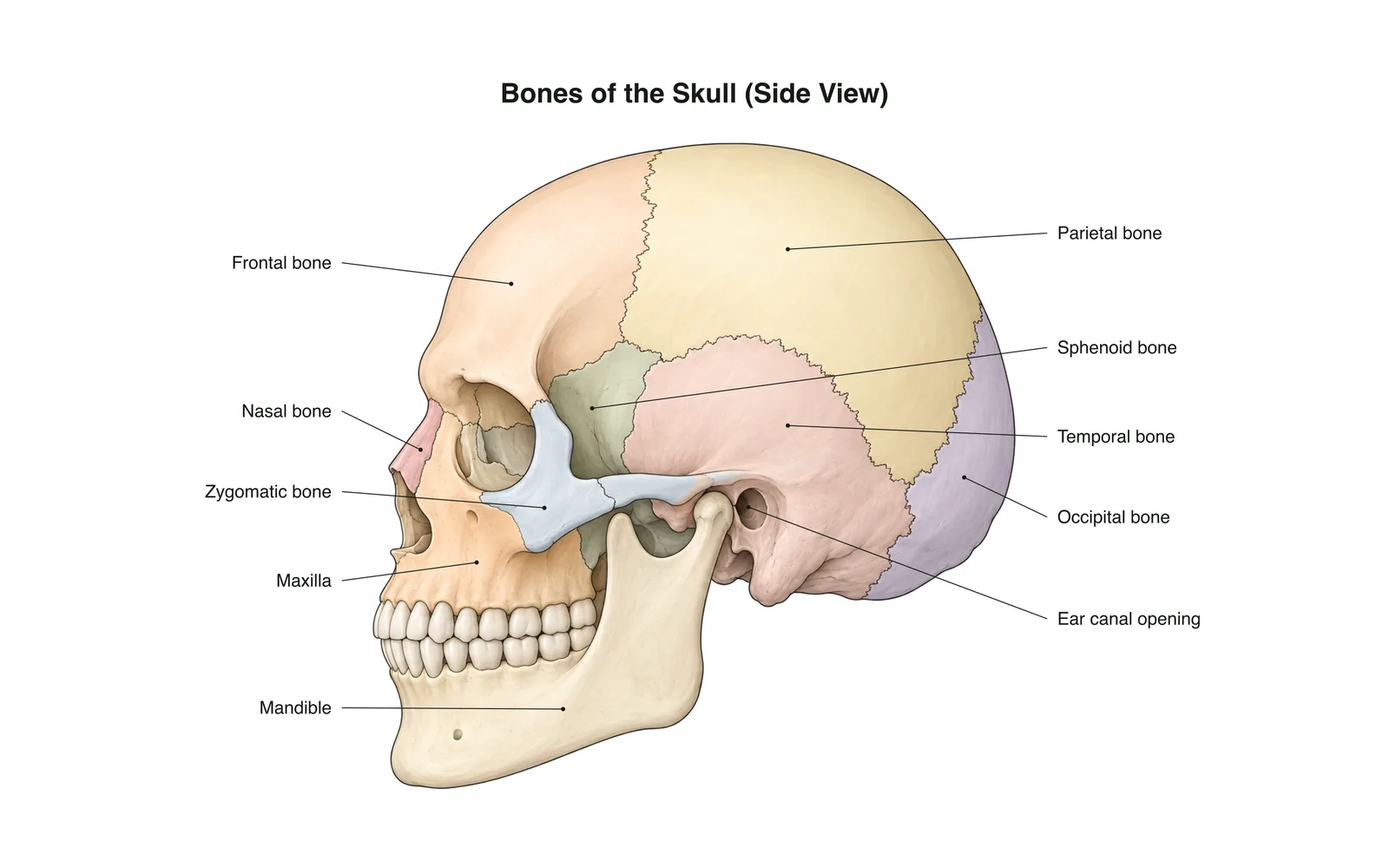
Apprentissage 2D
Bones of the Skull
How it works · Body maps · 10 cartes
Notes d'étude
- The skull has 22 bones: 8 around the brain and 14 in the face.
- Skull bones are joined by fixed joints called sutures; only the jaw moves.
- In babies, soft spots (fontanelles) let the skull grow and squeeze through birth.
Cartes mémoire
Carte 1 sur 10Touchez la carte pour la retourner
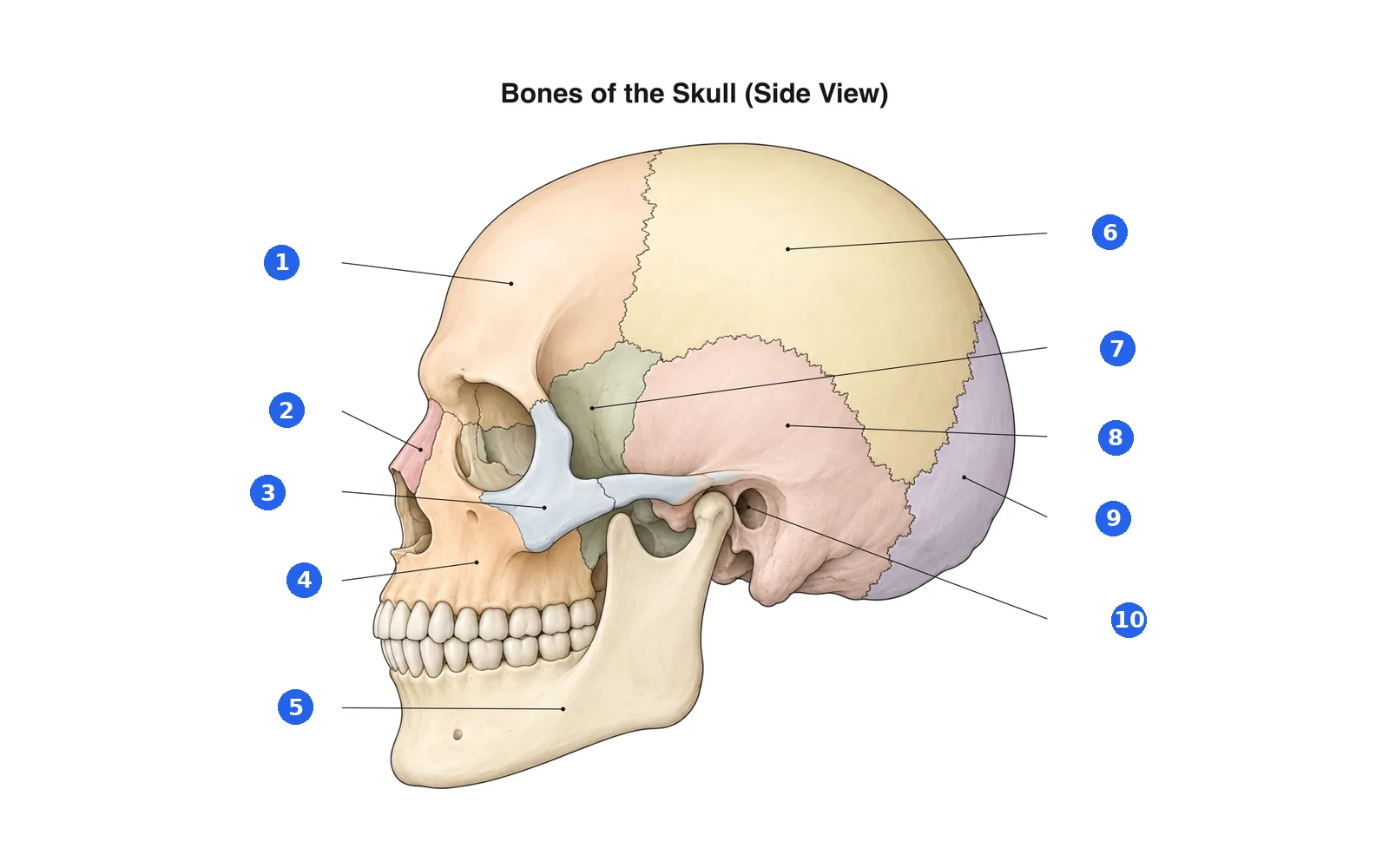
Légende le schéma
Nomme chaque partie numérotée. Passe aux légendes pour étudier d'abord.
Légende 1 sur 10Choisissez une réponse
Quel est le numéro 1 ?
Termes de ce paquet (10)
- Frontal bone
- The forehead and the roofs of the eye sockets.
- Parietal bone
- One of two bones forming the top and upper sides of the skull.
- Occipital bone
- The back and base of the skull.
- Temporal bone
- The side of the skull around the ear; holds the middle and inner ear.
- Sphenoid bone
- A butterfly-shaped bone at the base of the skull, behind the eyes.
- Zygomatic bone
- The cheekbone.
- Nasal bone
- One of two small bones forming the bridge of the nose.
- Maxilla
- The upper jaw, holding the upper teeth.
- Mandible
- The lower jaw, the skull's only movable bone.
- Ear canal opening
- The opening in the temporal bone that leads to the eardrum.
Le voir sur le corps 3D
Ouvrez le modèle 3D sur une partie, avec ses notes et fiches d'École.
Contenu éducatif pour apprendre l'anatomie, pas un avis médical.