2D Learning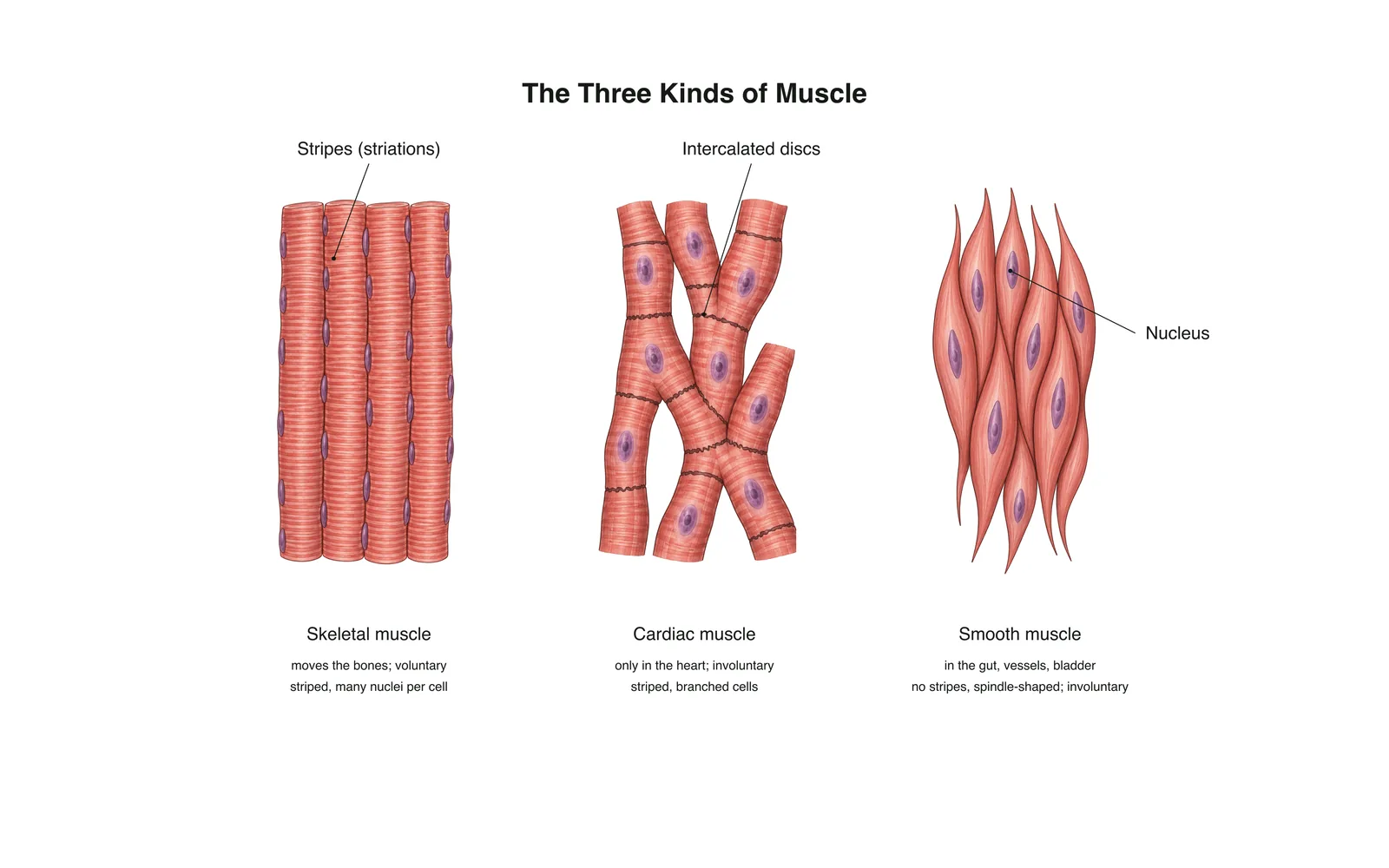
The three kinds of muscle tissue. 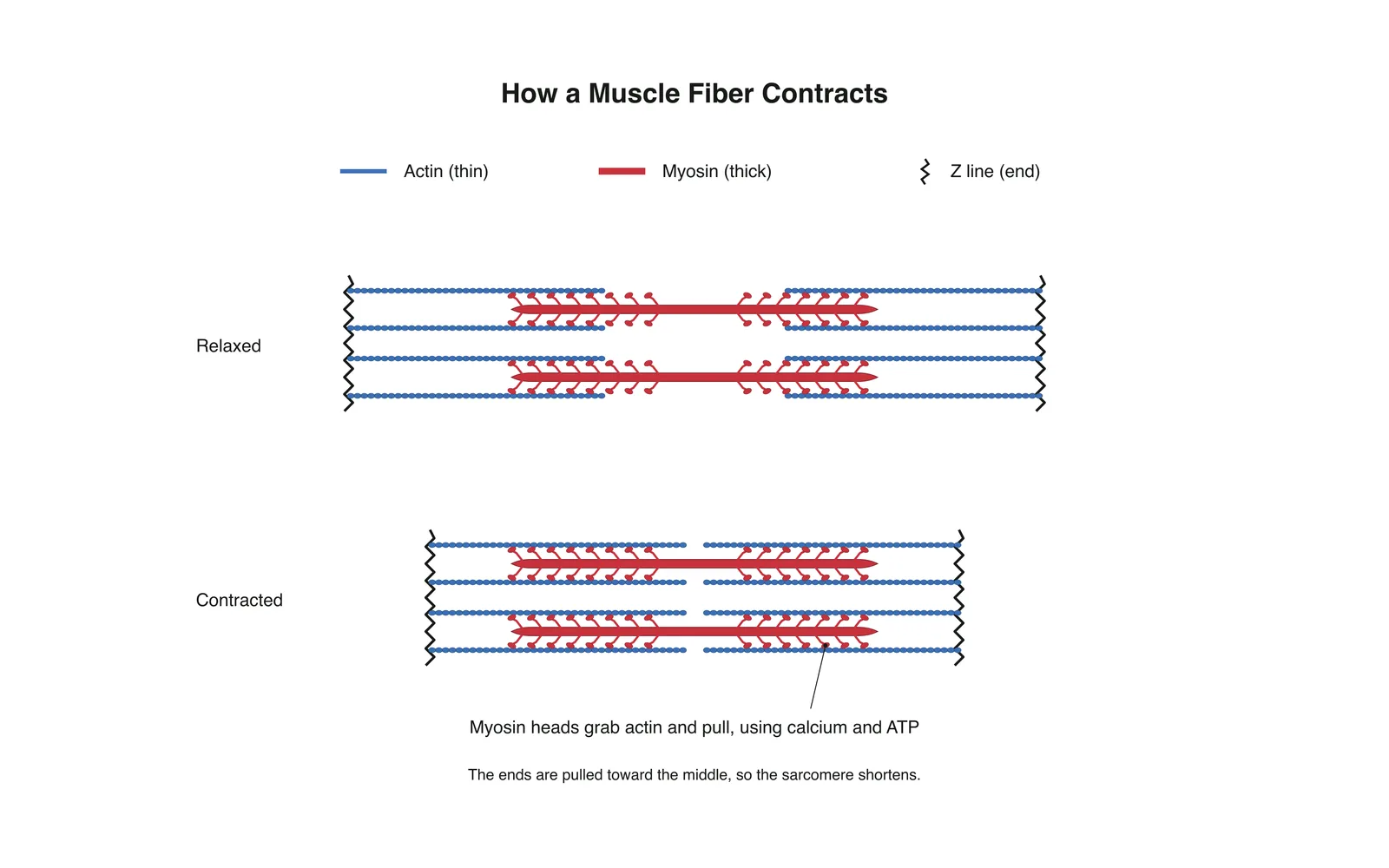
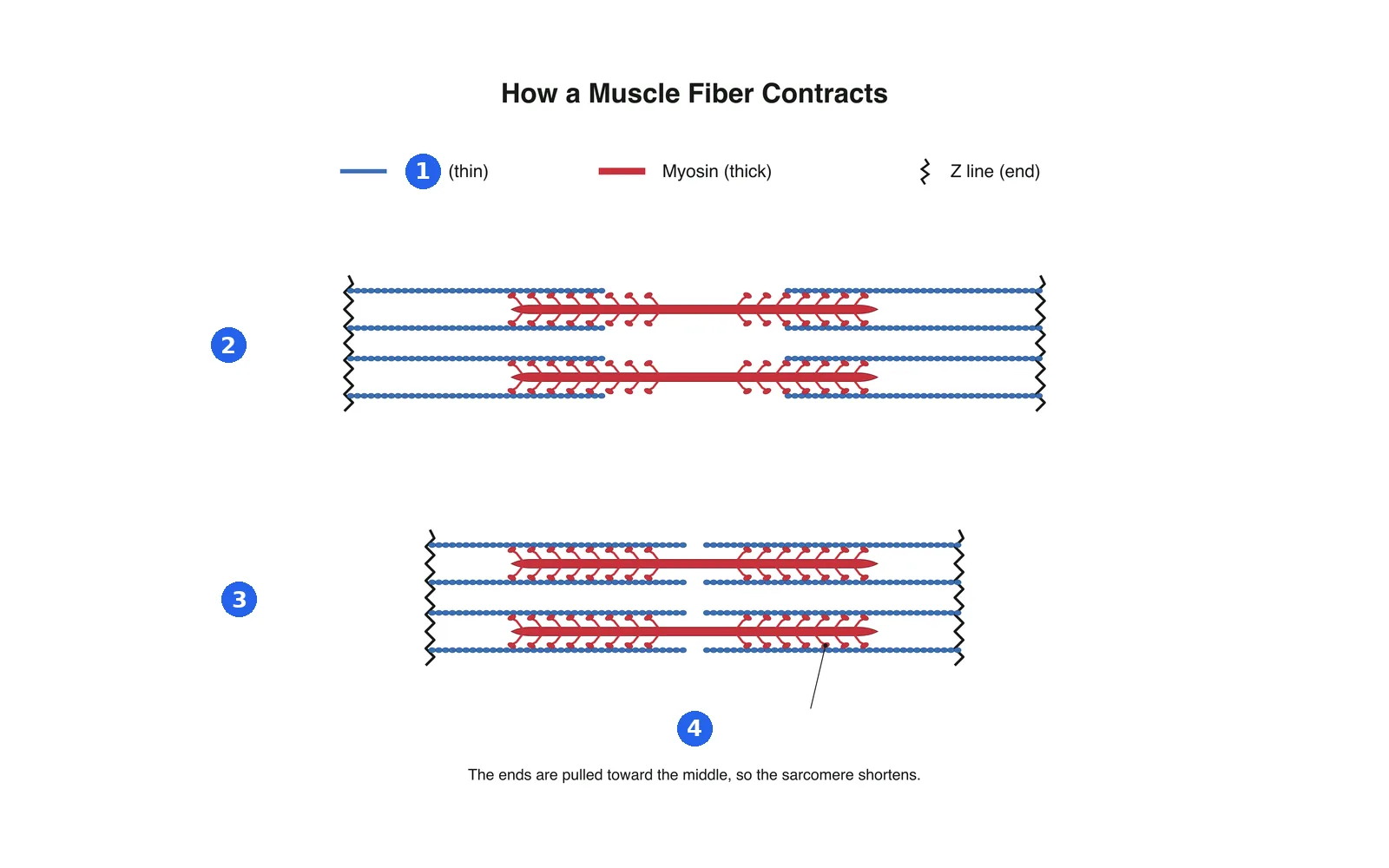
Muscle contraction: myosin pulls actin so each sarcomere shortens. 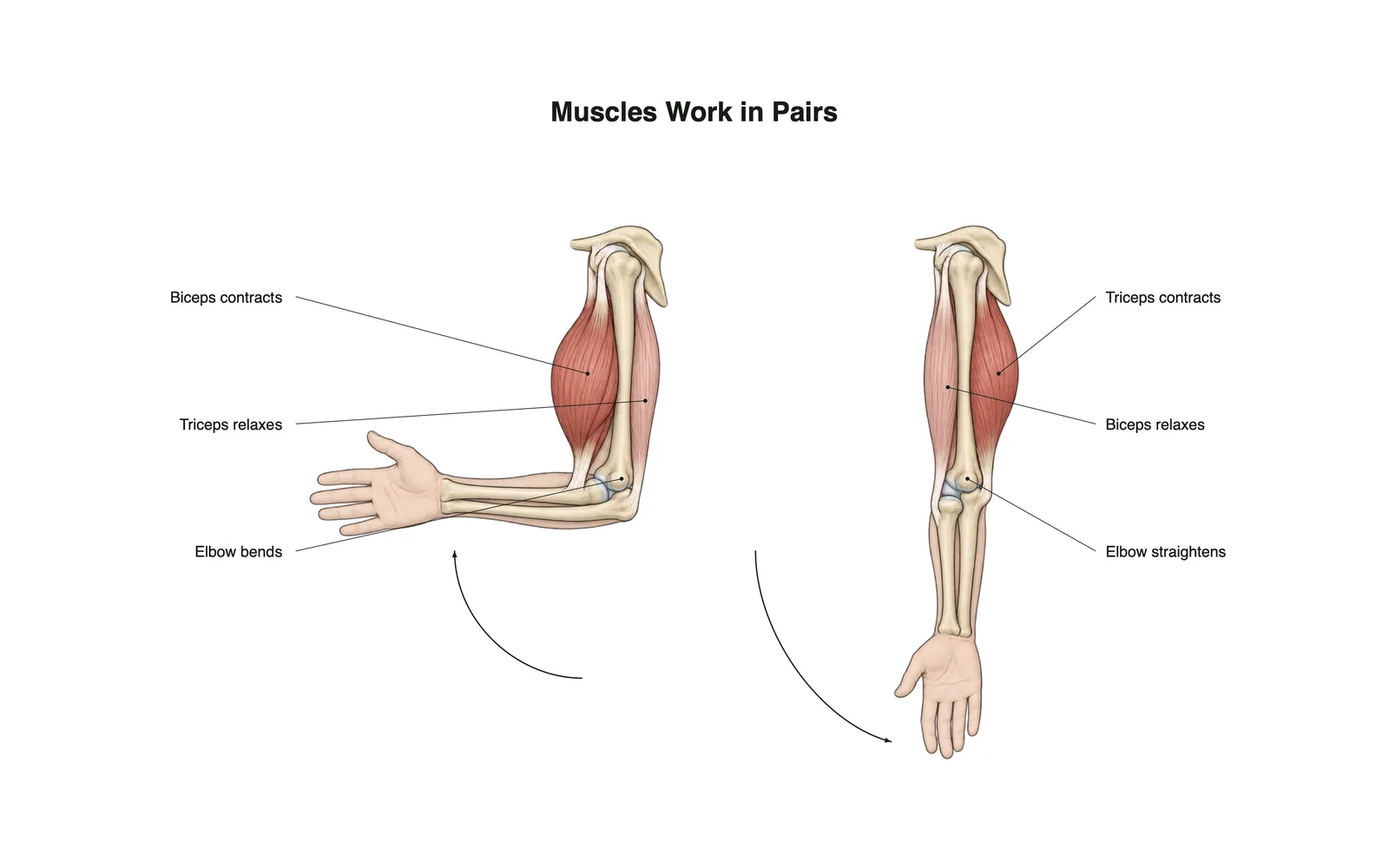
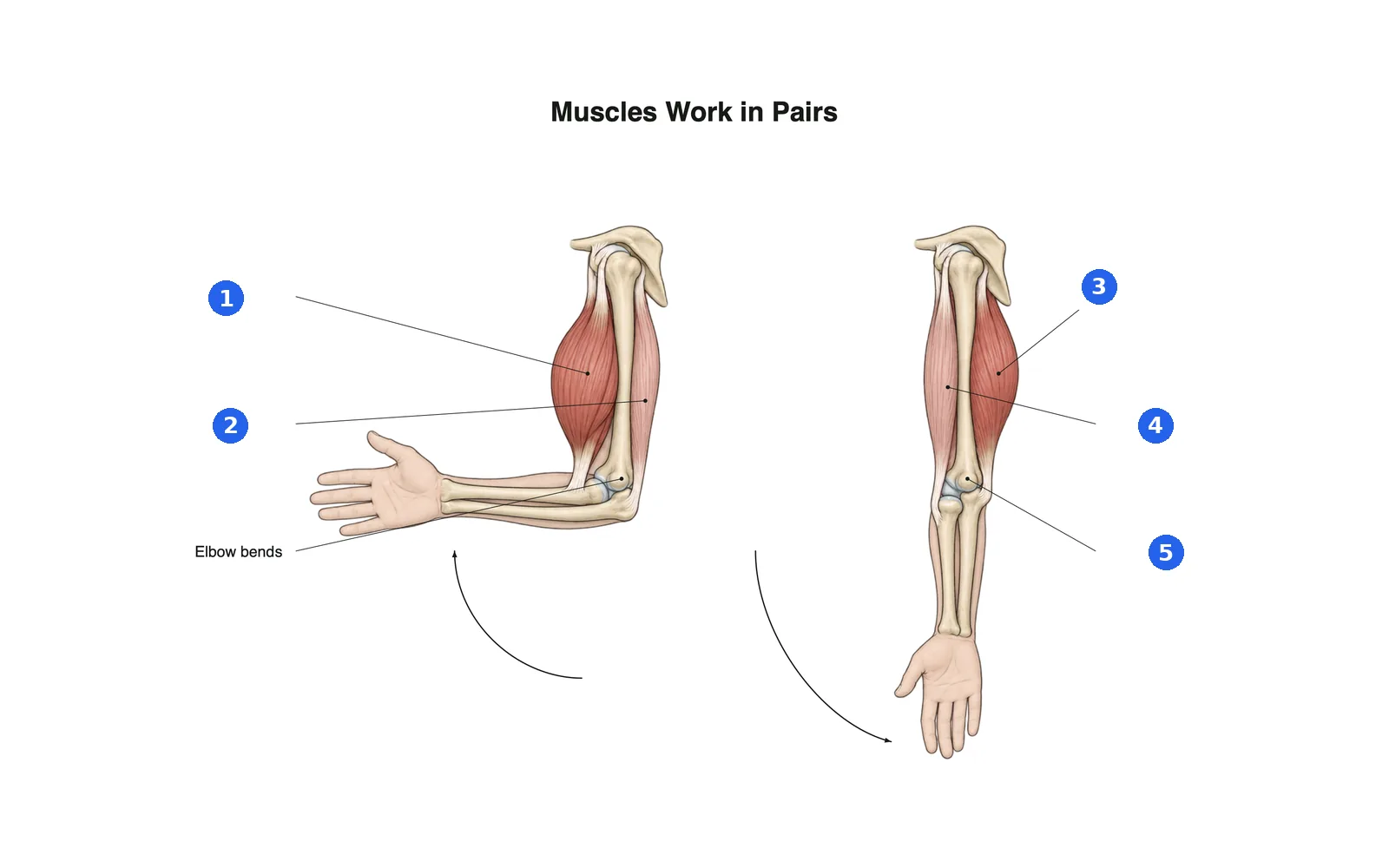
Muscles Work in Pairs 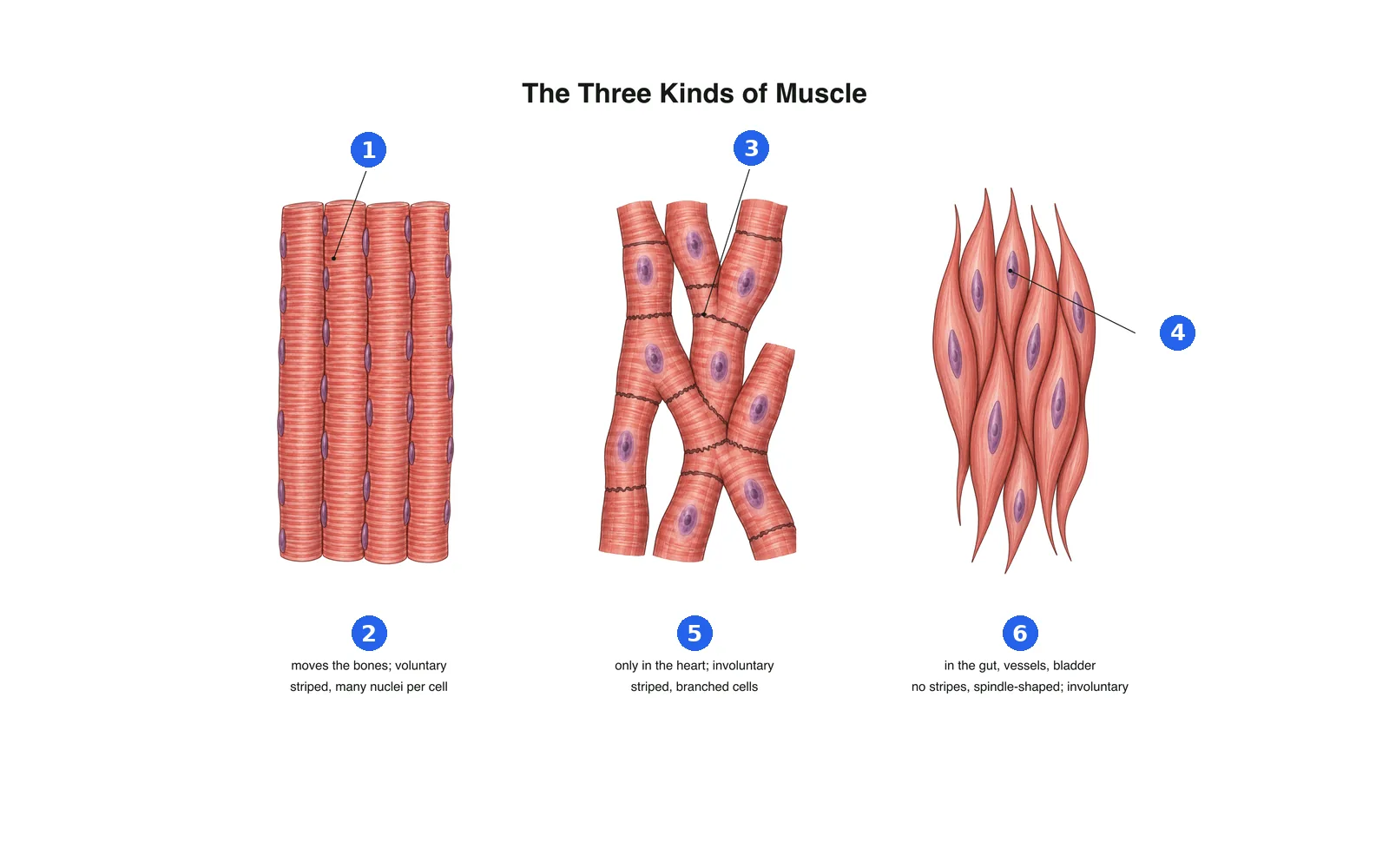
2D Learning
How Muscles Contract
How it works · Bones, joints and muscles · 11 cards
Study notes
- There are three kinds of muscle: skeletal (moves bones), cardiac (the heart) and smooth (walls of organs and vessels).
- A nerve signal at the neuromuscular junction tells a skeletal muscle fiber to contract.
- Inside each fiber, tiny filaments of myosin pull on filaments of actin, shortening units called sarcomeres.
- Contraction needs calcium and energy (ATP); muscles can only pull, never push.
Flashcards
Card 1 of 11Tap the card to flip
Label the diagram
Name each numbered part. Switch to the labels to study first.
Label 1 of 6Pick an answer
What is number 1?
Label 1 of 4Pick an answer
What is number 1?
Label 1 of 5Pick an answer
What is number 1?
Terms in this deck (11)
- Skeletal muscle
- Striped muscle attached to bones; under voluntary (conscious) control.
- Cardiac muscle
- The striped, involuntary muscle of the heart; its cells are linked so they beat together.
- Smooth muscle
- Unstriped, involuntary muscle in the walls of the gut, blood vessels, bladder and airways.
- Muscle fiber
- A single long muscle cell, packed with contracting filaments.
- Sarcomere
- The basic contracting unit of a muscle fiber, repeated end to end along it.
- Actin and myosin
- The two protein filaments of muscle: myosin heads grab and pull on actin to shorten the muscle.
- Sliding filament theory
- Muscles shorten because actin and myosin filaments slide past each other, not because the filaments shrink.
- Neuromuscular junction
- Where a motor nerve meets a muscle fiber and releases acetylcholine to trigger contraction.
- Role of calcium
- Calcium released inside the fiber uncovers binding sites on actin so myosin can grab on.
- Muscle cramp
- A sudden, painful, involuntary contraction that does not relax right away.
- Intercalated discs
- Special junctions joining heart muscle cells so they contract together as one.
See it on the 3D body
Open the 3D model on a part, with its School notes and flashcards.
Face & Jaw MusclesNeck MusclesRotator Cuff & DeltoidUpper Back & Shoulder Blade MusclesChest MusclesBiceps & Front of Upper ArmTriceps & Back of Upper ArmForearm FlexorsForearm ExtensorsCore & Abdominal MusclesSpinal Erector MusclesGlutes & Hip FlexorsInner Thigh & Groin MusclesQuadriceps & Front of ThighHamstrings & Back of ThighCalf, Shin & Ankle Muscles
Educational content for learning anatomy, not medical advice.