All decks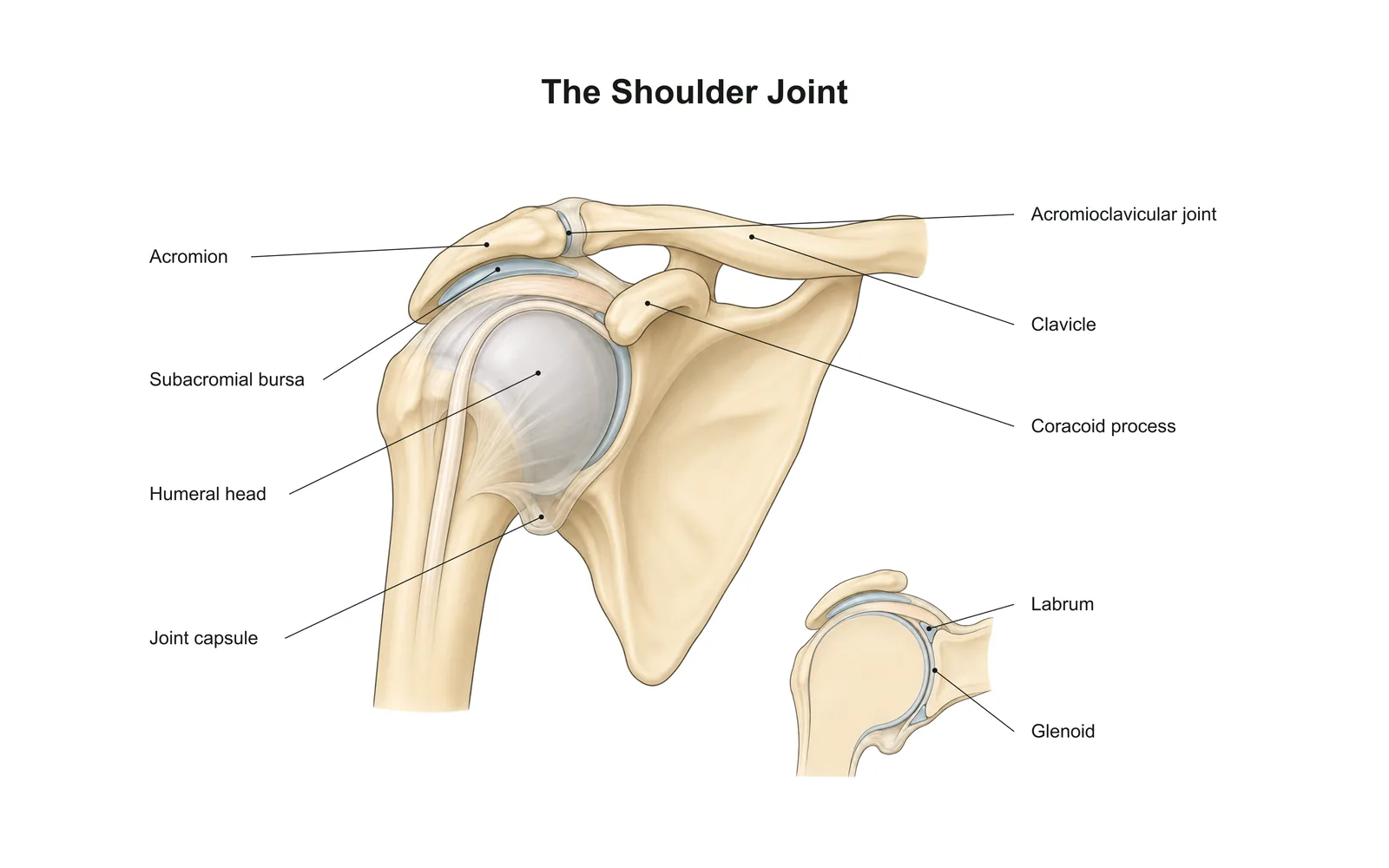
The Shoulder Joint 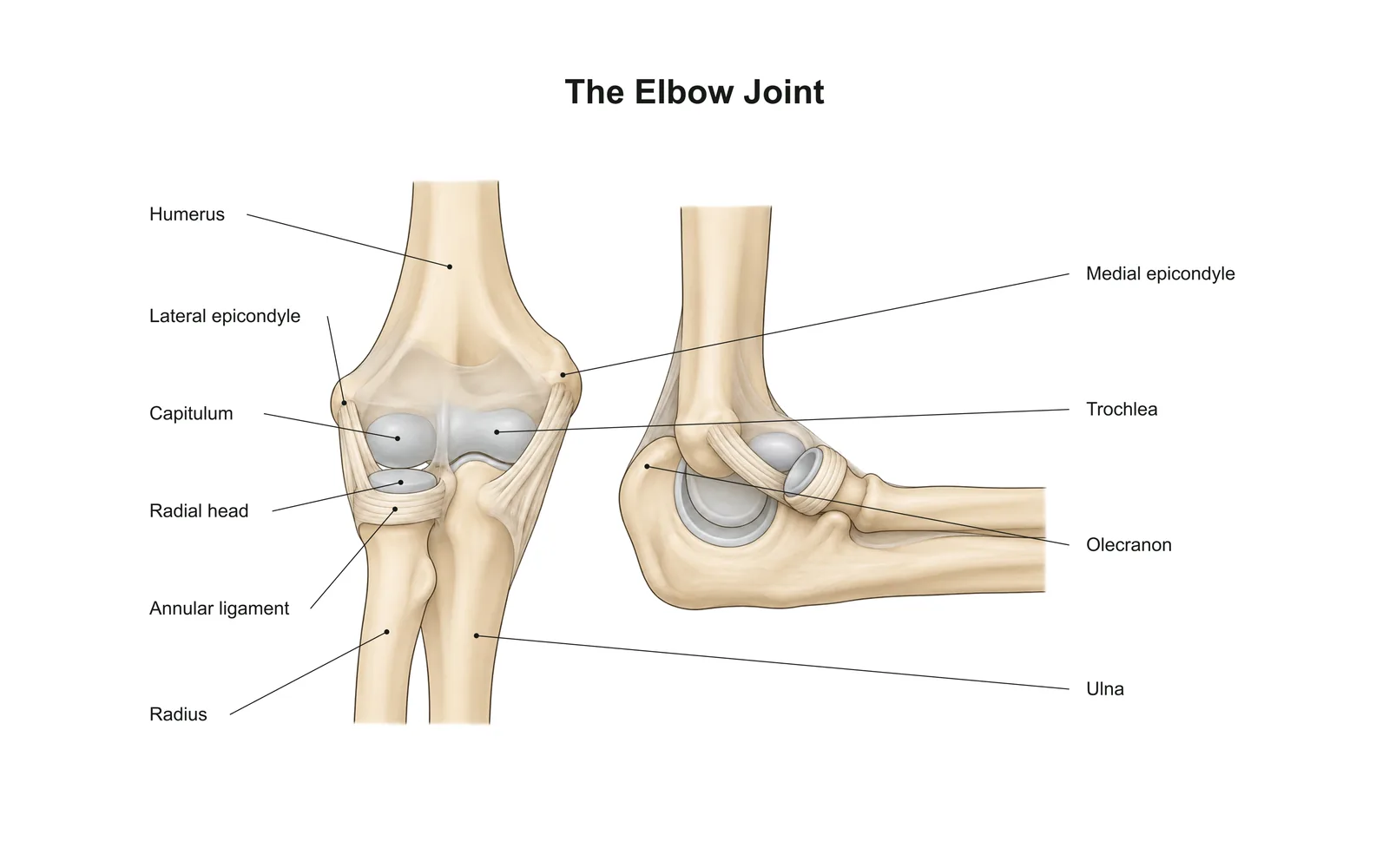
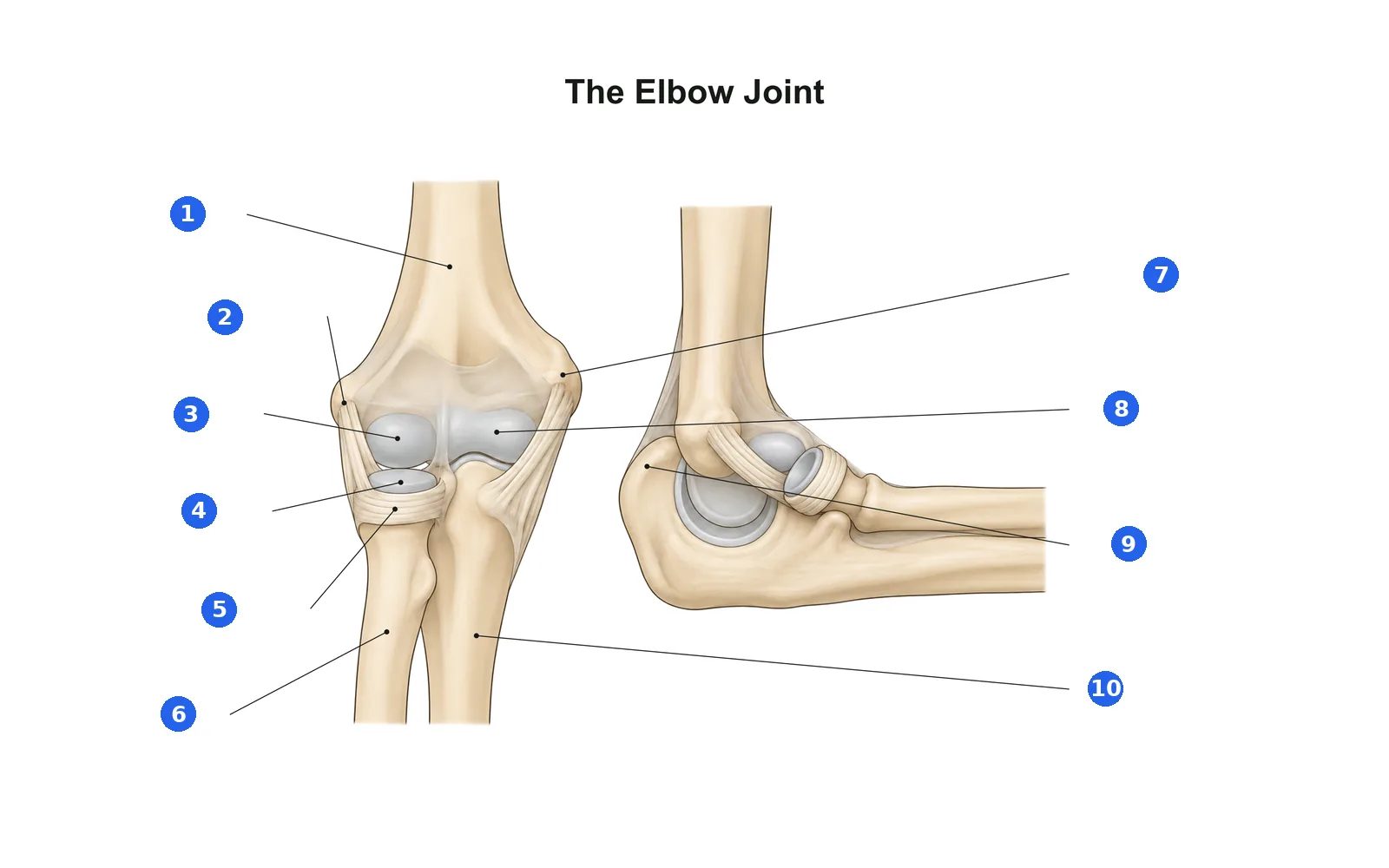
The Elbow Joint 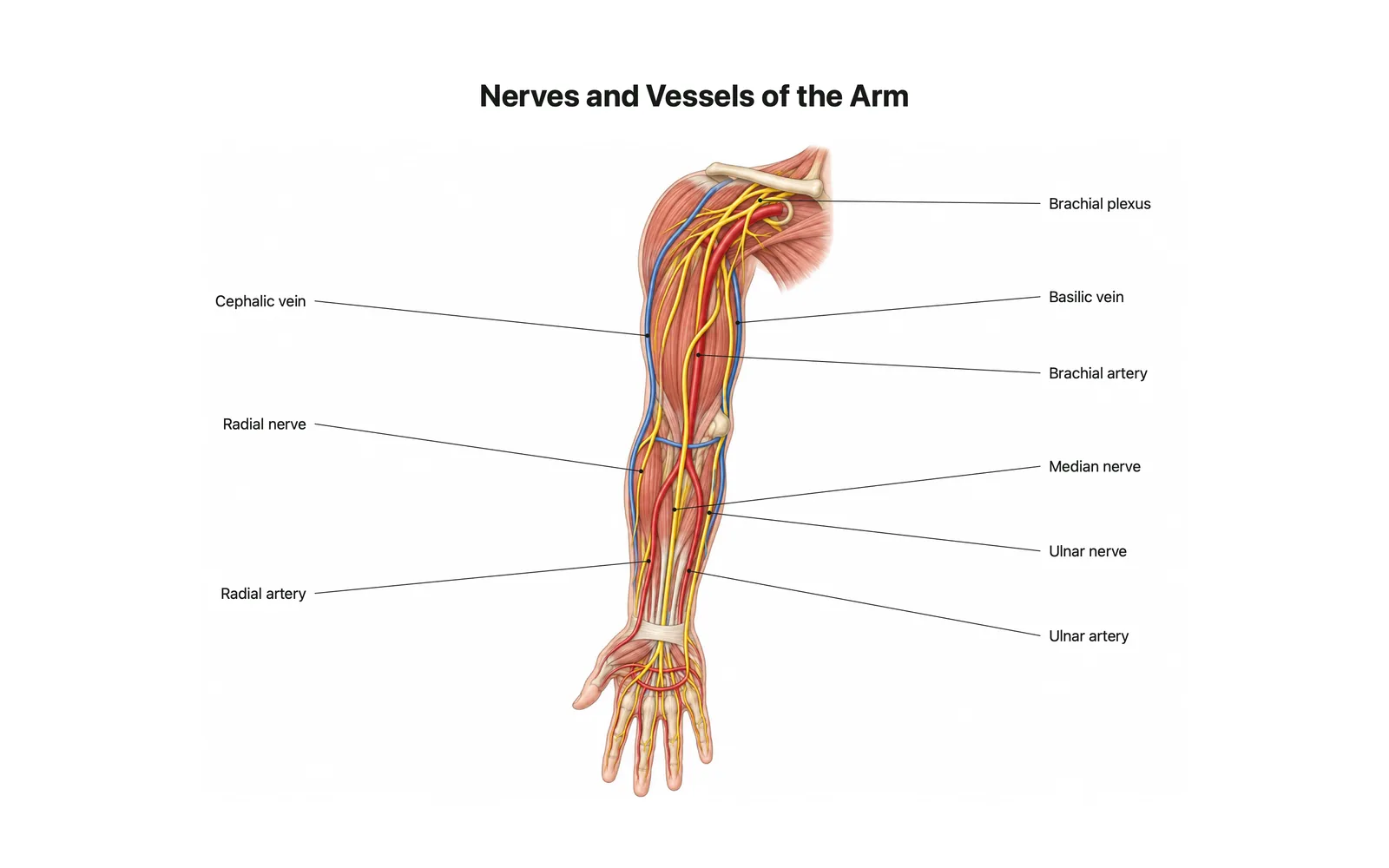
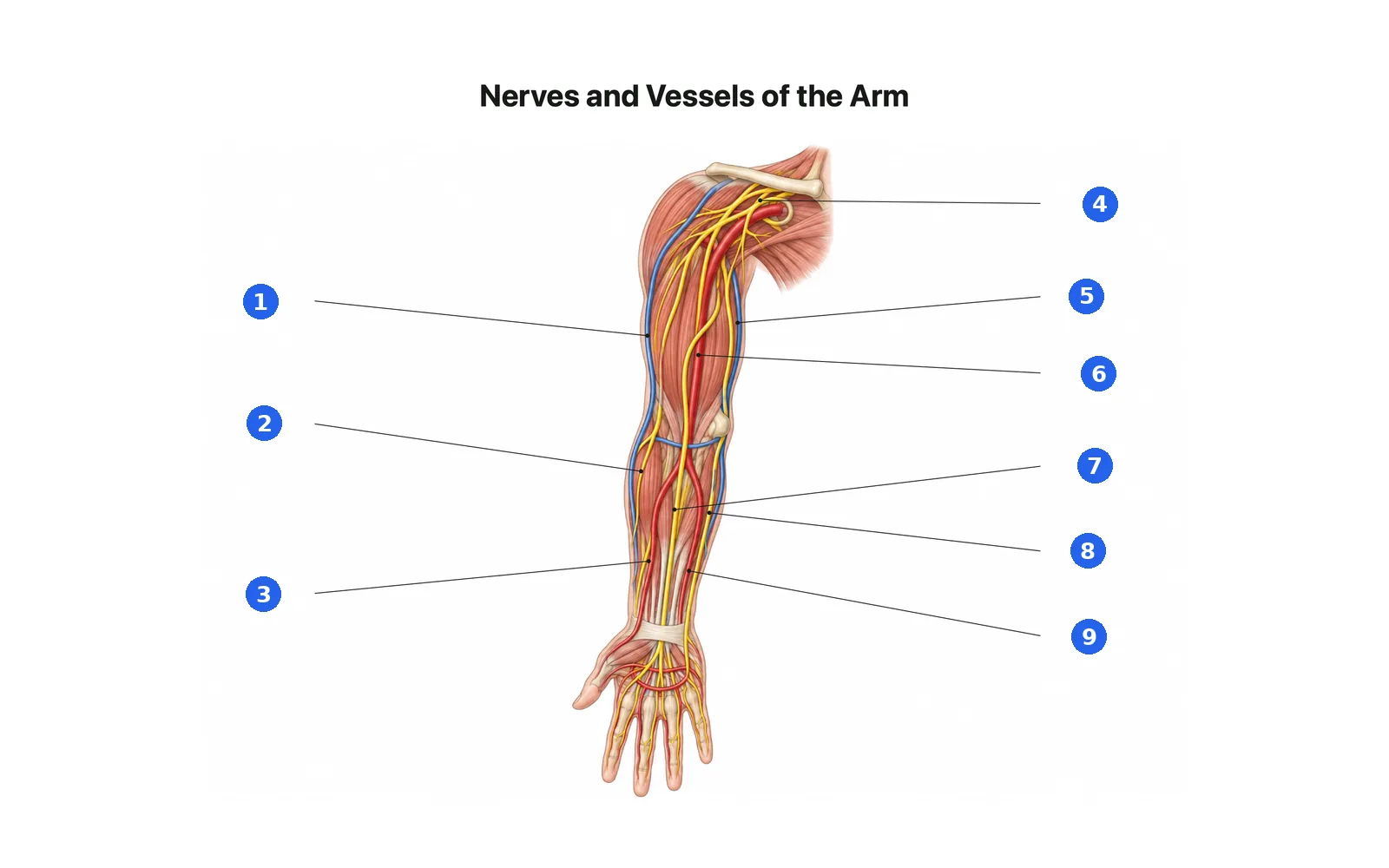
Nerves and Vessels of the Arm 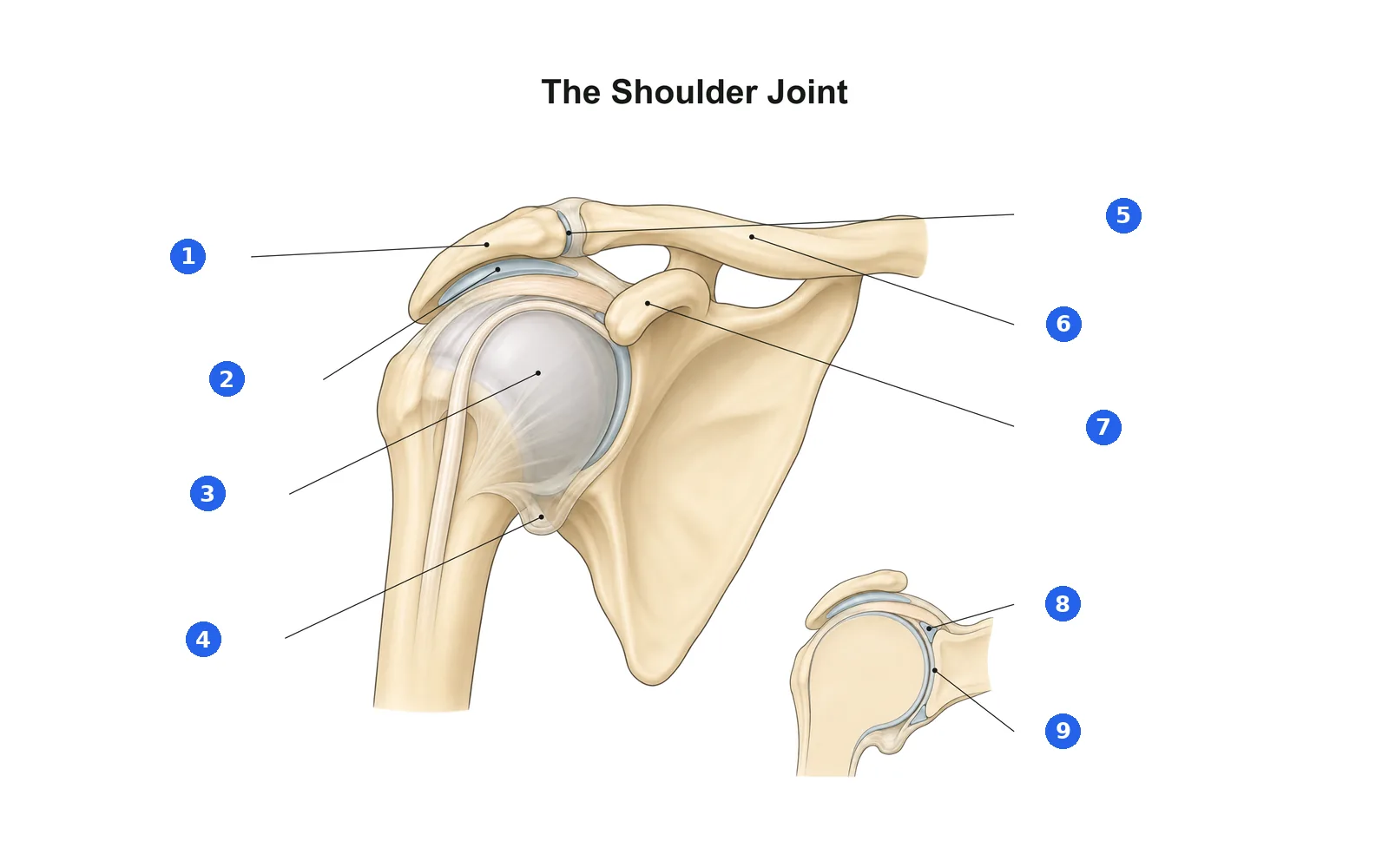
Arm and shoulder: care and discussions
Body regions
Arm (Upper Limb)
Body region · Brachial and antebrachial · 8 cards
Study notes
- The upper limb runs from the shoulder to the fingers: shoulder, arm, elbow, forearm, wrist and hand.
- In anatomy, 'arm' (brachium) means only the part between the shoulder and elbow.
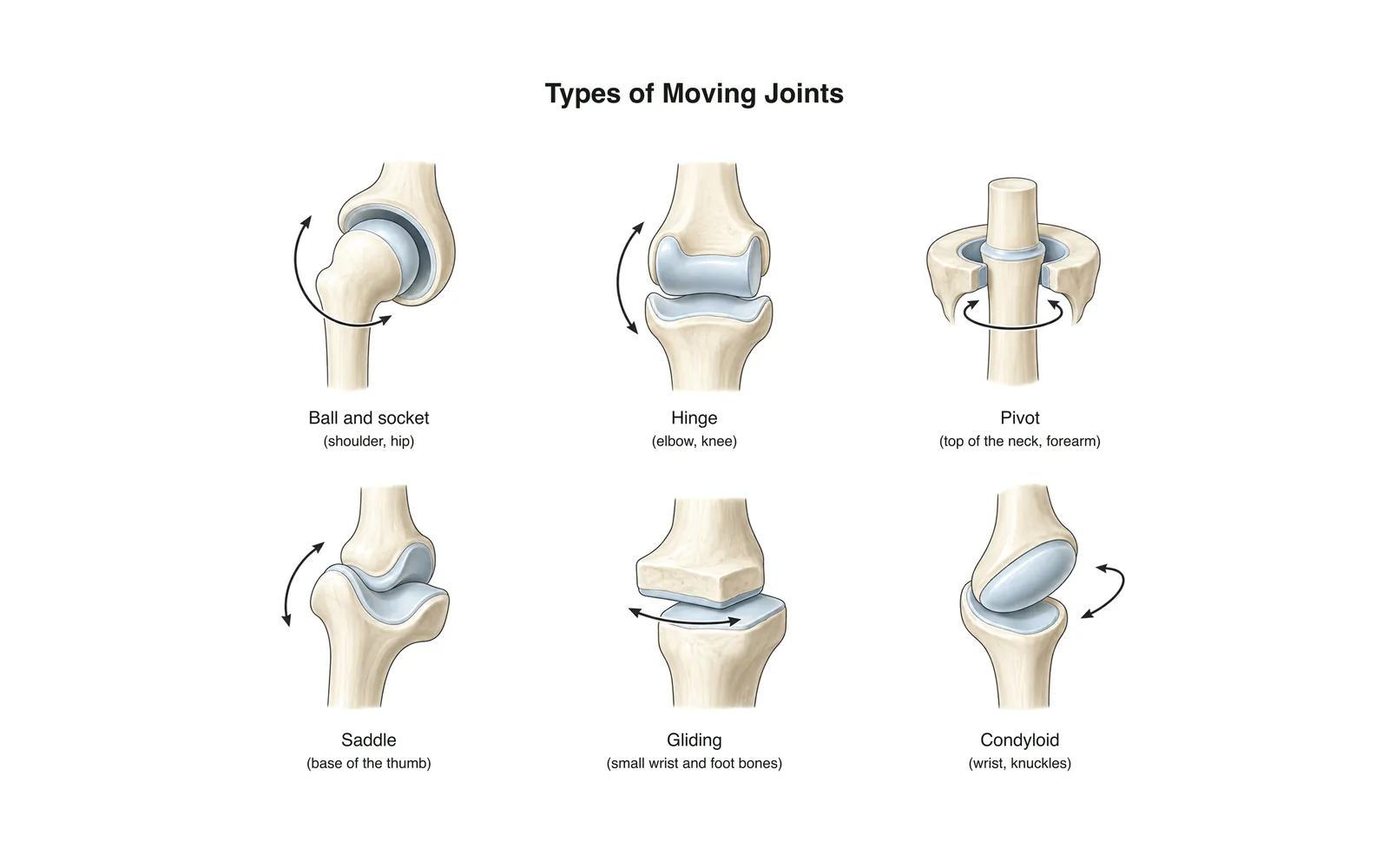
- The shoulder is the most mobile joint in the body, which also makes it the easiest to dislocate.
- The forearm has two bones, which lets it rotate the palm up and down.
Flashcards
Card 1 of 8Tap the card to flip
Label the diagram
Name each numbered part. Switch to the labels to study first.
Label 1 of 9Pick an answer
What is number 1?
Label 1 of 10Pick an answer
What is number 1?
Label 1 of 9Pick an answer
What is number 1?
Terms in this deck (8)
- Brachial
- Referring to the arm, the segment between the shoulder and the elbow.
- Antebrachial
- Referring to the forearm, between the elbow and the wrist.
- Antecubital region
- The front of the elbow, where blood is often drawn.
- Olecranal region
- The back of the elbow (the olecranon, the 'funny bone' area).
- Axillary region
- The armpit.
- Supination
- Rotating the forearm so the palm faces up (or forward).
- Pronation
- Rotating the forearm so the palm faces down (or backward).
- Proximal vs distal (on a limb)
- Proximal is closer to where the limb attaches to the body; distal is farther away. The wrist is distal to the elbow.
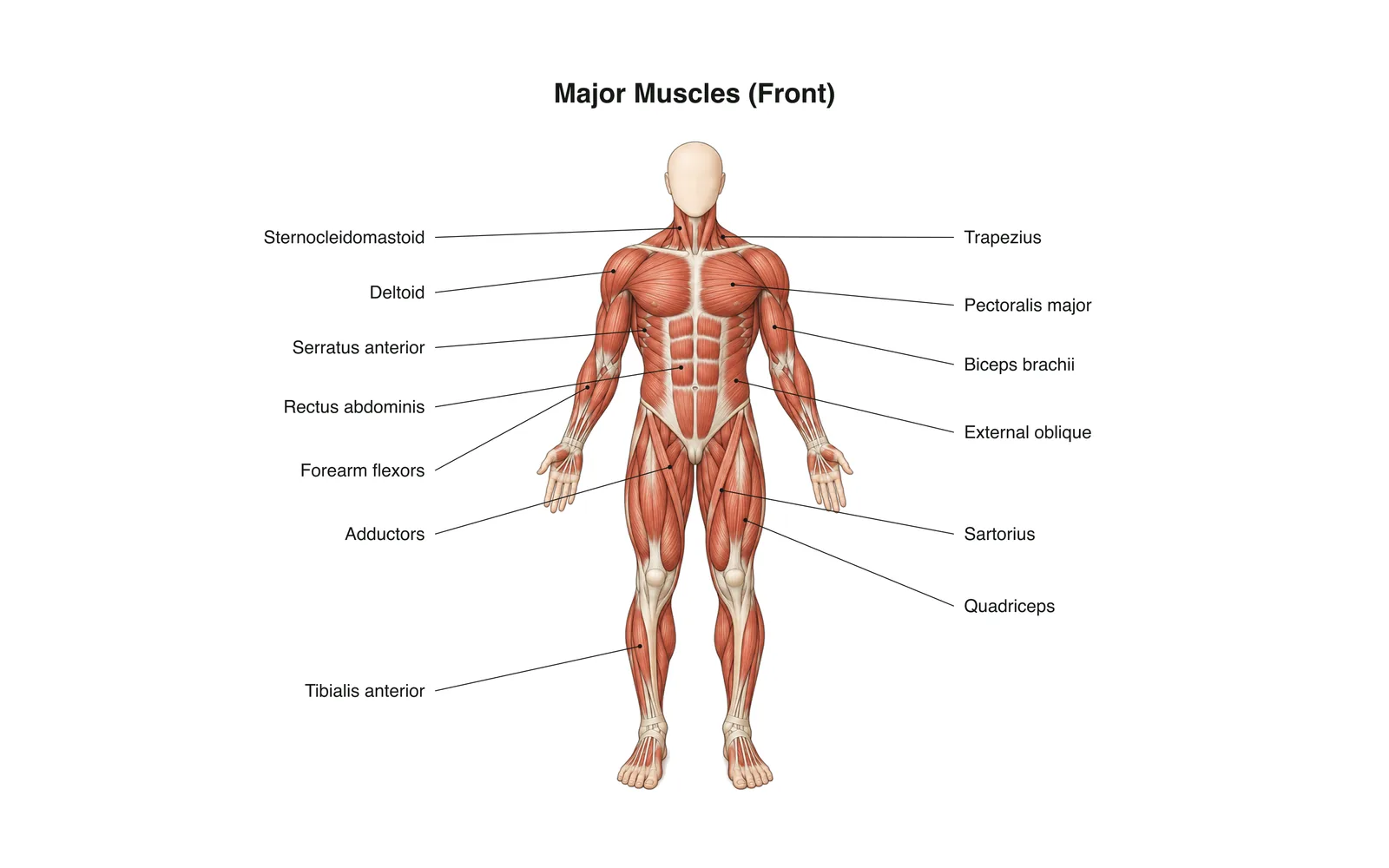
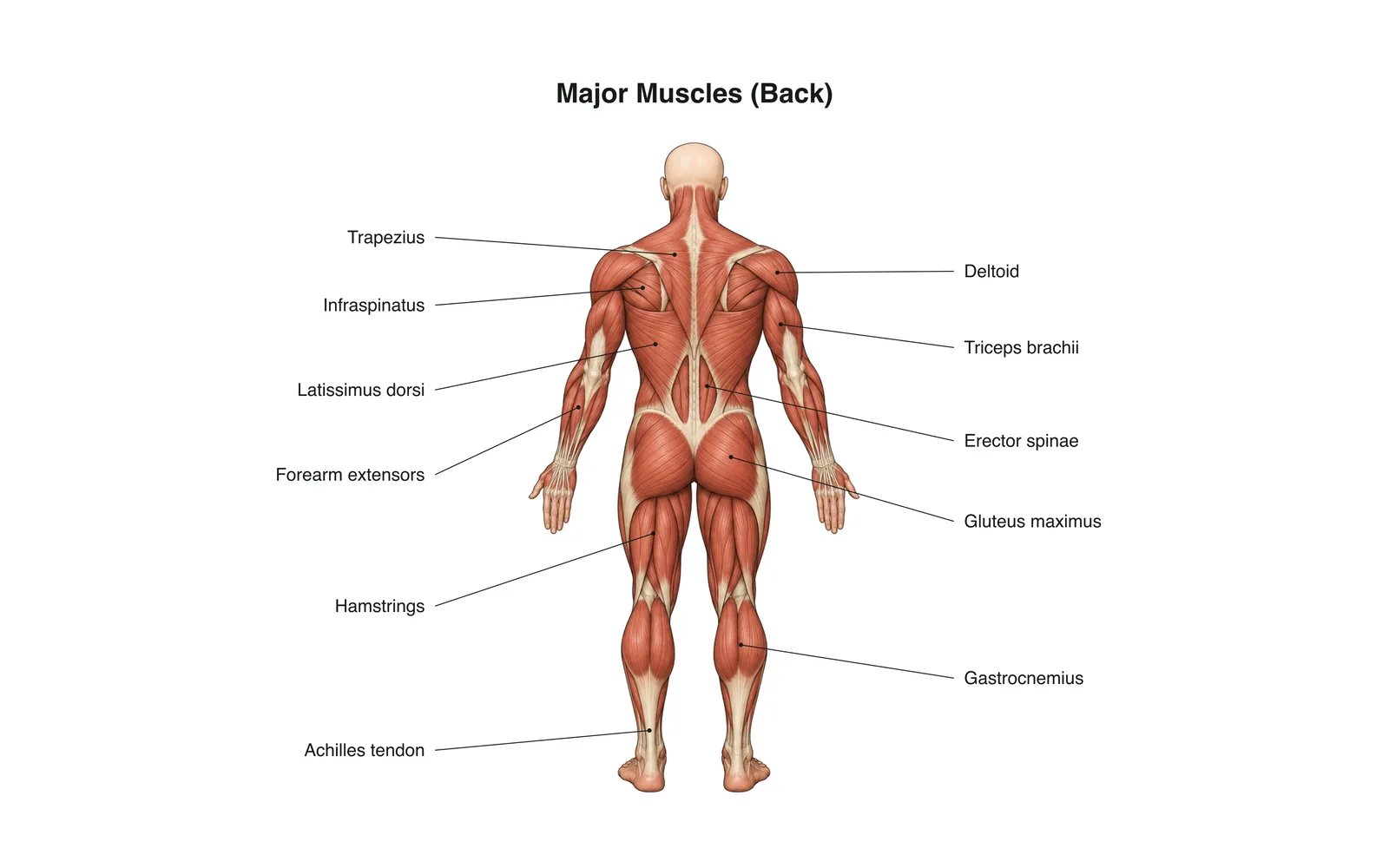
2D Learning
Diagrams and body maps for this part.
Educational content for learning anatomy, not medical advice. Tap this part on the 3D model with School selected to see it in place.