Aprendizaje 2D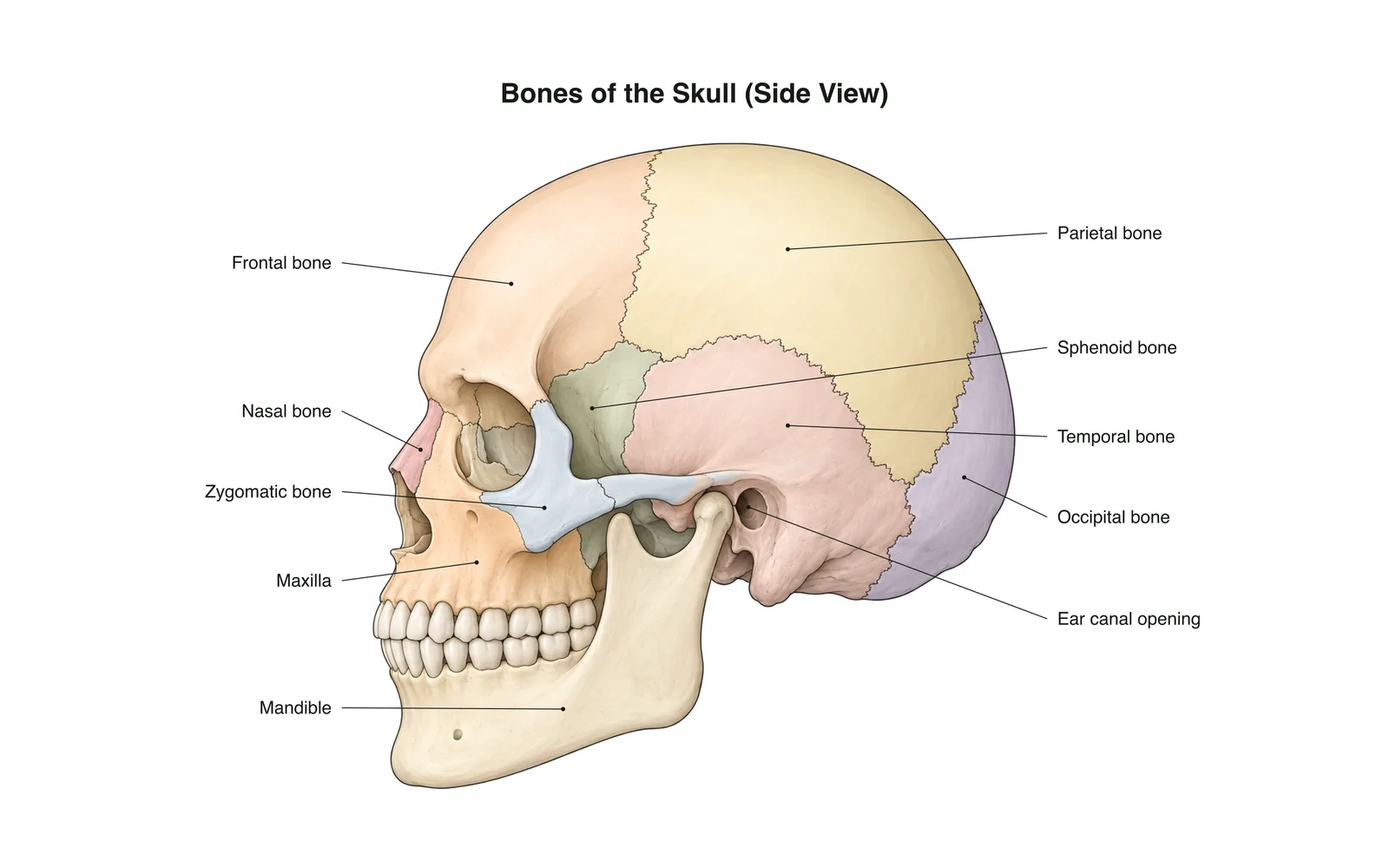
Aprendizaje 2D
Bones of the Skull
How it works · Body maps · 10 tarjetas
Notas de estudio
- The skull has 22 bones: 8 around the brain and 14 in the face.
- Skull bones are joined by fixed joints called sutures; only the jaw moves.
- In babies, soft spots (fontanelles) let the skull grow and squeeze through birth.
Tarjetas
Tarjeta 1 de 10Toca la tarjeta para darle la vuelta
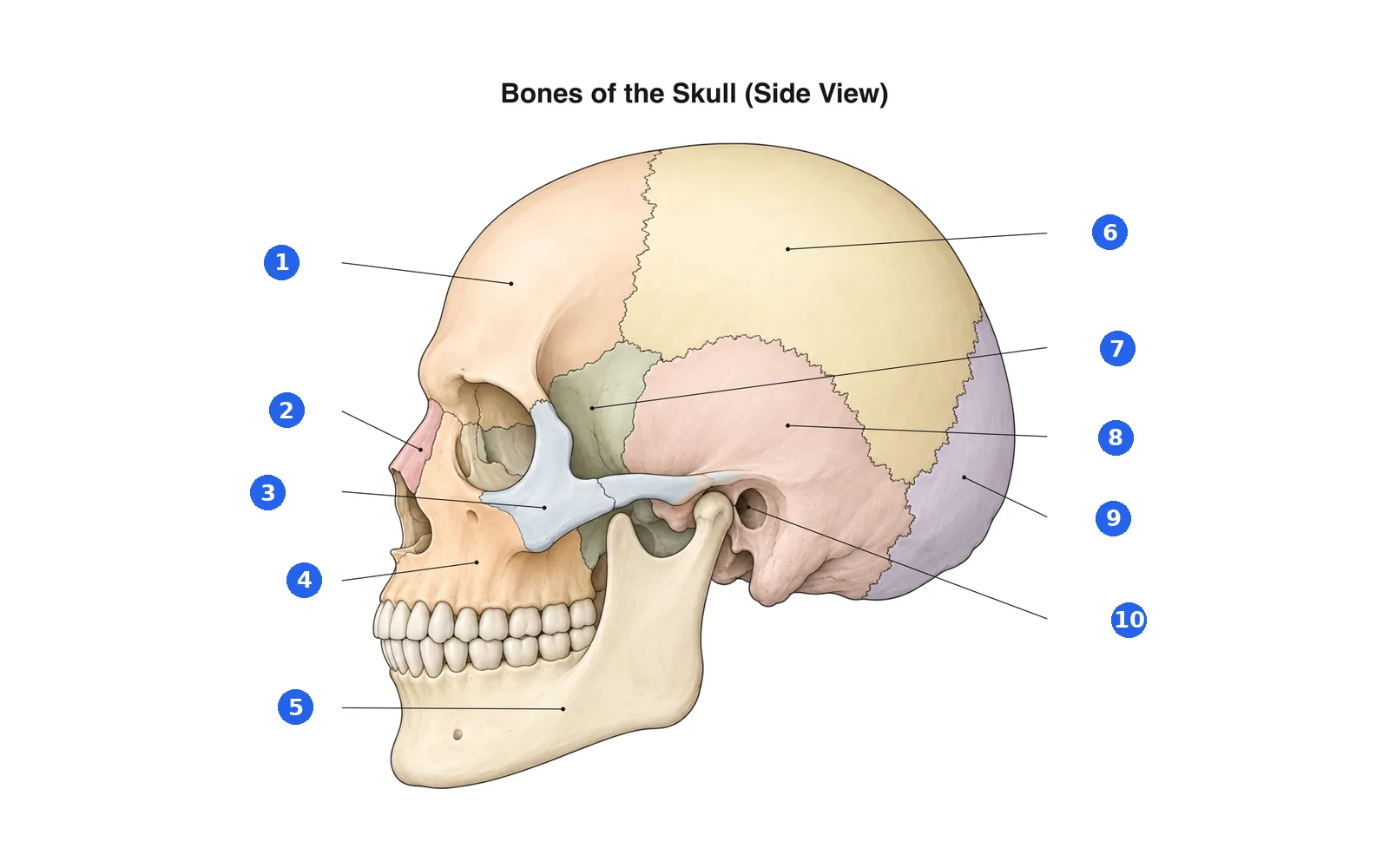
Etiqueta el diagrama
Nombra cada parte numerada. Cambia a las etiquetas para estudiar primero.
Etiqueta 1 de 10Elige una respuesta
¿Qué es el número 1?
Términos de este mazo (10)
- Frontal bone
- The forehead and the roofs of the eye sockets.
- Parietal bone
- One of two bones forming the top and upper sides of the skull.
- Occipital bone
- The back and base of the skull.
- Temporal bone
- The side of the skull around the ear; holds the middle and inner ear.
- Sphenoid bone
- A butterfly-shaped bone at the base of the skull, behind the eyes.
- Zygomatic bone
- The cheekbone.
- Nasal bone
- One of two small bones forming the bridge of the nose.
- Maxilla
- The upper jaw, holding the upper teeth.
- Mandible
- The lower jaw, the skull's only movable bone.
- Ear canal opening
- The opening in the temporal bone that leads to the eardrum.
Verlo en el cuerpo 3D
Abre el modelo 3D en una parte, con sus notas y tarjetas de Escuela.
Contenido educativo para aprender anatomía, no consejo médico.