Kujifunza kwa 2D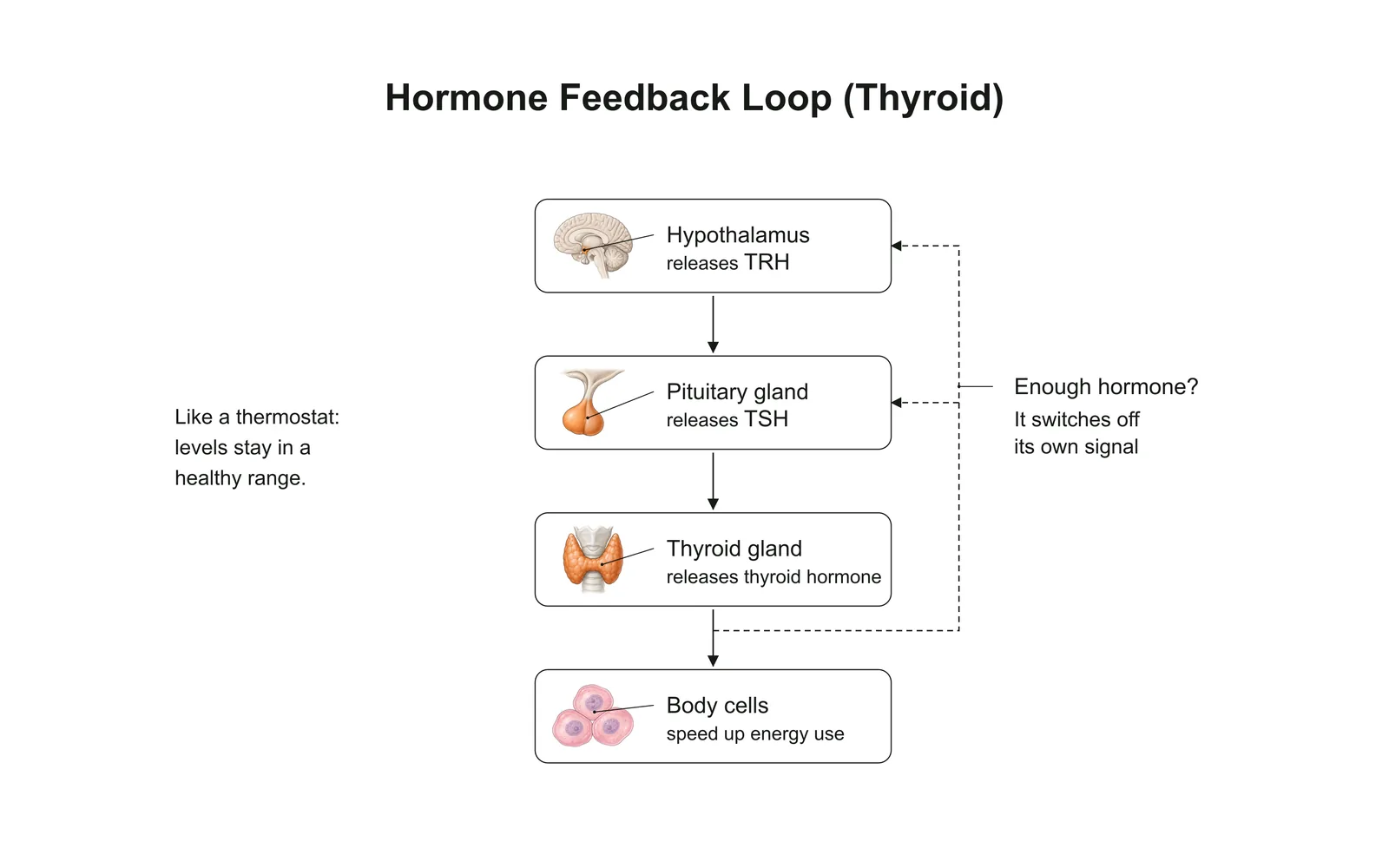
Negative feedback keeps hormone levels in a healthy range. 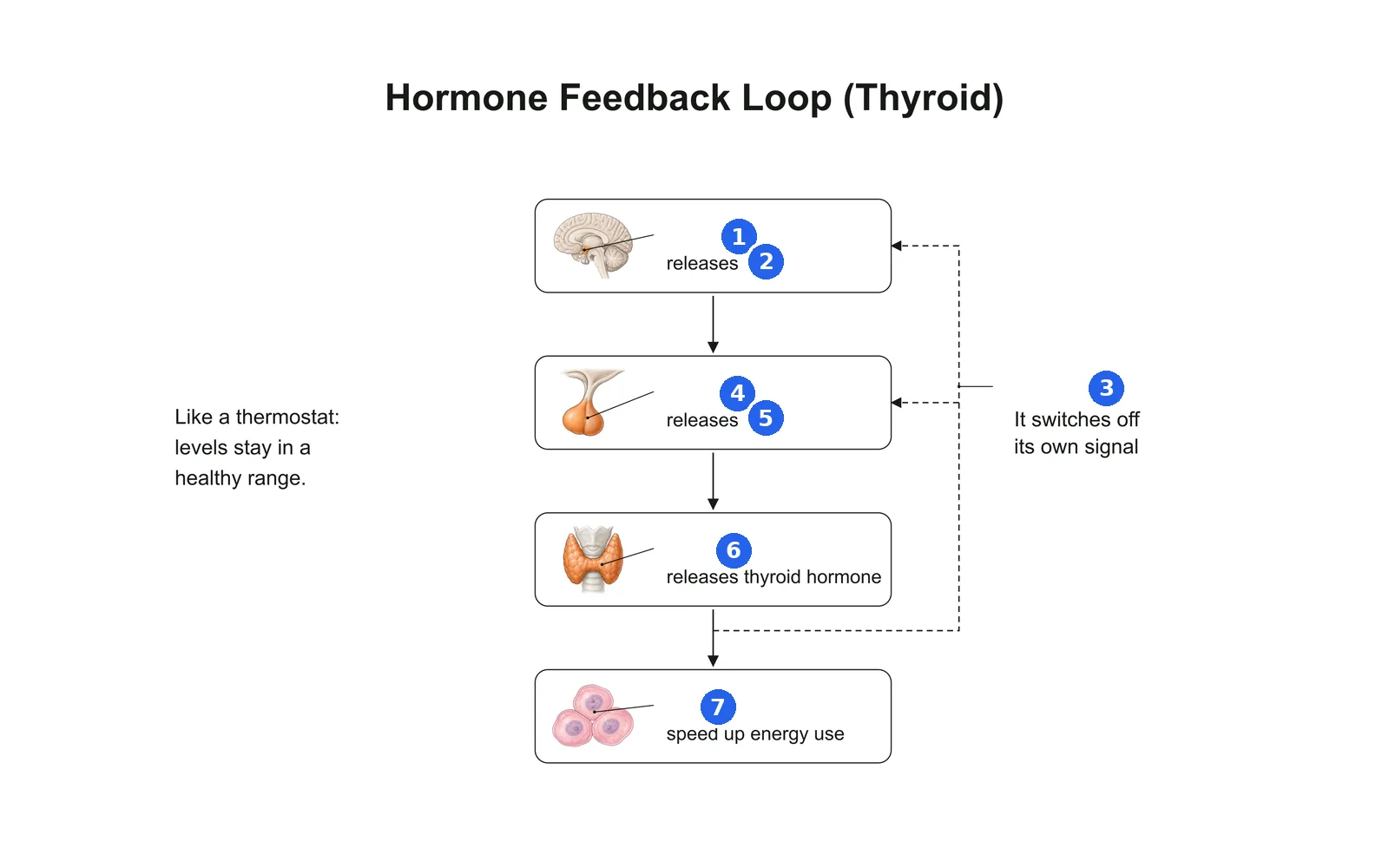
Kujifunza kwa 2D
How Hormones Work
How it works · Hormones · Kadi 10
Maelezo ya kusoma
- Hormones are chemical messengers made by glands and carried in the blood to target cells.
- Only cells with the matching receptor respond to a hormone.
- Most hormone levels are kept steady by negative feedback, like a thermostat.
- The hypothalamus and pituitary gland in the head direct many of the other glands.
Kadi za kujifunzia
Kadi 1 kati ya 10Gusa kadi kuigeuza
Taja sehemu za mchoro
Taja kila sehemu yenye namba. Badilisha kwenda kwenye majina ili usome kwanza.
Jina 1 kati ya 7Chagua jibu
Namba 1 ni nini?
Maneno katika seti hii (10)
- Hormone
- A chemical messenger released into the blood that changes how target cells work.
- Endocrine gland
- A gland that releases hormones straight into the blood (no ducts).
- Receptor
- A protein on or in a cell that recognizes one hormone, like a lock for its key.
- Negative feedback
- When a hormone's effect switches off its own release, keeping levels steady.
- Hypothalamus–pituitary link
- The hypothalamus senses the body's needs and signals the pituitary, which signals other glands.
- Parathyroid glands
- Four tiny glands behind the thyroid that raise blood calcium with parathyroid hormone.
- Blood sugar control
- Insulin lowers blood sugar after meals; glucagon raises it between meals.
- Cortisol
- The adrenal stress hormone; it raises blood sugar and calms inflammation. Its levels peak in the morning.
- Melatonin
- Made by the pineal gland in the dark; it signals the body that it is time to sleep.
- Sex hormones
- Testosterone, estrogen and progesterone, made mainly by the testes and ovaries; they drive puberty.
Ione kwenye mwili wa 3D
Fungua modeli ya 3D kwenye sehemu, pamoja na maelezo na kadi zake za Shule.
Maudhui ya kielimu ya kujifunza anatomia, si ushauri wa kitabibu.