Aprendizagem 2D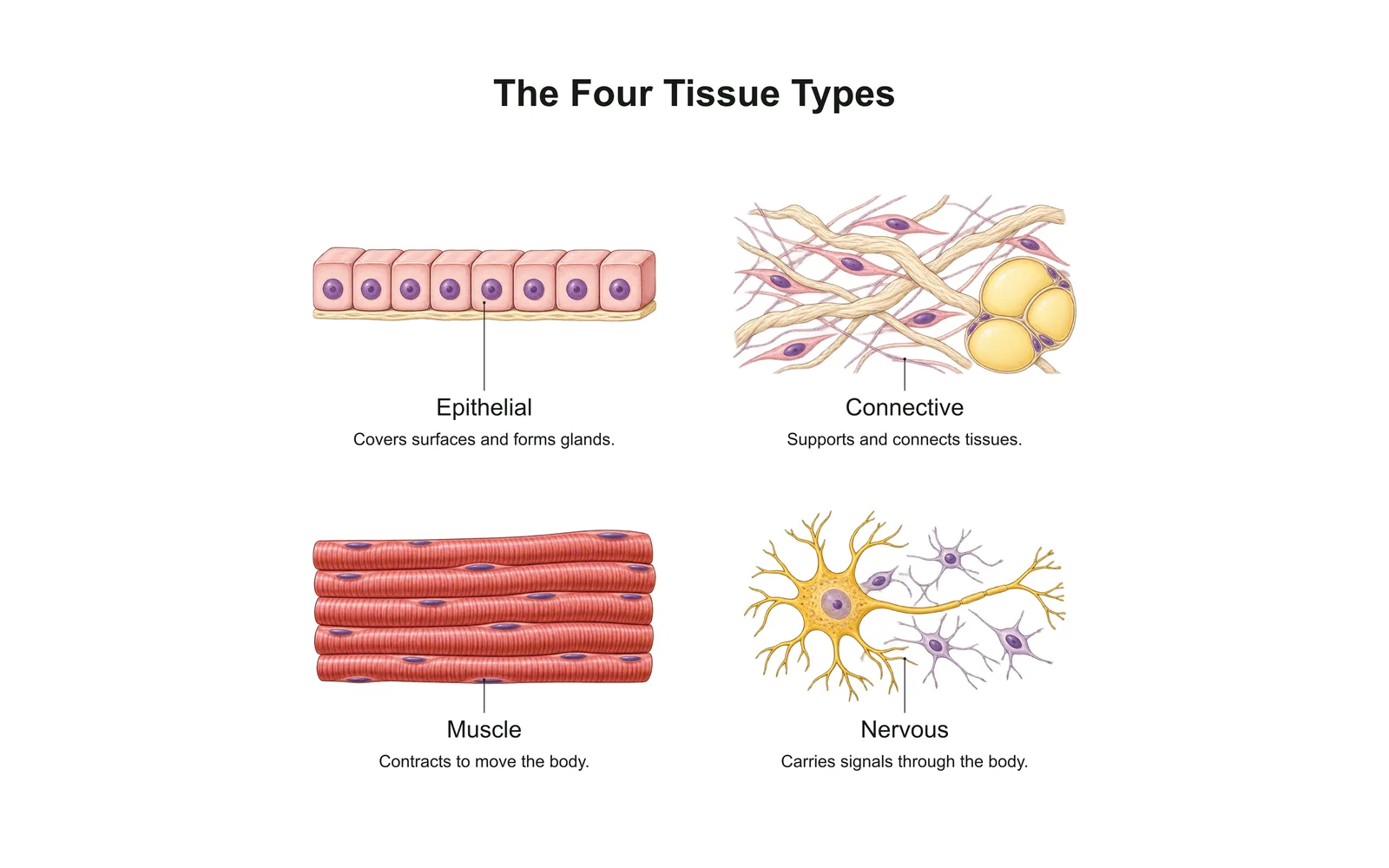
The four basic tissues that make up every organ. 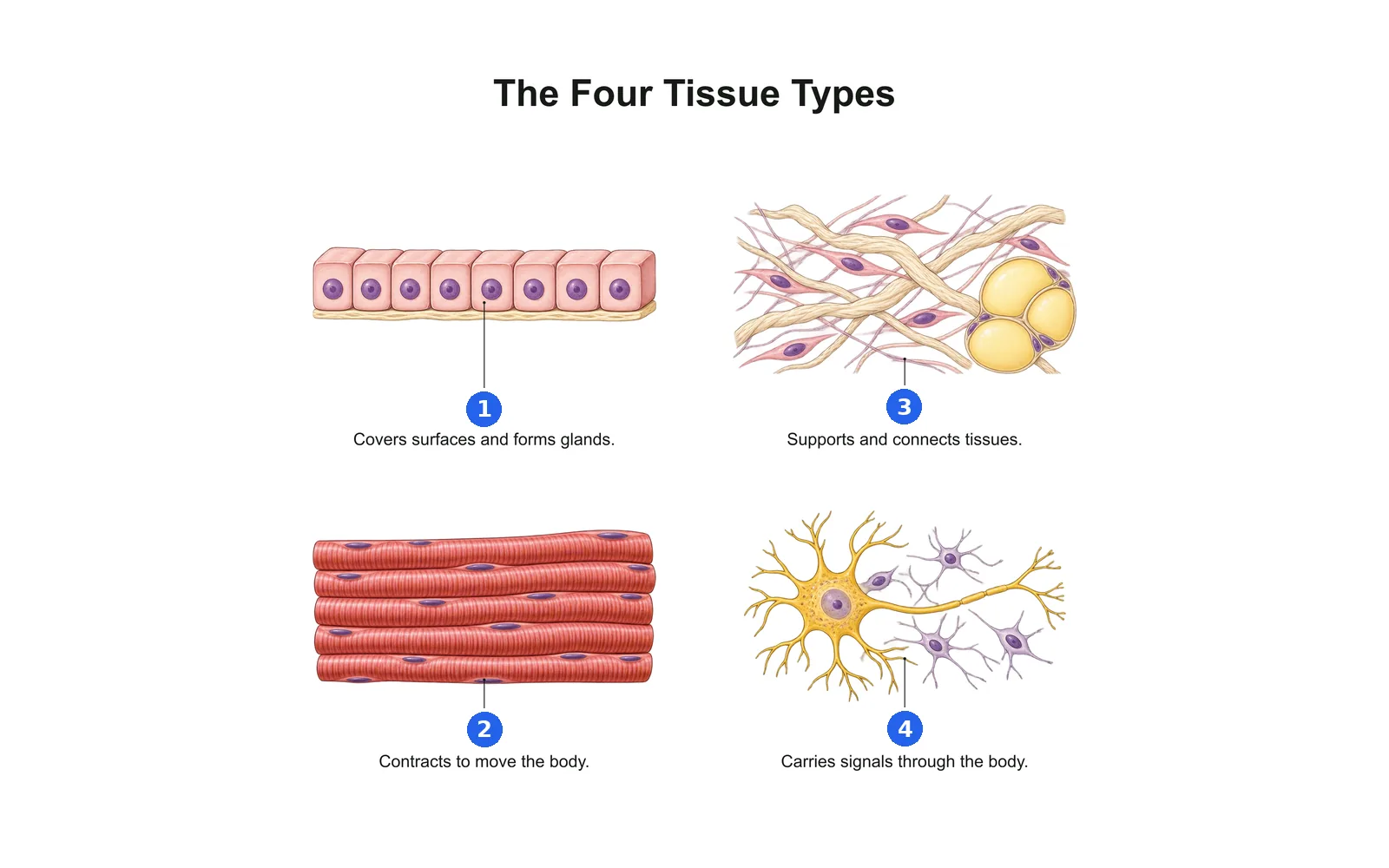
Aprendizagem 2D
The Four Tissue Types
How it works · Cells and tissues · 9 cartões
Notas de estudo
- A tissue is a group of similar cells working together.
- There are four basic types: epithelial, connective, muscle and nervous.
- Organs are made of several tissue types; the stomach, for example, has all four.
- Some tissues heal well (skin, bone); others heal poorly (heart muscle, nerves).
Flashcards
Cartão 1 de 9Toque no cartão para virar
Identifique o diagrama
Nomeie cada parte numerada. Mude para os rótulos para estudar primeiro.
Rótulo 1 de 4Escolha uma resposta
Qual é o número 1?
Termos deste baralho (9)
- Epithelial tissue
- Sheets of cells that cover the body and line organs, tubes and cavities.
- Connective tissue
- Tissue that supports and connects other tissues; includes bone, cartilage, fat, tendons and blood.
- Muscle tissue
- Tissue made of cells that can contract to create movement.
- Nervous tissue
- Tissue made of neurons and support cells that send and process signals.
- Collagen
- The most common protein in the body; tough fibers that give strength to skin, tendons, bone and cartilage.
- Cartilage
- Firm, smooth, flexible connective tissue found in joints, the ear, the nose and between ribs.
- Tendon vs ligament
- A tendon joins muscle to bone; a ligament joins bone to bone.
- Adipose tissue
- Fat tissue; it stores energy, cushions organs and keeps in heat.
- Mucous membrane
- A moist epithelial lining of passages open to the outside, like the mouth, nose and gut.
Conteúdo educativo para aprender anatomia, não é aconselhamento médico.