Aprendizagem 2D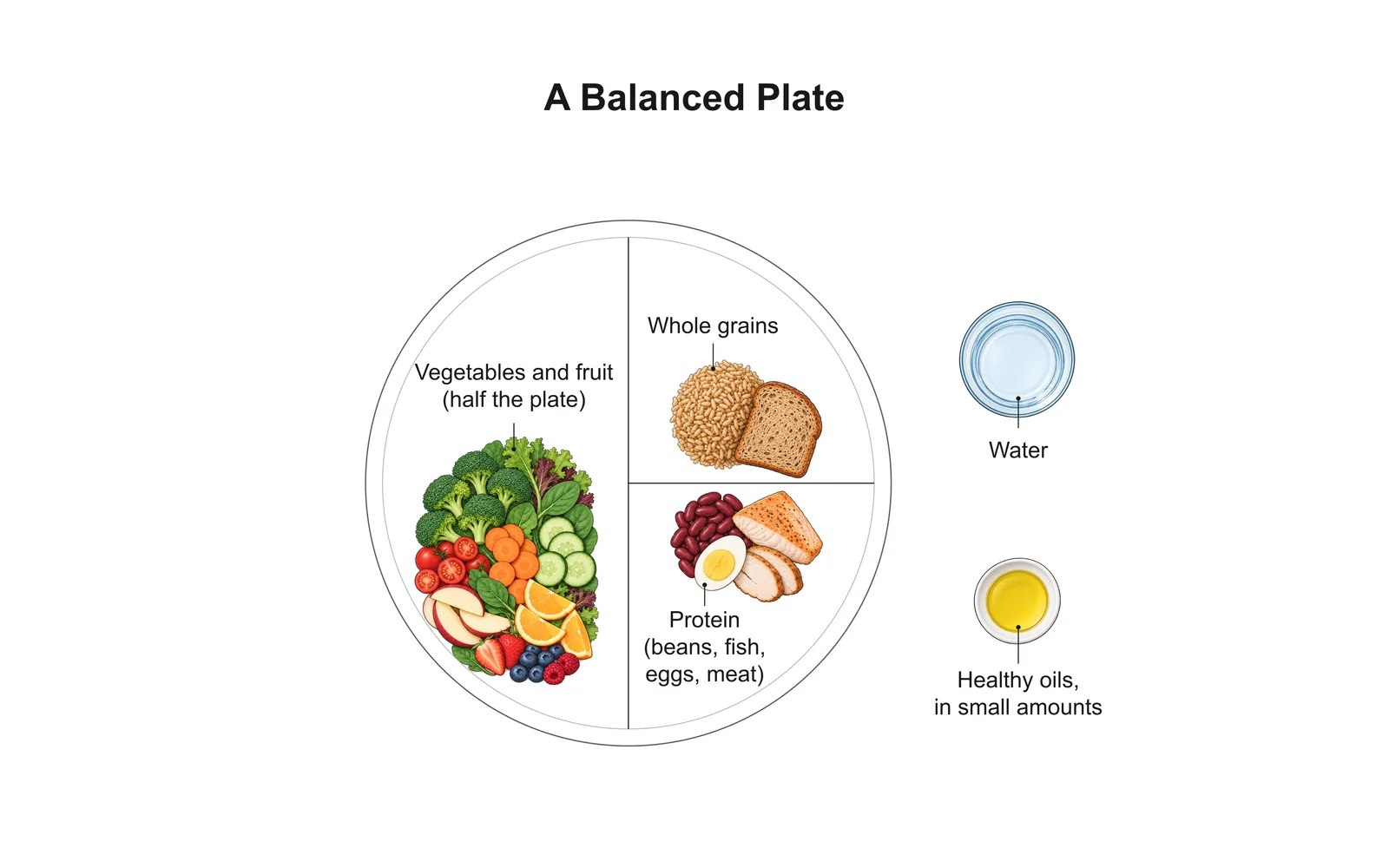
A balanced plate. 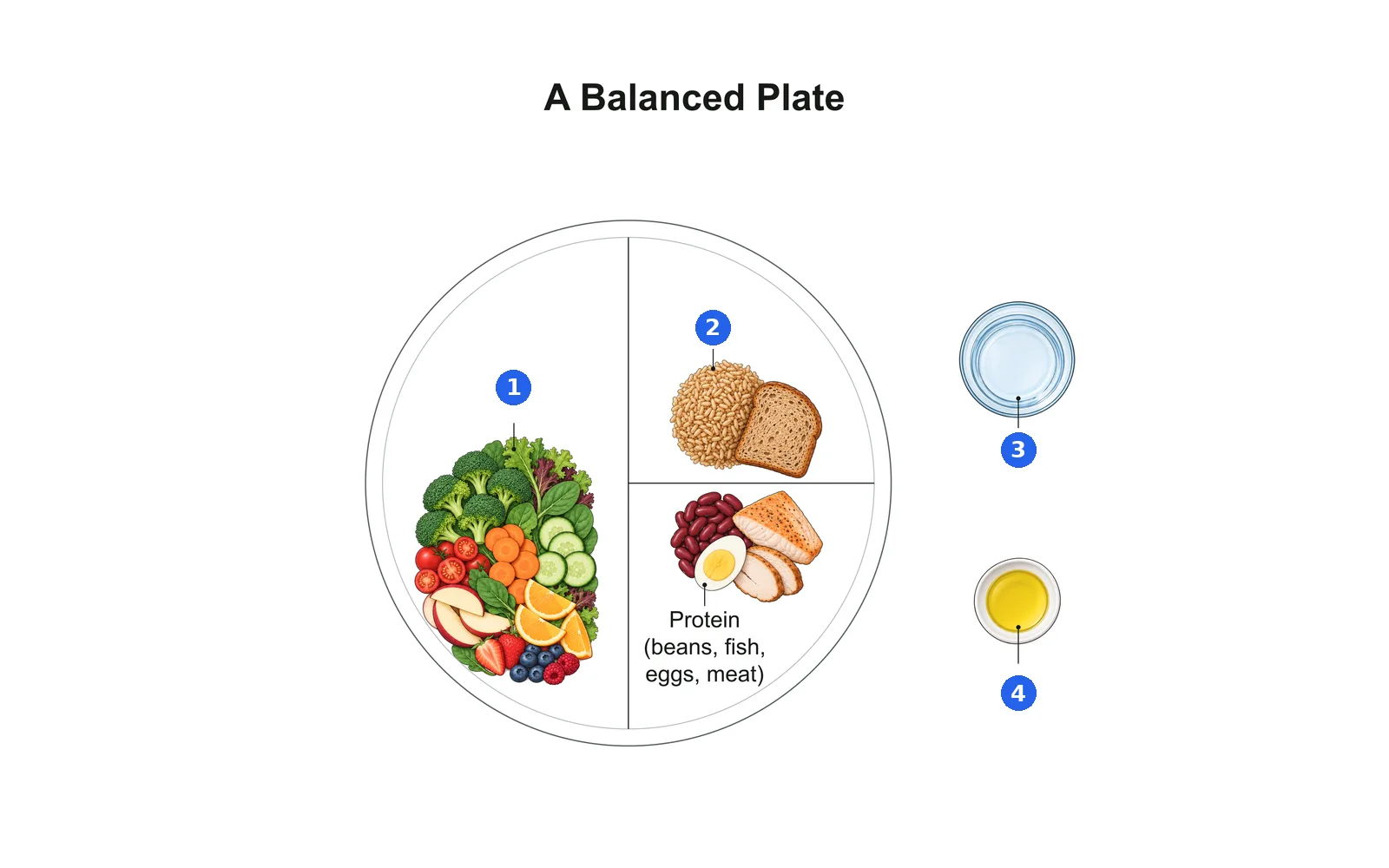
Aprendizagem 2D
Nutrition Basics
How it works · Nutrition · 10 cartões
Notas de estudo
- Food gives the body energy and the raw materials to build and repair itself.
- Macronutrients (carbohydrates, proteins and fats) are needed in large amounts and supply energy.
- Micronutrients (vitamins and minerals) are needed in small amounts but are just as essential.
- Fiber and water do not supply energy but keep digestion and the body working well.
Flashcards
Cartão 1 de 10Toque no cartão para virar
Identifique o diagrama
Nomeie cada parte numerada. Mude para os rótulos para estudar primeiro.
Rótulo 1 de 4Escolha uma resposta
Qual é o número 1?
Termos deste baralho (10)
- Calorie
- A unit of energy in food. Carbohydrates and protein give about 4 per gram; fat gives about 9.
- Carbohydrates (nutrition)
- The main energy source; whole grains, fruit, vegetables and beans are better choices than sugar.
- Protein (nutrition)
- Needed to build and repair muscle and tissues; found in beans, lentils, eggs, fish, meat and dairy.
- Healthy fats
- Fats from nuts, seeds, avocado, olive oil and oily fish that support the heart and brain.
- Fiber
- Plant material the body cannot digest; it keeps bowels regular and feeds good gut bacteria.
- Vitamins
- Small nutrients needed for many body processes, like vitamin C for healing and vitamin A for vision.
- Iron
- A mineral needed to make hemoglobin; found in beans, leafy greens and meat.
- Calcium
- A mineral for strong bones and teeth and for muscle and nerve function.
- Water
- Needed for every body process; thirst and pale urine are simple guides.
- Fat-soluble vitamins
- Vitamins A, D, E and K, which are stored in body fat.
Ver no corpo 3D
Abra o modelo 3D numa parte, com as notas e cartões da Escola.
Conteúdo educativo para aprender anatomia, não é aconselhamento médico.