Aprendizagem 2D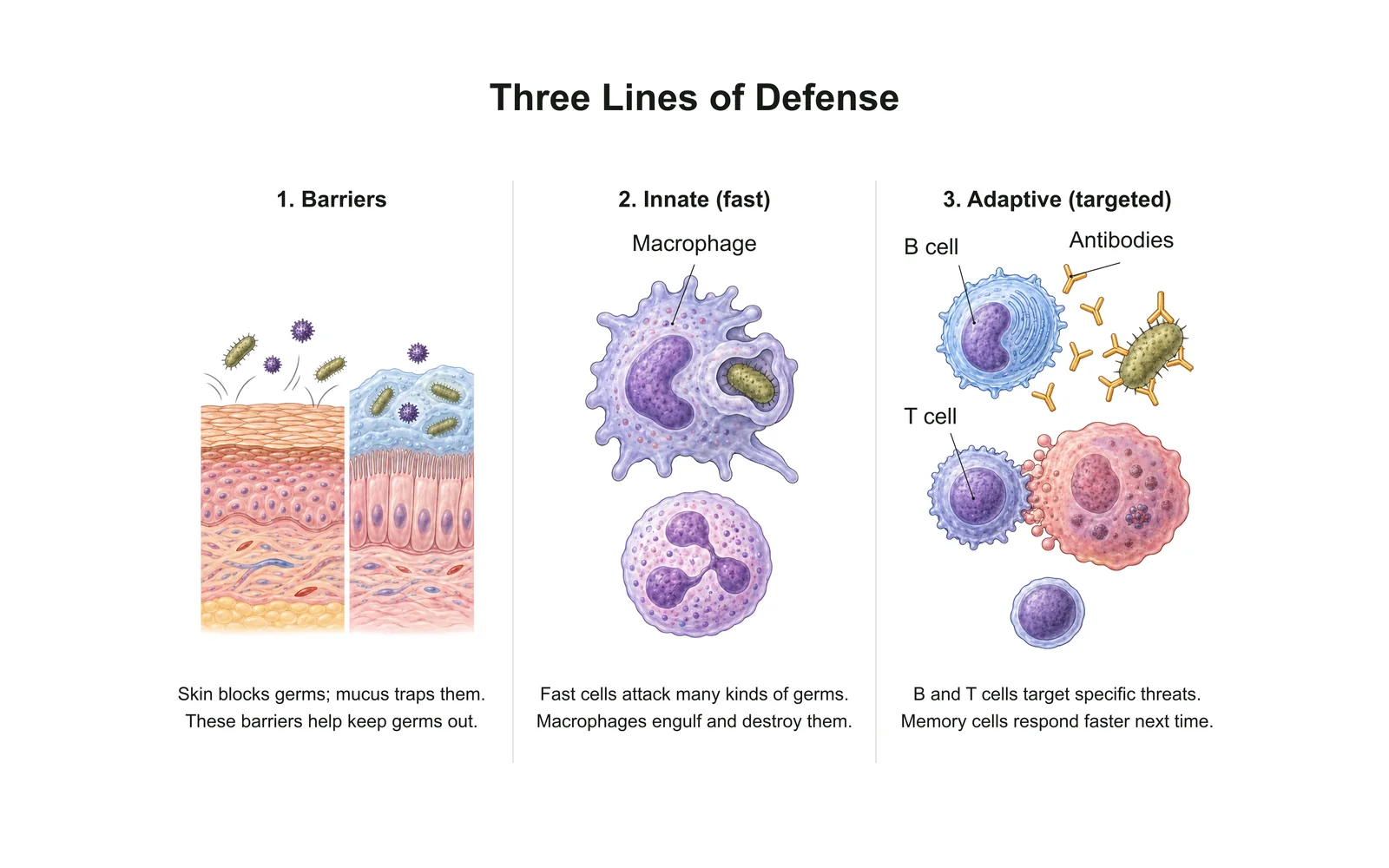
Three lines of defense, from skin to antibodies. 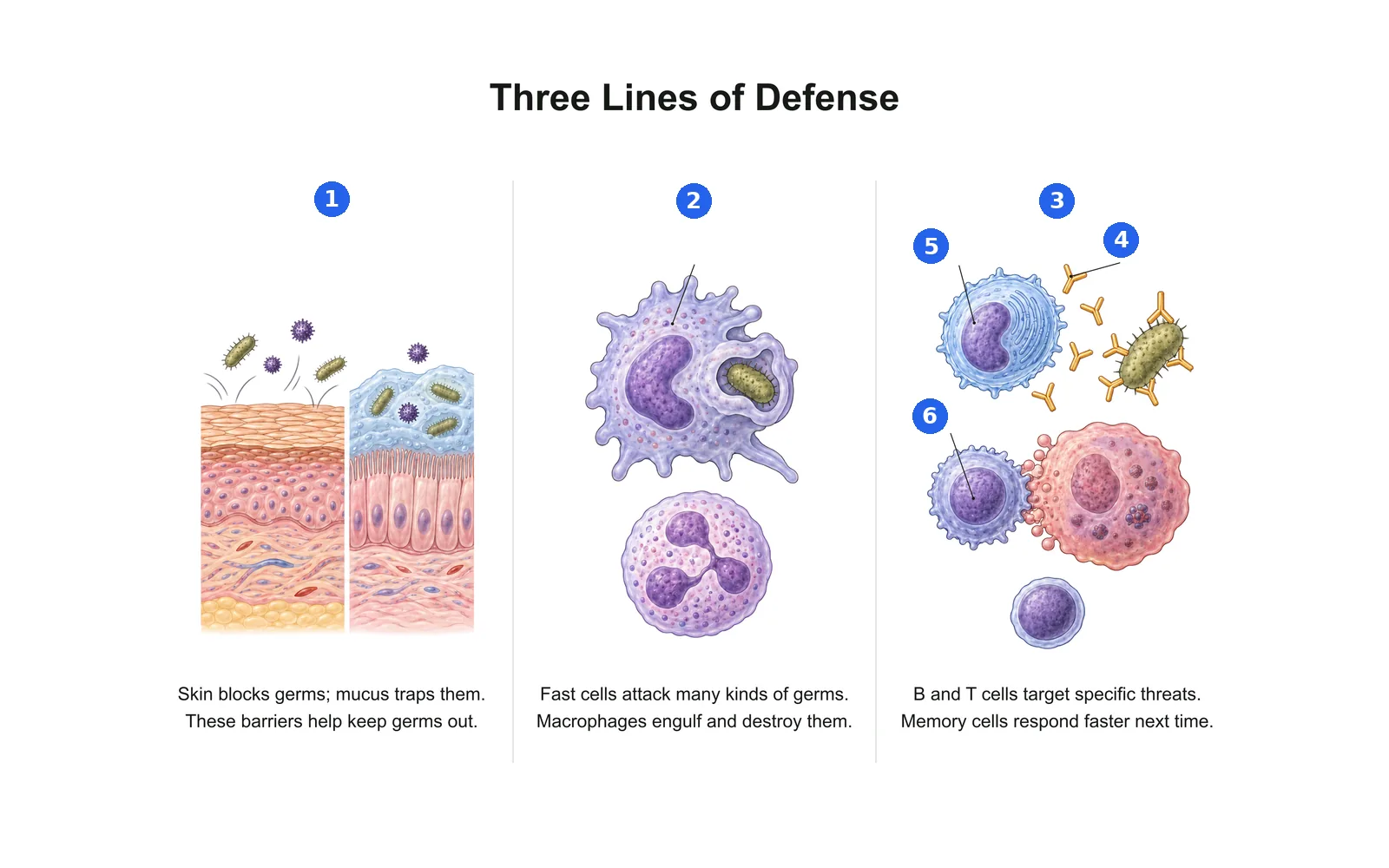
Aprendizagem 2D
How Immunity Works
How it works · Immunity · 12 cartões
Notas de estudo
- The body defends itself in layers: barriers, then fast general defenses (innate immunity), then targeted defenses (adaptive immunity).
- Innate immunity reacts within minutes to anything foreign.
- Adaptive immunity takes days the first time but remembers each germ, so it reacts faster next time.
- Vaccines train adaptive immunity safely, without causing the full disease.
Flashcards
Cartão 1 de 12Toque no cartão para virar
Identifique o diagrama
Nomeie cada parte numerada. Mude para os rótulos para estudar primeiro.
Rótulo 1 de 6Escolha uma resposta
Qual é o número 1?
Termos deste baralho (12)
- First line of defense
- Barriers that keep germs out: skin, mucus, tears, stomach acid and tiny hairs in the airways.
- Innate immunity
- The fast, general defense present from birth: inflammation, fever and germ-eating cells.
- Adaptive immunity
- The targeted defense that learns to recognize specific germs and remembers them.
- Phagocytes
- White cells such as neutrophils and macrophages that swallow and destroy germs.
- Inflammation
- Redness, heat, swelling and pain as blood flow and immune cells rush to an injured or infected area.
- Antigen
- A marker on a germ or substance that the immune system recognizes as foreign.
- Antibodies
- Y-shaped proteins made by B cells that lock onto antigens and flag germs for destruction.
- B cells
- White cells that make antibodies; some become memory cells.
- T cells
- White cells matured in the thymus: helper T cells direct the response, killer T cells destroy infected cells.
- Immune memory
- Memory B and T cells that remember a germ so the next response is faster and stronger.
- Vaccine
- A harmless version or part of a germ that teaches the immune system to recognize it.
- Why do you get a fever?
- The brain raises body temperature to slow germs and speed up immune cells.
Ver no corpo 3D
Abra o modelo 3D numa parte, com as notas e cartões da Escola.
Conteúdo educativo para aprender anatomia, não é aconselhamento médico.