Aprendizagem 2D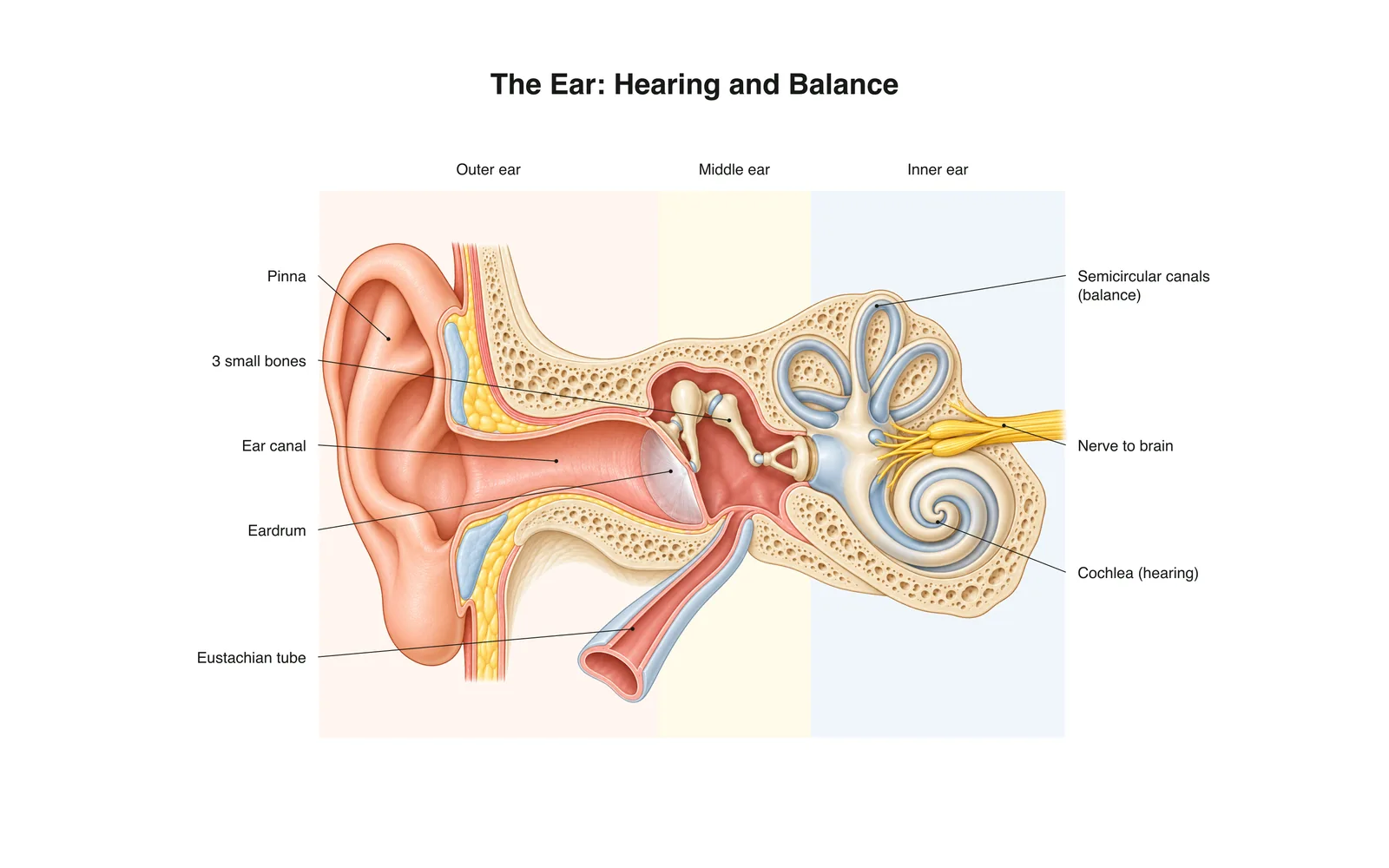
The ear handles both hearing and balance. 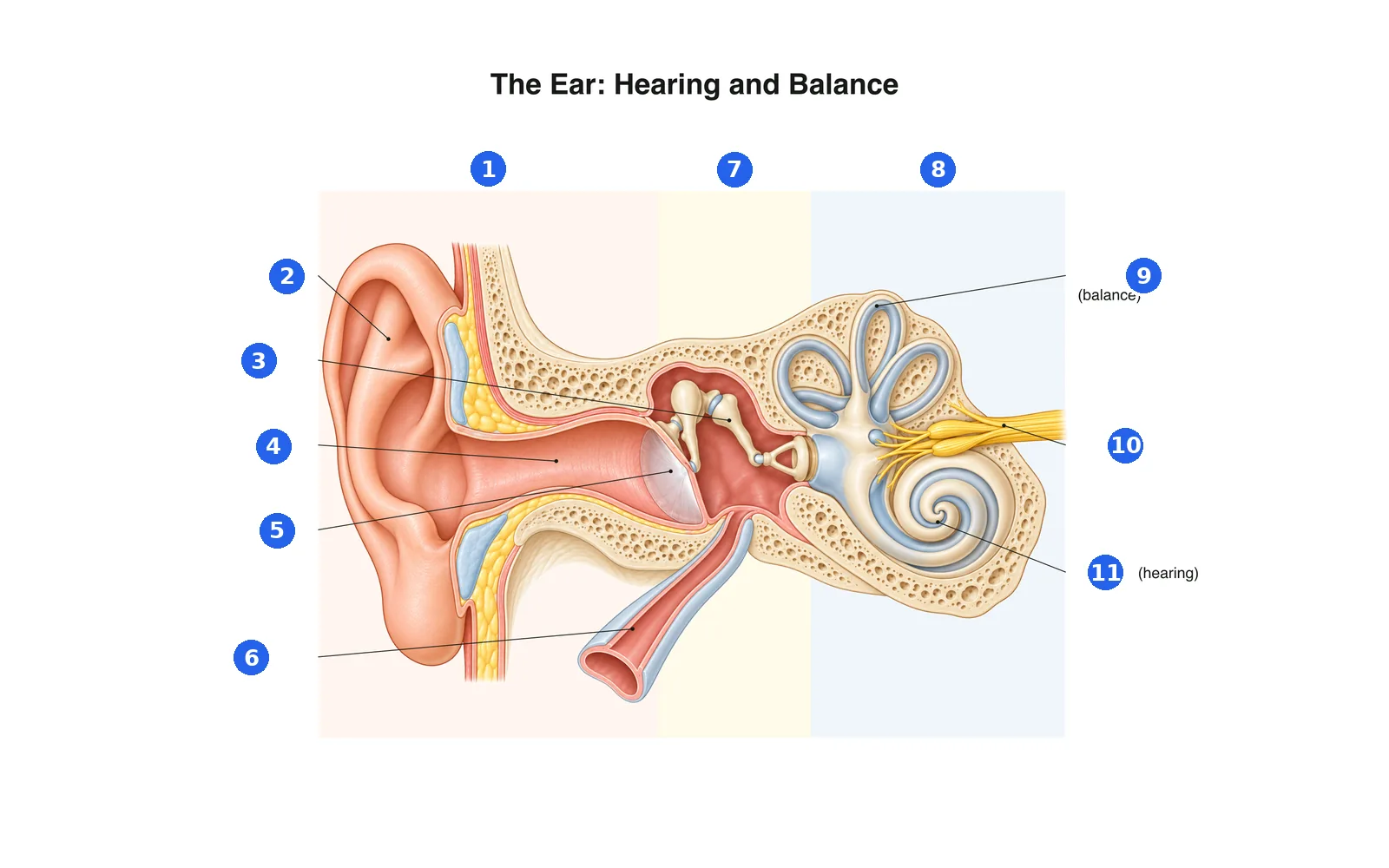
Aprendizagem 2D
Hearing and Balance
How it works · Nerves and senses · 12 cartões
Notas de estudo
- The ear has three parts: outer, middle and inner.
- Sound waves make the eardrum vibrate; three tiny bones pass the vibration to the inner ear.
- In the snail-shaped cochlea, hair cells turn vibrations into nerve signals.
- Three fluid-filled canals and two small sacs in the inner ear sense head movement and keep you balanced.
Flashcards
Cartão 1 de 12Toque no cartão para virar
Identifique o diagrama
Nomeie cada parte numerada. Mude para os rótulos para estudar primeiro.
Rótulo 1 de 11Escolha uma resposta
Qual é o número 1?
Termos deste baralho (12)
- Outer ear
- The visible ear (pinna) and ear canal, which funnel sound to the eardrum.
- Eardrum (tympanic membrane)
- A thin membrane that vibrates when sound waves hit it.
- Ossicles
- The three smallest bones in the body: the malleus (hammer), incus (anvil) and stapes (stirrup).
- Eustachian tube
- Connects the middle ear to the throat and equalizes pressure; it is why ears 'pop'.
- Cochlea
- The snail-shaped, fluid-filled part of the inner ear where hearing happens.
- Hair cells
- Sensory cells in the cochlea that turn vibrations into nerve signals; loud noise can damage them for good.
- Semicircular canals
- Three looped canals at right angles that sense the head turning in any direction.
- Vestibular system
- The inner ear's balance organs, which work with the eyes and muscles to keep you steady.
- Auditory nerve
- Carries sound signals from the cochlea to the brain.
- Why do you feel dizzy after spinning?
- The fluid in the balance canals keeps moving for a moment after you stop.
- Pinna
- The visible outer ear that funnels sound in.
- Ear canal
- The tube from the outer ear to the eardrum.
Ver no corpo 3D
Abra o modelo 3D numa parte, com as notas e cartões da Escola.
Conteúdo educativo para aprender anatomia, não é aconselhamento médico.