Aprendizagem 2D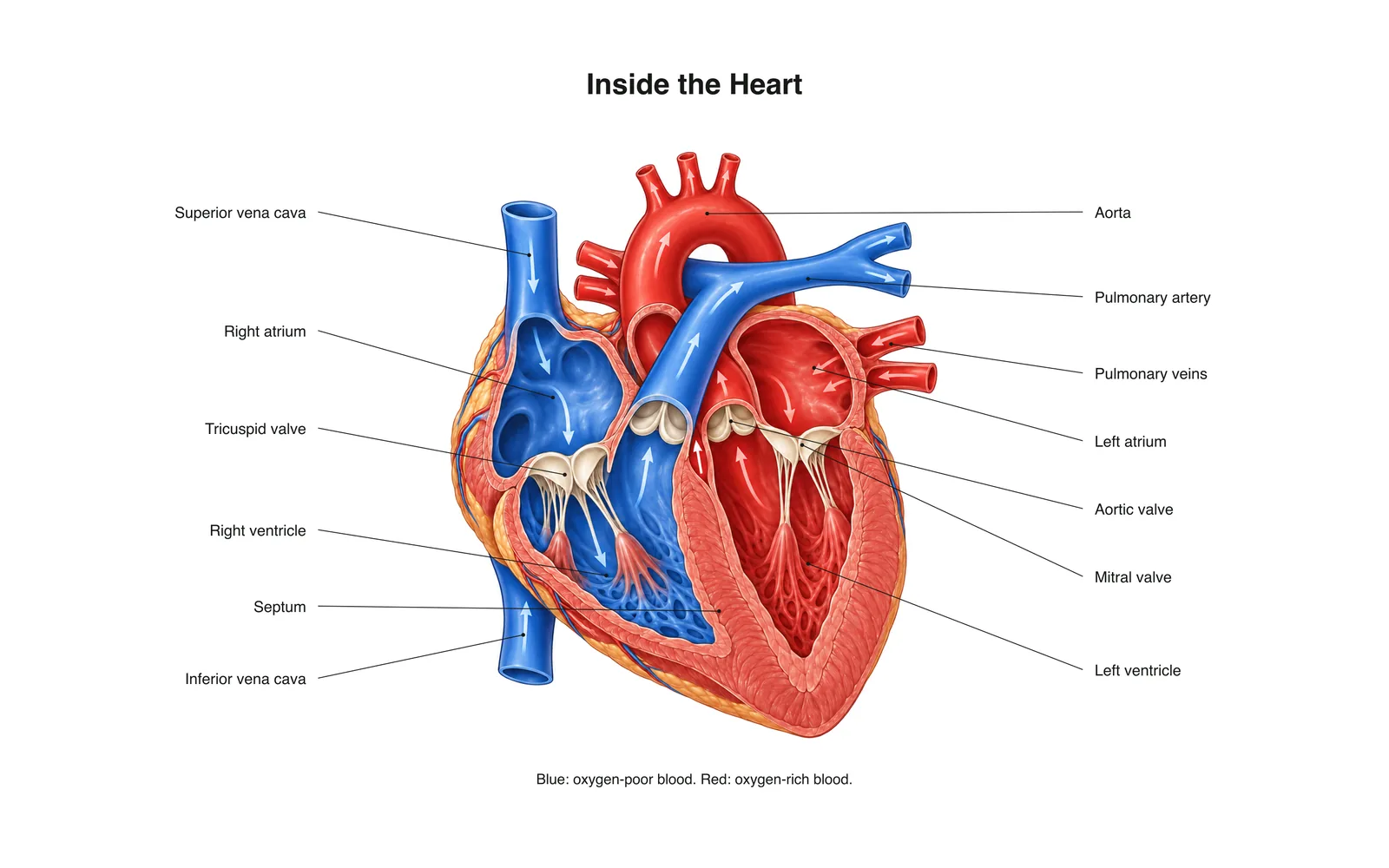
Aprendizagem 2D
Inside the Heart
How it works · Body maps · 13 cartões
Notas de estudo
- The right side pumps oxygen-poor blood to the lungs; the left side pumps oxygen-rich blood to the body.
- Four one-way valves keep blood flowing forward; their closing makes the 'lub-dub' sound.
- The left ventricle has the thickest wall because it pumps blood to the whole body.
Flashcards
Cartão 1 de 13Toque no cartão para virar
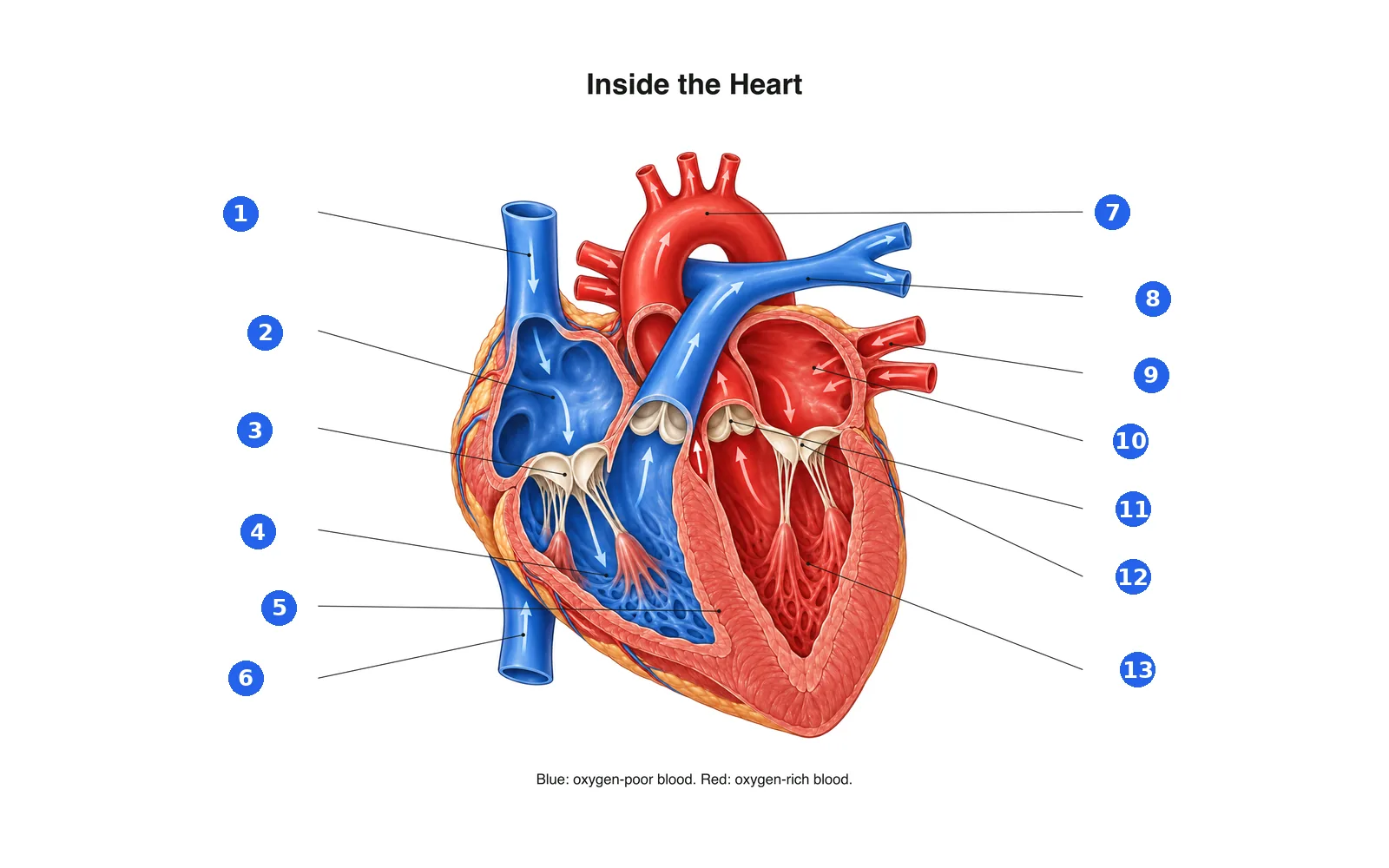
Identifique o diagrama
Nomeie cada parte numerada. Mude para os rótulos para estudar primeiro.
Rótulo 1 de 13Escolha uma resposta
Qual é o número 1?
Termos deste baralho (13)
- Superior vena cava
- The large vein bringing blood from the upper body into the right atrium.
- Inferior vena cava
- The large vein bringing blood from the lower body into the right atrium.
- Right atrium
- Upper right chamber; receives oxygen-poor blood from the body.
- Tricuspid valve
- The valve between the right atrium and right ventricle.
- Right ventricle
- Lower right chamber; pumps blood to the lungs.
- Pulmonary artery
- Carries oxygen-poor blood from the right ventricle to the lungs.
- Pulmonary veins
- Bring oxygen-rich blood from the lungs into the left atrium.
- Left atrium
- Upper left chamber; receives oxygen-rich blood from the lungs.
- Mitral valve
- The two-flap valve between the left atrium and left ventricle.
- Left ventricle
- Lower left chamber with the thickest wall; pumps blood to the body.
- Aortic valve
- The valve between the left ventricle and the aorta.
- Aorta
- The body's largest artery, carrying blood from the left ventricle to the body.
- Septum
- The muscular wall dividing the right and left sides of the heart.
Ver no corpo 3D
Abra o modelo 3D numa parte, com as notas e cartões da Escola.
Conteúdo educativo para aprender anatomia, não é aconselhamento médico.