2D लर्निंग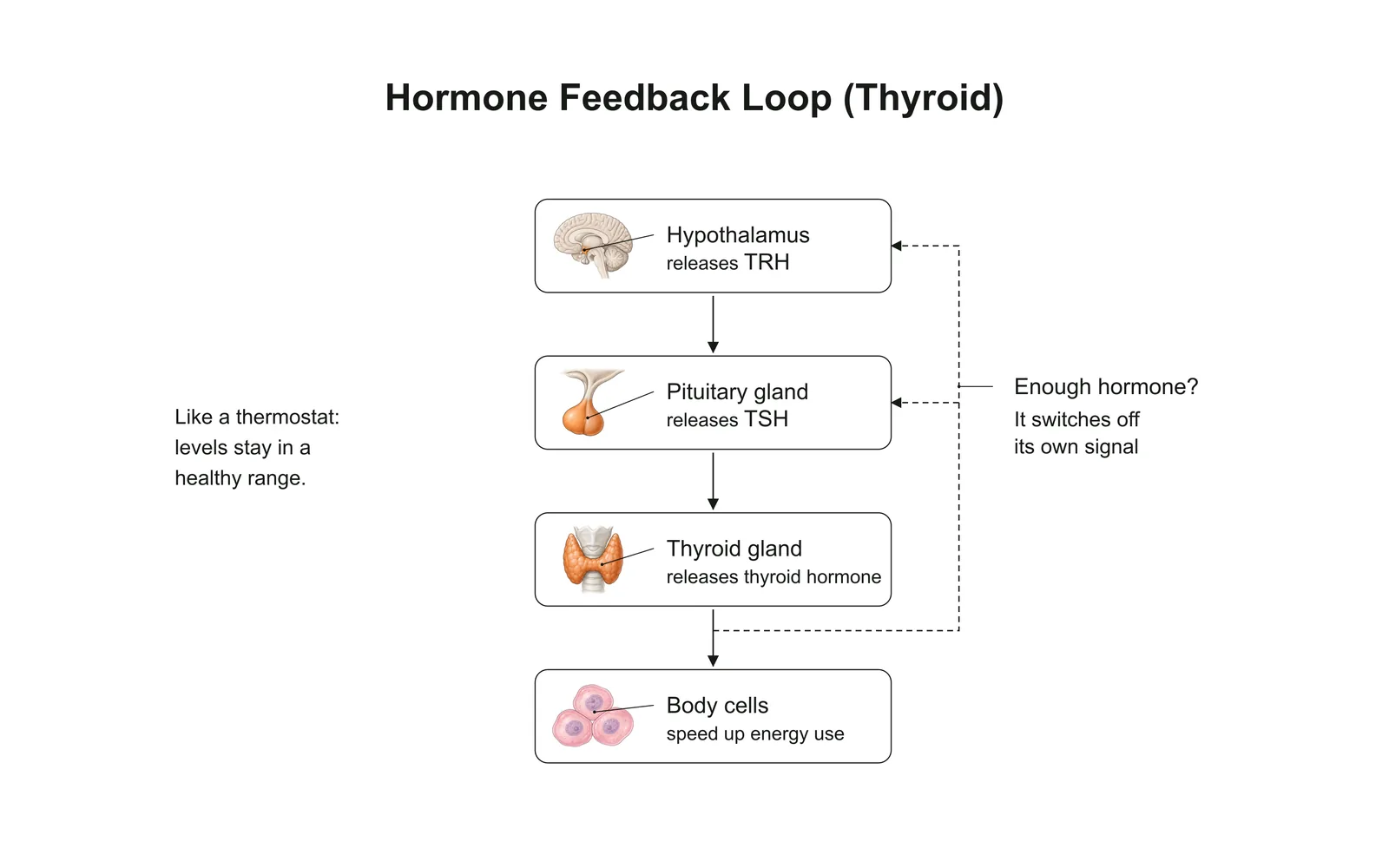
Negative feedback keeps hormone levels in a healthy range. 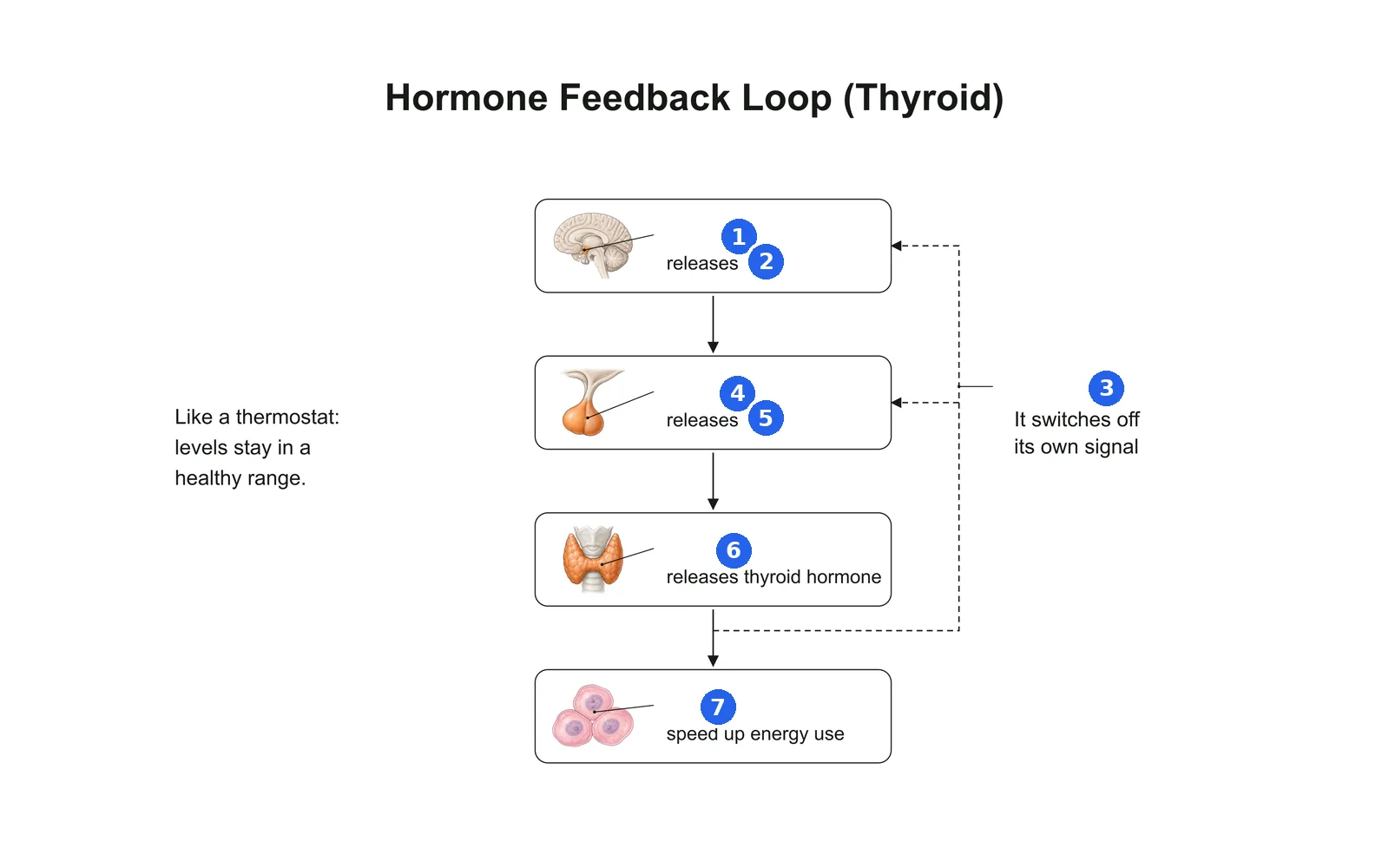
2D लर्निंग
How Hormones Work
How it works · Hormones · 10 कार्ड
अध्ययन नोट्स
- Hormones are chemical messengers made by glands and carried in the blood to target cells.
- Only cells with the matching receptor respond to a hormone.
- Most hormone levels are kept steady by negative feedback, like a thermostat.
- The hypothalamus and pituitary gland in the head direct many of the other glands.
फ़्लैशकार्ड
कार्ड 1 / 10पलटने के लिए कार्ड टैप करें
चित्र के भाग पहचानें
हर क्रमांकित भाग का नाम बताएँ। पहले पढ़ने के लिए लेबल देखें।
लेबल 1 / 7एक उत्तर चुनें
संख्या 1 क्या है?
इस डेक के शब्द (10)
- Hormone
- A chemical messenger released into the blood that changes how target cells work.
- Endocrine gland
- A gland that releases hormones straight into the blood (no ducts).
- Receptor
- A protein on or in a cell that recognizes one hormone, like a lock for its key.
- Negative feedback
- When a hormone's effect switches off its own release, keeping levels steady.
- Hypothalamus–pituitary link
- The hypothalamus senses the body's needs and signals the pituitary, which signals other glands.
- Parathyroid glands
- Four tiny glands behind the thyroid that raise blood calcium with parathyroid hormone.
- Blood sugar control
- Insulin lowers blood sugar after meals; glucagon raises it between meals.
- Cortisol
- The adrenal stress hormone; it raises blood sugar and calms inflammation. Its levels peak in the morning.
- Melatonin
- Made by the pineal gland in the dark; it signals the body that it is time to sleep.
- Sex hormones
- Testosterone, estrogen and progesterone, made mainly by the testes and ovaries; they drive puberty.
इसे 3D शरीर पर देखें
3D मॉडल को किसी हिस्से पर खोलें, उसके स्कूल नोट्स और फ्लैशकार्ड के साथ।
शरीर रचना सीखने के लिए शैक्षिक सामग्री, चिकित्सा सलाह नहीं।