2D लर्निंग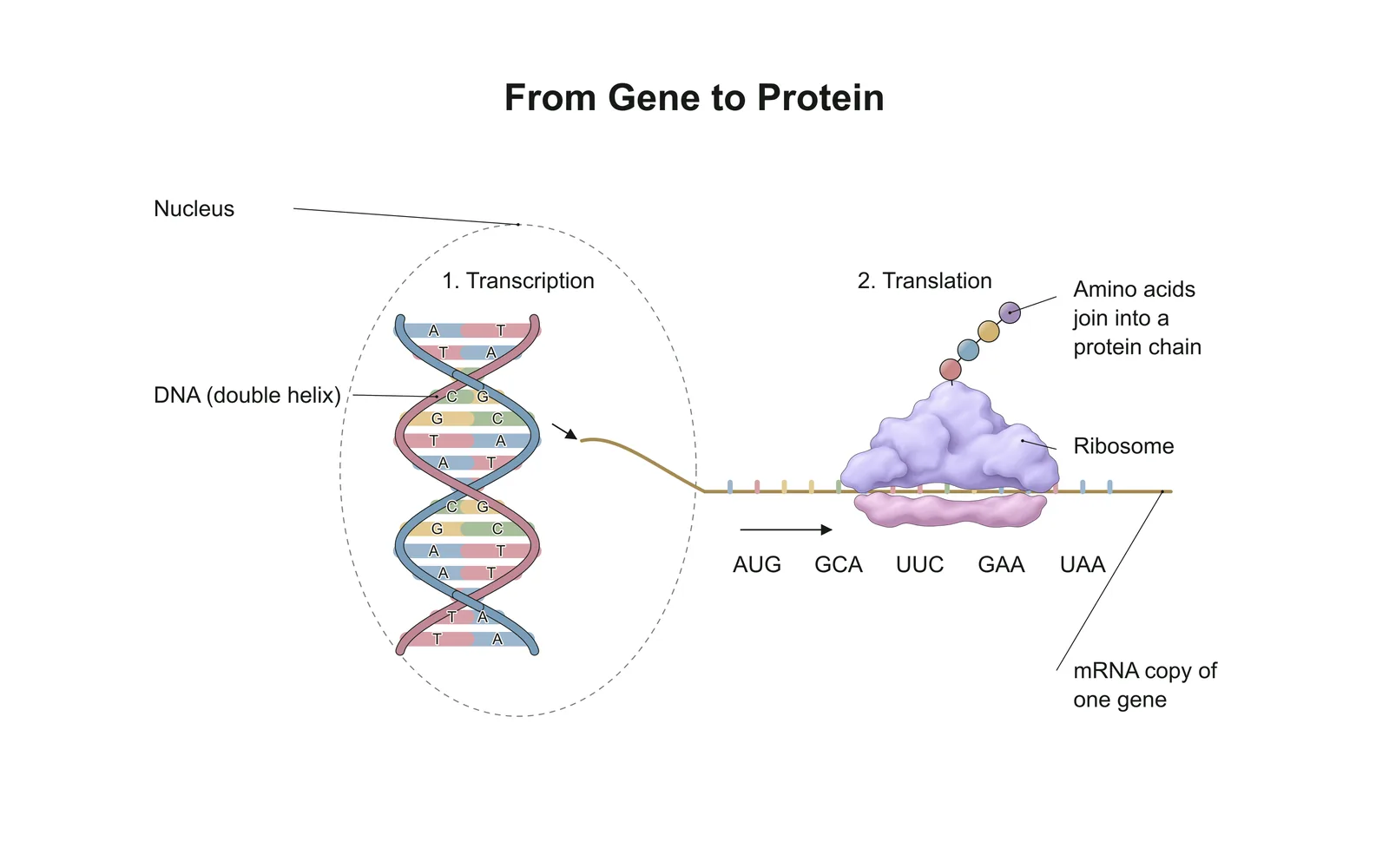
From gene to protein: DNA is copied into mRNA, then a ribosome builds the protein. 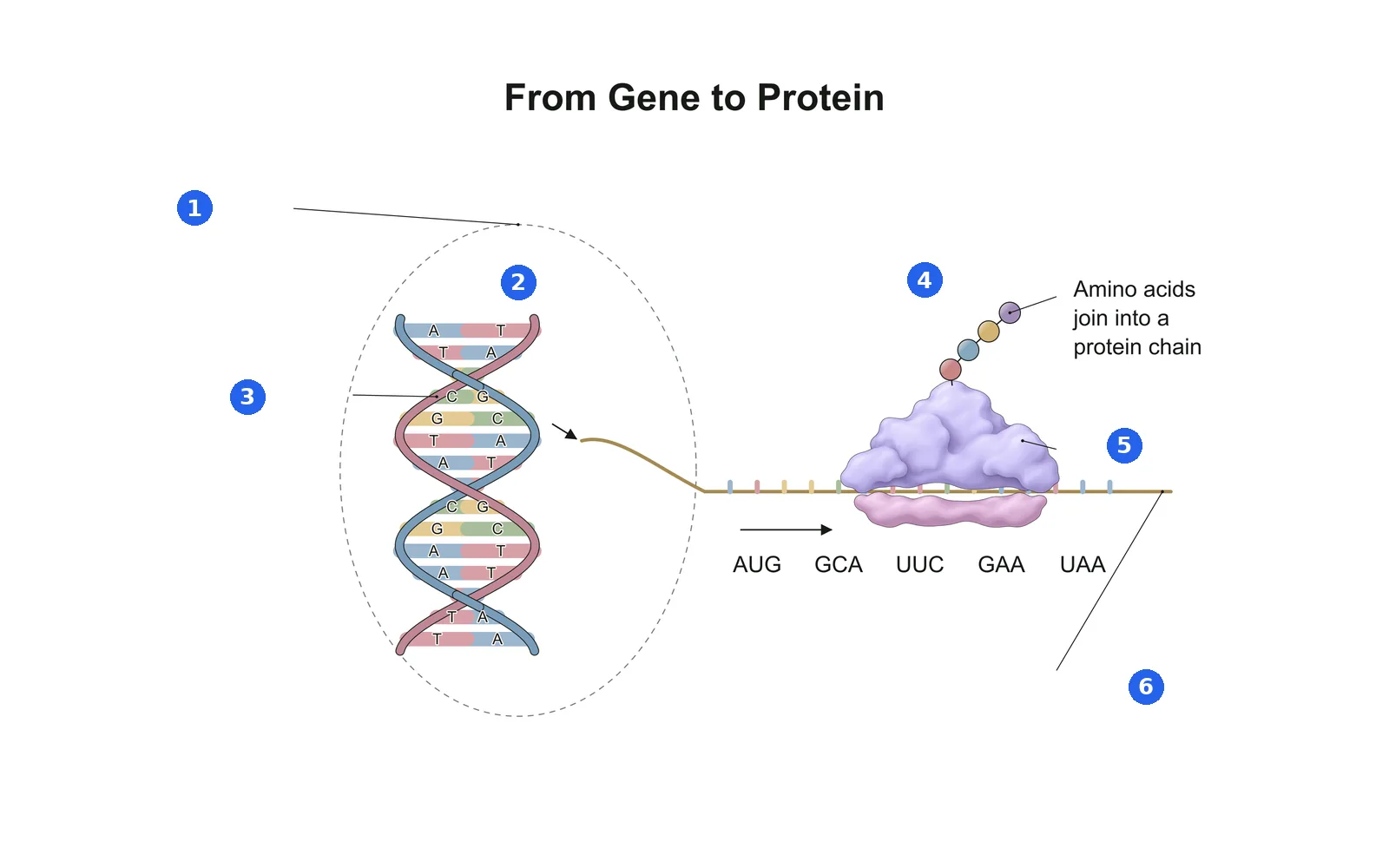
2D लर्निंग
DNA, Genes and Proteins
How it works · Cells and tissues · 13 कार्ड
अध्ययन नोट्स
- DNA is a long, twisted ladder (double helix) made of four bases: A, T, C and G.
- A gene is a stretch of DNA with the recipe for one protein.
- Making a protein has two steps: copy the gene into RNA (transcription), then build the protein from it (translation).
- Proteins do most of the work in the body: they form muscle, carry oxygen, fight germs and speed up reactions.
फ़्लैशकार्ड
कार्ड 1 / 13पलटने के लिए कार्ड टैप करें
चित्र के भाग पहचानें
हर क्रमांकित भाग का नाम बताएँ। पहले पढ़ने के लिए लेबल देखें।
लेबल 1 / 6एक उत्तर चुनें
संख्या 1 क्या है?
इस डेक के शब्द (13)
- DNA
- Deoxyribonucleic acid: the molecule that stores the body's genetic instructions.
- Double helix
- The shape of DNA: two strands twisted around each other like a spiral ladder.
- Base pairs
- The rungs of the DNA ladder; A always pairs with T, and C always pairs with G.
- Gene
- A section of DNA that holds the instructions for one protein.
- Chromosome
- A tightly packed bundle of DNA; most body cells have 46 (23 pairs).
- Transcription
- Copying a gene from DNA into a messenger RNA (mRNA) inside the nucleus.
- Translation
- A ribosome reading the mRNA and joining amino acids in the right order to build a protein.
- Amino acids
- The 20 building blocks that link together in chains to make proteins.
- Mutation
- A change in the DNA sequence; many are harmless, some cause disease.
- DNA replication
- Copying all the DNA before a cell divides, so each new cell gets a full set.
- Nucleus
- Where the DNA is kept and genes are copied into mRNA.
- Messenger RNA (mRNA)
- A short working copy of one gene that carries its recipe to a ribosome.
- Ribosome
- The protein-building machine that reads mRNA and links amino acids.
शरीर रचना सीखने के लिए शैक्षिक सामग्री, चिकित्सा सलाह नहीं।