2D लर्निंग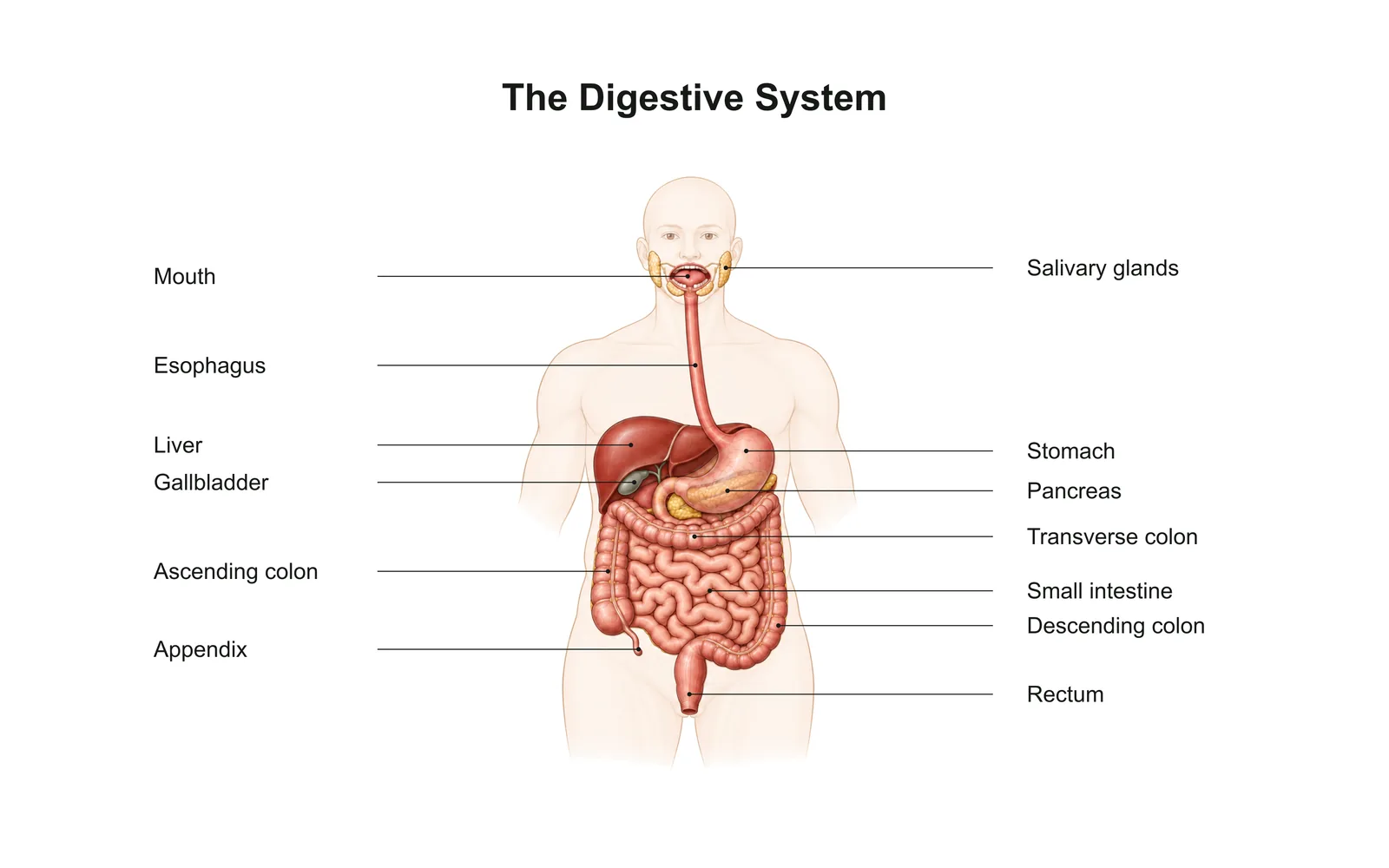
2D लर्निंग
The Digestive System
How it works · Body maps · 13 कार्ड
अध्ययन नोट्स
- Food travels mouth → esophagus → stomach → small intestine → large intestine → rectum.
- The liver, gallbladder and pancreas add bile and enzymes but food does not pass through them.
- Most nutrients are absorbed in the small intestine; the large intestine mainly takes back water.
फ़्लैशकार्ड
कार्ड 1 / 13पलटने के लिए कार्ड टैप करें
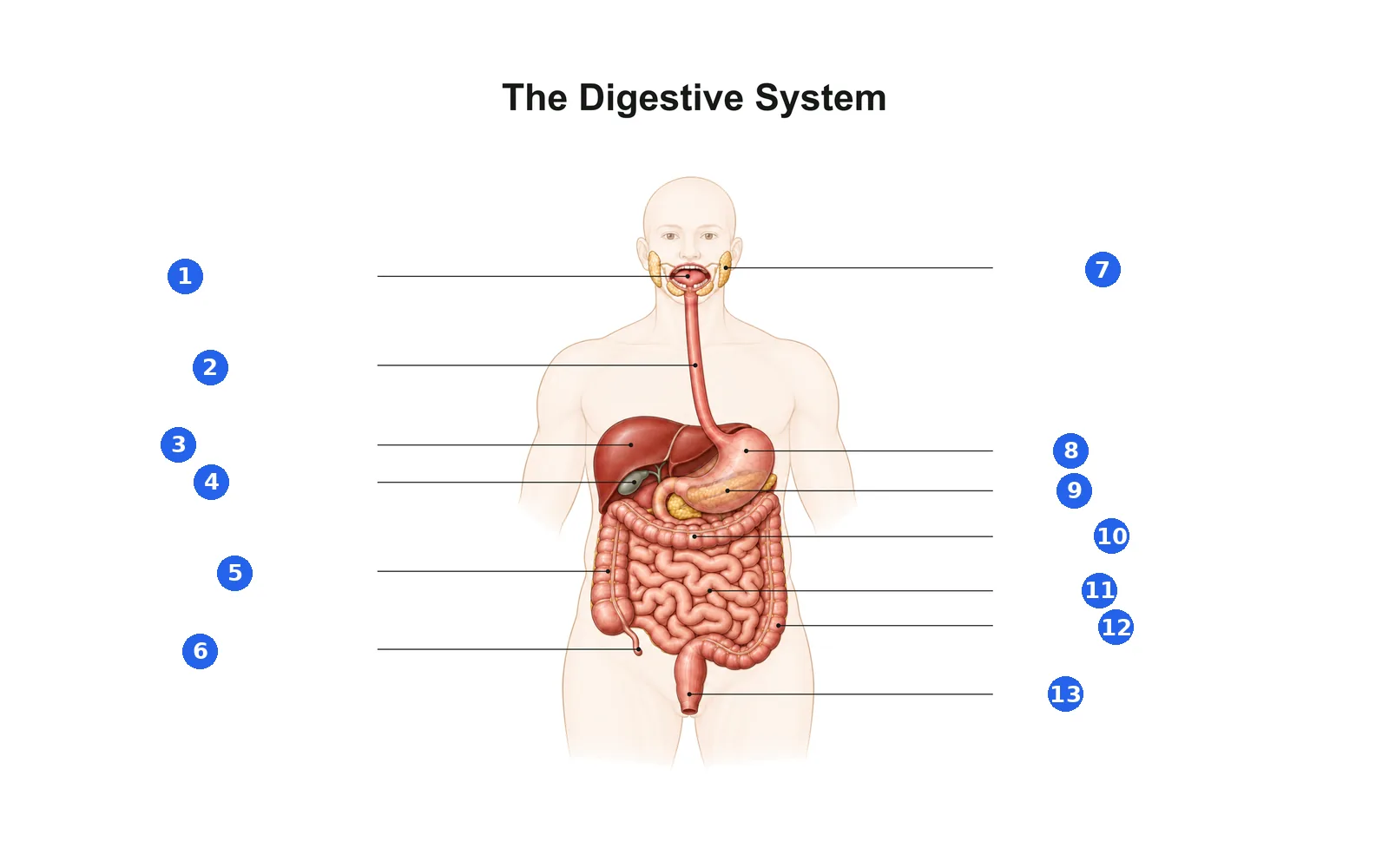
चित्र के भाग पहचानें
हर क्रमांकित भाग का नाम बताएँ। पहले पढ़ने के लिए लेबल देखें।
लेबल 1 / 13एक उत्तर चुनें
संख्या 1 क्या है?
इस डेक के शब्द (13)
- Mouth
- Where digestion starts: teeth chew and saliva begins breaking down starch.
- Salivary glands
- Glands around the mouth that make saliva.
- Esophagus
- The muscular tube carrying food from the throat to the stomach.
- Liver
- Makes bile, stores energy and clears toxins from the blood.
- Gallbladder
- Stores bile from the liver and releases it after fatty meals.
- Stomach
- Churns food with acid and enzymes into a soupy mix called chyme.
- Pancreas
- Makes digestive enzymes and the hormones insulin and glucagon.
- Small intestine
- About 6 m long; digests food and absorbs most nutrients.
- Ascending colon
- The part of the large intestine that rises up the right side of the belly.
- Transverse colon
- The part of the large intestine that crosses the belly.
- Descending colon
- The part of the large intestine that runs down the left side.
- Appendix
- A small pouch off the start of the large intestine.
- Rectum
- The last part of the large intestine, which stores stool before it leaves.
इसे 3D शरीर पर देखें
3D मॉडल को किसी हिस्से पर खोलें, उसके स्कूल नोट्स और फ्लैशकार्ड के साथ।
शरीर रचना सीखने के लिए शैक्षिक सामग्री, चिकित्सा सलाह नहीं।