Apprentissage 2D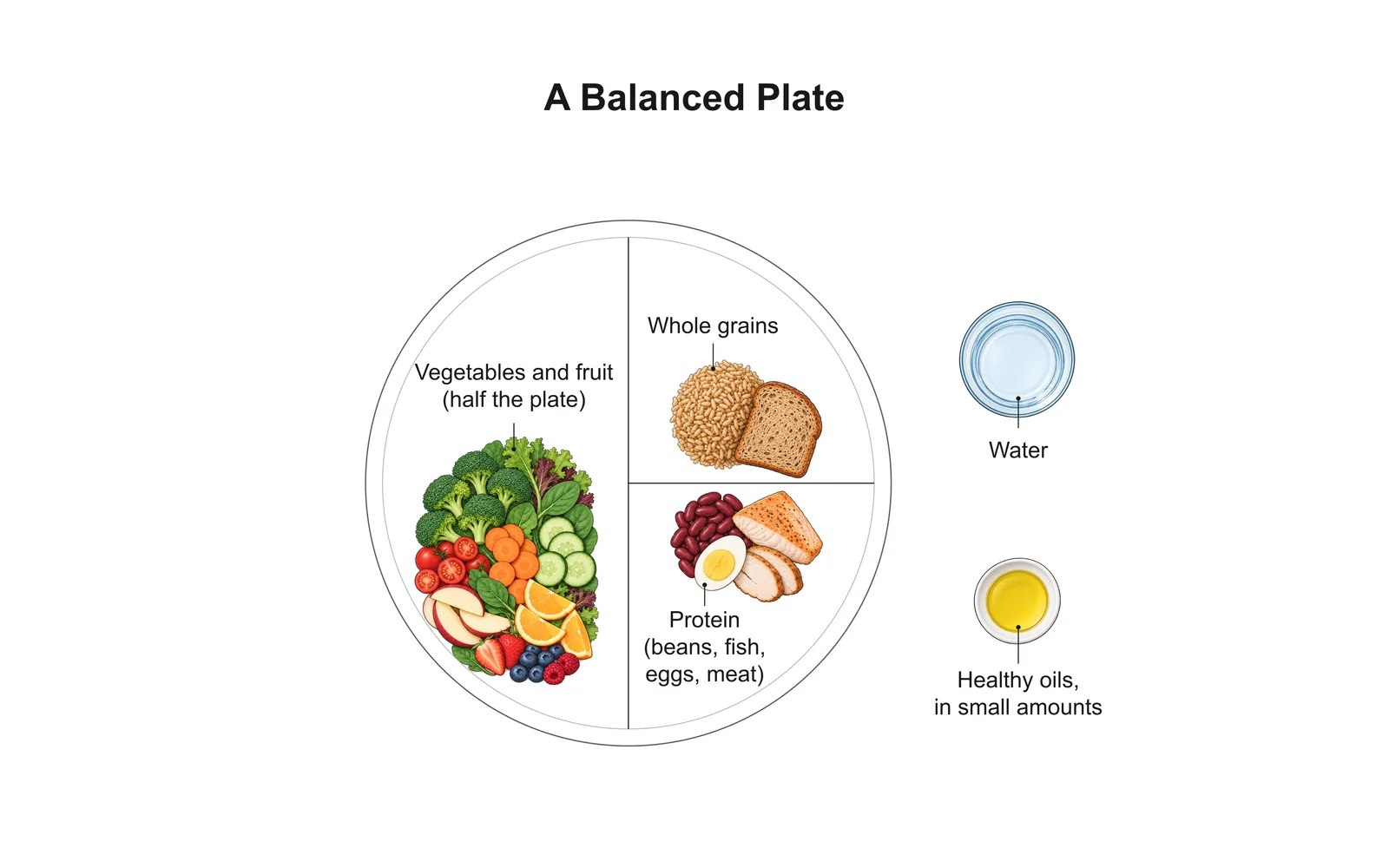
A balanced plate. 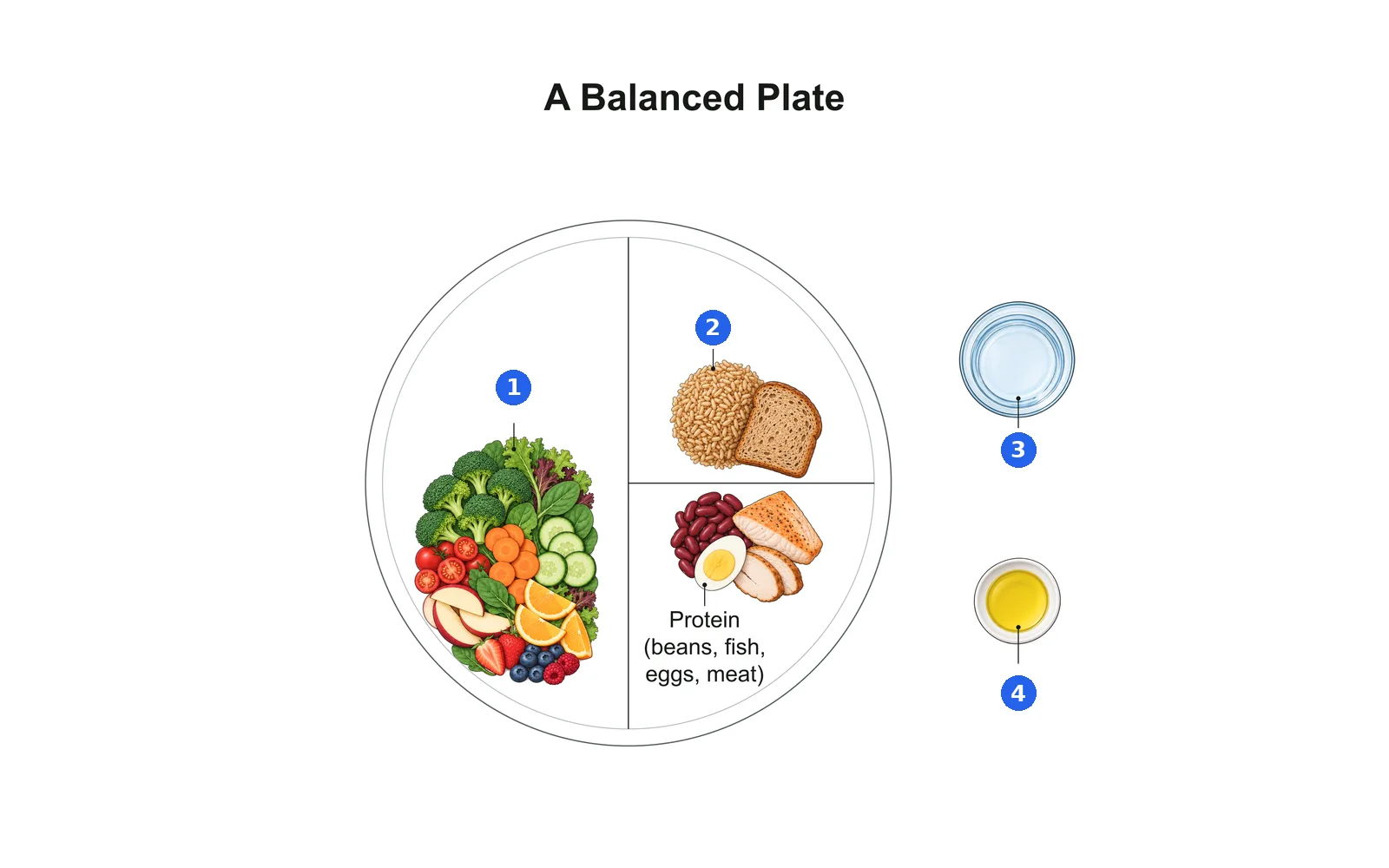
Apprentissage 2D
Nutrition Basics
How it works · Nutrition · 10 cartes
Notes d'étude
- Food gives the body energy and the raw materials to build and repair itself.
- Macronutrients (carbohydrates, proteins and fats) are needed in large amounts and supply energy.
- Micronutrients (vitamins and minerals) are needed in small amounts but are just as essential.
- Fiber and water do not supply energy but keep digestion and the body working well.
Cartes mémoire
Carte 1 sur 10Touchez la carte pour la retourner
Légende le schéma
Nomme chaque partie numérotée. Passe aux légendes pour étudier d'abord.
Légende 1 sur 4Choisissez une réponse
Quel est le numéro 1 ?
Termes de ce paquet (10)
- Calorie
- A unit of energy in food. Carbohydrates and protein give about 4 per gram; fat gives about 9.
- Carbohydrates (nutrition)
- The main energy source; whole grains, fruit, vegetables and beans are better choices than sugar.
- Protein (nutrition)
- Needed to build and repair muscle and tissues; found in beans, lentils, eggs, fish, meat and dairy.
- Healthy fats
- Fats from nuts, seeds, avocado, olive oil and oily fish that support the heart and brain.
- Fiber
- Plant material the body cannot digest; it keeps bowels regular and feeds good gut bacteria.
- Vitamins
- Small nutrients needed for many body processes, like vitamin C for healing and vitamin A for vision.
- Iron
- A mineral needed to make hemoglobin; found in beans, leafy greens and meat.
- Calcium
- A mineral for strong bones and teeth and for muscle and nerve function.
- Water
- Needed for every body process; thirst and pale urine are simple guides.
- Fat-soluble vitamins
- Vitamins A, D, E and K, which are stored in body fat.
Le voir sur le corps 3D
Ouvrez le modèle 3D sur une partie, avec ses notes et fiches d'École.
Contenu éducatif pour apprendre l'anatomie, pas un avis médical.