Aprendizaje 2D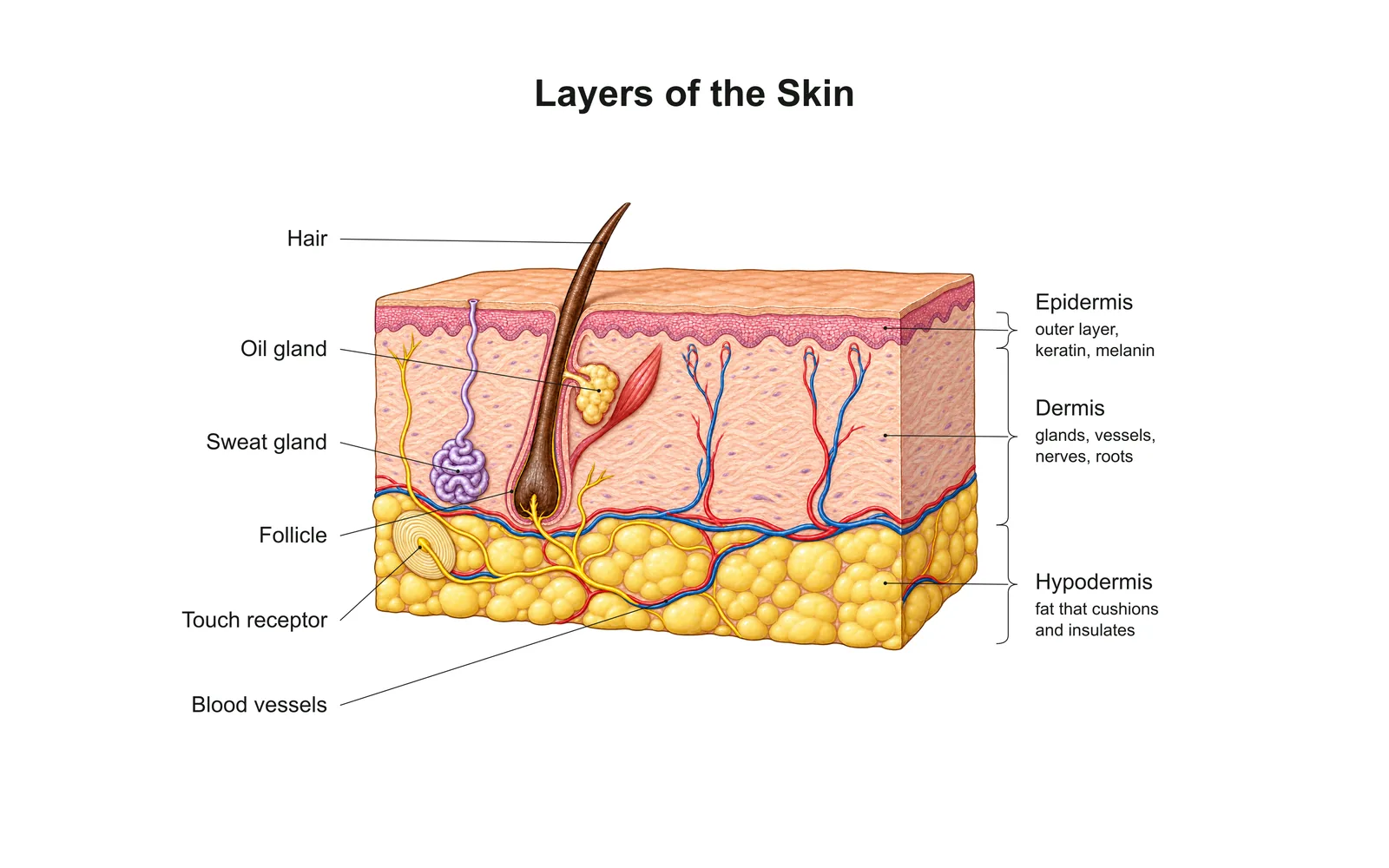
The three layers of the skin. 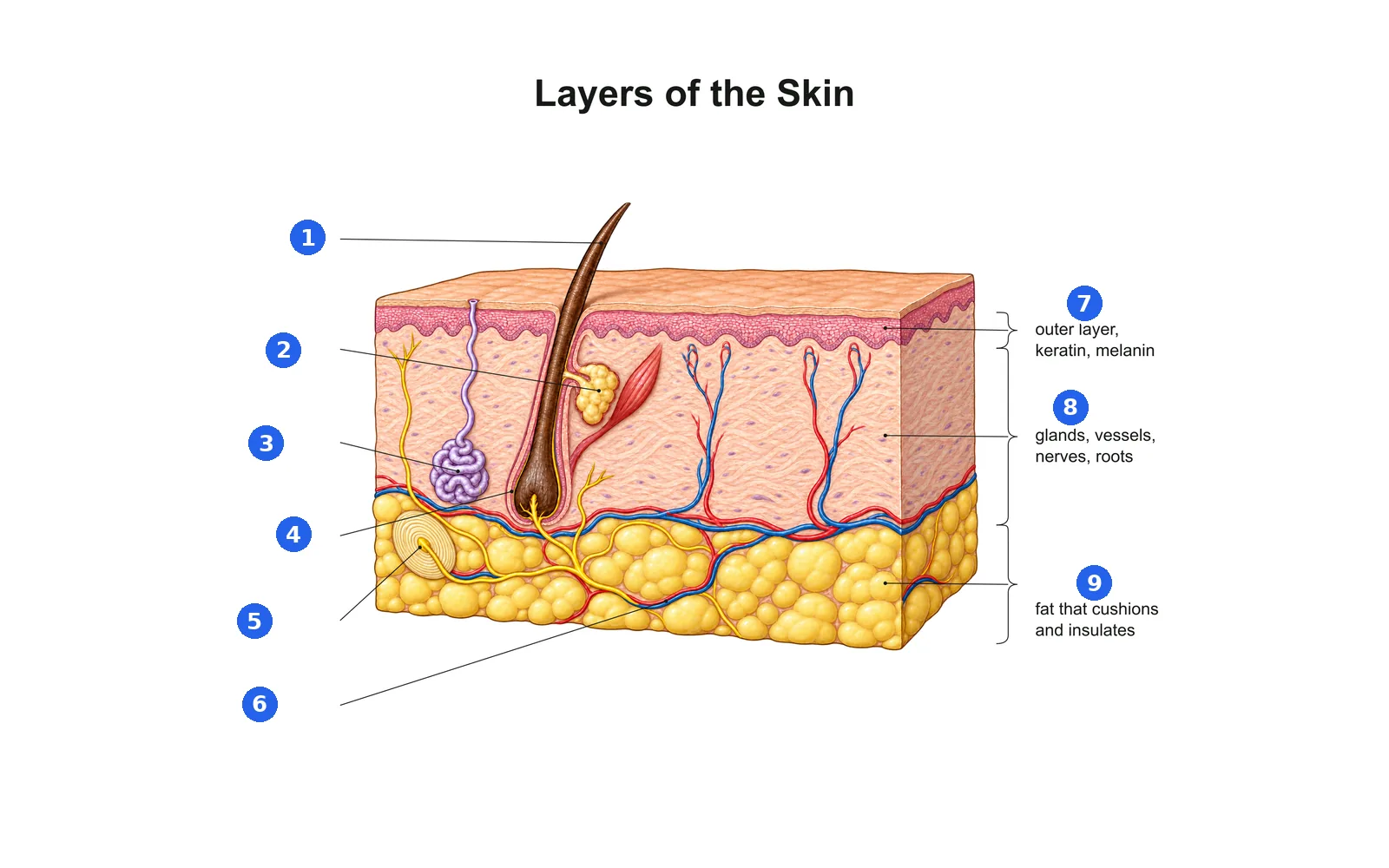
Aprendizaje 2D
Skin, Hair and Nails
How it works · Skin · 14 tarjetas
Notas de estudio
- The skin is the body's largest organ.
- It has three layers: the epidermis on top, the dermis below, and a fatty layer underneath (hypodermis).
- It protects against germs and water loss, controls temperature, senses touch and makes vitamin D in sunlight.
- Hair and nails are made of keratin, a tough protein, and grow from living cells at their base.
Tarjetas
Tarjeta 1 de 14Toca la tarjeta para darle la vuelta
Etiqueta el diagrama
Nombra cada parte numerada. Cambia a las etiquetas para estudiar primero.
Etiqueta 1 de 9Elige una respuesta
¿Qué es el número 1?
Términos de este mazo (14)
- Epidermis
- The thin outer layer of skin; its surface cells are dead and constantly shed and replaced.
- Dermis
- The thick middle layer with blood vessels, nerves, hair roots, and sweat and oil glands.
- Hypodermis
- The fatty layer under the skin that stores energy, cushions and insulates.
- Keratin
- The tough protein in the outer skin, hair and nails.
- Melanin
- The pigment that colors skin, hair and eyes and helps protect against ultraviolet light.
- Sweat glands
- Glands that release sweat; as it evaporates it cools the body.
- Sebaceous glands
- Oil glands attached to hair follicles that keep skin and hair supple.
- Hair follicle
- The pocket in the skin where a hair grows from living cells at its base.
- Vitamin D
- Skin makes it when exposed to sunlight; the body needs it to absorb calcium.
- How does skin help control temperature?
- Sweating and widening blood vessels release heat; narrowing vessels and goosebumps keep heat in.
- Hair
- A strand of keratin growing from a follicle; it helps keep heat in and senses touch.
- Oil gland
- A sebaceous gland that releases oil (sebum) into the hair follicle.
- Blood vessels
- Tiny vessels in the dermis that feed the skin and help control temperature.
- Touch receptor
- A nerve ending in the skin that senses touch, pressure or vibration.
Verlo en el cuerpo 3D
Abre el modelo 3D en una parte, con sus notas y tarjetas de Escuela.
Contenido educativo para aprender anatomía, no consejo médico.