Aprendizaje 2D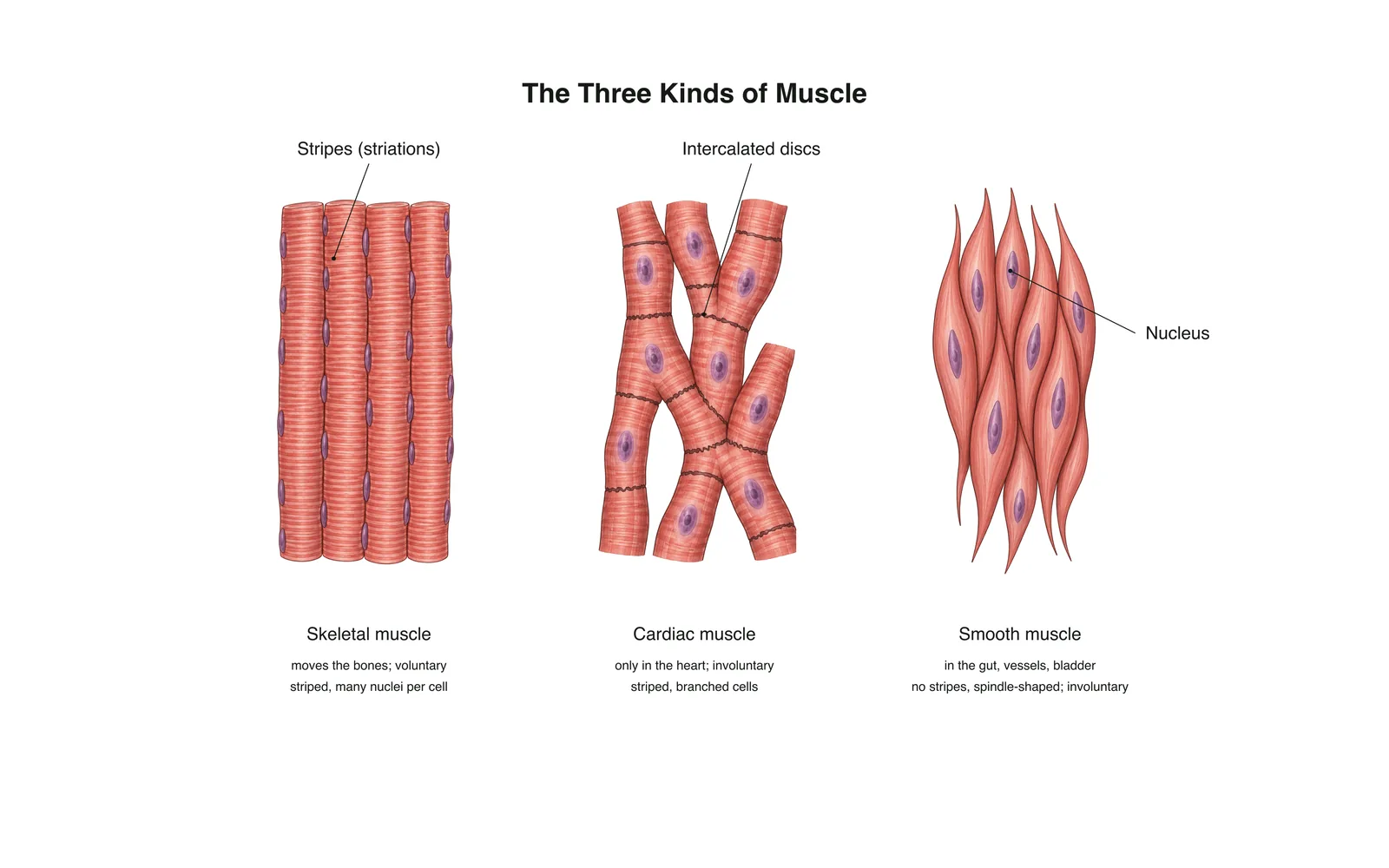
The three kinds of muscle tissue. 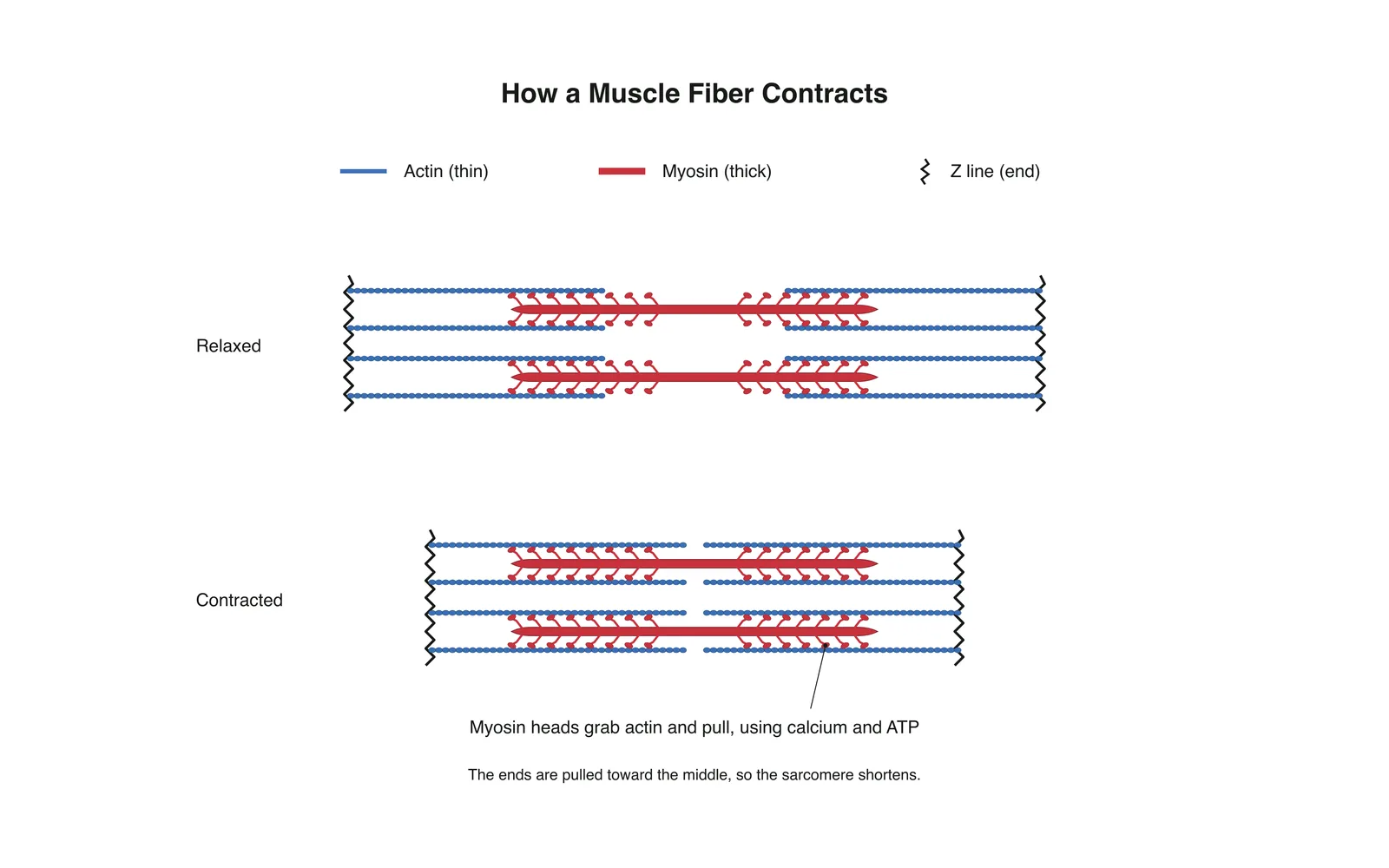
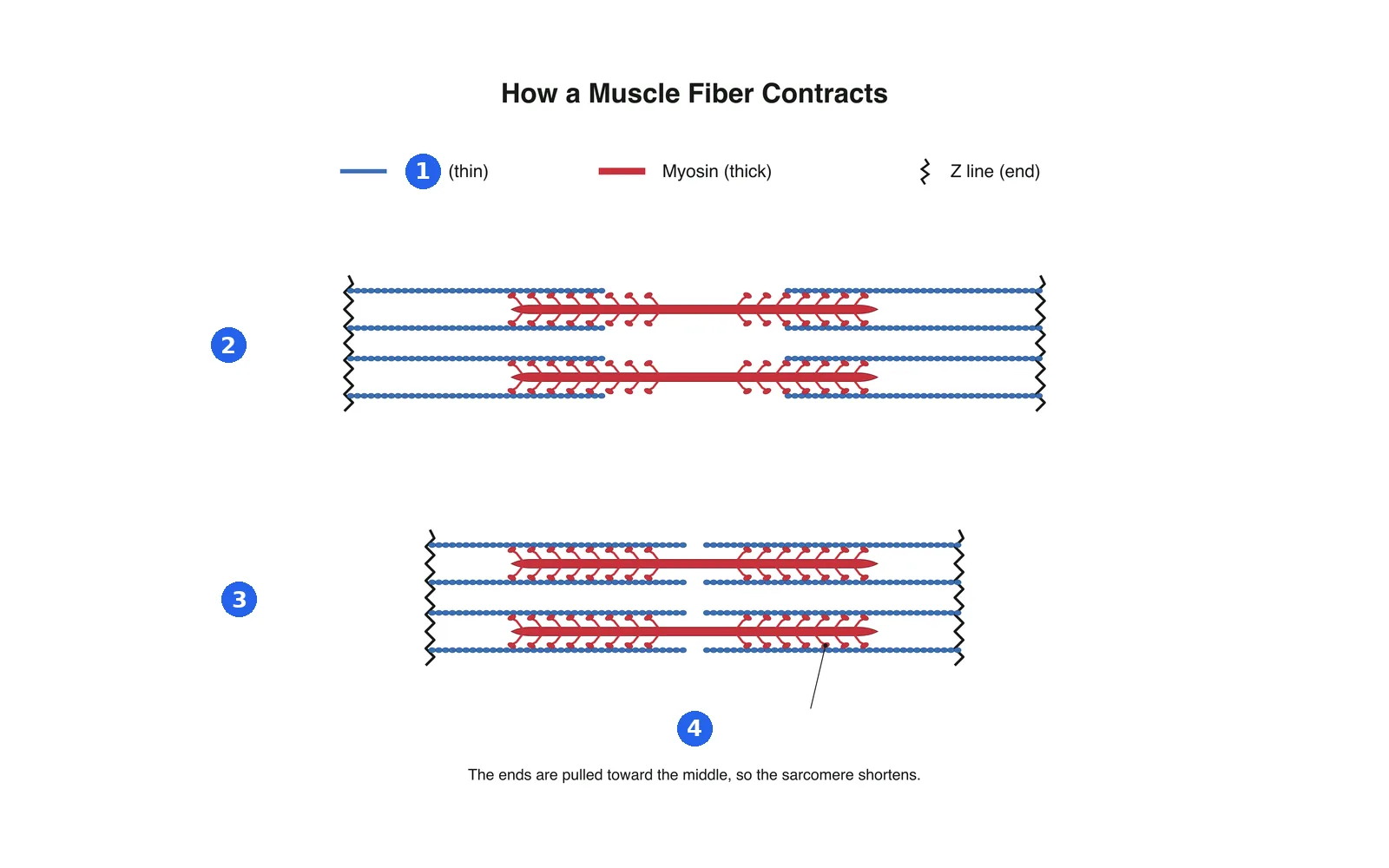
Muscle contraction: myosin pulls actin so each sarcomere shortens. 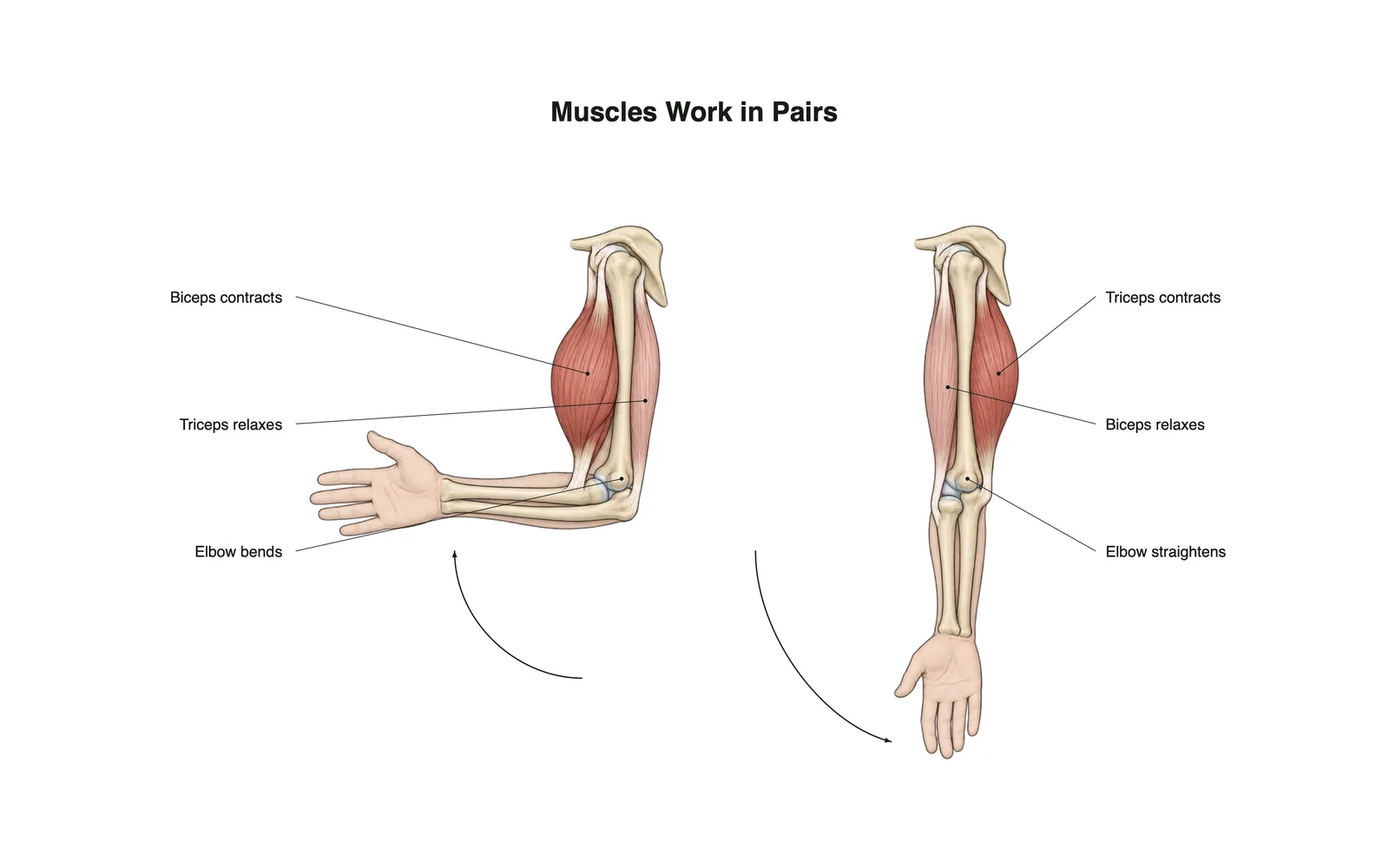
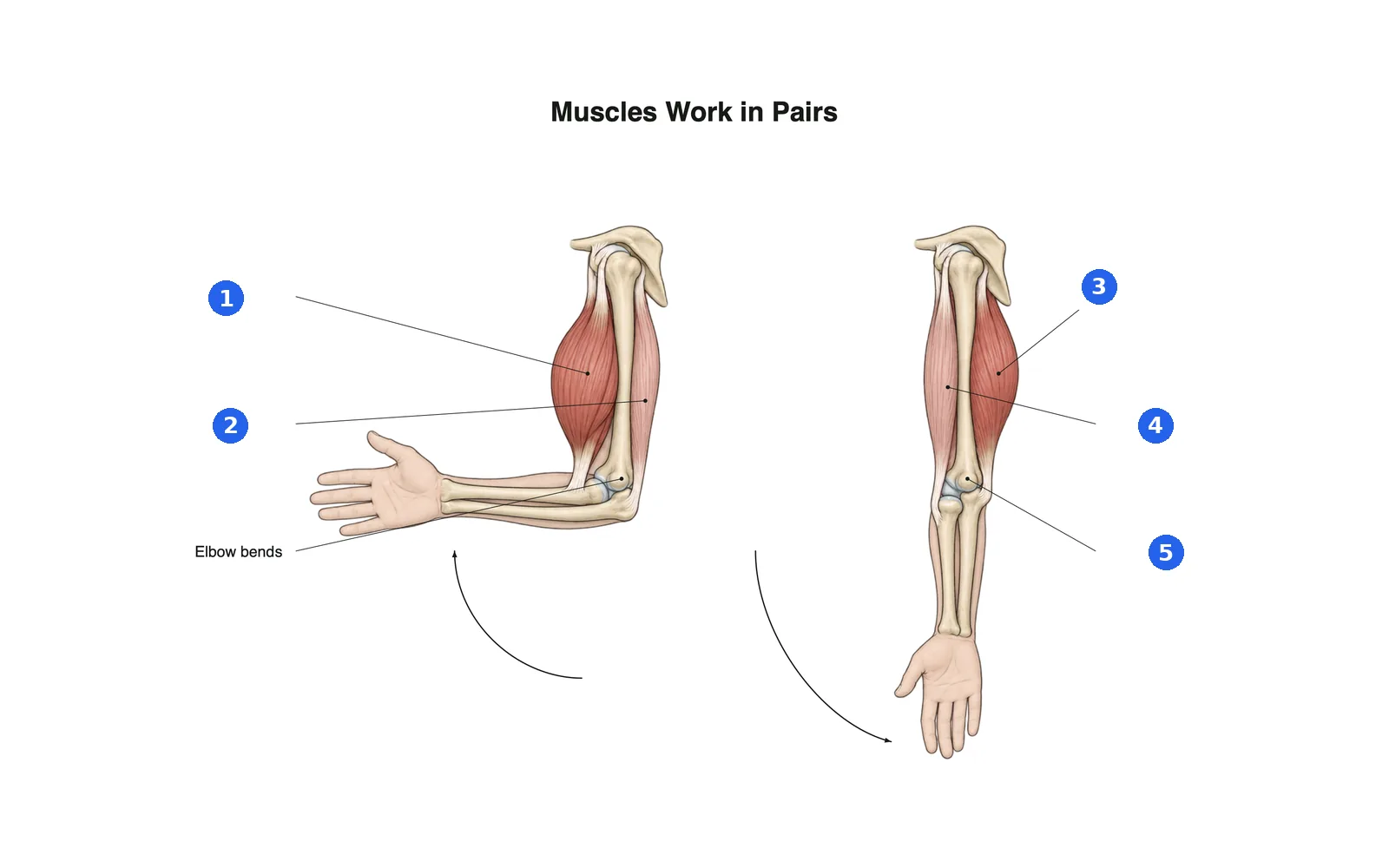
Muscles Work in Pairs 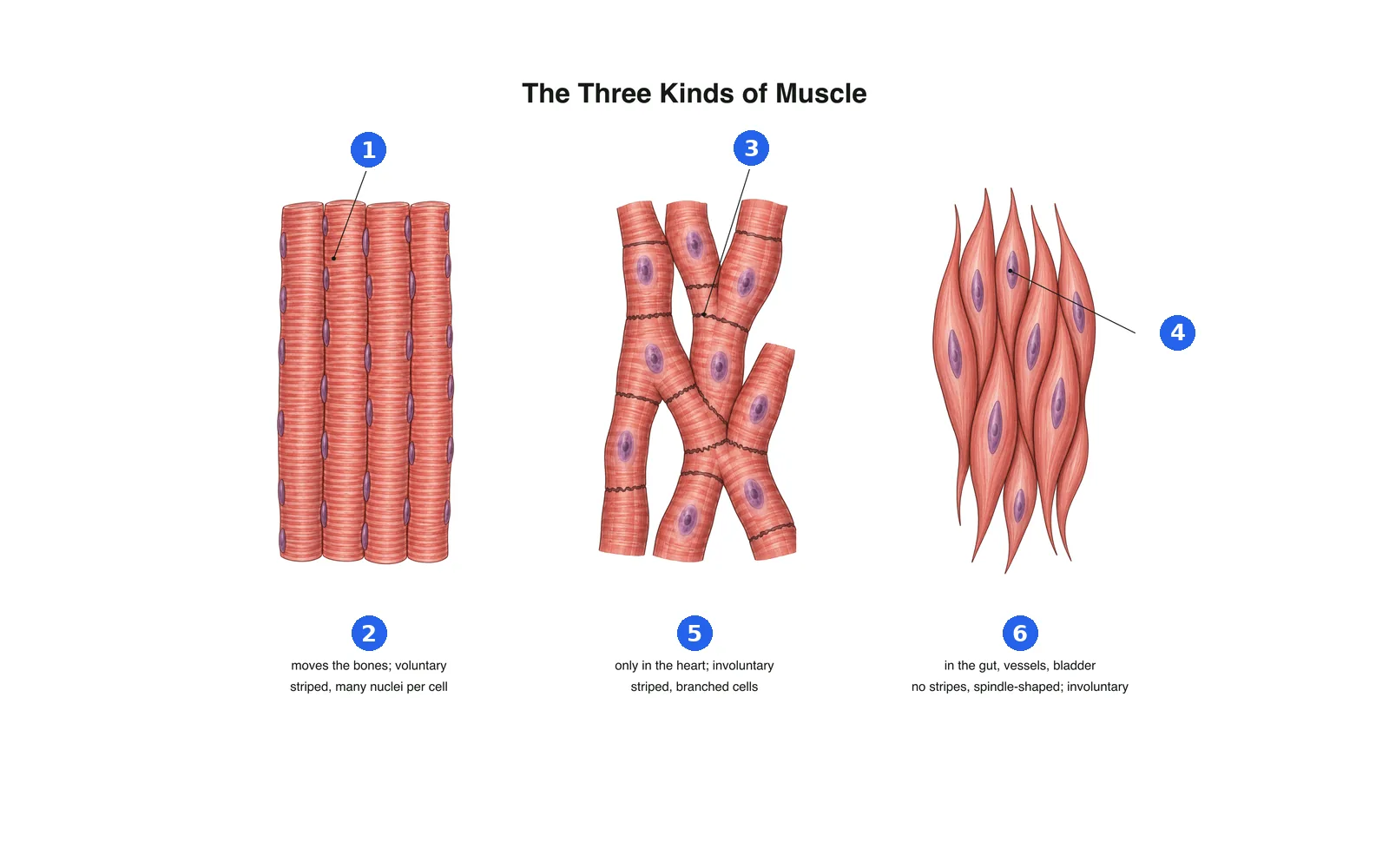
Aprendizaje 2D
How Muscles Contract
How it works · Bones, joints and muscles · 11 tarjetas
Notas de estudio
- There are three kinds of muscle: skeletal (moves bones), cardiac (the heart) and smooth (walls of organs and vessels).
- A nerve signal at the neuromuscular junction tells a skeletal muscle fiber to contract.
- Inside each fiber, tiny filaments of myosin pull on filaments of actin, shortening units called sarcomeres.
- Contraction needs calcium and energy (ATP); muscles can only pull, never push.
Tarjetas
Tarjeta 1 de 11Toca la tarjeta para darle la vuelta
Etiqueta el diagrama
Nombra cada parte numerada. Cambia a las etiquetas para estudiar primero.
Etiqueta 1 de 6Elige una respuesta
¿Qué es el número 1?
Etiqueta 1 de 4Elige una respuesta
¿Qué es el número 1?
Etiqueta 1 de 5Elige una respuesta
¿Qué es el número 1?
Términos de este mazo (11)
- Skeletal muscle
- Striped muscle attached to bones; under voluntary (conscious) control.
- Cardiac muscle
- The striped, involuntary muscle of the heart; its cells are linked so they beat together.
- Smooth muscle
- Unstriped, involuntary muscle in the walls of the gut, blood vessels, bladder and airways.
- Muscle fiber
- A single long muscle cell, packed with contracting filaments.
- Sarcomere
- The basic contracting unit of a muscle fiber, repeated end to end along it.
- Actin and myosin
- The two protein filaments of muscle: myosin heads grab and pull on actin to shorten the muscle.
- Sliding filament theory
- Muscles shorten because actin and myosin filaments slide past each other, not because the filaments shrink.
- Neuromuscular junction
- Where a motor nerve meets a muscle fiber and releases acetylcholine to trigger contraction.
- Role of calcium
- Calcium released inside the fiber uncovers binding sites on actin so myosin can grab on.
- Muscle cramp
- A sudden, painful, involuntary contraction that does not relax right away.
- Intercalated discs
- Special junctions joining heart muscle cells so they contract together as one.
Verlo en el cuerpo 3D
Abre el modelo 3D en una parte, con sus notas y tarjetas de Escuela.
Músculos de la cara y la mandíbulaMúsculos del cuelloManguito rotador y deltoidesMúsculos de la espalda alta y la escápulaMúsculos del pechoBíceps y parte delantera del brazoTríceps y parte trasera del brazoFlexores del antebrazoExtensores del antebrazoMúsculos del core y abdominalesMúsculos erectores de la columnaGlúteos y flexores de la caderaMúsculos de la cara interna del muslo y la ingleCuádriceps y parte delantera del musloIsquiotibiales y parte trasera del musloMúsculos de la pantorrilla, la espinilla y el tobillo
Contenido educativo para aprender anatomía, no consejo médico.