Aprendizaje 2D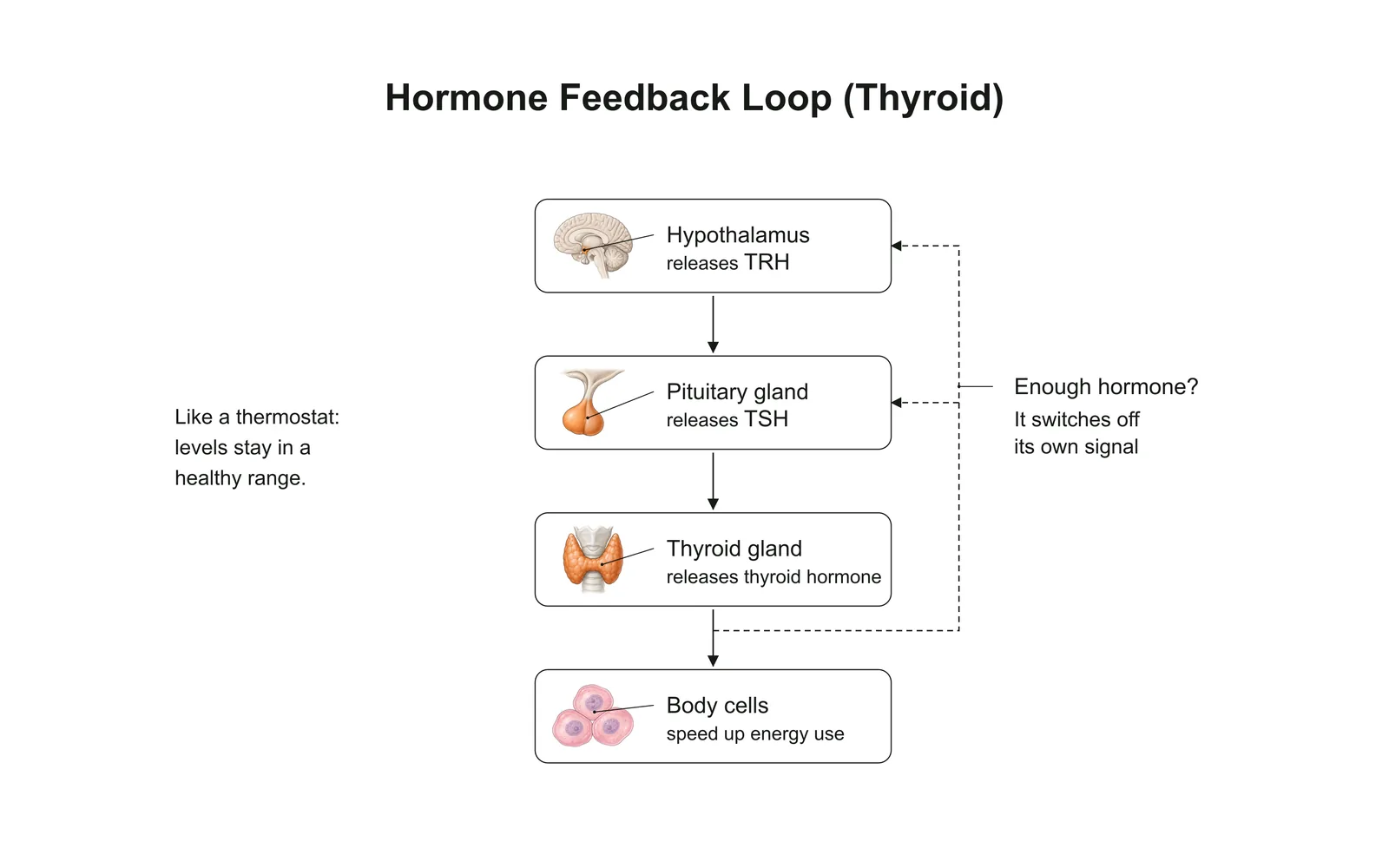
Negative feedback keeps hormone levels in a healthy range. 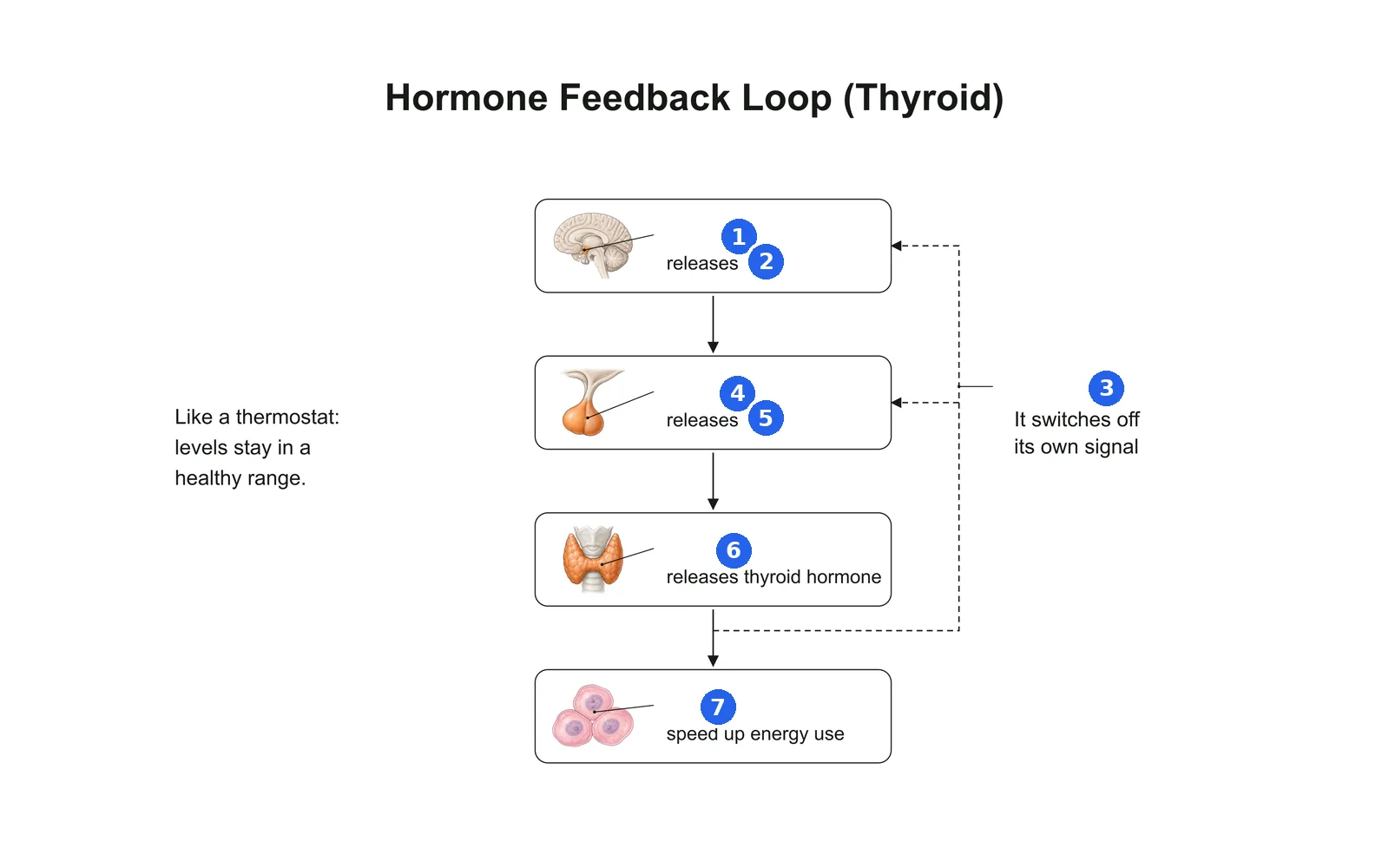
Aprendizaje 2D
How Hormones Work
How it works · Hormones · 10 tarjetas
Notas de estudio
- Hormones are chemical messengers made by glands and carried in the blood to target cells.
- Only cells with the matching receptor respond to a hormone.
- Most hormone levels are kept steady by negative feedback, like a thermostat.
- The hypothalamus and pituitary gland in the head direct many of the other glands.
Tarjetas
Tarjeta 1 de 10Toca la tarjeta para darle la vuelta
Etiqueta el diagrama
Nombra cada parte numerada. Cambia a las etiquetas para estudiar primero.
Etiqueta 1 de 7Elige una respuesta
¿Qué es el número 1?
Términos de este mazo (10)
- Hormone
- A chemical messenger released into the blood that changes how target cells work.
- Endocrine gland
- A gland that releases hormones straight into the blood (no ducts).
- Receptor
- A protein on or in a cell that recognizes one hormone, like a lock for its key.
- Negative feedback
- When a hormone's effect switches off its own release, keeping levels steady.
- Hypothalamus–pituitary link
- The hypothalamus senses the body's needs and signals the pituitary, which signals other glands.
- Parathyroid glands
- Four tiny glands behind the thyroid that raise blood calcium with parathyroid hormone.
- Blood sugar control
- Insulin lowers blood sugar after meals; glucagon raises it between meals.
- Cortisol
- The adrenal stress hormone; it raises blood sugar and calms inflammation. Its levels peak in the morning.
- Melatonin
- Made by the pineal gland in the dark; it signals the body that it is time to sleep.
- Sex hormones
- Testosterone, estrogen and progesterone, made mainly by the testes and ovaries; they drive puberty.
Verlo en el cuerpo 3D
Abre el modelo 3D en una parte, con sus notas y tarjetas de Escuela.
Contenido educativo para aprender anatomía, no consejo médico.