Aprendizaje 2D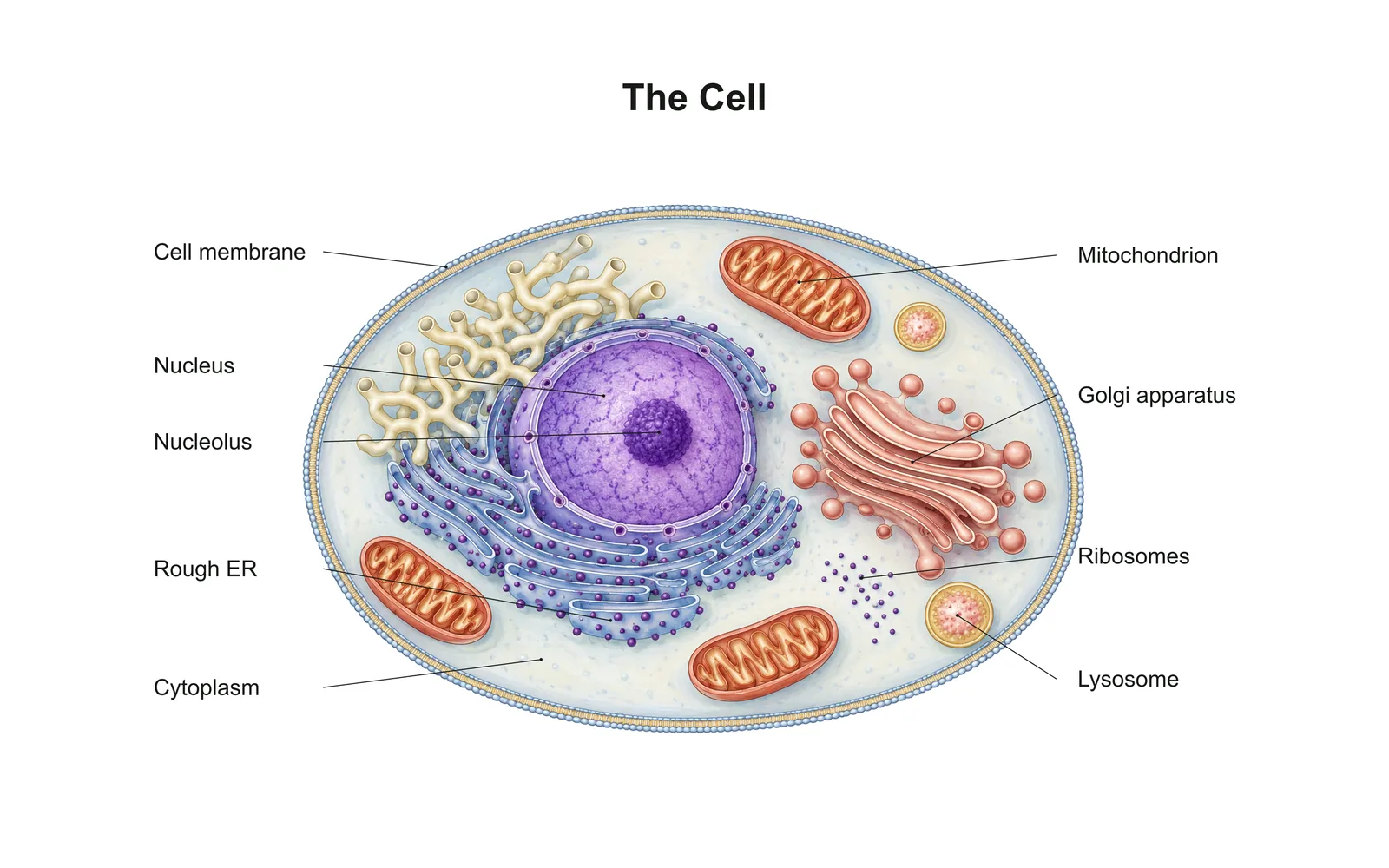
A typical body cell and its main parts. 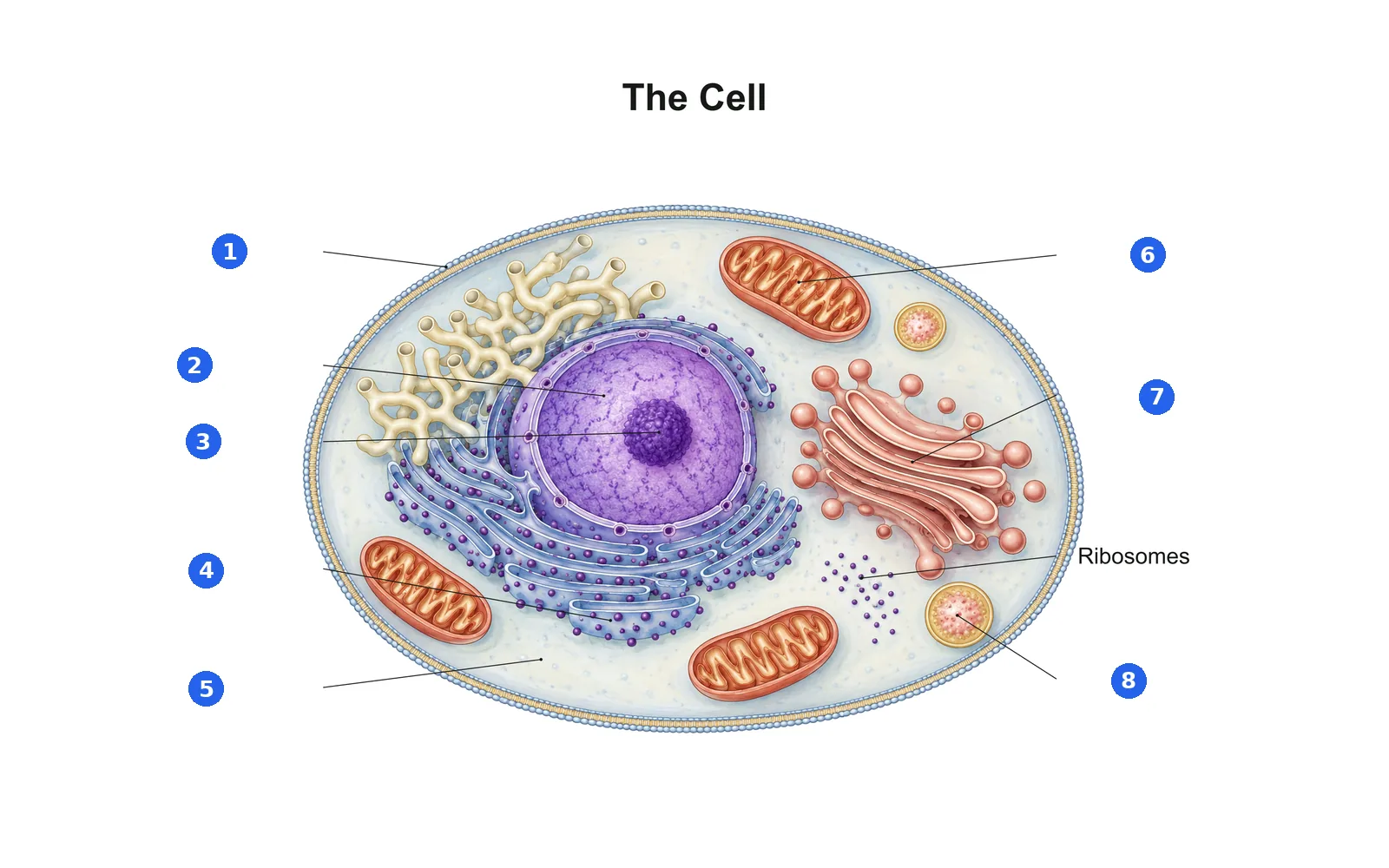
Aprendizaje 2D
The Cell
How it works · Cells and tissues · 13 tarjetas
Notas de estudio
- The cell is the smallest living unit; an adult body has tens of trillions of them.
- Every cell is wrapped in a thin membrane that controls what goes in and out.
- The nucleus holds the DNA, the instructions for building and running the cell.
- Small working parts called organelles each do one job, like making energy or building proteins.
Tarjetas
Tarjeta 1 de 13Toca la tarjeta para darle la vuelta
Etiqueta el diagrama
Nombra cada parte numerada. Cambia a las etiquetas para estudiar primero.
Etiqueta 1 de 8Elige una respuesta
¿Qué es el número 1?
Términos de este mazo (13)
- Cell membrane
- The thin, flexible outer layer of fats and proteins that controls what enters and leaves the cell.
- Nucleus
- The cell's control center; it holds the DNA and directs which proteins are made.
- Cytoplasm
- The jelly-like fluid inside the cell, around the nucleus, where the organelles sit.
- Mitochondria
- The cell's power stations; they turn sugar and oxygen into usable energy (ATP).
- Ribosomes
- Tiny structures that read genetic messages and build proteins.
- Endoplasmic reticulum (ER)
- A folded network of membranes: rough ER (with ribosomes) makes proteins, smooth ER makes fats.
- Golgi apparatus
- Sorts, packages and ships proteins to where they are needed, like a post office.
- Lysosomes
- Small sacs of enzymes that break down waste and worn-out parts.
- Diffusion
- Substances spreading from where there is more of them to where there is less, with no energy needed.
- Osmosis
- Water moving across a membrane toward the side with more dissolved substances.
- Mitosis
- Cell division that makes two identical cells; used for growth and repair.
- Nucleolus
- A dense spot inside the nucleus that makes ribosomes.
- Rough ER
- Endoplasmic reticulum studded with ribosomes, where many proteins are made.
Contenido educativo para aprender anatomía, no consejo médico.