التعلّم ثنائي الأبعاد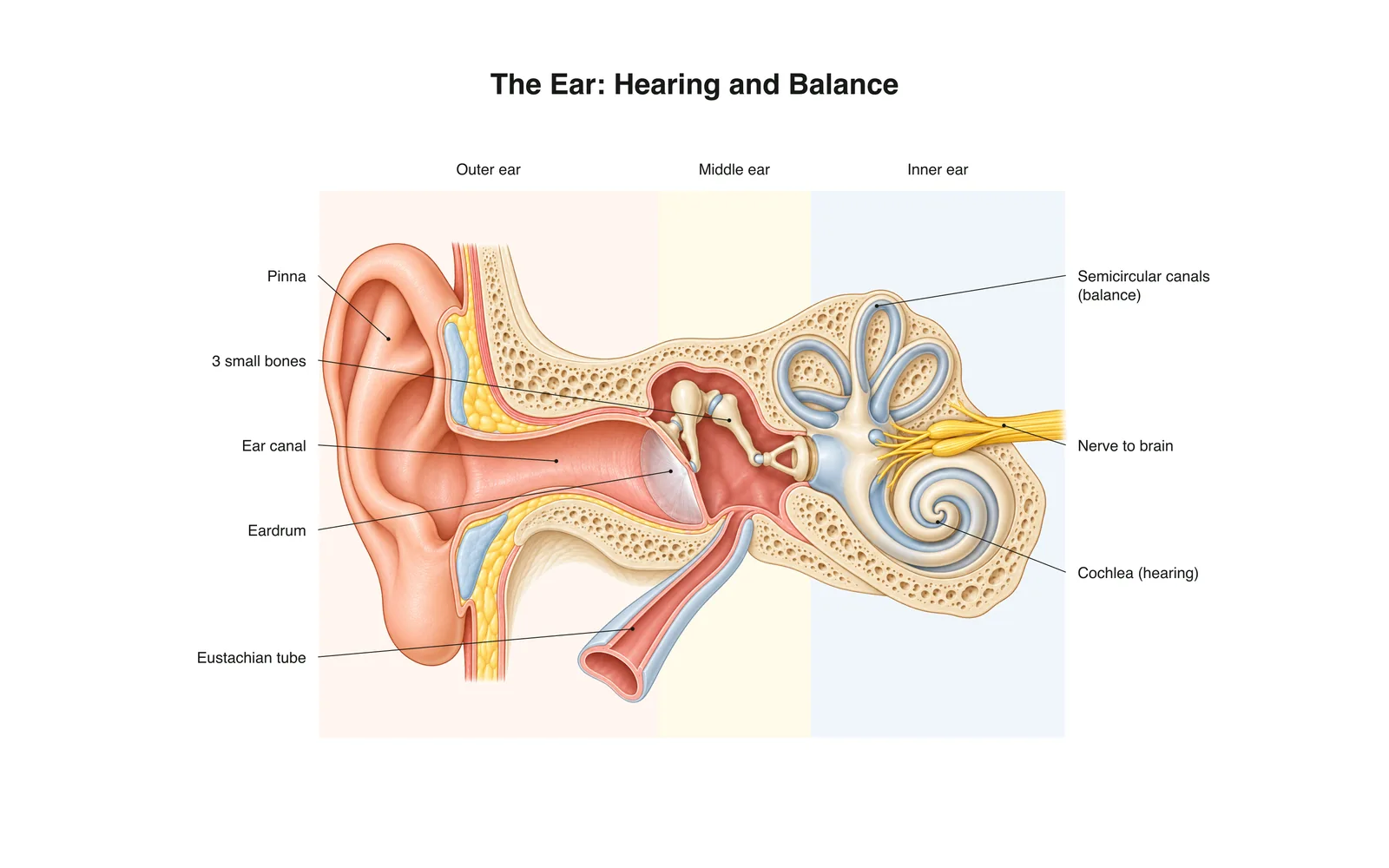
The ear handles both hearing and balance. 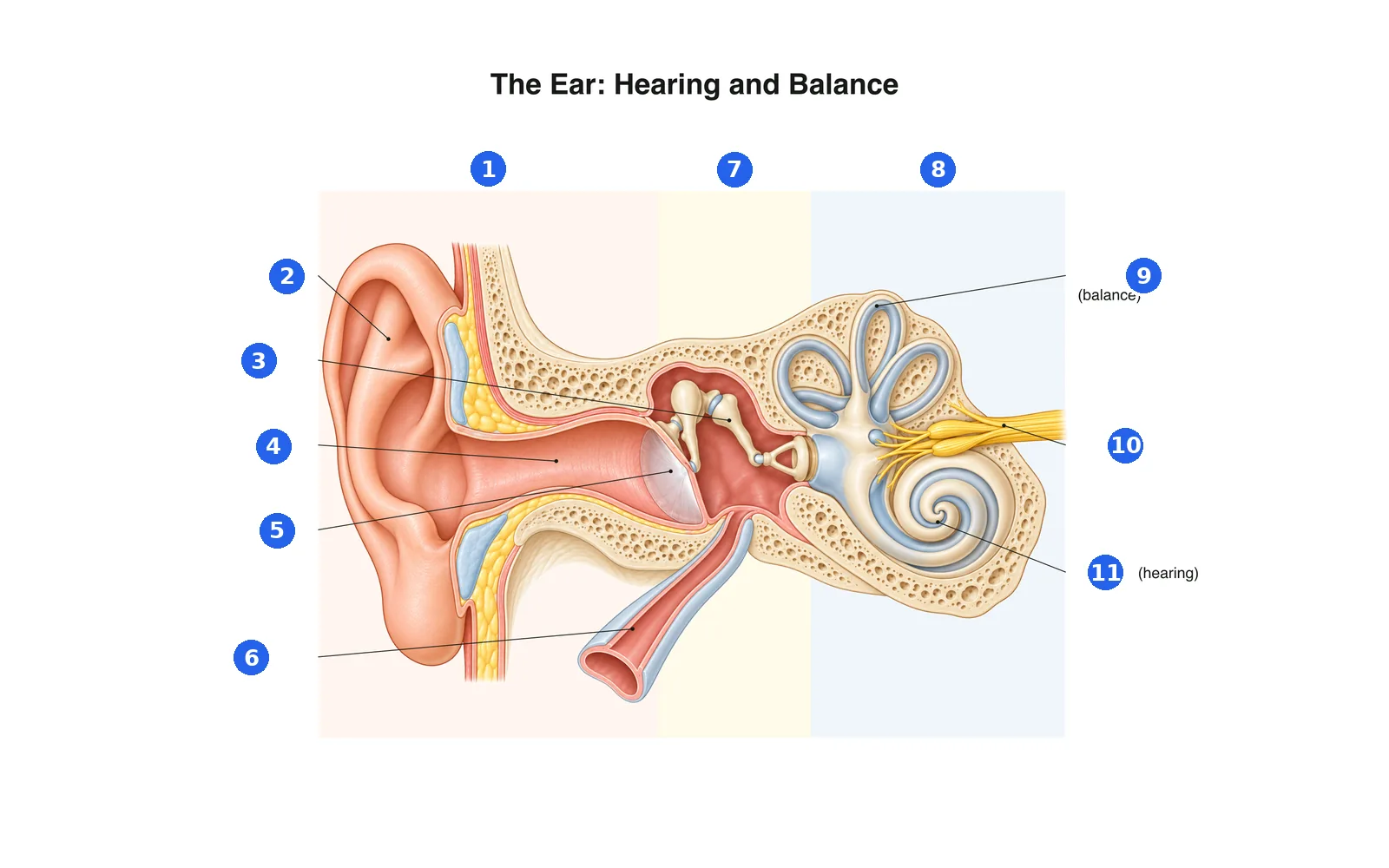
التعلّم ثنائي الأبعاد
Hearing and Balance
How it works · Nerves and senses · 12 بطاقة
ملاحظات الدراسة
- The ear has three parts: outer, middle and inner.
- Sound waves make the eardrum vibrate; three tiny bones pass the vibration to the inner ear.
- In the snail-shaped cochlea, hair cells turn vibrations into nerve signals.
- Three fluid-filled canals and two small sacs in the inner ear sense head movement and keep you balanced.
البطاقات التعليمية
البطاقة 1 من 12المس البطاقة لقلبها
سمِّ أجزاء الرسم
سمِّ كل جزء مرقّم. انتقل إلى التسميات لتدرس أولاً.
التسمية 1 من 11اختر إجابة
ما هو الرقم 1؟
مصطلحات هذه المجموعة (12)
- Outer ear
- The visible ear (pinna) and ear canal, which funnel sound to the eardrum.
- Eardrum (tympanic membrane)
- A thin membrane that vibrates when sound waves hit it.
- Ossicles
- The three smallest bones in the body: the malleus (hammer), incus (anvil) and stapes (stirrup).
- Eustachian tube
- Connects the middle ear to the throat and equalizes pressure; it is why ears 'pop'.
- Cochlea
- The snail-shaped, fluid-filled part of the inner ear where hearing happens.
- Hair cells
- Sensory cells in the cochlea that turn vibrations into nerve signals; loud noise can damage them for good.
- Semicircular canals
- Three looped canals at right angles that sense the head turning in any direction.
- Vestibular system
- The inner ear's balance organs, which work with the eyes and muscles to keep you steady.
- Auditory nerve
- Carries sound signals from the cochlea to the brain.
- Why do you feel dizzy after spinning?
- The fluid in the balance canals keeps moving for a moment after you stop.
- Pinna
- The visible outer ear that funnels sound in.
- Ear canal
- The tube from the outer ear to the eardrum.
شاهده على الجسم ثلاثي الأبعاد
افتح النموذج ثلاثي الأبعاد على جزء، مع ملاحظاته وبطاقاته في المدرسة.
محتوى تعليمي لتعلم التشريح، وليس نصيحة طبية.