التعلّم ثنائي الأبعاد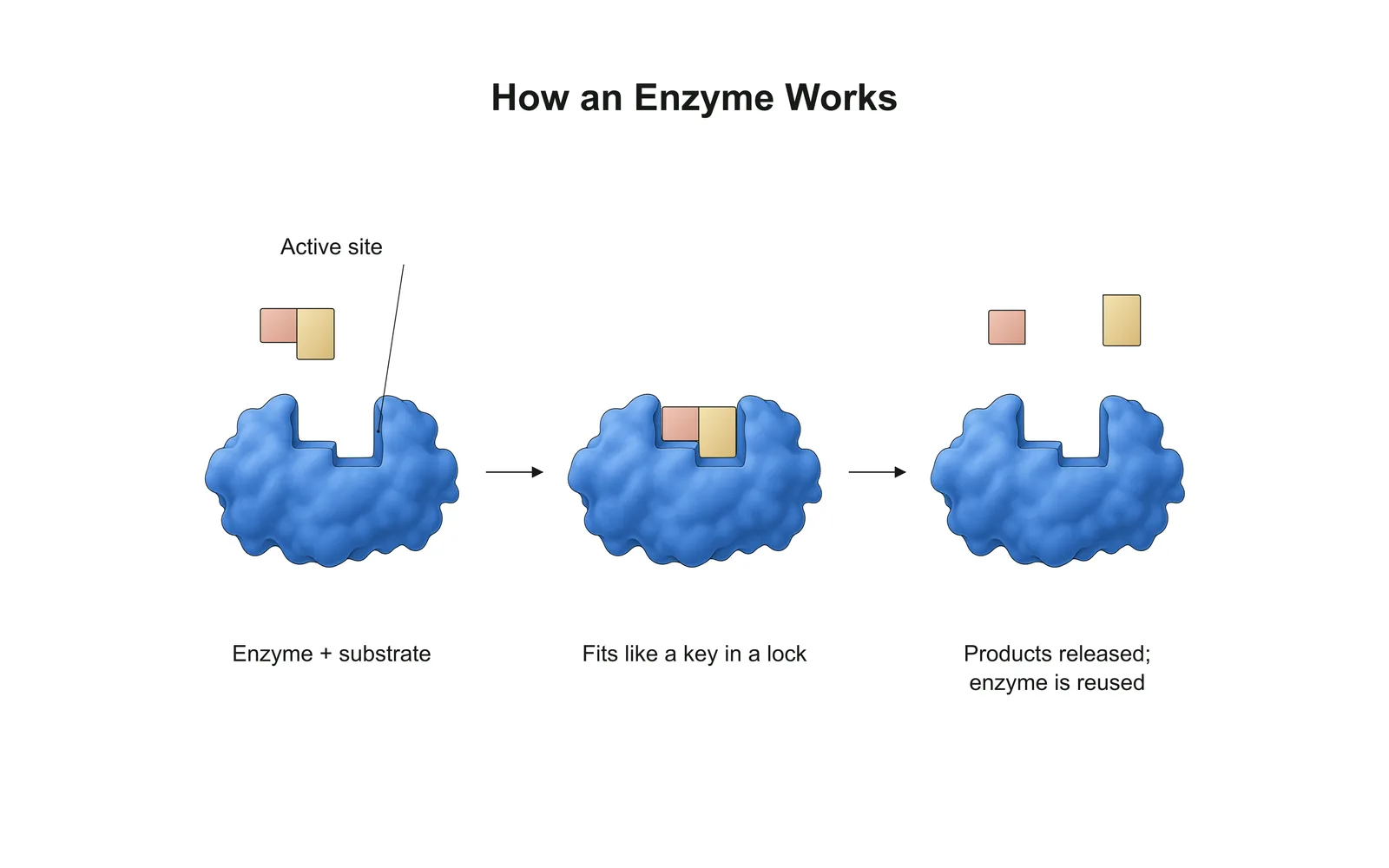
Enzymes fit their target like a key in a lock, then speed up the reaction. 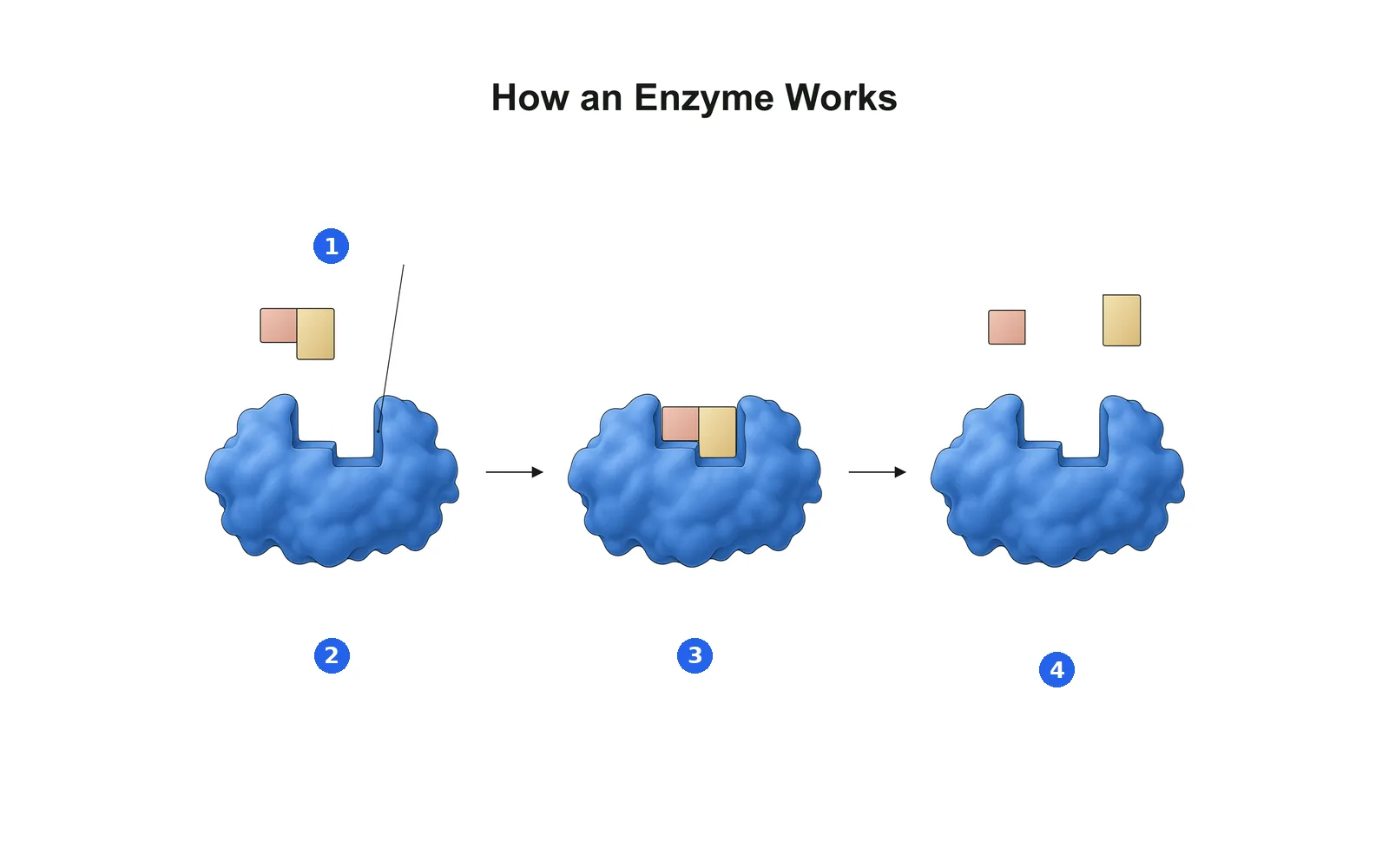
التعلّم ثنائي الأبعاد
Body Chemistry and Enzymes
How it works · Cells and tissues · 11 بطاقة
ملاحظات الدراسة
- About 60% of an adult's body weight is water.
- The body is built from four main kinds of large molecules: carbohydrates, proteins, fats (lipids) and nucleic acids.
- Enzymes are proteins that speed up chemical reactions without being used up.
- The body keeps conditions like temperature and blood acidity steady; this balance is called homeostasis.
البطاقات التعليمية
البطاقة 1 من 11المس البطاقة لقلبها
سمِّ أجزاء الرسم
سمِّ كل جزء مرقّم. انتقل إلى التسميات لتدرس أولاً.
التسمية 1 من 4اختر إجابة
ما هو الرقم 1؟
مصطلحات هذه المجموعة (11)
- Carbohydrates
- Sugars and starches; the body's main quick source of energy.
- Glucose
- The simple sugar that cells burn for energy; it travels in the blood.
- Lipids
- Fats and oils; they store energy, form cell membranes and make some hormones.
- Proteins
- Chains of amino acids that build tissues and do most of the cell's work.
- Nucleic acids
- DNA and RNA, the molecules that store and carry genetic information.
- Enzyme
- A protein that speeds up a specific chemical reaction in the body.
- Lock and key model
- Each enzyme has an active site shaped to fit only its own target molecule (substrate).
- ATP
- The small molecule that carries energy inside cells, like a rechargeable battery.
- pH
- A scale of how acidic or alkaline something is; blood stays slightly alkaline, around 7.4.
- Homeostasis
- The body keeping its internal conditions stable, such as temperature, water and blood sugar.
- Electrolytes
- Minerals like sodium, potassium and calcium that carry electric charge and help nerves and muscles work.
محتوى تعليمي لتعلم التشريح، وليس نصيحة طبية.