التعلّم ثنائي الأبعاد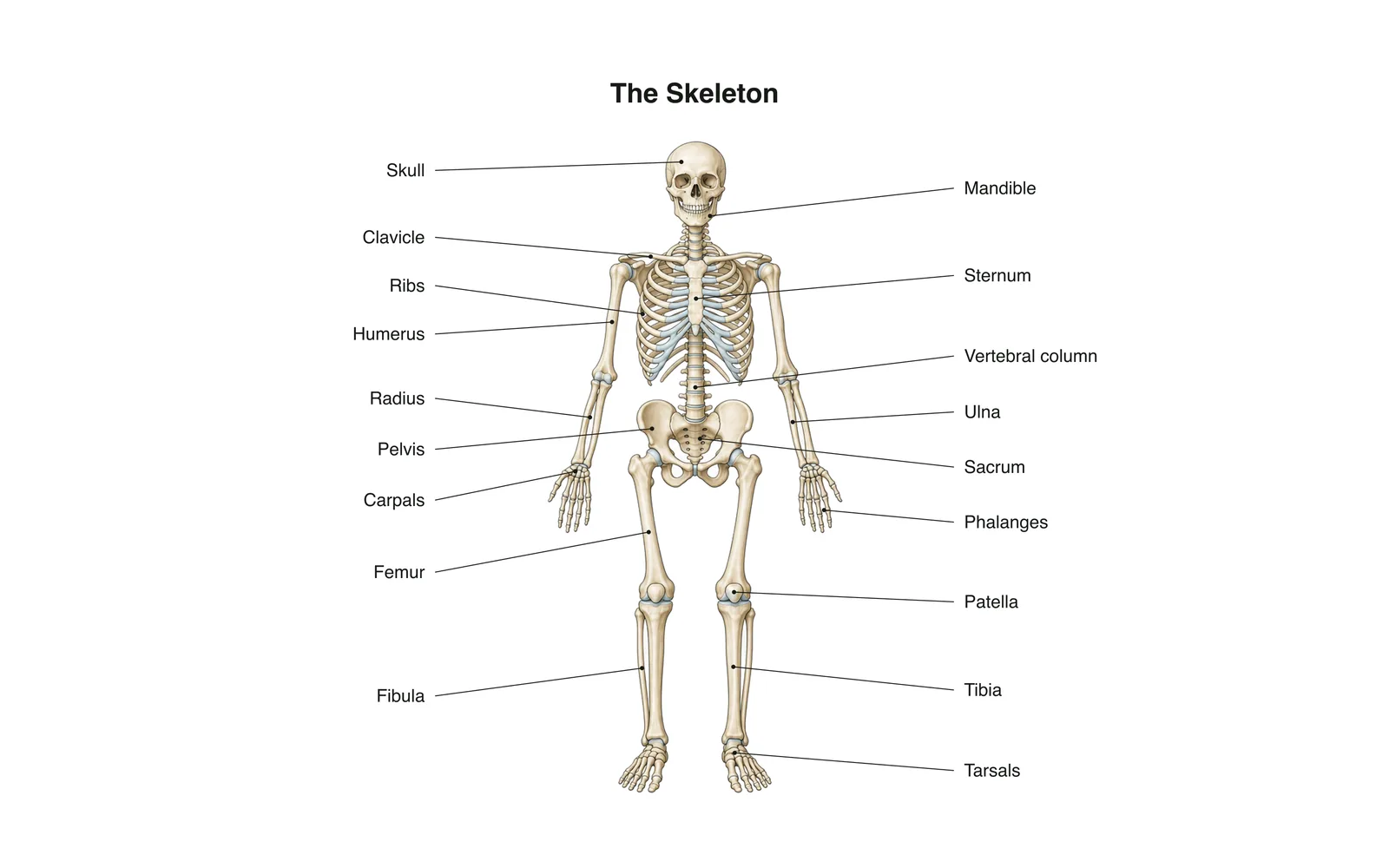
التعلّم ثنائي الأبعاد
The Skeleton
How it works · Body maps · 18 بطاقة
ملاحظات الدراسة
- An adult skeleton has 206 bones; a newborn has about 300 that fuse as they grow.
- The axial skeleton (skull, spine, ribs, sternum) protects the brain, spinal cord and chest organs.
- The appendicular skeleton (shoulders, arms, pelvis, legs) lets us move and handle things.
البطاقات التعليمية
البطاقة 1 من 18المس البطاقة لقلبها
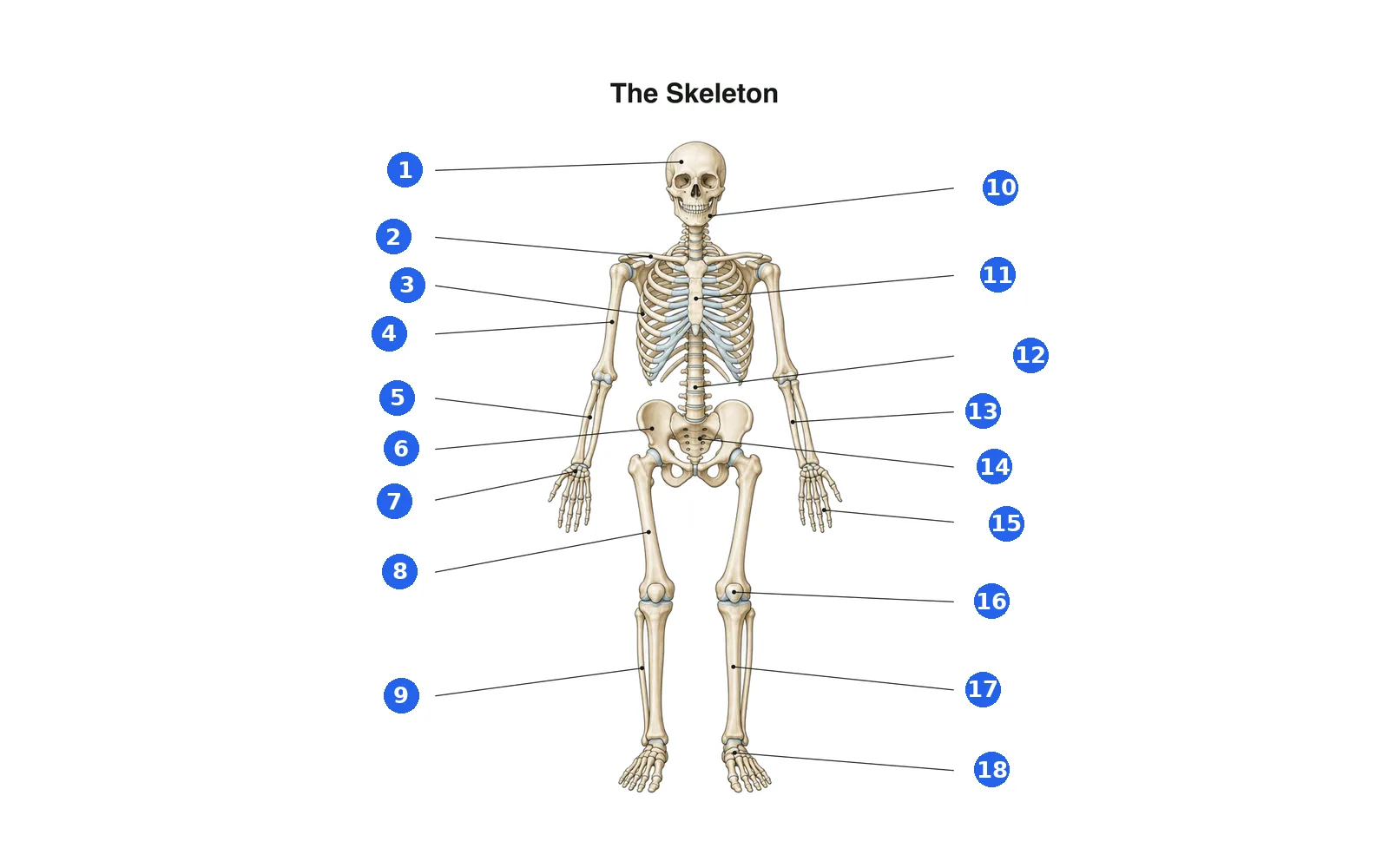
سمِّ أجزاء الرسم
سمِّ كل جزء مرقّم. انتقل إلى التسميات لتدرس أولاً.
التسمية 1 من 18اختر إجابة
ما هو الرقم 1؟
مصطلحات هذه المجموعة (18)
- Skull
- The bones of the head; it protects the brain and shapes the face.
- Mandible
- The lower jaw, the only skull bone that moves.
- Clavicle
- The collarbone, a strut between the breastbone and shoulder.
- Sternum
- The breastbone, in the middle of the chest; the ribs attach to it.
- Ribs
- 12 pairs of curved bones that protect the heart and lungs.
- Humerus
- The upper-arm bone, from shoulder to elbow.
- Vertebral column
- The spine: 33 vertebrae stacked around the spinal cord.
- Radius
- The forearm bone on the thumb side.
- Ulna
- The forearm bone on the little-finger side; forms the point of the elbow.
- Pelvis
- The ring of hip bones that carries the upper body's weight to the legs.
- Sacrum
- Five fused vertebrae at the base of the spine, joined to the pelvis.
- Carpals
- The 8 small wrist bones.
- Phalanges
- The finger and toe bones: 3 per finger or toe, 2 in the thumb and big toe.
- Femur
- The thigh bone, the longest and strongest bone in the body.
- Patella
- The kneecap, which protects the knee and helps the thigh muscles straighten it.
- Tibia
- The shin bone, which carries the body's weight.
- Fibula
- The thin bone beside the tibia; it forms the outer ankle.
- Tarsals
- The 7 ankle and back-of-foot bones, including the heel bone.
شاهده على الجسم ثلاثي الأبعاد
افتح النموذج ثلاثي الأبعاد على جزء، مع ملاحظاته وبطاقاته في المدرسة.
محتوى تعليمي لتعلم التشريح، وليس نصيحة طبية.