2D ትምህርት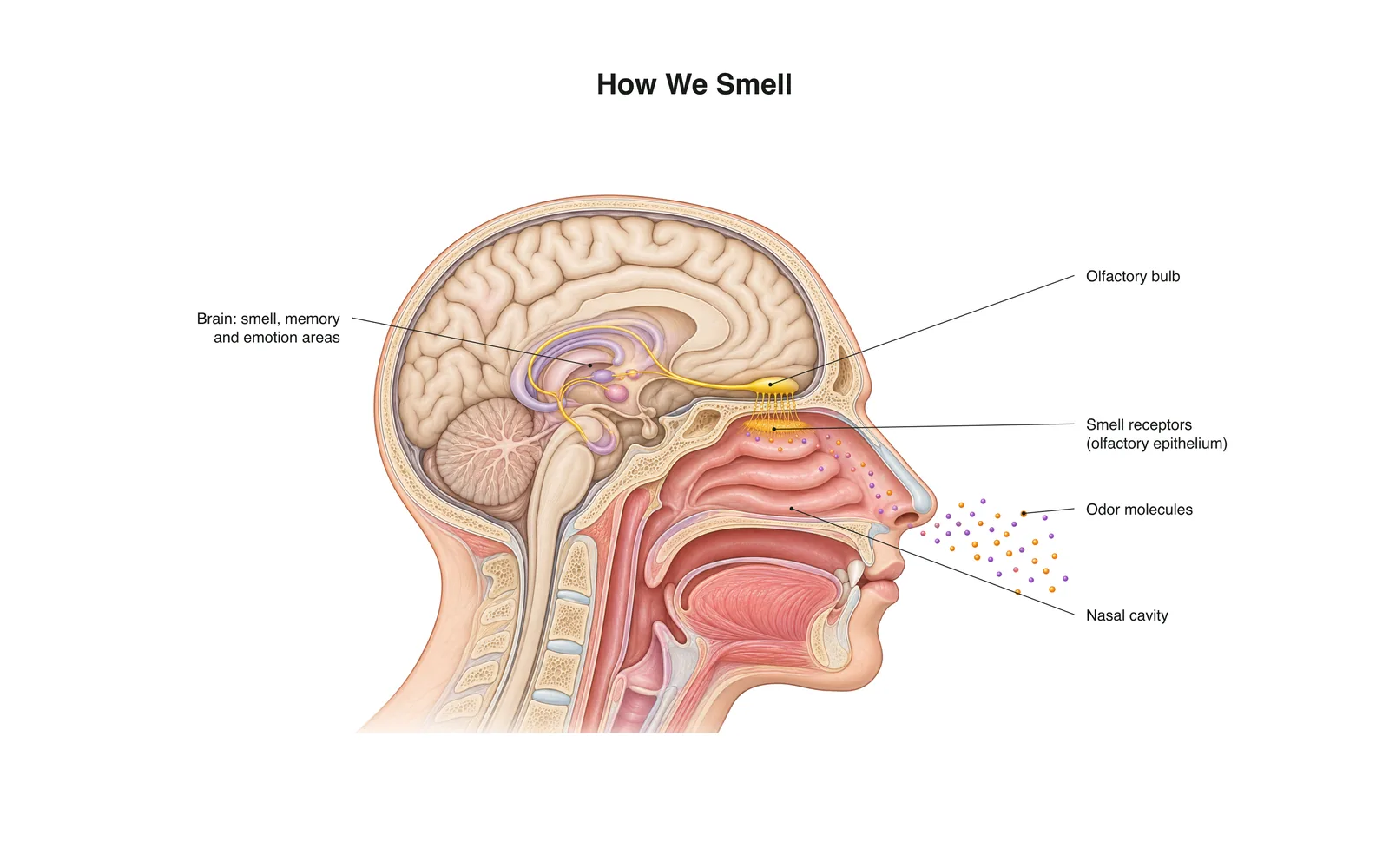
Smell receptors high in the nose send signals straight to the brain. 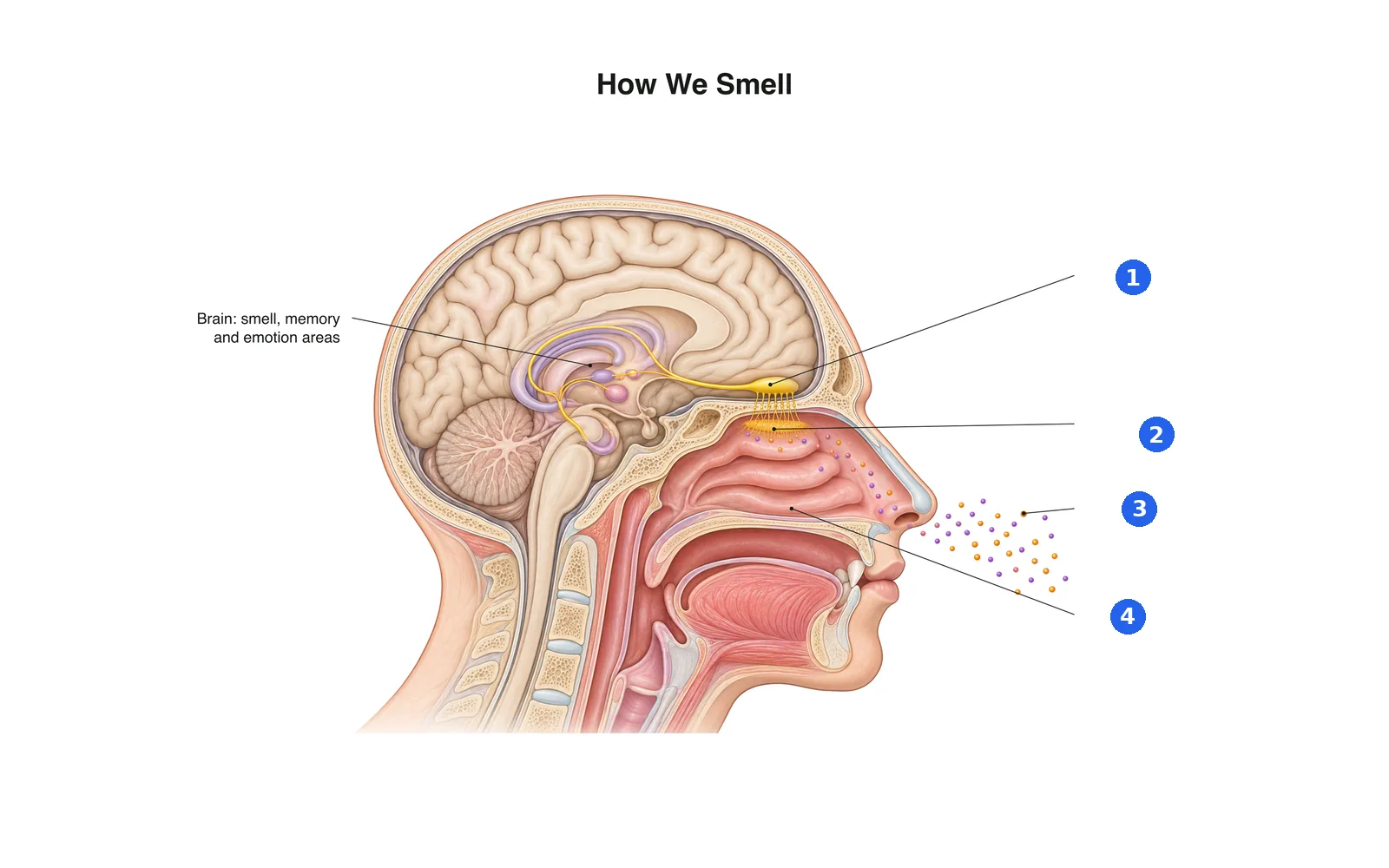
2D ትምህርት
Smell and Taste
How it works · Nerves and senses · 9 ካርዶች
የጥናት ማስታወሻዎች
- Smell and taste are chemical senses: receptors detect molecules.
- Smell receptors sit in a small patch high in the roof of the nose.
- Most of what we call flavor is actually smell, which is why food seems bland with a blocked nose.
- Taste buds detect five basic tastes: sweet, salty, sour, bitter and umami.
የማስታወሻ ካርዶች
ካርድ 1 ከ9ለመገልበጥ ካርዱን ይንኩ
የሥዕሉን ክፍሎች ሰይም
ቁጥር ያለውን እያንዳንዱን ክፍል ሰይም። መጀመሪያ ለማጥናት ወደ ስሞቹ ቀይር።
ስም 1 ከ4መልስ ይምረጡ
ቁጥር 1 ምንድን ነው?
በዚህ ስብስብ ያሉ ቃላት (9)
- Olfactory epithelium
- The patch of tissue in the roof of the nose that holds smell receptors.
- Olfactory bulb
- The part of the brain just above the nose that first processes smells.
- Olfactory nerve
- The first cranial nerve; it carries smell signals to the brain.
- Why are smells linked to memories?
- Smell signals go directly to brain areas for emotion and memory.
- Taste buds
- Clusters of taste cells, mostly on the tongue's bumps (papillae), that detect taste chemicals.
- Umami
- The savory taste of glutamate, found in broth, cheese, tomatoes and meat.
- Flavor
- The combined sense of taste, smell, texture and temperature of food.
- Anosmia
- Loss of the sense of smell, for example after a cold or a viral infection.
- Nasal cavity
- The air space inside the nose, lined with mucus membranes.
በ3D ሰውነት ላይ ይመልከቱ
የ3D ሞዴሉን በአንድ ክፍል ላይ ይክፈቱ፣ ከትምህርት ቤት ማስታወሻዎቹና ካርዶቹ ጋር።
የሰውነት አካል ጥናትን ለመማር የሚረዳ ትምህርታዊ ይዘት እንጂ የሕክምና ምክር አይደለም።