2D ትምህርት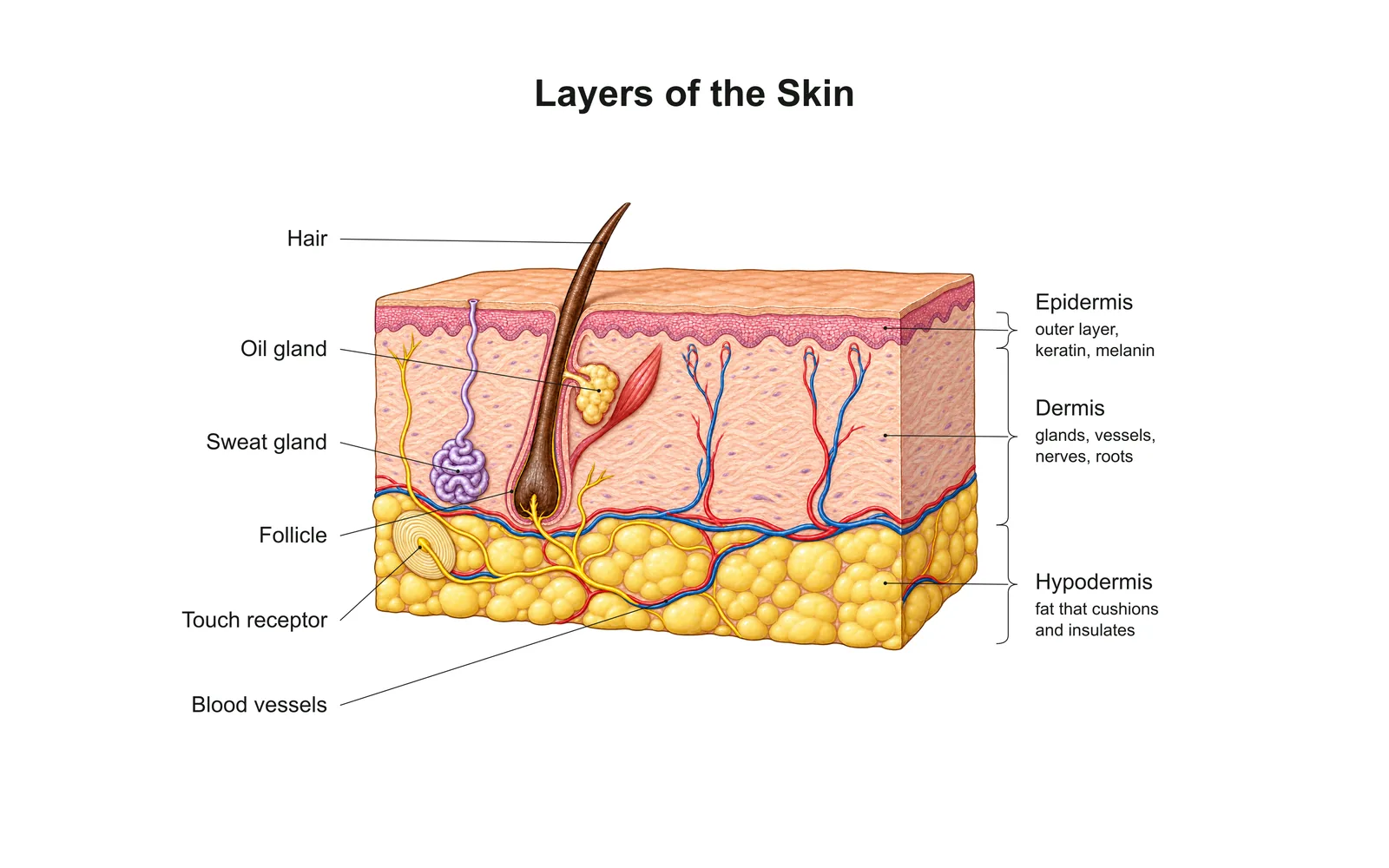
The three layers of the skin. 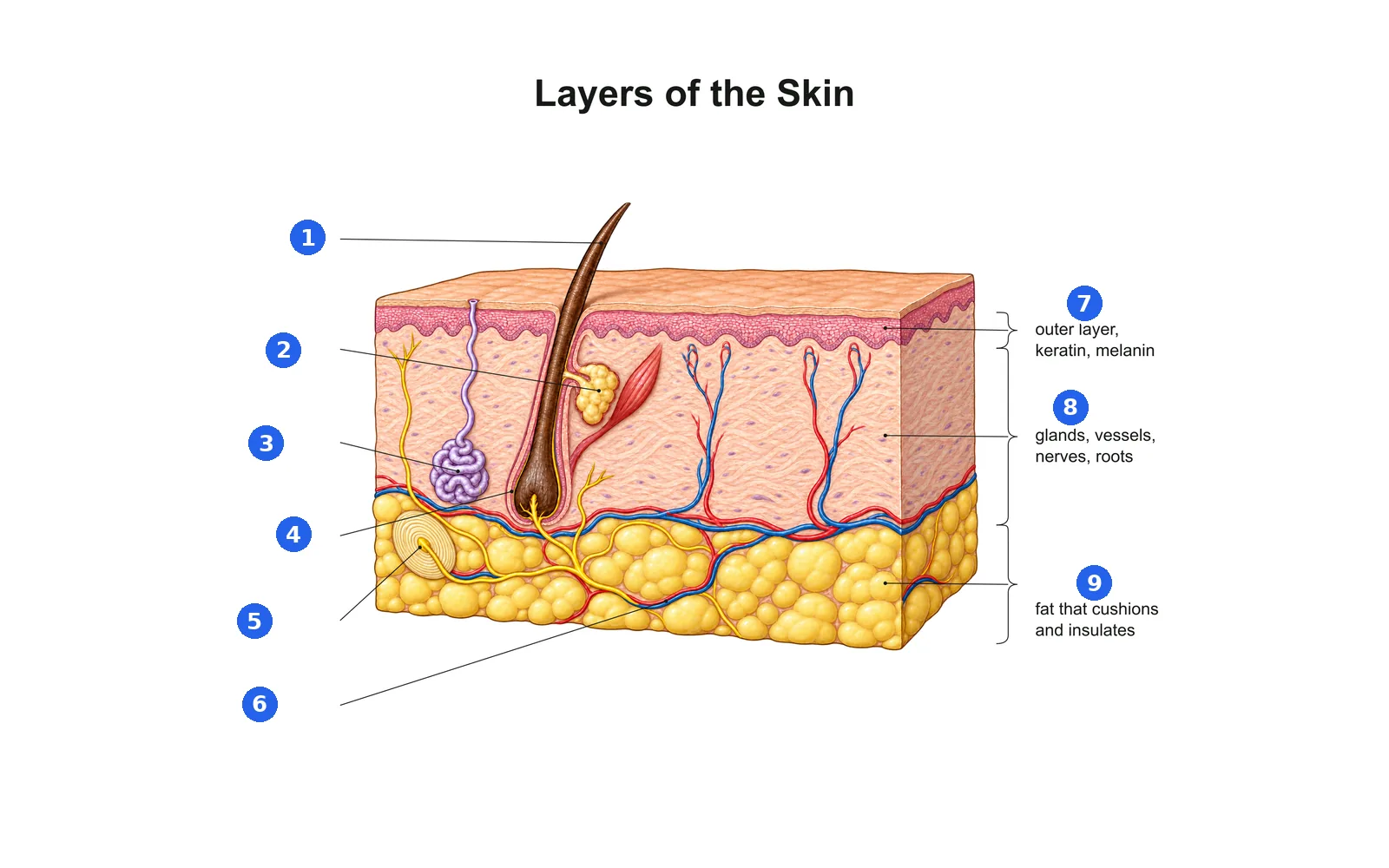
2D ትምህርት
Skin, Hair and Nails
How it works · Skin · 14 ካርዶች
የጥናት ማስታወሻዎች
- The skin is the body's largest organ.
- It has three layers: the epidermis on top, the dermis below, and a fatty layer underneath (hypodermis).
- It protects against germs and water loss, controls temperature, senses touch and makes vitamin D in sunlight.
- Hair and nails are made of keratin, a tough protein, and grow from living cells at their base.
የማስታወሻ ካርዶች
ካርድ 1 ከ14ለመገልበጥ ካርዱን ይንኩ
የሥዕሉን ክፍሎች ሰይም
ቁጥር ያለውን እያንዳንዱን ክፍል ሰይም። መጀመሪያ ለማጥናት ወደ ስሞቹ ቀይር።
ስም 1 ከ9መልስ ይምረጡ
ቁጥር 1 ምንድን ነው?
በዚህ ስብስብ ያሉ ቃላት (14)
- Epidermis
- The thin outer layer of skin; its surface cells are dead and constantly shed and replaced.
- Dermis
- The thick middle layer with blood vessels, nerves, hair roots, and sweat and oil glands.
- Hypodermis
- The fatty layer under the skin that stores energy, cushions and insulates.
- Keratin
- The tough protein in the outer skin, hair and nails.
- Melanin
- The pigment that colors skin, hair and eyes and helps protect against ultraviolet light.
- Sweat glands
- Glands that release sweat; as it evaporates it cools the body.
- Sebaceous glands
- Oil glands attached to hair follicles that keep skin and hair supple.
- Hair follicle
- The pocket in the skin where a hair grows from living cells at its base.
- Vitamin D
- Skin makes it when exposed to sunlight; the body needs it to absorb calcium.
- How does skin help control temperature?
- Sweating and widening blood vessels release heat; narrowing vessels and goosebumps keep heat in.
- Hair
- A strand of keratin growing from a follicle; it helps keep heat in and senses touch.
- Oil gland
- A sebaceous gland that releases oil (sebum) into the hair follicle.
- Blood vessels
- Tiny vessels in the dermis that feed the skin and help control temperature.
- Touch receptor
- A nerve ending in the skin that senses touch, pressure or vibration.
በ3D ሰውነት ላይ ይመልከቱ
የ3D ሞዴሉን በአንድ ክፍል ላይ ይክፈቱ፣ ከትምህርት ቤት ማስታወሻዎቹና ካርዶቹ ጋር።
የሰውነት አካል ጥናትን ለመማር የሚረዳ ትምህርታዊ ይዘት እንጂ የሕክምና ምክር አይደለም።