2D ትምህርት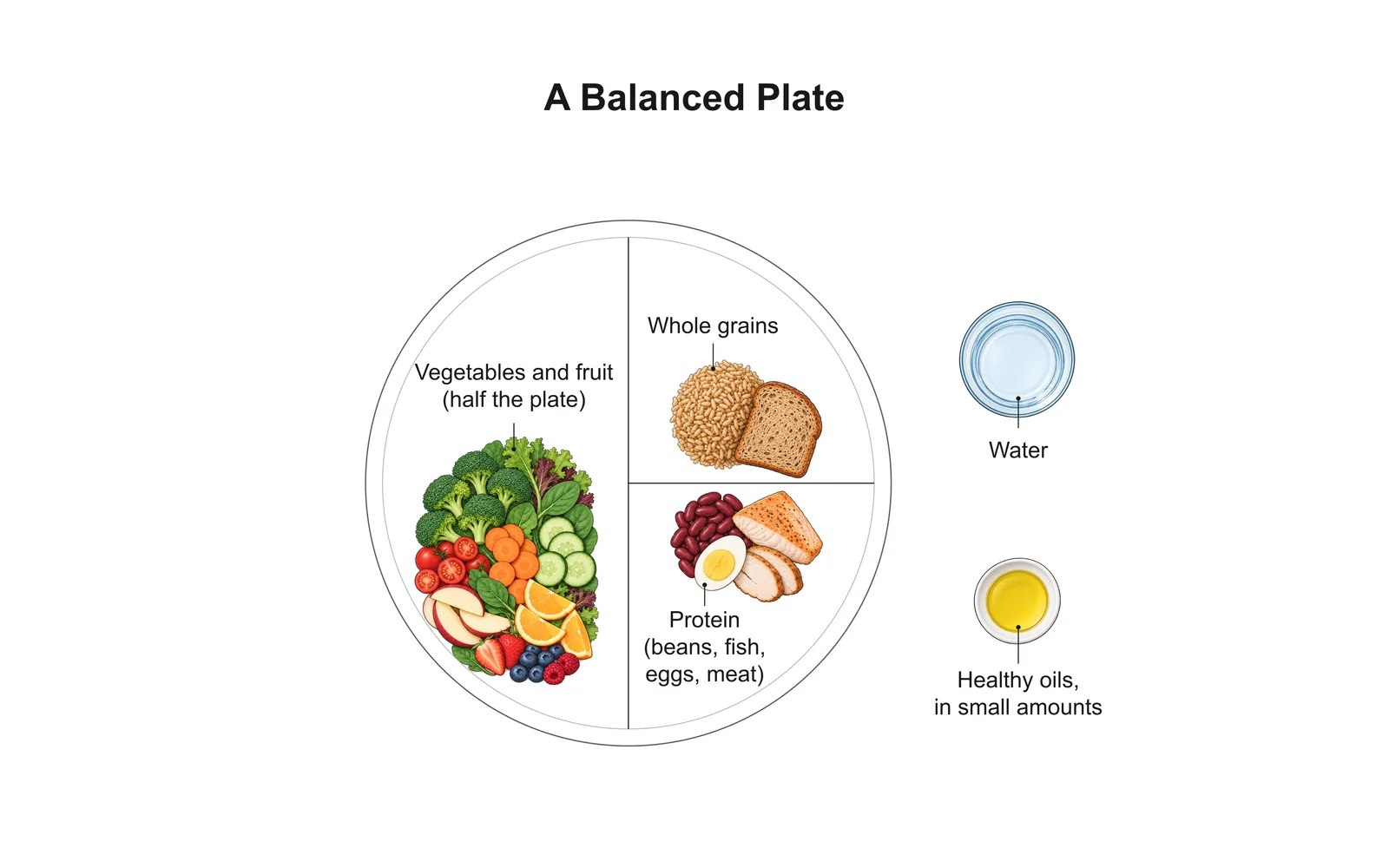
A balanced plate. 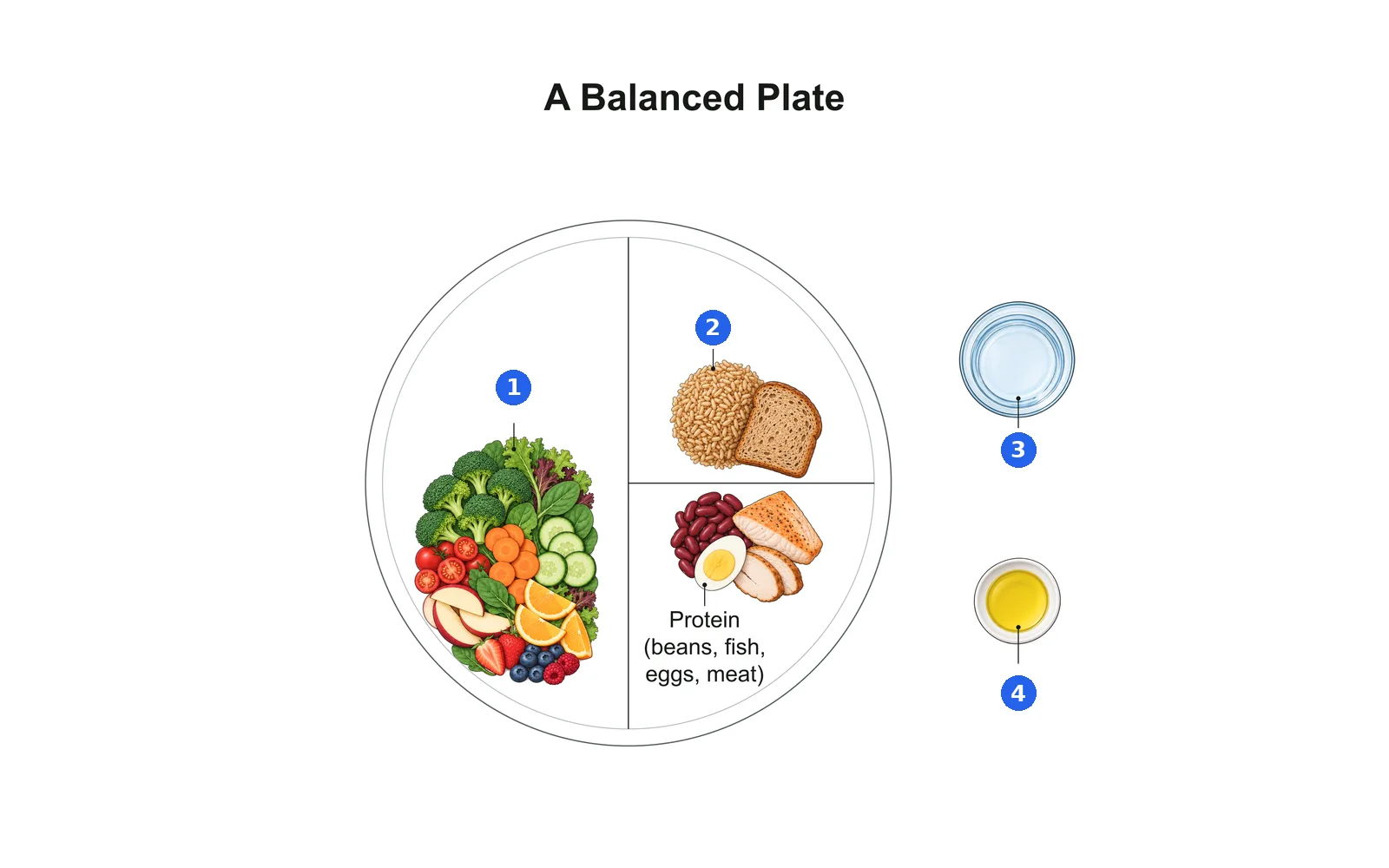
2D ትምህርት
Nutrition Basics
How it works · Nutrition · 10 ካርዶች
የጥናት ማስታወሻዎች
- Food gives the body energy and the raw materials to build and repair itself.
- Macronutrients (carbohydrates, proteins and fats) are needed in large amounts and supply energy.
- Micronutrients (vitamins and minerals) are needed in small amounts but are just as essential.
- Fiber and water do not supply energy but keep digestion and the body working well.
የማስታወሻ ካርዶች
ካርድ 1 ከ10ለመገልበጥ ካርዱን ይንኩ
የሥዕሉን ክፍሎች ሰይም
ቁጥር ያለውን እያንዳንዱን ክፍል ሰይም። መጀመሪያ ለማጥናት ወደ ስሞቹ ቀይር።
ስም 1 ከ4መልስ ይምረጡ
ቁጥር 1 ምንድን ነው?
በዚህ ስብስብ ያሉ ቃላት (10)
- Calorie
- A unit of energy in food. Carbohydrates and protein give about 4 per gram; fat gives about 9.
- Carbohydrates (nutrition)
- The main energy source; whole grains, fruit, vegetables and beans are better choices than sugar.
- Protein (nutrition)
- Needed to build and repair muscle and tissues; found in beans, lentils, eggs, fish, meat and dairy.
- Healthy fats
- Fats from nuts, seeds, avocado, olive oil and oily fish that support the heart and brain.
- Fiber
- Plant material the body cannot digest; it keeps bowels regular and feeds good gut bacteria.
- Vitamins
- Small nutrients needed for many body processes, like vitamin C for healing and vitamin A for vision.
- Iron
- A mineral needed to make hemoglobin; found in beans, leafy greens and meat.
- Calcium
- A mineral for strong bones and teeth and for muscle and nerve function.
- Water
- Needed for every body process; thirst and pale urine are simple guides.
- Fat-soluble vitamins
- Vitamins A, D, E and K, which are stored in body fat.
በ3D ሰውነት ላይ ይመልከቱ
የ3D ሞዴሉን በአንድ ክፍል ላይ ይክፈቱ፣ ከትምህርት ቤት ማስታወሻዎቹና ካርዶቹ ጋር።
የሰውነት አካል ጥናትን ለመማር የሚረዳ ትምህርታዊ ይዘት እንጂ የሕክምና ምክር አይደለም።