2D ትምህርት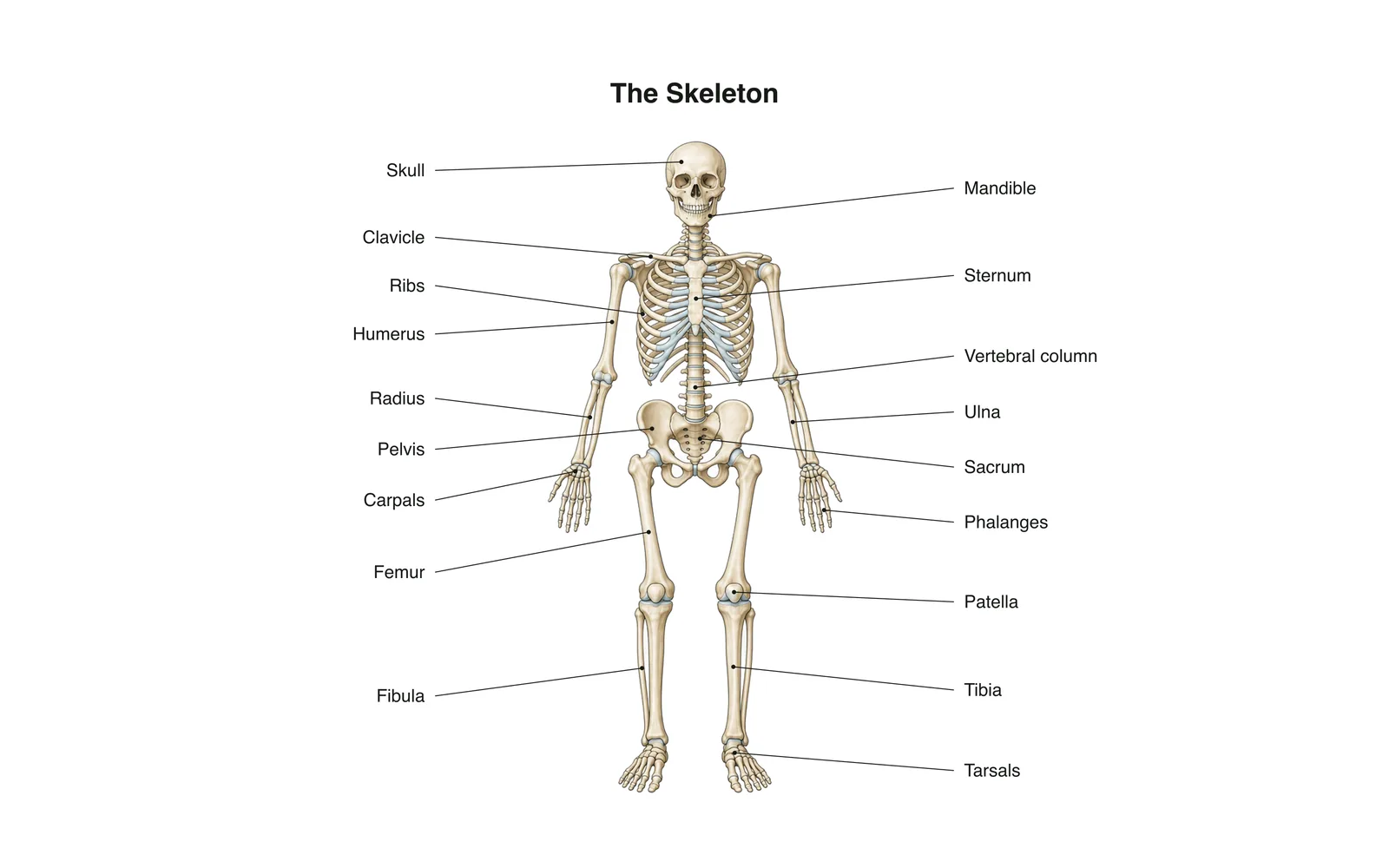
2D ትምህርት
The Skeleton
How it works · Body maps · 18 ካርዶች
የጥናት ማስታወሻዎች
- An adult skeleton has 206 bones; a newborn has about 300 that fuse as they grow.
- The axial skeleton (skull, spine, ribs, sternum) protects the brain, spinal cord and chest organs.
- The appendicular skeleton (shoulders, arms, pelvis, legs) lets us move and handle things.
የማስታወሻ ካርዶች
ካርድ 1 ከ18ለመገልበጥ ካርዱን ይንኩ
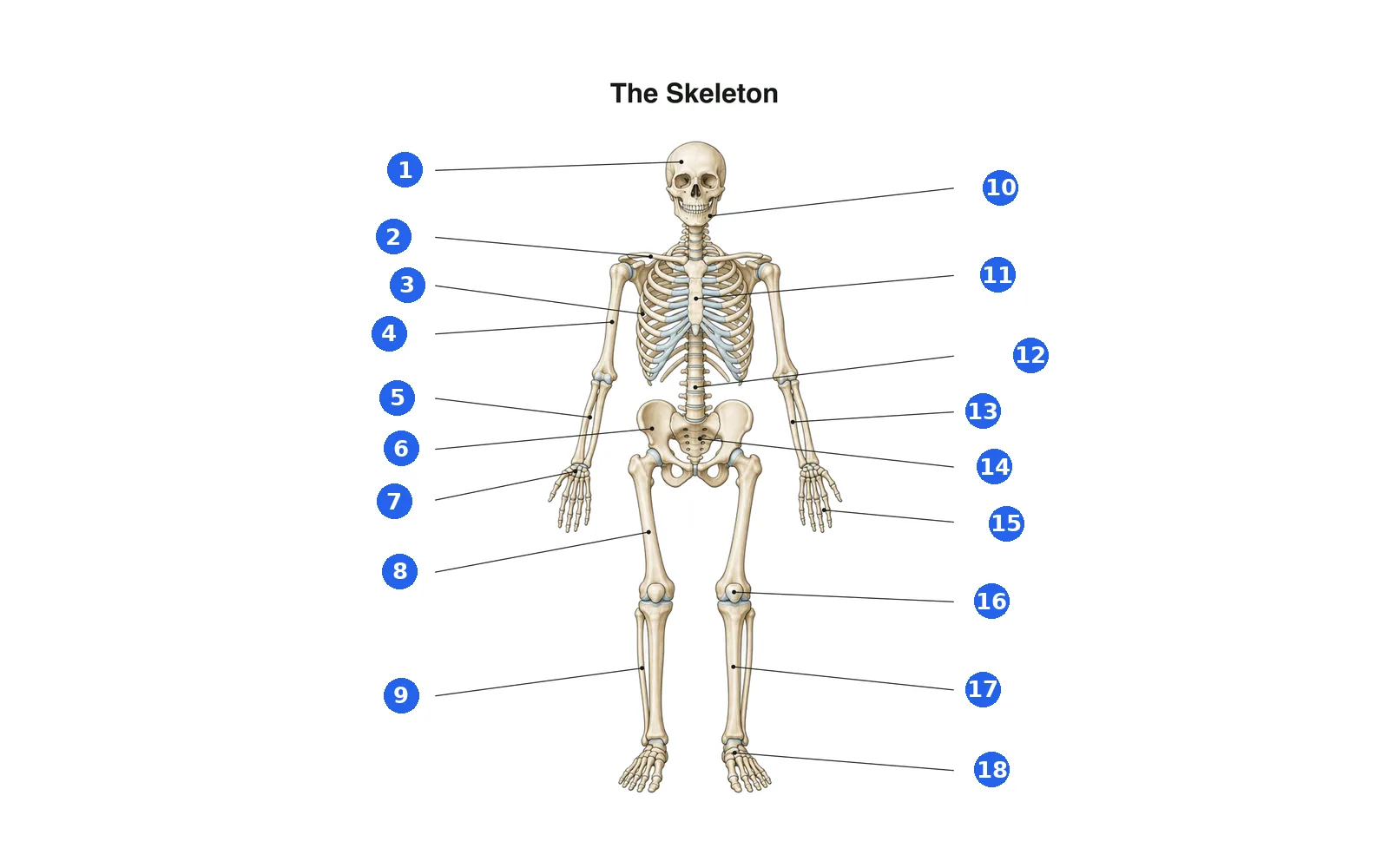
የሥዕሉን ክፍሎች ሰይም
ቁጥር ያለውን እያንዳንዱን ክፍል ሰይም። መጀመሪያ ለማጥናት ወደ ስሞቹ ቀይር።
ስም 1 ከ18መልስ ይምረጡ
ቁጥር 1 ምንድን ነው?
በዚህ ስብስብ ያሉ ቃላት (18)
- Skull
- The bones of the head; it protects the brain and shapes the face.
- Mandible
- The lower jaw, the only skull bone that moves.
- Clavicle
- The collarbone, a strut between the breastbone and shoulder.
- Sternum
- The breastbone, in the middle of the chest; the ribs attach to it.
- Ribs
- 12 pairs of curved bones that protect the heart and lungs.
- Humerus
- The upper-arm bone, from shoulder to elbow.
- Vertebral column
- The spine: 33 vertebrae stacked around the spinal cord.
- Radius
- The forearm bone on the thumb side.
- Ulna
- The forearm bone on the little-finger side; forms the point of the elbow.
- Pelvis
- The ring of hip bones that carries the upper body's weight to the legs.
- Sacrum
- Five fused vertebrae at the base of the spine, joined to the pelvis.
- Carpals
- The 8 small wrist bones.
- Phalanges
- The finger and toe bones: 3 per finger or toe, 2 in the thumb and big toe.
- Femur
- The thigh bone, the longest and strongest bone in the body.
- Patella
- The kneecap, which protects the knee and helps the thigh muscles straighten it.
- Tibia
- The shin bone, which carries the body's weight.
- Fibula
- The thin bone beside the tibia; it forms the outer ankle.
- Tarsals
- The 7 ankle and back-of-foot bones, including the heel bone.
በ3D ሰውነት ላይ ይመልከቱ
የ3D ሞዴሉን በአንድ ክፍል ላይ ይክፈቱ፣ ከትምህርት ቤት ማስታወሻዎቹና ካርዶቹ ጋር።
የሰውነት አካል ጥናትን ለመማር የሚረዳ ትምህርታዊ ይዘት እንጂ የሕክምና ምክር አይደለም።