2D ትምህርት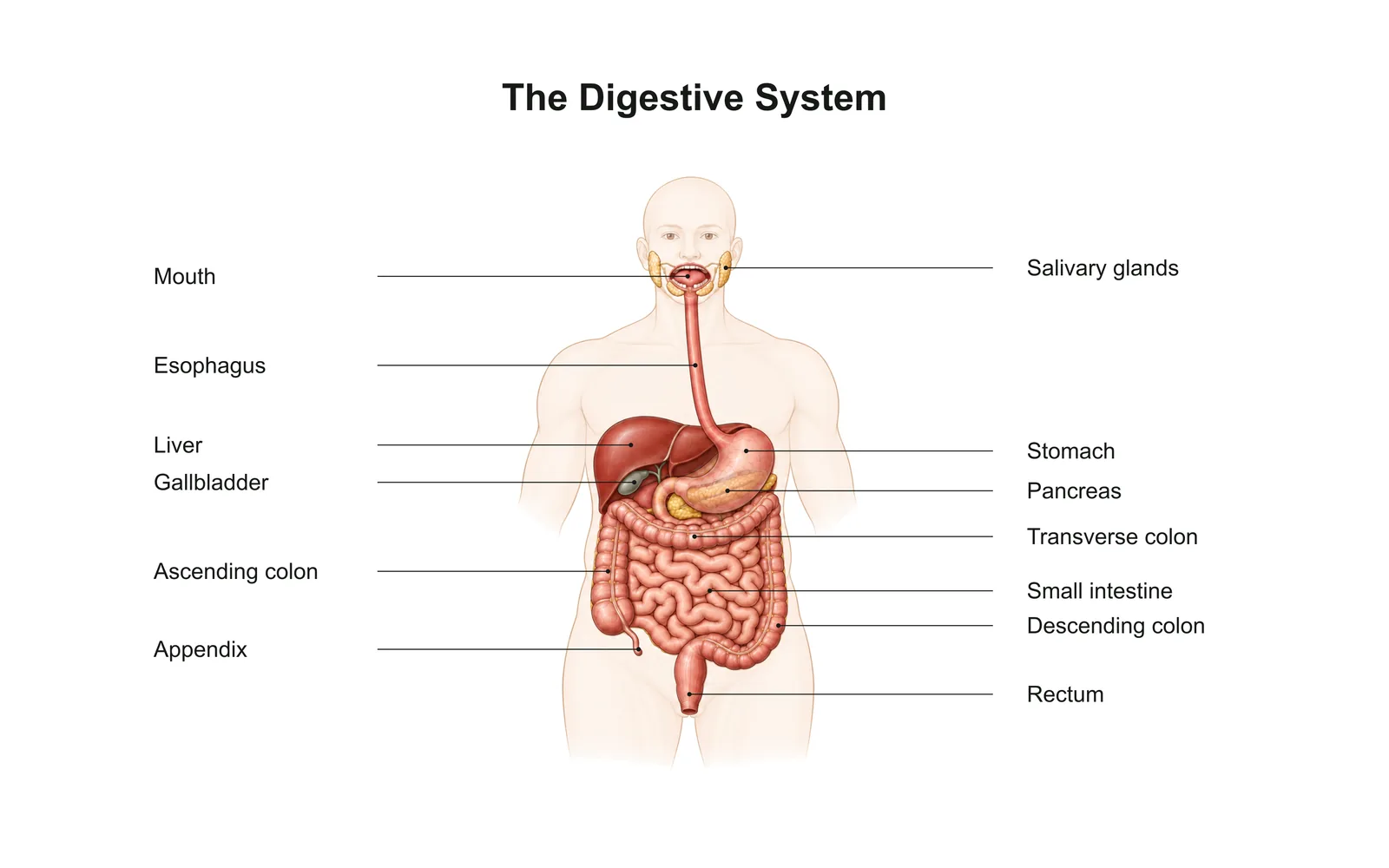
2D ትምህርት
The Digestive System
How it works · Body maps · 13 ካርዶች
የጥናት ማስታወሻዎች
- Food travels mouth → esophagus → stomach → small intestine → large intestine → rectum.
- The liver, gallbladder and pancreas add bile and enzymes but food does not pass through them.
- Most nutrients are absorbed in the small intestine; the large intestine mainly takes back water.
የማስታወሻ ካርዶች
ካርድ 1 ከ13ለመገልበጥ ካርዱን ይንኩ
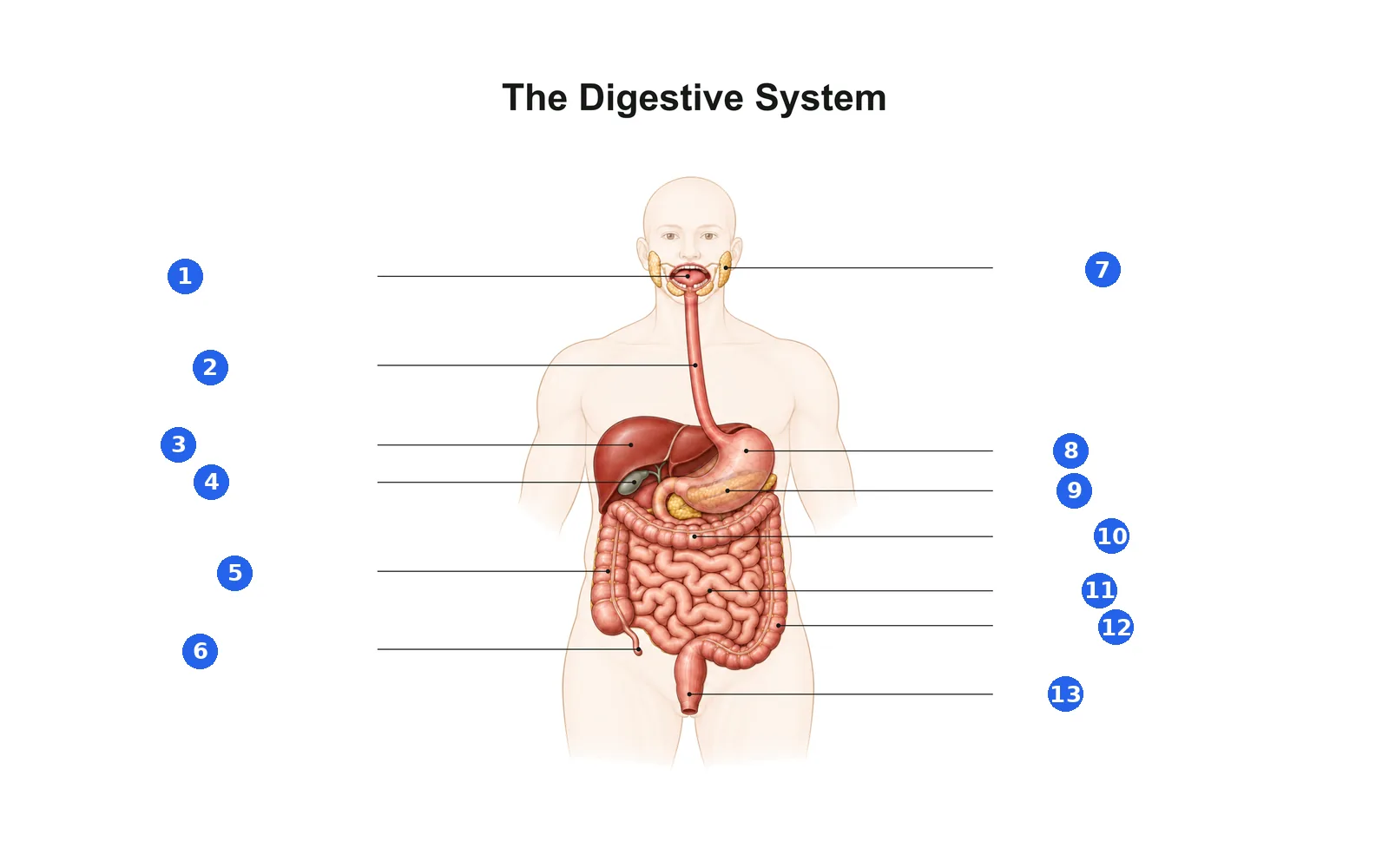
የሥዕሉን ክፍሎች ሰይም
ቁጥር ያለውን እያንዳንዱን ክፍል ሰይም። መጀመሪያ ለማጥናት ወደ ስሞቹ ቀይር።
ስም 1 ከ13መልስ ይምረጡ
ቁጥር 1 ምንድን ነው?
በዚህ ስብስብ ያሉ ቃላት (13)
- Mouth
- Where digestion starts: teeth chew and saliva begins breaking down starch.
- Salivary glands
- Glands around the mouth that make saliva.
- Esophagus
- The muscular tube carrying food from the throat to the stomach.
- Liver
- Makes bile, stores energy and clears toxins from the blood.
- Gallbladder
- Stores bile from the liver and releases it after fatty meals.
- Stomach
- Churns food with acid and enzymes into a soupy mix called chyme.
- Pancreas
- Makes digestive enzymes and the hormones insulin and glucagon.
- Small intestine
- About 6 m long; digests food and absorbs most nutrients.
- Ascending colon
- The part of the large intestine that rises up the right side of the belly.
- Transverse colon
- The part of the large intestine that crosses the belly.
- Descending colon
- The part of the large intestine that runs down the left side.
- Appendix
- A small pouch off the start of the large intestine.
- Rectum
- The last part of the large intestine, which stores stool before it leaves.
በ3D ሰውነት ላይ ይመልከቱ
የ3D ሞዴሉን በአንድ ክፍል ላይ ይክፈቱ፣ ከትምህርት ቤት ማስታወሻዎቹና ካርዶቹ ጋር።
የሰውነት አካል ጥናትን ለመማር የሚረዳ ትምህርታዊ ይዘት እንጂ የሕክምና ምክር አይደለም።